• What are local and global metrics for warehouse operations?
• How does WES software optimize these metrices?
• Case studies that guide you for making the choice easier
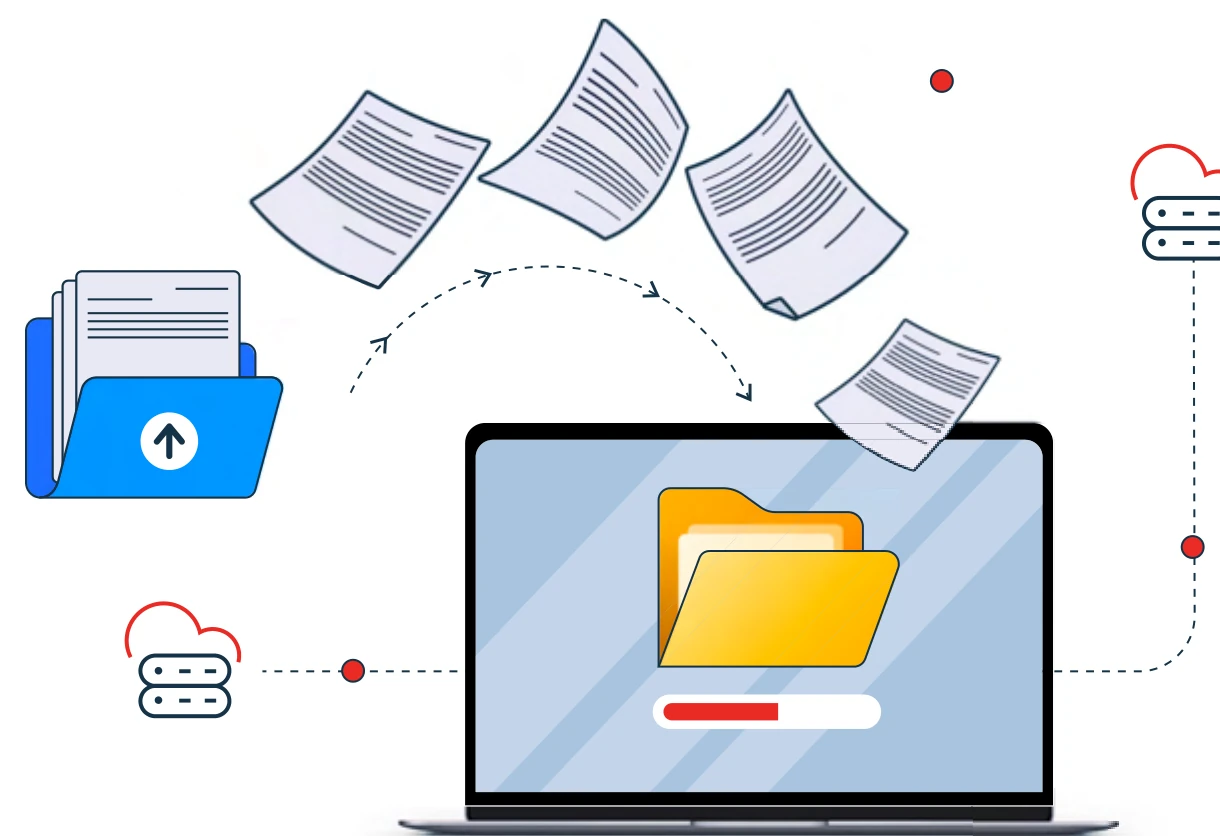
From Paper to Paperless
The first step towards automation isn’t introducing robots to replace manual handling, but building a system that can support scalable operations. Digitising previously paper based processes opens the door to creating a world class warehousing system. There are simple, intuitive reasons for this shift, so let’s address them in this summary itself.
First, it is easy to lose paper. People do it every day.
Second, you have to read paper. Reading warehouse documents usually requires searching through a maze of information for just a single line that matters for the transaction at hand.
Third, people have to write on paper. Again, it is easy to transpose something.
Fourth, things on paper cannot be communicated in real time. As a result, errors in inventory levels, product locations, task status, and/or order status are not known with real-time reliability, making it difficult or impossible to implement cross-docking and transaction interleaving.
Fifth, paper is expensive to print, handle and file.
Sixth, it is easy to damage and smudge paper. Paperless modern warehousing and world-class warehousing go hand in hand.
Executive Summary
Imagine a scenario where a production line achieves its daily target, inventory levels are perfectly balanced and yet the facility is struggling to meet its overall performance. What could be the issue?
As organisations seek to streamline their processes, the integration of advanced software such as Warehouse Management Systems (WMS), Warehouse Execution Systems (WES), Warehouse Control System (WCS), and Fleet Management Systems (FMS) emerges as a vital strategy. These systems contribute to enhanced decision-making capabilities, enabling warehouses to optimise their operations in real-time.
However, access to large amounts of data makes it increasingly hard to keep focus on the real goal.
The use of WMS is becoming more frequent in this modern era. As warehouses & Distribution Centres become more automated and less reliant on human labour, and as that labour becomes harder to come by and more expensive, software that supports these operations is in high demand.
Source: McCrea, 2019
This question boils down to a choice between global and local optimisation strategies. While a balanced approach fosters overall growth, it can also leave some room for specific local enhancements. Similarly, meeting the local metrics without a view on global metrics, which is often a case in contemporary warehousing solutions, could lead to ignorance of business objectives. This equilibrium is vital for maximising productivity and effectiveness within warehouse operations.
This whitepaper delves into the contrasting approaches of global and local optimisation metrics, starting from listing down such metrics for few warehouses. Furthermore, we will also highlight how Addverb's software helps you make this choice and achieve global objectives while addressing localised challenges.
Modern Warehouse
Key Functions
Execute a higher volume of smaller transactions
Handle and store a broader range of SKUs
Offer extensive product and service customisation
Provide more value-added services
Process a growing number of returns
Accommodate an increasing number of international shipments
Key challenges
Reduced order processing times & tighter error margins
Declining availability of skilled personnel
Limitations of legacy WMS due to outdated ERP investments
This increasing complexity places significant pressure on warehouse managers, who must optimise operations while managing constraints. The evolving warehousing landscape highlights the need for advanced technologies, including warehouse management systems, automation, & robotics, to maintain efficiency & competitiveness.
Source: World class warehousing and material handling (second edition), Edward H. Frazelle, PhD
Global vs. Local Optimisation
Supply chain management ensures that products reach customers in the right quantity, condition, and time while balancing quality and cost control. Traditionally, a central planner optimises costs and demand, but modern supply chains have evolved into supply networks with multiple independent decision-makers.
In real-world operations, interconnected suppliers operate with their own priorities and constraints. The supply network approach enhances efficiency by modelling interdependencies, identifying bottlenecks, and leveraging digital optimisation. Unlike traditional supply chains, supply networks recognise conflicting objectives and information asymmetry, shifting the focus toward collaborative trade-offs that improve overall logistics performance.
This same principle applies to warehouse optimisation, where software-driven decisions must align with the right North Star metric. While efficiency focuses on minimising resource use, such as reducing travel time or maximising equipment utilisation, effectiveness ensures that these improvements contribute to higher-order business goals like order accuracy, fulfilment speed, and cost-to-serve.
With this in mind, warehouse optimisation strategies can be divided into global optimisation and local optimisation, each differing in focus, objectives, and implementation.
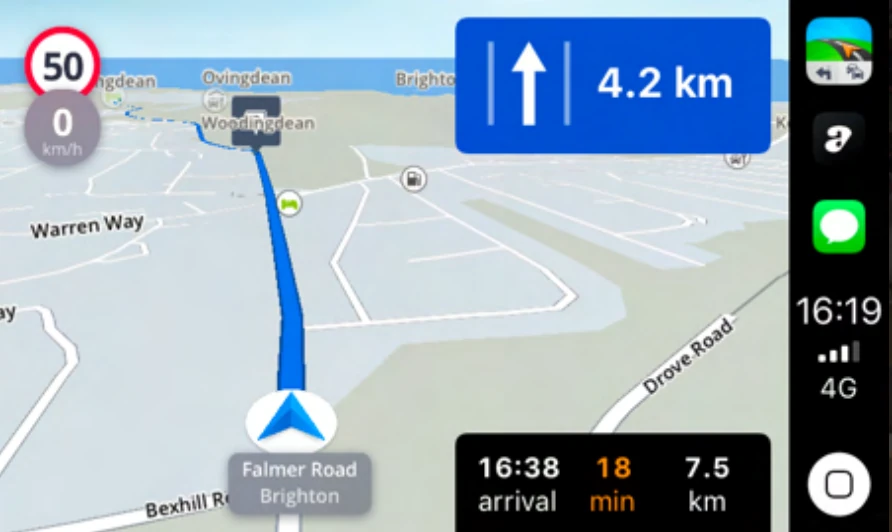
Traffic signals in a town are example of global optimisation, they seek overall smooth flow of traffic.Individual car navigation is an example of local optimisation, it will find the shortest path to destination.
A 2022 report by McKinsey & Company highlights that large-scale e-commerce fulfilment centres, such as those operated by Amazon, prioritise end-to-end optimisation over localised efficiency.
Global Optimisation: A Holistic Approach
According to a survey by modern material handling institute, 70% of warehouses and distribution centres report significant technology gaps preventing them from capturing the benefits of data capture innovations.
Global optimisation encompasses the synchronisation of various processes within the warehouse to achieve maximum overall efficiency. This involves ensuring that every task, ranging from inventory movement to material handling and order processing, is executed cohesively, rather than in a disjointed manner. Research from Supply Chain Digital indicates that implementing a data-driven, AI-powered warehouse system can reduce order fulfilment time by as much as 40%. This reduction is achieved by optimising material flows throughout the facility, ensuring that resources are utilised in the most effective way possible.
A leading eyewear brand used Addverb’s Warehouse Execution System (WES) to streamline order fulfilment. This system provided real-time visibility, helping the company achieve over 98% next-day delivery. This demonstrates how effective software decisions can enhance efficiency.
Key elements of a global optimisation strategy include:
Automated Task Allocation
Employing sophisticated algorithms to dynamically balance workloads among different zones or areas of the warehouse, ensuring that no single area becomes overburdened while others are underutilised.
Adaptive Task Prioritisation
Utilising data analytics to continuously adjust storage locations in real-time, based on current demand patterns and inventory levels. This adaptability ensures that the most frequently picked items are easily accessible.
Seamless Coordination of Material Flows
Fostering effective communication and collaboration between manual and automated handling systems to prevent bottlenecks and improve overall process fluidity.
Local Optimisation: The Micro-Level Approach
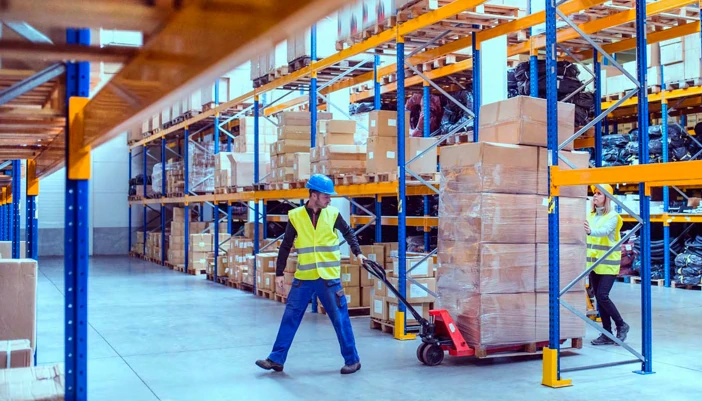
Conversely, local optimisation targets improvements at the micro level, concentrating on specific warehouse functions such as the design of picking zones, storage layouts, and packing stations. This strategy can deliver quick boosts in efficiency and performance, but it may not always align with broader warehouse performance objectives and can lead to isolated gains that do not translate into overall success.
Most of the warehouse inefficiencies stem from ineffective location-based task management. This includes factors such as suboptimal picking paths, poorly configured storage areas, and inefficient robotic movements. While enhancing performance in specific areas can provide immediate benefits, if these improvements are not integrated into a comprehensive warehouse strategy, they can potentially create new bottlenecks and hinder overall operational flow.
Successful Local Optimisations include:
Optimised Picking Strategies: Implementing various picking methodologies such as batch picking, zone picking, or wave picking to streamline and expedite the picking process.
Dynamic Storage Allocation: Employing algorithms that adjust storage assignments based on SKU demand frequency, ensuring that rapidly moving items are conveniently located.
Localised AMR Routing: Utilising advanced routing algorithms for Autonomous Mobile Robots (AMRs) to improve task execution in areas with high traffic, thus reducing delays and increasing throughput.
The Fallacy of Local Optimisation without a Global Perspective
Local optimisation, when taken as the sole focus of performance improvement, often presents a false sense of efficiency. While it may yield great results in isolated warehouse processes, it overlooks the broader perspective of system-wide coordination.
Examples where local optimisation may fall short:
Production Line Efficiency
While a production line may be running at peak efficiency, bottlenecks in logistics or inventory management may undermine overall performance.
Maintenance Downtime
Minimal downtime in machinery is a positive KPI, but poor machine scheduling and ineffective utilisation may still result in low output.
Inventory Levels
Perfectly balanced inventory levels may be maintained, but if raw materials are not used efficiently, there could be excess waste and higher operational costs.
This "illusion of efficiency" is why it is essential to integrate local optimisations into a global strategy. Without a holistic approach, warehouses may fail to realise the maximum potential of their operations.
In a study conducted with a leading apparel retailer, inefficiencies in the receiving function of warehouse were identified as a critical bottleneck in their supply chain. During an on-site evaluation of their primary distribution centre, it was observed that the receiving dock experienced significant congestion. Upon inquiry, the warehouse manager reported a dock-to-stock time of 96 hours, a figure that was perceived as a benchmark within their operations. However, industry benchmarks indicate that 24 hours is the standard, 8 hours is above average, & a few hours is considered world-class. This discrepancy highlighted a key inefficiency in their operations, impacting inventory turnover & fulfilment speed. The case underscored the critical role of Warehouse Software System & automation.
Source: World class warehousing and material handling (second edition), Edward H. Frazelle, PhD
While local optimisation delivers short-term gains, it often creates systemic inefficiencies if not integrated into a global strategy.
A study by Deloitte (Deloitte Insights) indicates that over 55% of warehouses struggle with balancing local efficiency with global coordination, leading to operational disconnects.
Storage Efficiency vs. Throughput: A perfectly optimised storage system may cause delays if picking routes are not optimised concurrently.
AMR Utilisation vs. Task Prioritisation: If Autonomous Mobile Robots (AMRs) are optimised for local efficiency, they might not be available when needed for high-priority tasks elsewhere in the warehouse.
Conveyor System Speed vs. Dock Management: A high-speed conveyor that optimises local throughput can create congestion at docking stations if unloading processes are not balanced.
Achieving the Right Balance with Warehouse Software
According to Harvard Business Review, "While (artificial intelligence) AI will radically alter how work gets done and who does it, the technology's larger impact will be in complementing and augmenting human capabilities, not replacing them."
To ensure both global and local optimisation, Addverb’s software suite integrates real-time intelligence, predictive analytics, and automation coordination. This enables:
Seamless Warehouse Synchronisation
Ensuring localised improvements align with broader efficiency goals.
Real-Time Optimisation
Using AI-driven analytics to adjust operations dynamically.
Scalability and Adaptability
Allowing warehouses to evolve with changing demands.
By leveraging these advanced capabilities, Addverb enables warehouses to achieve a harmonious balance between local efficiencies and global optimisation.
Approach for Business Metrics through real-life Case Studies
PepsiCo
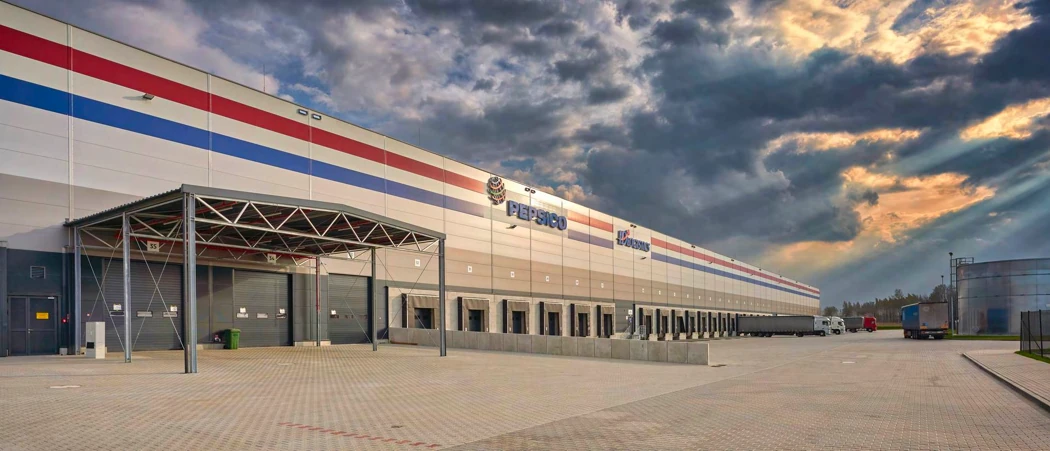
PepsiCo planned to build its largest automated warehouse in India to manage end-to-end inventory flow within a constrained 36,000 sq. ft. footprint. The primary challenge was to enable high-volume case picking, mixed-SKU (rainbow) pallet formation, and efficient space utilisation, while moving away from manual processes. Addverb implemented a hybrid automation solution featuring crane-based ASRS for slow movers and a multi-level Mother-Child shuttle system for fast movers powered by Warehouse Execution System, Concinity. The warehouse is built to achieve a system throughput of 300 pallets per hour, with 32 rainbow pallets (600 cases) formed hourly through 60 grabs across seven pick lines. With 9,000 pallet positions across 2,000 bays and an average inventory retention of less than seven days, the site supports 248 pallet movements per hour.
Local Metrics
Turn table cycle time
Crane speed
Mother-child Shuttle retrieval time
Picker accuracy
Aisle congestion rate
Pick-to-light response lag
Manual intervention frequency
Global Metrics
Overall storage density
Rainbow picking efficiency
Inventory turnover
System throughput
Order batching cycle time
SKU-wise velocity dispersion
Dock turnaround synchronisation
Volvo
Volvo sought to improve parts availability anytime, anywhere, prompting VE Commercial Vehicles Limited (VECV) to expand the VE Parts Distribution Centre (VEPDC) for better traceability, accuracy, and order-to-delivery times, enhancing customer satisfaction and operational efficiency. Addverb implemented an automation solution with an ASRS featuring three stacker cranes, 5,700 pallet positions, and 630 ground positions, supporting 15–21 days of inventory and 60 order pickings per hour. The Multi-Level Shuttle System (MLS - Medius) managed six days of inventory with 23,040 tote positions and 100 buffer positions. An integrated conveyor system and Warehouse Control System (WCS) optimised storage and synchronised operations. The result was a 60% increase in daily order lines, from 6,000 to 10,000, with four Goods-to-Person (GTP) stations handling 15 order totes at once. Key gains included 131 pallets per hour (ASRS), 983 totes per hour (MLS), and 414 order lines per hour, improving dispatch accuracy, reducing truck turnaround time, and boosting productivity.
Local Metrics
Order line starvation at GTP slot
Tote decanting time
Crane/shuttle utilisation/reliability (MTBF/MTTR)
Worker agility at picking station and decanting station
Fast mover retrieval time
Pick path overlap
Manual repick rate
Slotting accuracy
Station dwell time
Global Metrics
Order closure time
Inventory storage density/turnover
Overall picking throughput
Inventory accuracy
Order fulfilment cost
Energy usage per order
Cycle count frequency
Automation system uptime
Auto Components Player
A leading aluminium die-casting manufacturer in Chennai, faced material handling and storage inefficiencies due to reliance on forklifts for moving semi-finished (SFG) and finished goods (FG), leading to bottlenecks, errors, and safety risks. To resolve this, the company implemented Automated Storage and Retrieval Systems (ASRS) and Autonomous Mobile Robots (AMRs) in phases. Initially, 30 AMRs automated pallet movement, with more to follow. A WIP ASRS with 2,070 pallet positions was set up for SFG, and an FG ASRS with 1,240 pallet positions for FG, both using vertical storage and automated cranes. This automation significantly improved efficiency, reduced manual effort, and boosted throughput processing 42 pallets/hour in the FG ASRS, 54 pallets/hour in the WIP ASRS, and up to 94 filled pallets/hour with the AMR-Dynamo1000.
Local Metrics
Dynamo movement reduction (based on optimised park spots)
Worker idle time in casting cells and machine shops
Crane/Dynamo utilisation & reliability
Zone congestion frequency
Pallet staging delay
Manual intervention incidents
Pick error rate
AMR battery swap rate
Global Metrics
Order lead time
Storage capacity
Overall site throughput in terms of WIP casting and machined boxes output
Energy consumption per move
Equipment downtime
Average inventory age
Carbon footprint per pallet moved
Cost per order fulfilled
Add Intelligence to your warehouse
One system, multiple faces
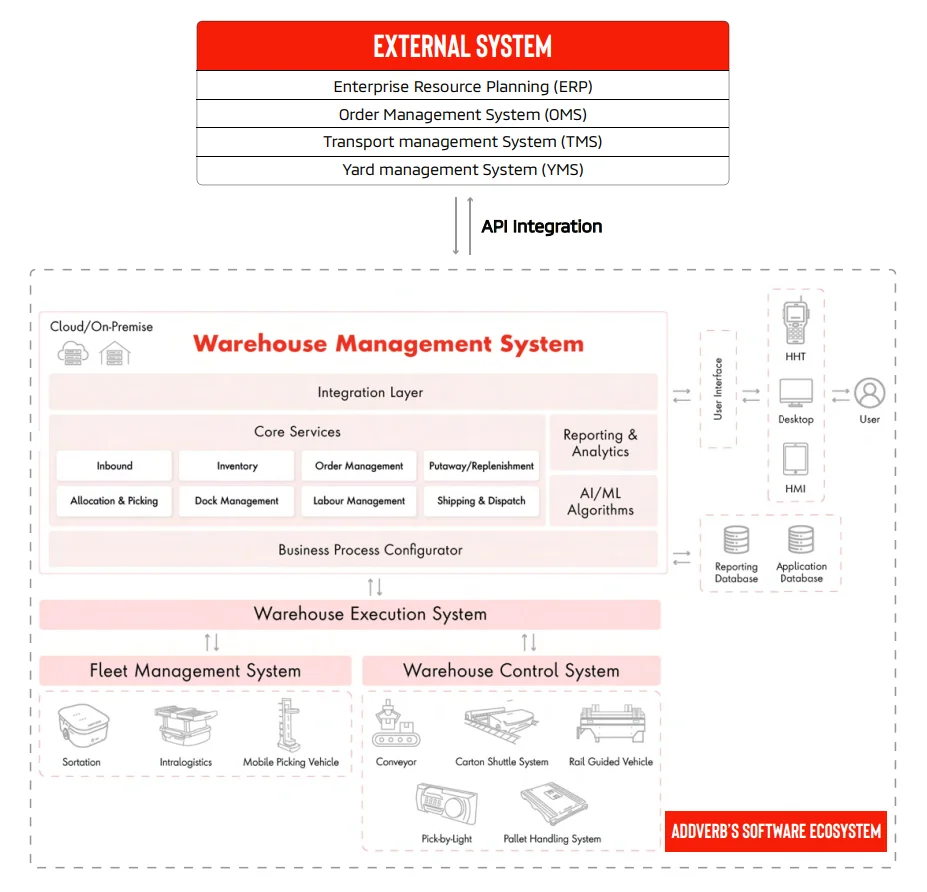
Addverb's software suite offers a comprehensive solution for warehouse, distribution, & manufacturing companies by consolidating their WMS, WES, WCS, and Fleet management operations onto a unified platform. This centralised approach streamlines processes, improves operational efficiency, and enhances visibility and control over the entire supply chain. With Addverb's software suite, organisations can effectively manage and optimise their warehouse, automation systems, and fleet of mobile robots, leading to improved productivity & streamlined operations.
Single platform or A la carte
Addverb's automation software is an AI-driven and feature-rich solution that serves as the backbone for streamlining the entire operation of clients. It caters to a wide range of scenarios, including greenfield and brownfield operations, providing the flexibility to centralise the entire operation or selectively integrate specific modules to create a highly configurable platform. With 100% integration agnosticism, elasticity, and versatility, Addverb's software platform is intuitive, modern, easy-to-use, and easy-to-train on.
One platform multiple layers
Addverb's software platform combines the latest modern layers for WMS, WES, WCS, and Fleet Management, providing clients with the capability to seamlessly integrate their existing hardware or software requirements with our platform. The software suite offers a feature-rich and interoperable solution, enabling you to configure, simulate, optimise, and analyse your warehouse operations. With Addverb's single-platform software, you can digitise your entire warehouse to meet market demand and scale as required, leveraging advanced functionalities and ensuring a streamlined and efficient operation.
How Addverb’s Software Suite Enables Global Optimisation
Addverb's software suite provides a comprehensive solution that optimises warehouse operations both globally and locally. Key features include:
According to world class warehousing and material handling, maintaining healthy storage utilisation helps to enforce healthy inventory management. In our early work with Honda, the company’s warehouse space utilisation was more than 98 %. When it came time to implement a new warehouse management system, the warehouses were so full that there was no room to move product to create the space needed to relabel and reconfigure racking to accommodate the new system.
End-to-End Integration: Addverb’s suite, including Optimus WMS, Concinity WES, Mobinity WCS, and Movect FMS, ensures seamless coordination across all warehouse functions. This integration enables the system to optimise global metrics such as turnaround times and storage utilisation.
Real-Time Updates: Addverb's software offers near real-time operational updates, enabling managers to quickly identify and address bottlenecks, ensuring smooth warehouse operations.
Task Management and Scheduling: By utilising priority-driven scheduling, Addverb's software ensures optimised task allocation. Movect FMS, for example, ensures that robots are assigned tasks based on overall warehouse needs rather than focusing on individual performance metrics.
Scalability: Addverb's software solutions are scalable, which means they can adapt to the evolving needs of warehouses, making it easier to integrate new technologies and processes as they become available.
Addverb’s approach goes beyond individual KPIs to enhance overall operational performance. By focusing on optimising global metrics and integrating both local and global strategies, Addverb’s software suite ensures that warehouses operate at peak efficiency.
Conclusion
Global and local optimisation must work in tandem to maximise warehouse efficiency. While local optimisations enhance specific processes, they must align with global strategies to prevent operational bottlenecks. Addverb’s software suite ensures that warehouses maintain this critical balance, enabling seamless integration across all operational levels.
Global and location optimisation are two sides of the same coin. While local optimisation targets specific areas for improvement, global optimisation ensures that all warehouse processes are aligned for maximum efficiency. Addverb’s software suite plays a crucial role in bridging the gap between these two approaches, ensuring seamless coordination and integration across all warehouse functions.
By leveraging a combination of WMS, WES, and FMS, warehouses can achieve a comprehensive optimisation strategy that drives overall efficiency, reduces costs, and enhances throughput. This holistic approach positions warehouses to not only meet current demands but also adapt to future challenges, ensuring sustained success in a dynamic market.