




Frequently Asked Questions
-
What is a belt conveyor in a warehouse?
A belt conveyor is a continuous belt running over pulleys that carries products on a flat, stable surface, which makes it suited to fragile, irregular or small-base items that could tip or snag on rollers. Addverb's belt conveyors come in PVC and PLM variants. The PVC belt carries up to 125 kg per metre at up to 100 m per minute on frames up to 1,500 mm wide. -
Is a belt conveyor better than a roller conveyor for e-commerce parcels?
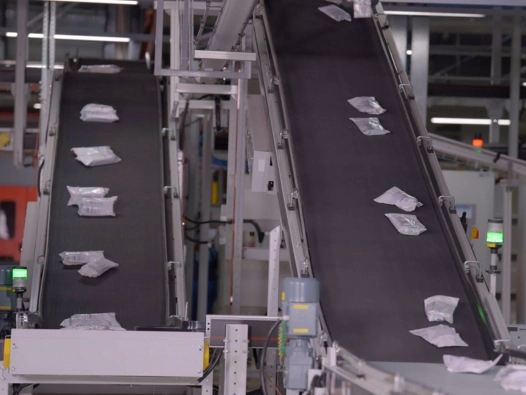
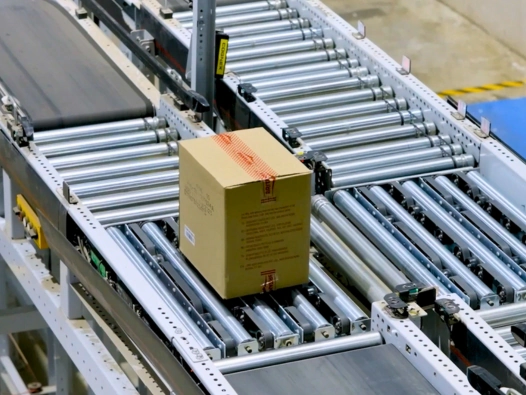
Yes, a belt conveyor is usually better for mixed e-commerce parcels, because polybags, envelopes and soft packages need the full support of a belt instead of riding on separate rollers. The belt also grips loads during fast acceleration and stops without slippage. Roller conveyors still suit rigid cartons and totes, so many fulfilment centres combine both on the same network. -
Can a belt conveyor carry products up an incline?
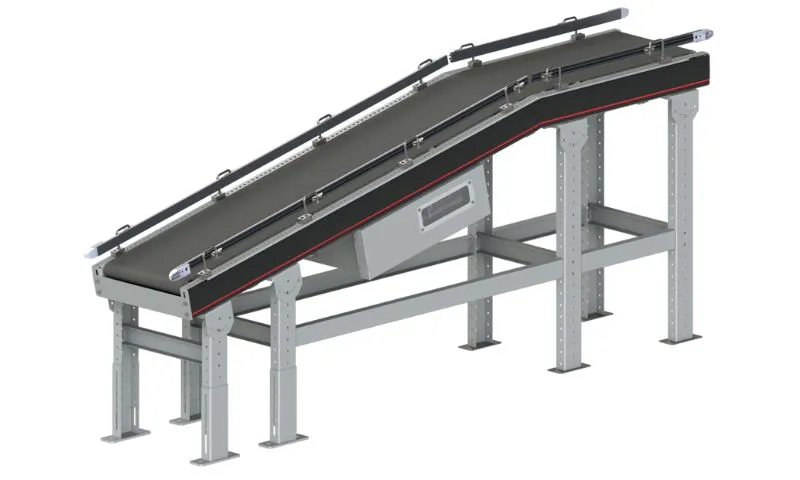
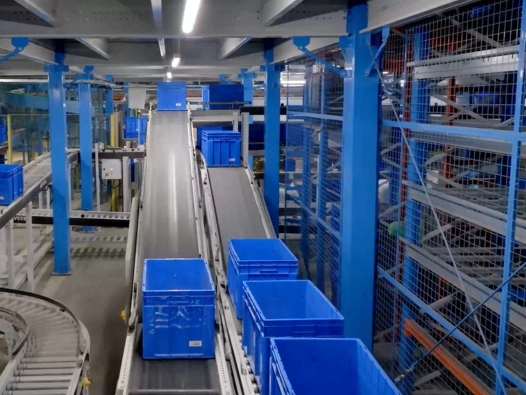
Yes, belt conveyors handle inclines and declines well, because the high-friction belt surface grips cartons, parcels and polybags at steep angles where a roller conveyor would let them slide back. Addverb's belt conveyors use high-friction materials for steep vertical transitions, which lets you move goods between floors or mezzanines and free up overhead space. The safe angle depends on product weight, shape and packaging, so it is set during system design. -
Can belt conveyors be customised for electronics or pharmaceuticals?
Yes, Addverb's belt conveyors can use specialised belt compounds, including anti-static and flame-retardant materials, so one conveyor design adapts to sensitive electronics, pharmaceutical cleanrooms or standard e-commerce fulfilment. Belt material, width and drive type, either end drive or centre drive, are selected for each application. This makes belt conveyors a flexible choice across very different product ranges. -
When is a belt conveyor not the right choice?
A belt conveyor is a poor fit for lines where items must queue for long periods, because a running belt keeps pushing items into each other, while zoned roller conveyors accumulate them without contact. Belts also have more wearing parts than roller conveyors. Addverb's PVC belt carries up to 125 kg per metre, so pallet loads belong on dedicated pallet conveyors.