




Frequently Asked Questions
-
What is a roller conveyor?
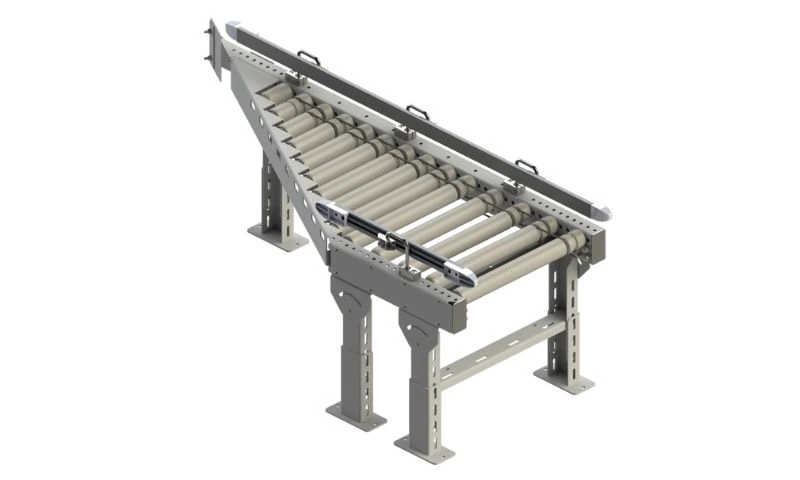
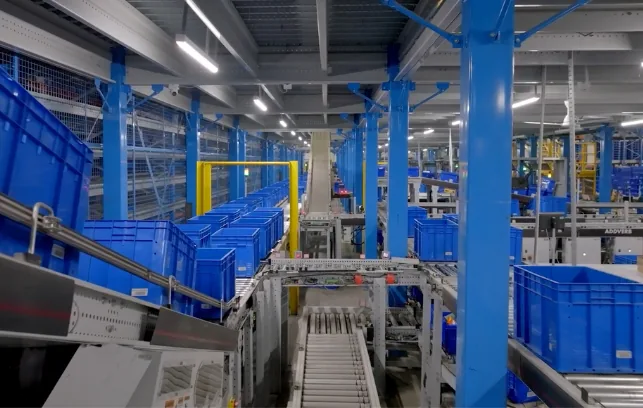
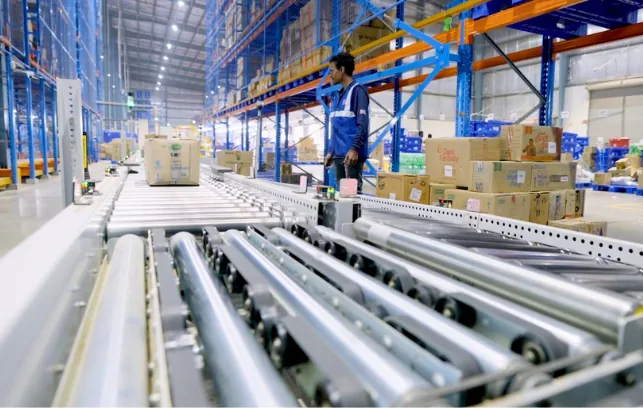
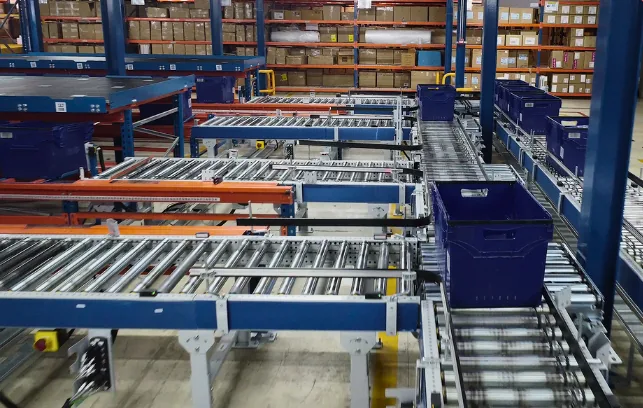
A roller conveyor is a series of rollers mounted in a frame that moves cases, totes, cartons or pallets along a set path, either by gravity or by powered rollers. Addverb's roller conveyor range includes spur, curve, belt-over-roller, gravity, accumulation and pallet roller conveyors. They suit heavier, non-fragile items with flat, solid bottoms, and they link production, packing, storage and shipping areas. -
What is the difference between a gravity roller conveyor and a powered roller conveyor?
A gravity roller conveyor uses a slight slope or a push from the operator to move items with no motor, while a powered roller conveyor drives the rollers so items move at a controlled speed on level runs. Gravity conveyors are low-cost and suit short runs such as packing benches. Powered conveyors, such as Addverb's motorised driven roller (MDR) range, suit longer automated lines that need speed control. -
What is an MDR accumulation roller conveyor?
An MDR accumulation roller conveyor uses motorised driven rollers (MDR) in separate zones, so each zone runs only when an item is present and stops items before they touch the one in front. This zero-pressure accumulation prevents product damage when lines back up. Running zones on demand also uses less energy than a constantly running line. Addverb's spur conveyor uses MDR drives at up to 60 m per minute. -
What are spur and curve roller conveyors used for?
A spur roller conveyor merges items from several conveyor lines into one controlled stream, or branches them off a main line, while a curve roller conveyor turns products around corners without manual handling. Addverb's spur conveyor carries up to 30 kg per metre on frames up to 660 mm wide. Together they let one conveyor network route cartons and totes through complex warehouse layouts. -
Should I choose a roller conveyor or a belt conveyor?
Choose a roller conveyor for cases, totes and cartons with firm, flat bottoms that need to accumulate or be diverted, and a belt conveyor for polybags, small, soft or irregular items and inclines. Roller conveyors have fewer moving parts than belt conveyors, which lowers maintenance and energy use. Addverb also offers belt-over-roller conveyors, which combine a belt surface with a roller-supported frame.