






Frequently Asked Questions
-
What is an autonomous mobile robot and how does it work in a warehouse?
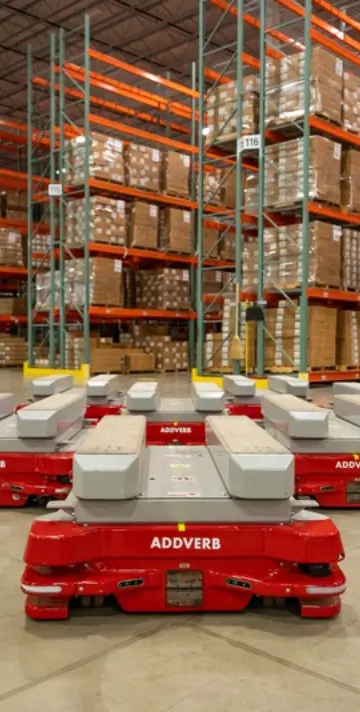
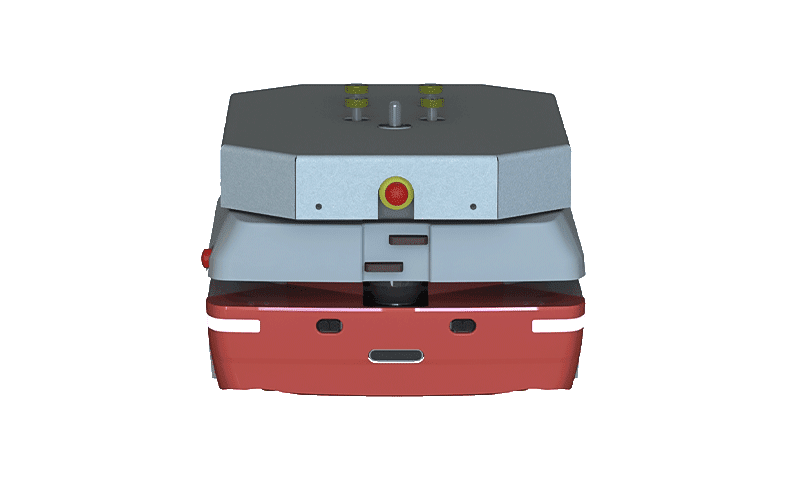
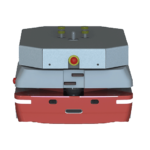
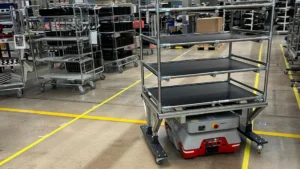
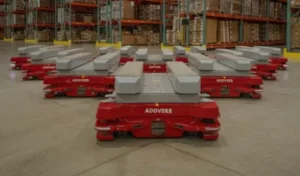
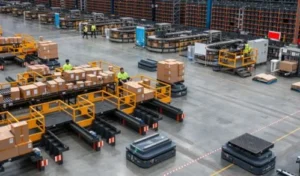
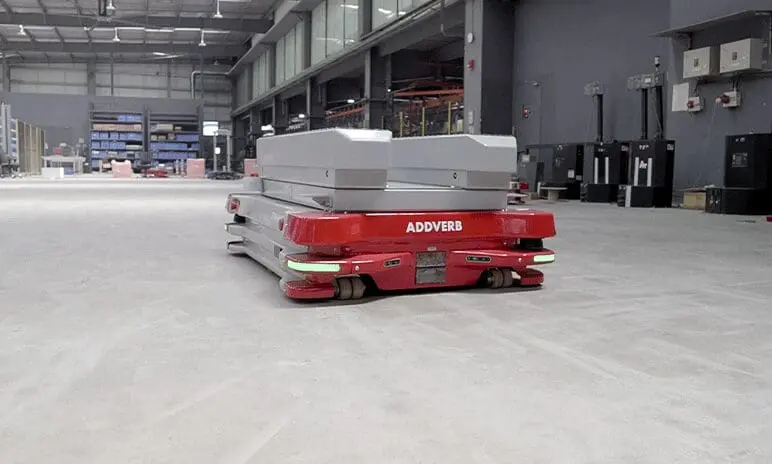
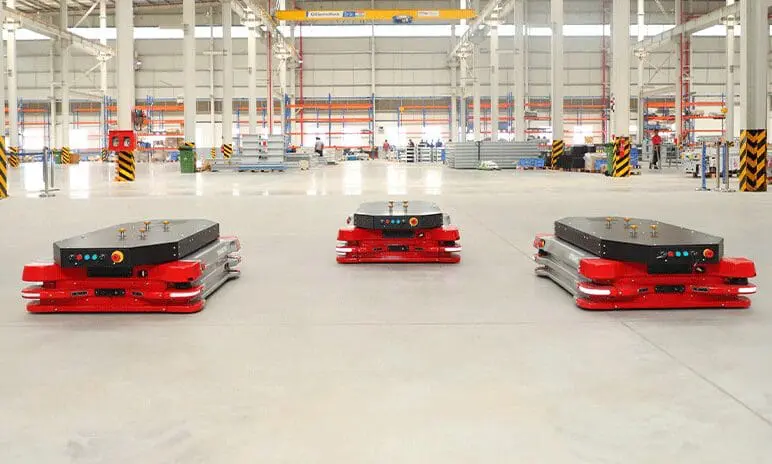
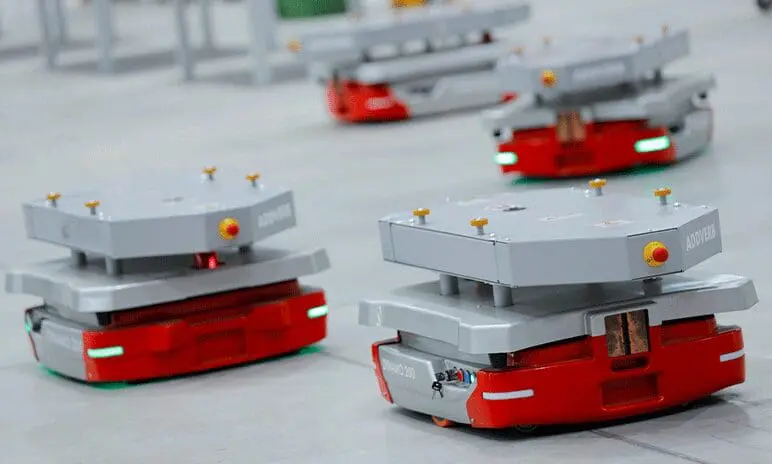
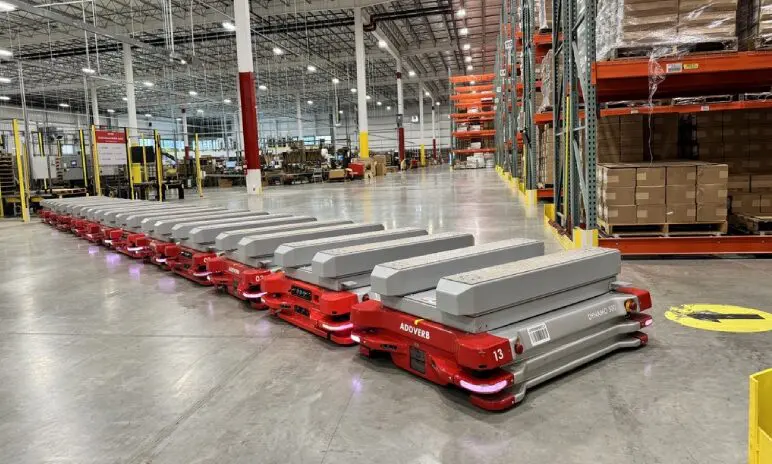
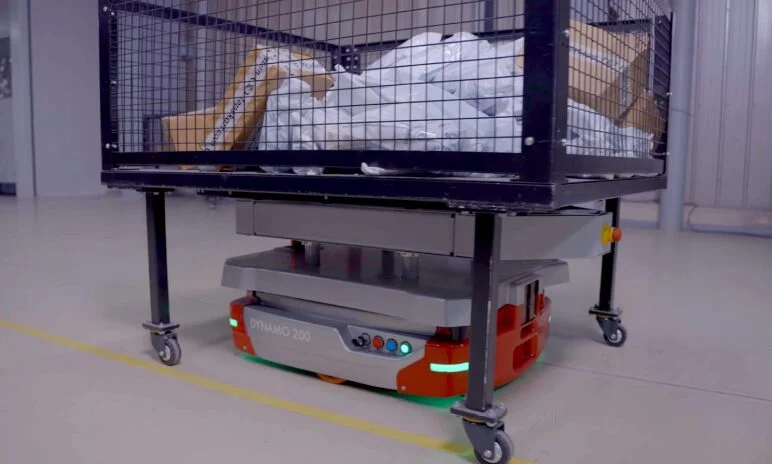
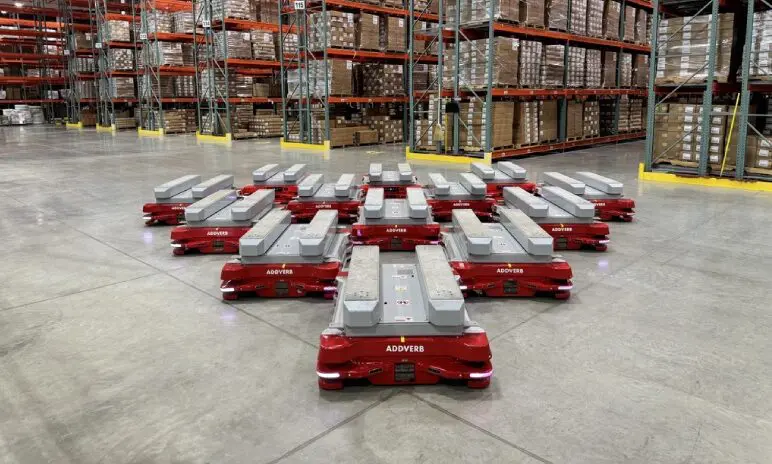
An autonomous mobile robot (AMR robot) is a self-navigating vehicle that moves totes, cases, carts and pallets around a warehouse without fixed tracks, using onboard LiDAR, sensors and maps to plan its own routes. Addverb's Dynamo AMR uses natural navigation and 2D LiDAR to detect obstacles, reroute around people and equipment, and dock at stations to within ±10 mm. A fleet management system assigns tasks and manages traffic across the robot fleet. -
What is the difference between an AMR and an AGV?
An AMR (Mobile Robots) plans its own path and reroutes around obstacles in real time, while an AGV (Guided Vehicles) follows fixed guides such as magnetic tape or floor markers and stops when something blocks its route. That makes AMRs easier to redeploy when layouts change, because you remap the floor in software instead of relaying physical guides. AGVs still suit simple, repetitive routes. Addverb builds both: Dynamo uses natural navigation, while the Dash assembly line robot follows ground markers. -
How much weight can the Dynamo AMR robot carry?
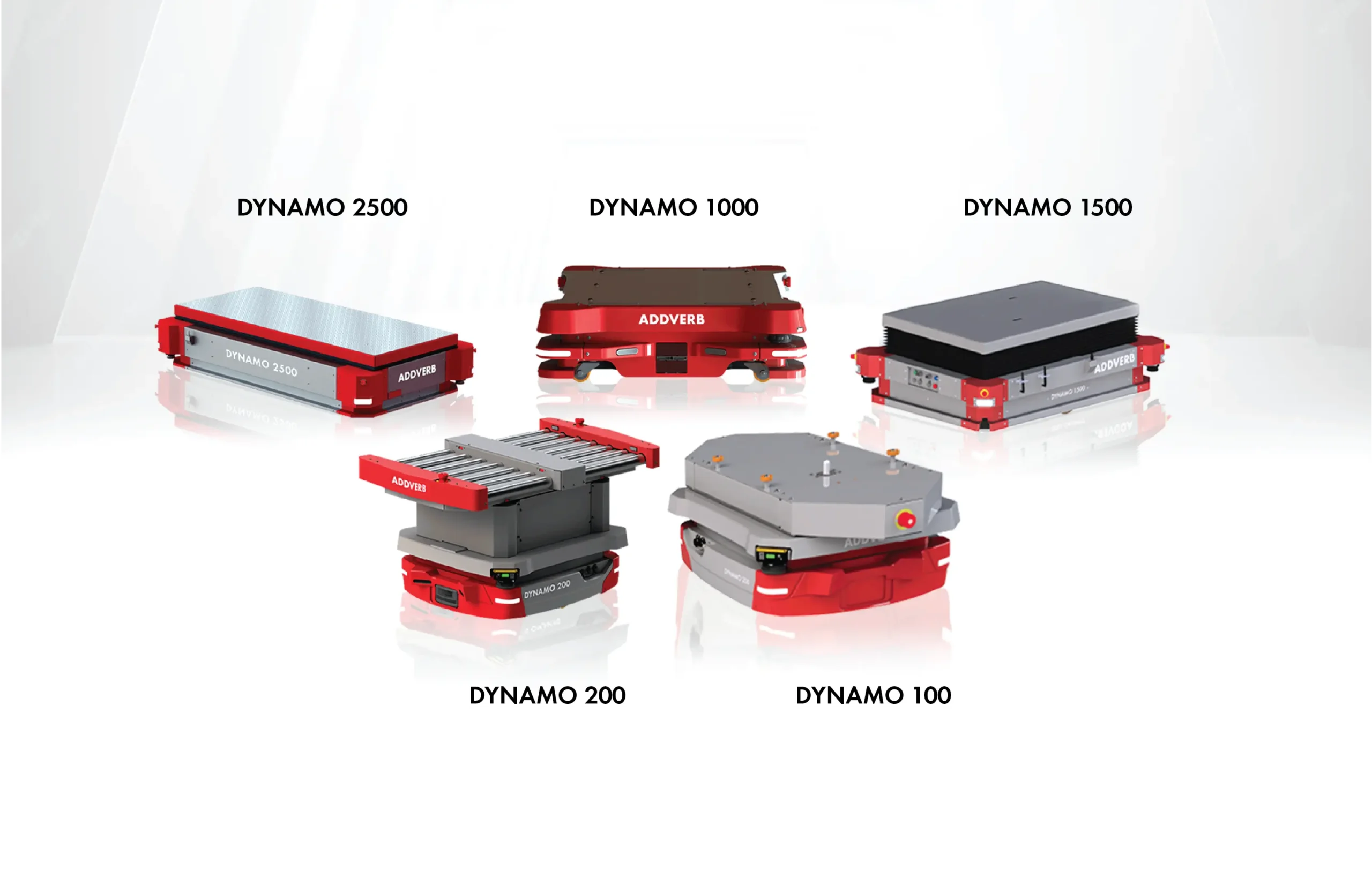
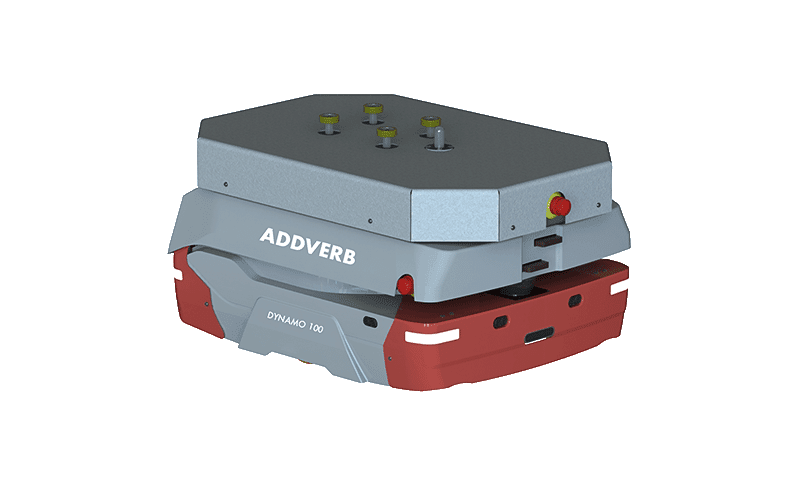
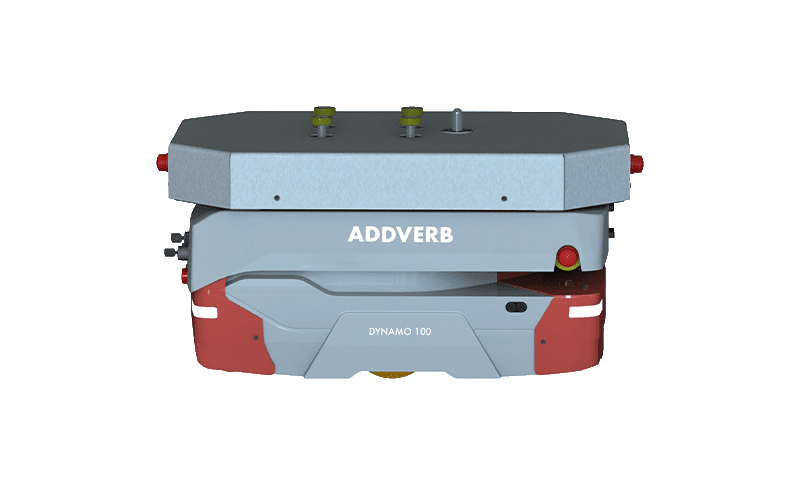
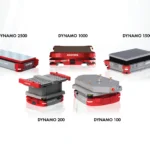
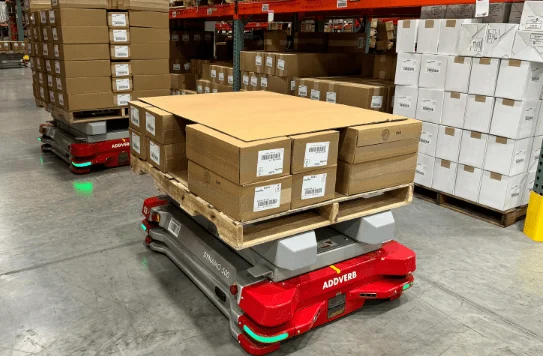
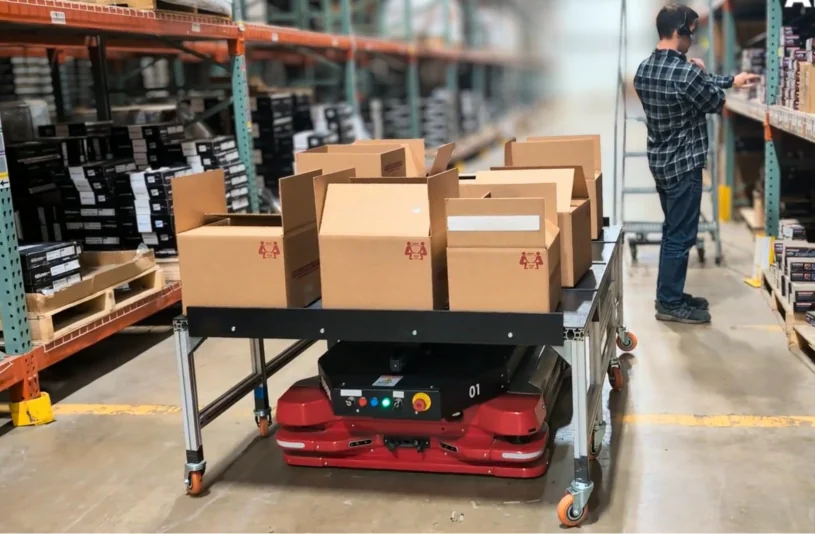
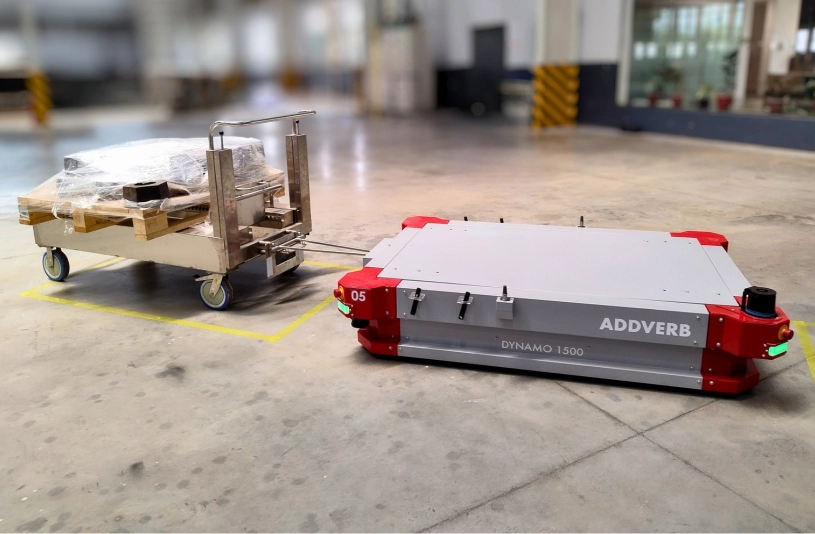
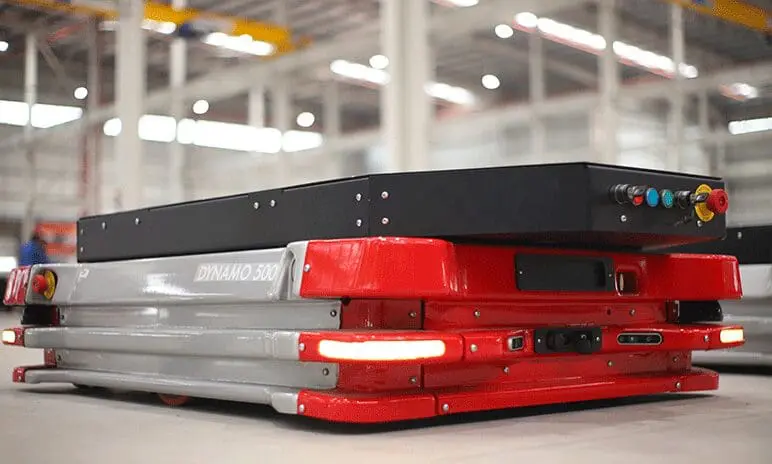
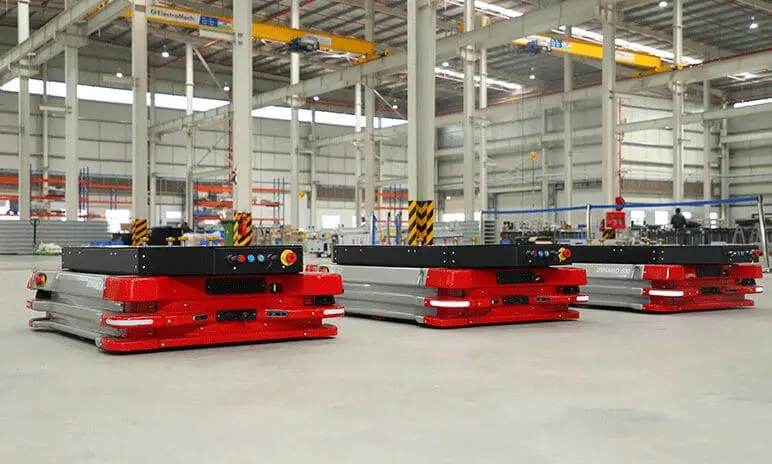
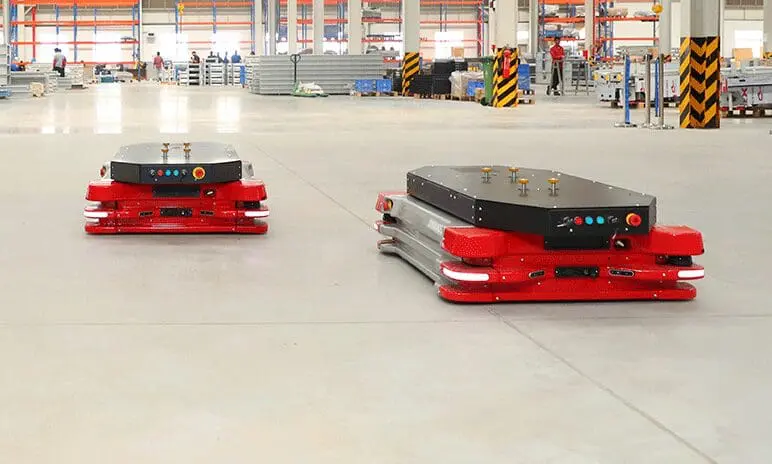
Addverb's Dynamo AMR robot comes in six variants with payloads of 100, 200, 500, 1,000, 1,500 and 2,500 kg, so one platform covers everything from light tote transport to heavy pallet and cart movement. Attachments set the job: tote conveyors, lifters and chain conveyors for material movement, pick assist for order picking, and a trolley tugger on the Dynamo 1500 for towing carts. -
How long does an AMR run on a single charge?
The Dynamo AMR runs for up to 4 hours per charge, which lets it opportunity-charge during idle moments and stay in service across shifts. Run time and charging time vary by variant, payload and duty cycle, so Addverb sizes the fleet and charger count during system design. Download the tech specifications for figures on the heavier Dynamo models. -
Are autonomous mobile robots safe to work alongside people?
Yes, autonomous mobile robots are built to share floor space with people: Dynamo uses 2D LiDAR and safety sensors to detect obstacles, slow down and stop before contact, then reroutes around the blockage. Safety zones and speed limits are configured to your facility during commissioning. Industrial mobile robots are typically assessed against ISO 3691-4 and, in the US, ANSI/ITSDF B56.5. -
When is an AMR not the right choice for a warehouse?
An AMR is a poor fit for very high-volume, fixed-path transport between two points, where a conveyor moves more units at a lower cost per move, or for floors that are uneven, wet or heavily cluttered. AMRs earn their place in changing layouts, multi-point routes and phased growth. Many sites combine both: conveyors on fixed high-volume spaces and AMRs for flexible links between zones.