



ON THIS PAGE
Cold storage warehouses are fundamental infrastructure for storing products across some segments, such as food, pharmaceuticals, biotech, etc., that require specific temperature standards. The cold chain logistics market will likely grow from an estimated USD 393.2 billion in 2025 to USD 1,632.6 billion by the year 2035, at a CAGR of 15.3%, according to Future Market Insights. Such a level of increase shows a growing reliance on refrigerated high density storage and transport globally. As regulations tighten, energy costs rise, and delivery timelines shrink, manual operations are becoming increasingly inefficient as better alternatives now exist.
An automated cold storage warehouse offers constant temperature control, much shorter material movement times, lower human exposure to extreme conditions, and higher operational reliability. As supply chains grow more complex, automation of cold storage warehouses is becoming essential.
What Challenges Does a Traditional Cold Storage Warehouse Face?
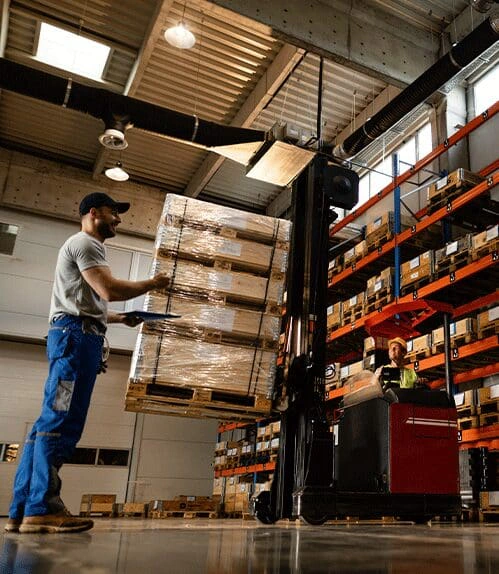
Running a refrigerated warehouse is challenging, especially on the operations side. Workers must endure cold temperatures for a limited duration and expose themselves to risks like frostbite and slippery floors. Due to the necessity for fewer working hours and protective gear, on average, a 15% to 20% loss in productivity is seen.
Energy consumption is another major issue. Refrigeration systems must be kept running continuously in cold storage facilities, leading to seven times the energy consumption of a regular warehouse. There is a high likelihood of rapid, severe inventory loss due to equipment failures, particularly for high-value pharmaceutical products.
Traditional warehouses also have trouble with space utilisation. While manual racking systems restrict vertical storage, congestion ultimately leads to inaccuracies in picking and delays. Thus, scaling up operations in a manual chilled storage warehouse environment is difficult.
How Cold Storage Automation Actually Works?
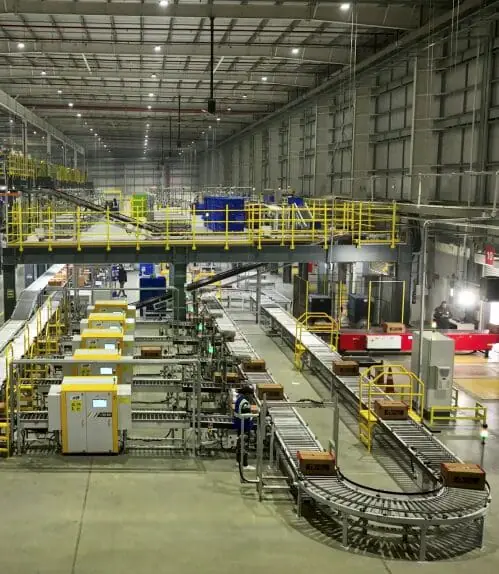
Cold storage automation is the use and combination of various advanced technologies like robotics, conveyors, and warehousing softwares, to handle temperature-sensitive goods with precision. The goods are received, stored, picked, and shipped in mostly an autonomous manner.
In an automated cold storage warehouse, sensors and software maintain precise temperature, occupy little space, and lead to reduced energy costs.
Key Business Benefits of Cold Storage Automation
1. Enhanced Workers’ Safety
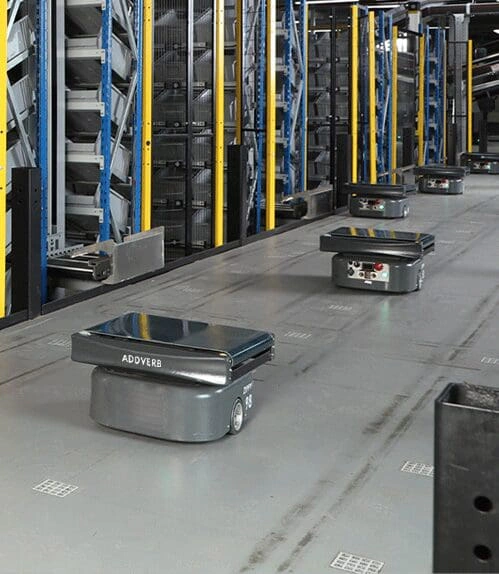
Addverb’s Autonomous Mobile Robots (AMRs) and autonomous forklifts perform repetitive tasks such as pallet movement and picking in extremely cold environments. This helps reduce health risks and accidents and is supported by digital twin technology that enables virtual simulation and optimization of robotic systems for improved performance and safety.
2. Improved Operational Efficiency
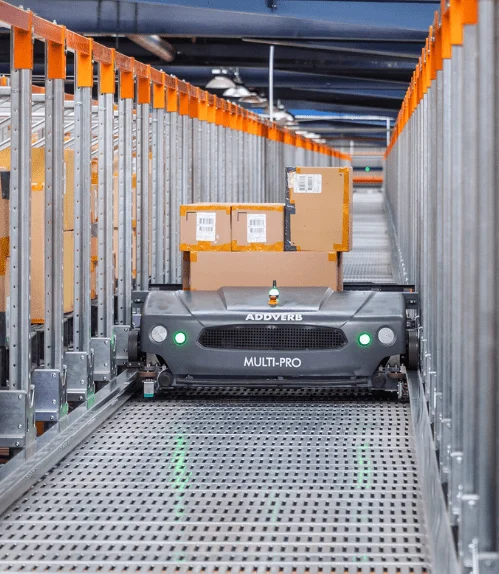
Cold storage warehouses benefit from Addverb’s AMRs, carton shuttles (Quadron), pallet shuttles (Mother‑Child Shuttle, 2 Way Pallet Shuttle and 4 Way Pallet Shuttle), and Pick-to-Light (Rapido) systems that operate 24×7. Automated picking accuracy improves, travel times are reduced, inventory loss is minimised, and order turnaround is much quicker.
3. Space Optimisation
Addverb’s 4-way pallet shuttle systems and other ASRS robots are designed for high-density vertical storage in cold storage warehouses. They help maximise cubic space in a refrigerated storage warehouse by enabling high-density vertical storage.
4. Reduced Energy Consumption
By integrating Addverb’s automated warehouse storage and retrieval systems and automated material handling, cold storage facilities can easily optimise material flows and minimise door openings. This stabilises internal temperatures and cuts down refrigeration load.
5. Regulatory Compliance
Addverb’s warehouse automation solutions help maintain consistent storage conditions through controlled material movement and reduced manual handling. These capabilities support temperature consistency, traceability, and audit readiness, which are essential for meeting food safety and cold chain compliance requirements.
Key ROI and Cost Efficiency Drivers of Cold Storage Automation
Cold storage automation brings in massive financial benefits. As per Zipdo, warehouse automation projects usually pay back the investment in two to three years. This is driven primarily by savings in labour costs, increased throughput, and fewer errors. Labor costs can be reduced by nearly 20% while productivity can rise by 30%–50% through technologies such as AMRs, ASRS solutions, and vision-guided systems.
Energy savings, spoilage prevention, and fewer operational errors will lead to higher profitability. There is also predictive maintenance, which minimises downtime, protecting high-value inventory in refrigerated warehouses. Automation adds stability to the cost of operations and improves service reliability.
Comparison of Manual vs Automated Cold Storage
Here’s a comparison of manual vs automated cold storage:
| Feature | Manual Cold Storage | Automated Cold Storage |
| Energy Consumption | High, frequent temperature loss | Reduced, controlled material flow, and minimal door openings |
| Labour Cost | High, reliant on human workers | Low, minimal human intervention |
| Worker Safety | High risk due to extreme temperatures | Reduced risk, robots handle tasks |
| Operational Efficiency | Slower material movement | Fast, consistent throughput |
| Space Utilization | Limited by manual racking | High-density vertical storage |
Addverb’s Automated Warehouse Robots for Cold Storage
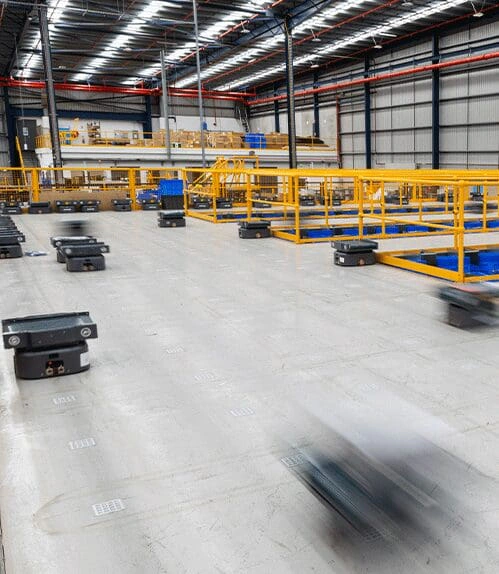
Addverb provides advanced Automated Warehouse Robots designed specifically for cold storage environments. These robots support the smooth flow of materials, storage optimisation, and automation of the picking process in temperature-controlled facilities.
Addverb’s robotic systems, such as 4-way Pallet Shuttle Systems, enable high-density storage and retrieval of pallets and can operate in cold storage warehouses, including sub-zero temperatures, ensuring uninterrupted operations. Their Autonomous Mobile Robots (AMRs) transport goods seamlessly between storage, picking, and staging areas, while Automated Storage & Retrieval (ASRS) cranes efficiently handle pallet movement and retrieval with precision for upto 40m of height.
Integrated software platforms connect with WMS, WES, and ERP systems, permitting live inventory tracking, temperature monitoring, and intelligent task orchestrating. Due to this, accuracy, compliance, and throughput are maintained.
Case Studies: Addverb in Cold Storage Warehouse Automation
A few cases where Addverb has deployed it’s warehouse automation solution in use cases similar to cold storage warehouse are as below:
In the Reliance Omni-Channel Automated Distribution Centre project, Addverb helped Reliance Retail transform its 2,50,000 sq. ft. facility into a highly automated fulfilment hub. Carton shuttles with high-density, smart conveyors and a Concinity warehouse execution system assisted with storage, picking, and dispatch. Warehousing was optimised for space utilisation, order fulfillment was faster, and enabled a throughput of nearly 0.3 million units per day.
In the Maersk Flexible Fulfilment Centre project, Addverb supported Maersk in building an omnichannel warehouse capable of handling high SKU diversity and fluctuating demand. A combination of autonomous mobile robots (AMRs), shuttle systems, robotic sortation, and integrated software was a part of the solution for real-time inventory movement. Through automation, more than 100,000 units could be processed daily with improved accuracy, quicker retrieval, and more efficient order routing.
In the Landmark Group E-Commerce Fulfilment Centre automation project, Addverb addressed the challenge of managing large SKU volumes and tight delivery timelines. The Quazzy system combined carton shuttle and robotic sorting to ensure faster batch picking and a high-speed sort. Automation removed much of the manual work, enabling greater accuracy and speed to reach over 1,000 sorts per hour, meeting growing demands.
End Note
Cold storage warehouses are very important for keeping goods at a controlled temperature, but manual systems in a cold room warehouse are unable to meet the demands of today. With the continuous hike in energy costs, labor issues, space limitations, and compliance requirements, conventional cold storage becomes riskier and inefficient.
Automation is the need of the hour. With their combination of robotics, Automated Storage and Retrieval Systems (ASRS), and smart software, cold warehouses get to improve safety, enhance space management capabilities, offer energy efficiency, and comply with regulations. Addverb is a company offering feasible solutions that would aid the warehouse in working seamlessly despite severe challenging conditions, in addition to maintaining accuracy and a ready-to-scale mechanism. With the growing demand for the cold chain, automation has become a necessity to keep cold storage operations running smoothly at all times.
FAQs
1. How does cold storage warehouse automation operate?
AMRs, ASRS Shuttles and intelligent softwares manage storage, picking, and material movement inside temperature-controlled zones. This reduces exposure of human labor to severe conditions while keeping inventory flow precise.
2. What are the difficulties faced by traditional cold storage warehouses?
They are struggling with multiple issues, which include low productivity in workers, excessive energy use, safety hazards, and space constraints in operations. Plus, manual handling activities in freezing environments often result in lethargy, inconsistency, and workforce issues in the long run.
3. Does automating cold storage improve cost efficiency?
Yes, automation reduces long-term labor dependency, minimises energy wastage, and reduces product spoilage. Those savings really help the cost efficiency and profit margins for the whole warehouse.
4. What is the ROI of an automated cold storage warehouse?
Most facilities achieve ROI within 2-3 years through reduced labor costs, energy optimisation, and higher throughput. Improved accuracy and less product loss strengthens financial returns.
5. What are the benefits of automating cold storage warehouse operations?
Automation ensures that workers are safe, makes for greater efficiency, and regulatory compliance. Other enhancements are the ability to raise both inventory accuracy and service levels for temperature-sensitive products.
6. How does cold storage automation minimise energy consumption?
It does it by restricting door opening, enhancing storage density, and stabilising temperature zones around the facility. The automated systems can maintain consistent cooling at minimum thermal loss.