


Warehouse Challenges for Solar and Battery

Industry challenges
»
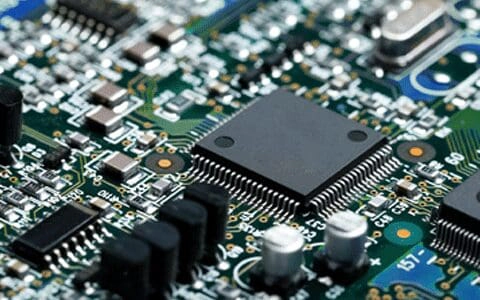
Controlled Environment - Manufacturing of Photovoltaic cell, core of solar panels and Li-ion batteries are highly sensitive to moisture and particle contamination and needs a cleanroom environment, else may result in reduced efficiency, corrosion and quality.
»
Process & Operational flows - Segregated ageing, testing, and Just in Time supply intensifies complexity to battery manufacturing, often causing material movement delays, idle production lines, further resulting into increased operating costs.
»
Complex Material racking - Custom-shaped solar panels and batteries of varying weights demand specialised storage racks, leading to increased handling complexity and inefficiencies in a solar warehouse operations.
»
ESD Risk - Production of new energy cells and battery are highly vulnerable to electrostatic discharge. It can result to short circuits, toxic exposure and thermal runaway resulting in fire or explosion.
Industry challenges
»
Storage Density - Gigafactory-scale production asks for compact, high-density storage and adaptable layouts. Shortage of buffer zones between coating, pressing, and testing stages results into space and inventory bottlenecks.
»
Storage and traceability - Proper storage and tracking of millions of micro-cells and segregating batteries like lithium iron phosphate (LFP) and nickel manganese cobalt (NMC) to avoid risks of reactions is complicated, leading to recalls, and non-compliance.
»
Return & Recycling Risks - End-of-life batteries and solar panels create fire, leakage and compliance dangers. Mishandling during reverse logistics slows down recycling, adds storage burden and affects sustainability goals.

Automation Solutions for Solar and Battery Industry

Buffer Storage

Material Movement

ASRS

Conveyors and pallets

AI-enabled Software

Digital Twin

Addverb shuttles enable high density buffer storage for in-process goods for the processes like cutting, calendering, ageing, etc. ensuring a continuous supply to subsequent production lines. These buffer storage helps to maintain strict compliance in a cleanroom environments, where space is at a premium.

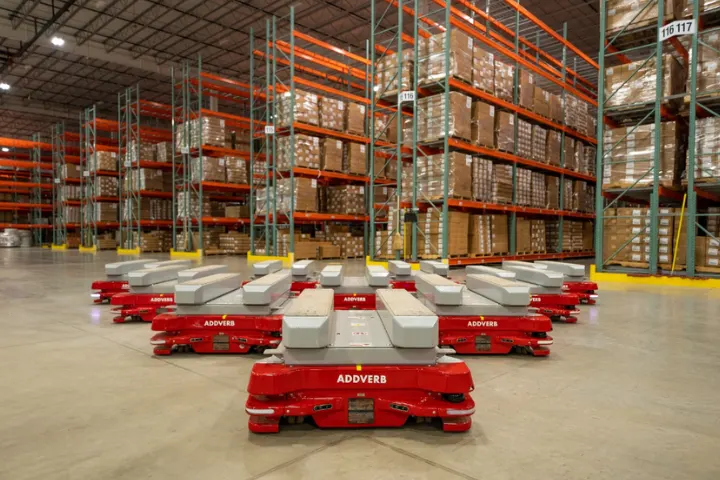
Addverb’s heavy duty AMR robots, with special attachments and varied load capability up to 2500 Kgs assures accurate handling of solar panels and battery packs, minimising damage risks and enabling accurate, large-scale handling in safe human robot environment.

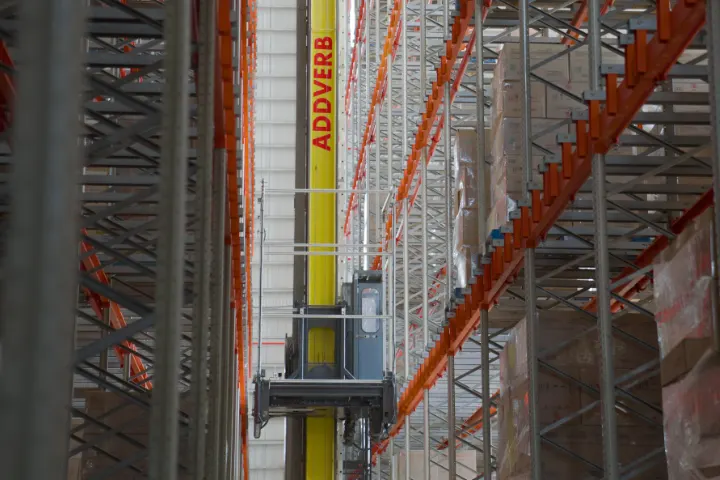
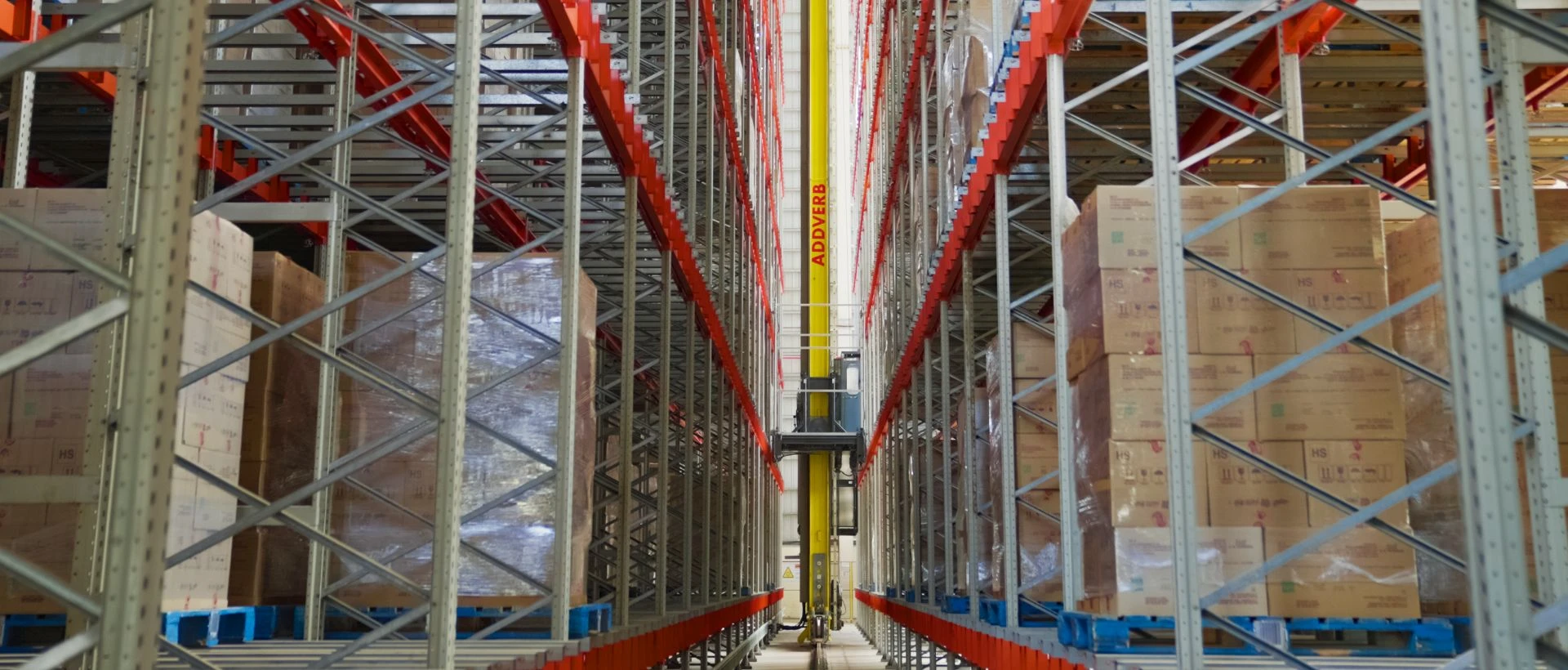
High-density ASRS like Stacker Cranes maximize gigafactory floor space, providing vertical storage and modular racks for varying chemistries and product sizes of up to 2500 kgs. Transfer Cars facilitate cranes to switch aisles smoothly and ensures flexibility in dynamic production environments.

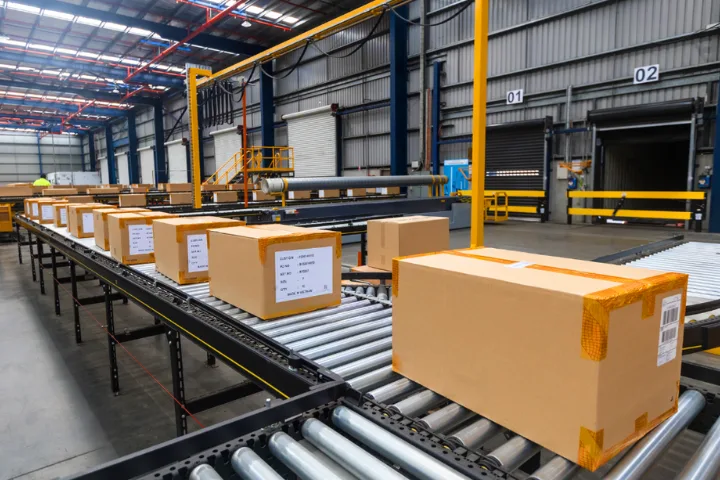
Anti-static conveyors with co-ordinated turntables transport pallet and crates with electrolytes and PV cells in production zones, maintaining safe zone-to-zone automated transfer line for flexible routing, preventing contamination and ensuring ESD safety compliances.

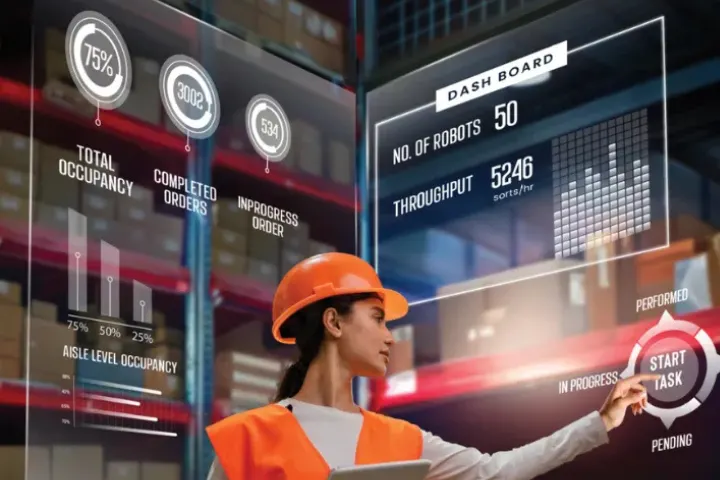
Addverb’s AI enabled software, WMS assures batch-level tracking across millions of micro-cells and chemistries, preventing mix-ups, assuring compliance, traceability and giving manufacturers real-time visibility of inventory.

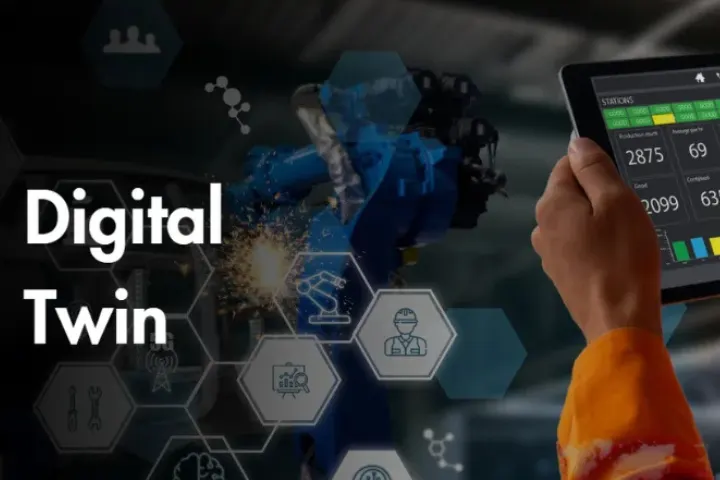
Our digital twin platform lets you onboard new customers with confidence by combining real-time data from existing operations with projected data from incoming customers. This realand simulated coexistence helps you test, analyze, and optimize in the virtual world before execution in the real one.

Solutions Finder

Your biggest challenge?
Damages during intra-warehouse material movement
Appropriate handling necessary to reduce the risk of damage during storage
Temperature-controlled environment to protect sensitive material
Unforeseen events disrupting supply chain and affecting order fulfilment
Compliance with storage and handling regulations is a must to avoid legal issues

Download our Brochure

Download

Are you looking for a solution?

Contact Us

Why Choose Addverb?

Transforming Industries with Automation

Battery and Solar warehouse automation benefits renewable industry by improving operational efficiency, safety and accuracy while saving cost and enhanced traceability.

...
Featured blog
Solar and Battery Warehousing: Challenges, Solution and Automation

Is your manual solar and battery warehousing holding you back? Research demonstrates that 10-20% of solar panels get damaged due to incorrect handling, stacking, or transport in manual warehouses. (Source: Frost &a...

Products for Solar and Battery

Other Industries

Frequently Asked Questions

  • What factors determine the cost of automating a solar or battery manufacturing warehouse?

    The cost of automating a solar warehouse depends on floor size, production capacity, product type (panels, cells, or battery packs), and handling requirements for delicate materials. Since each plant has a unique material flow layout and safety compliances, our solutions are fully customized. For an exact cost estimate, please get in touch with our experts.

  • How long does it take to implement warehouse automation in a solar or battery facility?

    Timelines vary by production layout, pallet position requirements, and material flow complexity. Modular automation like pallet shuttles, AMRs for cell movement, or automated storage for finished goods can be deployed in phases within months, ensuring smooth integration with MES and safety-compliance systems.

  • How do Addverb systems support traceability and quality control in production?

    Our WMS and WCS integrate with your MES and ERP software to enable end-to-end tracking of every cell, module, and battery pack. Barcode/RFID integration ensures 100% traceability, supports serial-level identification, and enables faster recalls or compliance audits when required.

  • How can digital twin technology help optimize solar and battery operations?

    Addverb’s digital twin for solar industry helps to simulate storage density, throughput, and robot utilization for varying production volumes. This allows plants to test new layouts, evaluate line balancing, and forecast capacity needs, ensuring efficient material flow from cell assembly to final packaging.

  • Can Addverb automation scale with future capacity expansion or gigafactory setup?

    Yes. Our modular ASRS systems, AMR fleets, and software suite can scale seamlessly as you expand your battery or solar cell production. This flexibility ensures consistent throughput, reduced manual dependency, and synchronized material supply for high-volume gigafactory operations.