



ON THIS PAGE
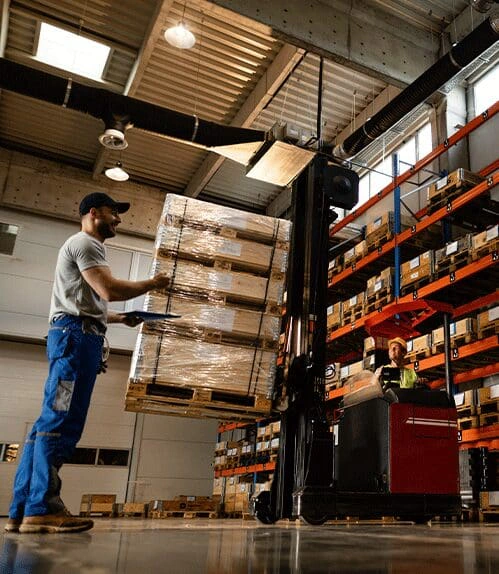
Imagine it is the week before Black Friday, and thousands of additional orders begin flowing into a warehouse every hour, storage locations fill rapidly, and picking teams struggle to keep pace. Even well-managed warehouses can experience slower fulfillment when storage space is limited and employees have to travel longer distances to retrieve inventory. Preparing for these seasonal demand spikes has become one of the biggest operational priorities for USA-based distribution centres.
Rather than investing in facility expansion, it is ideal for warehouses to use vertical storage systems to fully utilise the cubic space available. The integration of automated warehouse storage solutions with smart inventory management can help firms handle seasonal fluctuations without losing speed and efficiency. According to Dataintelo, the global vertical storage system market is expected to grow from USD 8.2 billion in 2025 to USD 14.7 billion by 2034. This reflects rising investment in space-efficient warehouse technologies.
Why Do US Warehouses Struggle to Meet Peak Season Fulfilment Demand?
Peak seasons bring a unique mix of operational challenges. Warehouses in USA need to be able to handle sudden increases in inventory and also fluctuating volumes of outbound orders. Key challenges include:
- Traditional racking systems typically leave valuable vertical space unused, making facilities look full when there is still additional storage capacity available.
- Labour availability becomes a concern as seasonal hiring brings additional training requirements.
- Manual movement of materials increases transit time, and the probability of fulfilment errors also increases.
- Congested picking aisles result in lower productivity, causing delays that affect customer satisfaction.
- Growing order complexity exposes the limitations of traditional storage methods in meeting the speed and flexibility required during peak demand.
This makes vertical storage warehouse operations necessary.
Can Vertical Storage Solutions Create More Capacity and Support Larger SKU Volumes Without Warehouse Expansion?
Automated Vertical storage solutions allow USA-based warehouses to increase storage density by utilising the full building height rather than expanding the warehouse footprint. High-density storage systems are effective at organising inventory and ensuring products are readily available for retrieval.
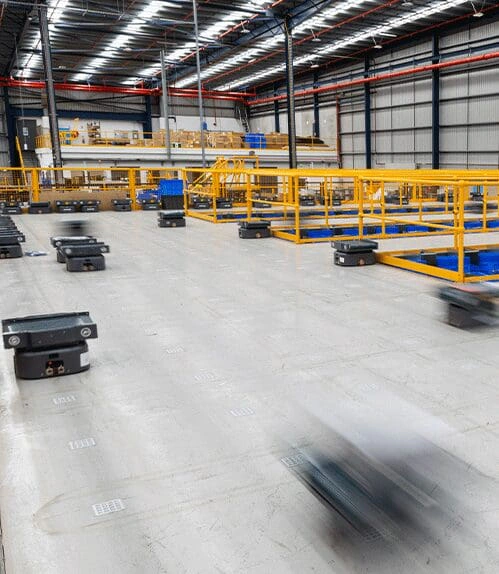
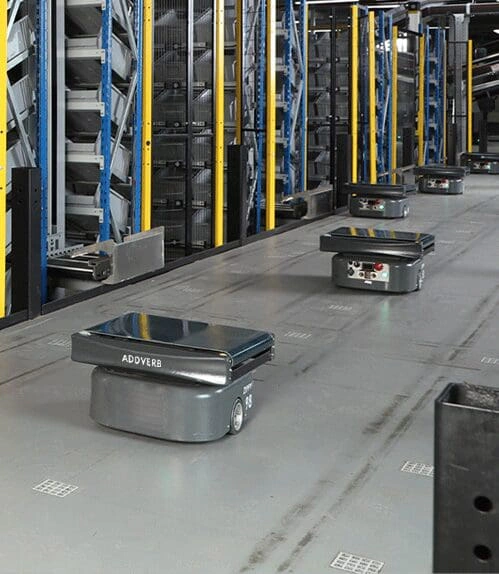
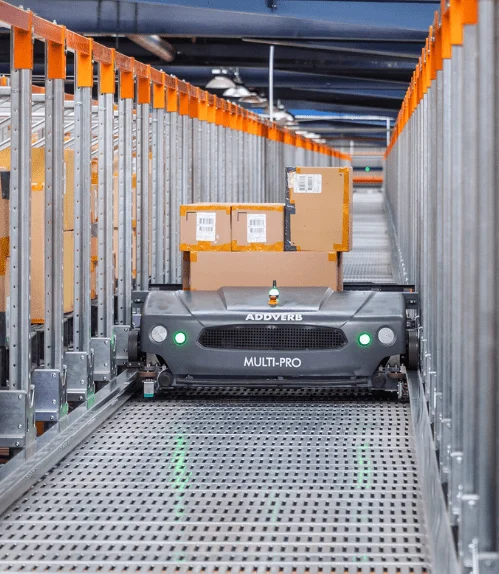
For facilities handling large pallet inventories, Addverb’s Mother-Child Shuttle, Multi-Pro, offers an efficient storage approach by combining a mother shuttle with child shuttles that move pallets deep inside storage lanes. It is capable of handling a 2,204 lb payload capacity and guaranteeing a throughput rate of 73 pallets per hour at an accuracy of 0.08 inches. This allows for dense storage and efficient pallet retrieval, making it suitable for warehouses handling higher SKU numbers during peak times.
The expansion of warehouse facilities becomes unnecessary due to increased capacity in the existing facility because of automated vertical storage systems.
How Do Vertical Storage Systems Improve Picking Throughput and Reduce Travel Time During Peak Demand?
An efficient vertical automated storage system moves inventory closer to picking locations, automates storage and retrieval activities, and reduces unnecessary worker movement. Operators spend more time on productive picking tasks instead of travelling long distances between storage aisles.
Research published on ScienceDirect found that worker travel can account for approximately 50% of the total order processing time in traditional warehouses in USA. This travel is reduced with vertical storage automation, which directly improves productivity. Productivity is crucial during peak seasons when every minute counts.
In case of fulfilment through the use of cartons, the Carton Shuttle, Quadron from Addverb performs tasks of storage and retrieval of cartons or totes very rapidly and accurately. It guarantees a throughput of 115 totes per hour, where 110.2 lb payloads move at the speed of 13.12 ft/s. This solution cuts down manual movement, saves time in picking and allows for fast order fulfilment when there is an increase in demand.
How Can Vertical Lifts Improve Storage Accessibility During Peak Season Fulfilment?
With Addverb’s Pallet Lift and Carton Lift, there is efficient vertical transportation of loads from one level to another in a USA-based warehouse. The Pallet Lift moves a 3,306 lbs load at a speed of 2.95 ft/s while the Carton Lift moves 132 lb at 13.12 ft/s. The lifts make it possible to move the pallets and cartons in a timely manner between floors, improving workflow continuity and supporting efficient automated material handling throughout the warehouse.
The use of an automated vertical storage system with vertical lifts reduces congestion in the loading areas and shortens the waiting time between storage and picking operations. Faster vertical movement means higher throughput, better safety and more reliable fulfilment performance during peak seasons when warehouses have to process thousands of additional orders per day, while making full use of available warehouse height.
What Operational Benefits Can Warehouses Achieve From Vertical Storage During Peak Seasons?
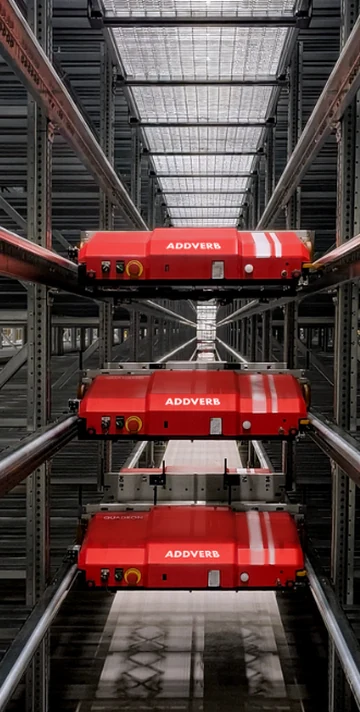
Vertical warehouse storage strategy can allow warehouses in USA to achieve several operational improvements during peak fulfilment periods. Solutions such as Addverb’s 2 Way Pallet Shuttle, Cruiser, and 4 Way Pallet Shuttle, Cruiser 360, facilitate high-density pallet storage, along with efficient inventory movement. Cruiser carries 3,306 lb at 3.61 ft/s, ensuring a throughput of 60 pallets/hr. Cruiser 360 also handles 3,306 lb and carries it at a speed of 4.92 ft/s with a positioning accuracy of +/- 0.08 inches. Key operational benefits are:
- Higher storage density without increasing the warehouse footprint.
- Faster pallet storage and retrieval during peak order volumes.
- Better utilisation of vertical space across the facility.
- Reduced congestion in storage and replenishment zones.
- Improved inventory accessibility for faster fulfilment.
- Greater flexibility to accommodate seasonal SKU growth.
- Enhanced throughput with consistent material flow.
- Easier scalability for future warehouse automation initiatives.
Impact of Vertical Storage on Peak Season Warehouse Performance
| Performance Metric | Traditional Storage | Vertical Storage |
| Storage Capacity Utilisation | Limited by available floor space | Maximises vertical cube space for higher storage density |
| Order Picking Speed | Longer picking routes and manual retrieval | Faster retrieval through automated storage and optimised picking paths |
| Worker Travel Time | High due to frequent movement across aisles | Reduced through vertical storage and automated inventory access |
| Peak Season Throughput | Slower order processing during demand spikes | Higher throughput with faster storage, retrieval, and replenishment |
Case Study: How Addverb’s Automation Solutions Helped A Warehouse Improve Throughput
S. Abraham and Sons faced challenges in labour productivity, space utilisation, and picking accuracy. The dispersed storage layout raised rental costs and limited throughput. Addverb deployed Carton Shuttle AS/RS and combined it with Multi-Level Shuttles (MLS). The solution helped achieve high throughput for storage and retrieval across 14,400 tote positions, supporting 1,300 SKUs. Space utilisation went up by 400%, and fulfilment time was reduced by over 200%.
Conclusion
It is important that storage systems maximise available space, increase the efficiency and speed of order picking, and improve order-processing efficiency to ensure effective peak-season handling. Vertical storage systems help companies scale up their operations without expanding their facilities. Addverb helps warehouses in the USA improve fulfilment performance and be ready for future growth with integrated storage technologies.
FAQs
1. What does a vertical storage system in a warehouse mean?
A vertical storage system utilises the height of the building to store inventory, enabling warehouses to maximise the available space and enhance the accessibility of storage.
2. How does a vertical storage system differ from traditional pallet racking?
Addverb’s automated vertical storage solutions, unlike traditional pallet racking, automate storage and retrieval and better utilise warehouse height to improve throughput and inventory accessibility.
3. How long does it take to install an automated vertical storage system?
Installation times depend on warehouse size, layout and system complexity. Addverb’s modular automation solutions can be integrated as part of a phased warehouse modernisation strategy.
4. How much space can businesses save with vertical storage solutions?
Space savings differ by facility layout and inventory profile. Addverb’s vertical storage solutions are designed to maximise the use of vertical cube and increase storage density significantly.
5. Can warehouse operators quickly learn to use automated vertical storage systems?
Yes. Addverb’s vertical storage solutions are easy to use with simple interfaces and integrate with warehouse software, so operators can adapt quickly with the right training.
6. Can vertical storage systems connect with WMS and order management software?
Yes. Modern vertical storage systems are integrated with warehouse management and order management software for real-time visibility of inventory and coordinated fulfilment.