



ON THIS PAGE
Water stress is no longer something industries can procrastinate on as “someday.” It is well-known that across the world, freshwater availability is already under extreme pressure, especially with climate change, exponential urban growth, and industrial expansion pushing local systems to their limits. In many regions, manufacturing facilities are operating in areas where water availability has become seasonal, uncertain, or contested.
Addverb realises these challenges and actively takes initiatives to reshape how water is viewed and utilised for operations. Rather than treating water management as a fixed utility input, it is considered a finite resource that needs careful usage, continuous attention, and long-term planning. This approach directly resonates with Addverb’s belief in Technological Ecology, the idea that innovation should progress without disbalancing the natural resources backing it up.
Integrating Water Responsibility into Everyday Operations
At Addverb, water conservation is not handled as a separate sustainability project. It is directly integrated into the operations of the facility. Both the manufacturing units of Addverb, Bot-Valley and Bot-Verse, follow a zero liquid discharge approach, ensuring that water entering the system is treated and completely reused rather than being released back into the environment.
To keep this approach effective, detailed water balance studies are carried out at regular intervals. These studies help teams spot possible water losses, inefficiencies, or unusual consumption patterns early on.
The result: water use gets guided by insight, not assumption.
Reducing Freshwater Use Through Water Reuse
A significant portion of Addverb’s water demand is met through internal reuse systems:
- Water treated through RO processes is reused in machine shop activities and powder coating operations.
- RO reject water is diverted for irrigation rather than being discharged into the environment.
- Water treated in ETPs (Effluent Treatment Plants) and STPs (Sewage Treatment Plants) is used for landscaping and maintaining green areas across the facility.
By continuously reusing water at multiple stages, direct dependence on freshwater sources is consistently reduced, while regulatory and operational requirements continue to be met.
Keeping Water Treatment Efficient with In-House Testing
To continuously monitor water quality, Addverb operates its own water testing laboratory. This allows teams to monitor ETP and STP performance on an ongoing basis instead of relying only on periodic external checks.
Regular testing helps:
- Identify changes in water quality before they escalate
- Fine-tune chemical dosing and aeration
- Avoid unnecessary treatment steps, lowering overall energy use
This hands-on approach improves treatment efficiency while keeping environmental impact in check.
Using Rainfall as a Resource
Rainwater harvesting is an important part of Addverb’s approach to water security. Across Addverb’s manufacturing locations:
- Rainwater harvesting capacity totals 460 kL
- 4,057 kL of rainwater was collected during the reporting period FY 2024-25
- Systems are spread across both Bot-Valley and Bot-Verse facilities
These systems support groundwater recharge, help manage water runoff during heavy rainfall, and reduce pressure and dependency on external water sources.
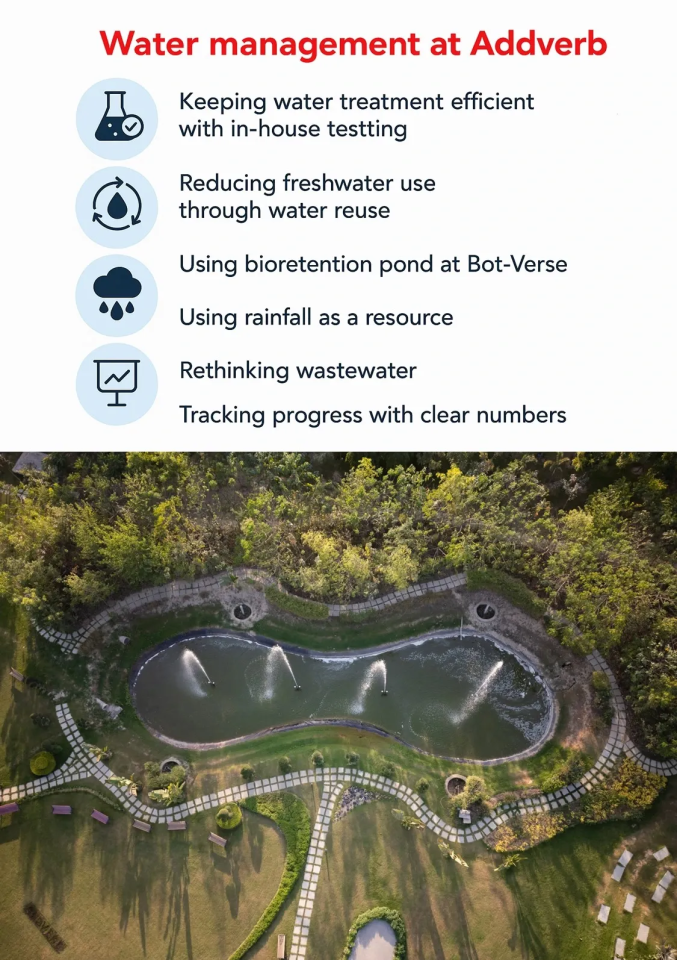
The Bioretention Pond at Bot-Verse
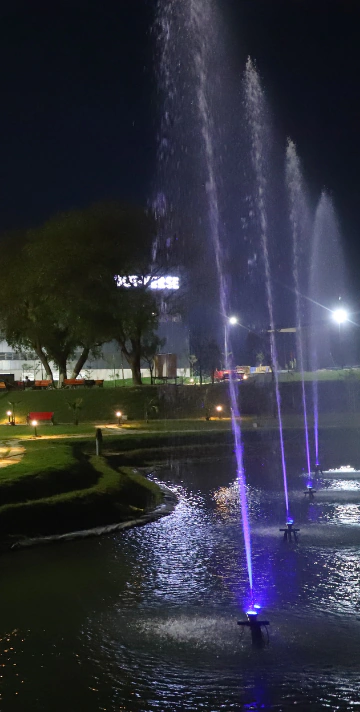
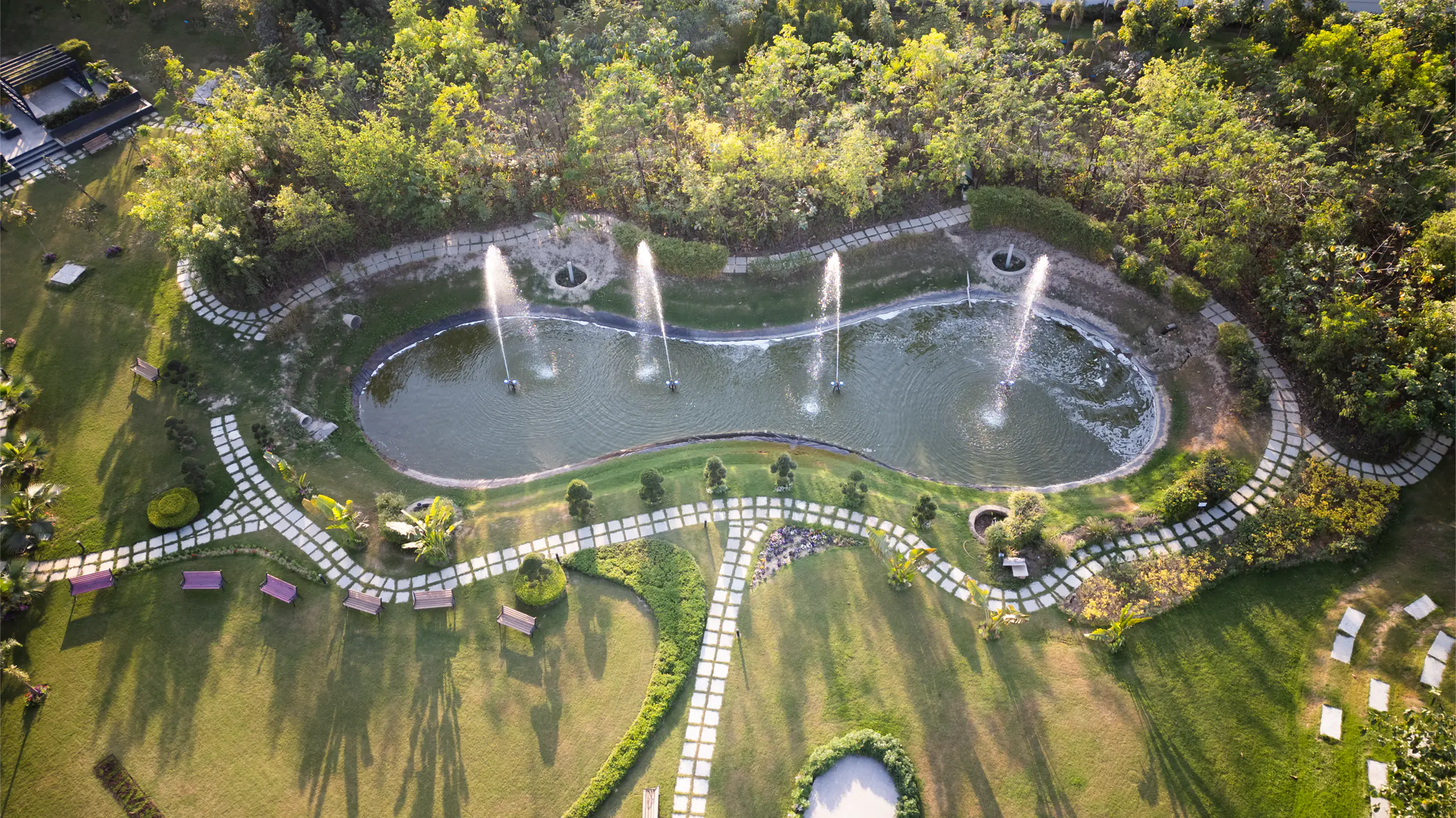
At Addverb’s Bot-Verse facility, water management has been designed to serve more than one purpose. An 800 kL bioretention pond has been developed to handle stormwater while also supporting the surrounding environment.
The pond helps:
- Recharge groundwater naturally, fostering natural ecosystems
- Manage excess rainwater and lower flood risk
- Create space for small-scale biodiversity to develop
It stands as a practical example of how engineered solutions can also work in favour of nature.
Our rainwater harvesting systems have been designed by Mr. Sekhar Raghavan, known as the ‘Rain Man of India’. He is a renowned expert in rainwater harvesting with an experience of two decades, bringing his unparalleled expertise to the forefront for sustainable utilisation of water.
Rethinking Wastewater
Addverb operates a 15 kL Effluent Treatment Plant and a 25 kL Sewage Treatment Plant to manage wastewater generated across facilities. Once treated, this water is reused to irrigate close to 5,000 trees within its manufacturing facility.
By reusing treated wastewater for green cover, the company reduces freshwater demand while supporting long-term plantation efforts.
Tracking Progress with Clear Numbers
Continuously tracking progress plays an important role in keeping water management accountable. During FY 2024–25:
- Total water withdrawn and consumed was 27.46 ML
- All facilities continued to operate under zero liquid discharge conditions
These figures point to steady improvement rather than one-time gains.
Water Management as a Long-Term Business Consideration
At Addverb, water is treated as a long-term business consideration, not just an environmental metric. Investments in treatment systems, continuous monitoring, and nature-based solutions are made with the understanding that water availability will shape industrial resilience in the years ahead.
This perspective ensures that environmental responsibility remains closely tied to operational planning and decision-making.
Moving Towards Water-Positive Practices
As water stress continues to rise, industries will need to move beyond using water efficiently and start giving back to local systems. Addverb’s current efforts, like spanning reuse, rainwater harvesting, ecological infrastructure, and continuous monitoring and upgrading its systems, lay the groundwork for that shift.
Through practical action and measured progress, Addverb is working towards a future where manufacturing growth places less strain on water management and contributes positively to the environments in which it operates.