



ON THIS PAGE
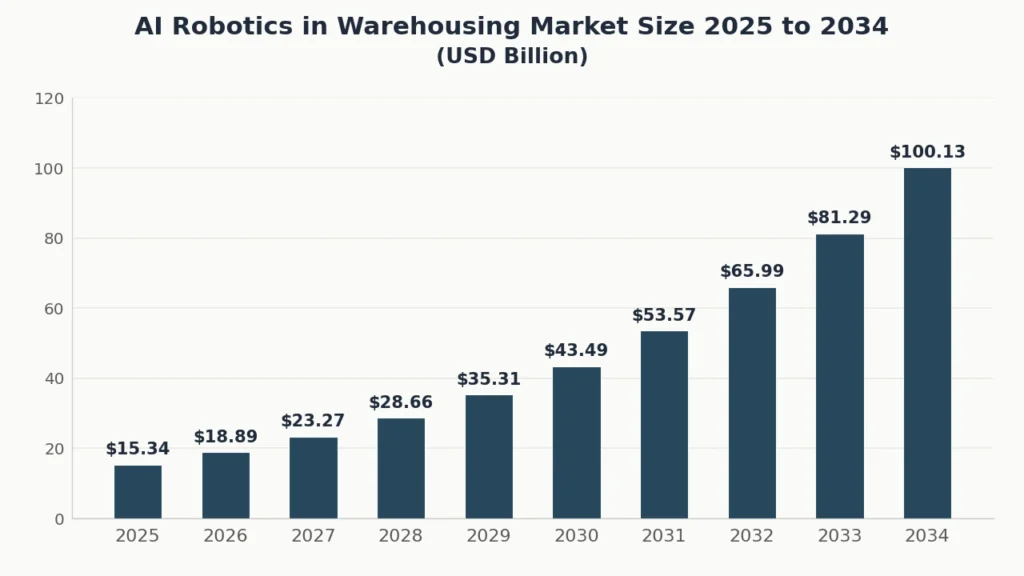
In the USA, fulfilment centres have never faced such an ordeal as they do now, with increased order quantities, heightened customer expectations, and more uncertain supply chain dynamics. In such conditions, conventional automation is unable to deal with the requirement for timely intelligence-based decision-making capabilities that modern warehouses require. According to GrandViewResearch, the global AI warehousing market was valued at USD 11.22 billion in 2024, and it is anticipated to reach USD 45.12 billion by 2030, growing at a CAGR of 26.1%, signalling a major shift in how warehouses invest in intelligent systems.
The rise of the AI Warehouse model is transforming the way that fulfilment centres function in the USA. Rather than focusing on workflow-based approaches that are constrained by rules, the adoption of AI technology is becoming popular in improving decision-making. The transformation is assisting the evolution of fulfilment centres into adaptive ecosystems that will support future logistics requirements.
Why Are Traditional Fulfillment Centers Struggling to Scale with Rule-Based Automation?
Traditional warehouse systems follow fixed workflows and instructions. Although this enhances uniformity, they fail to adapt quickly to any fluctuations in order volume or material flow. The increased demand for more SKUs and rapid delivery in the USA warehouses leads to inefficiencies due to manual intervention and fixed automation processes.
This is contributing to the adoption of AI in warehouse automation technologies that can adjust operations in real time according to the changing situations within the warehouse. Such technologies include Addverb’s Warehouse Control System (WCS), Mobinity, which allows workflow coordination that traditional rule-based systems cannot handle effectively. Mobinity automates tasks such as order picking and inventory management, increasing efficiency and offering real-time operational visibility.
Also Read: AI in Robotics: Transforming the Future Today
How Will AI Transform Automated Fulfilment Centres into Intelligent Warehouse Ecosystems?
AI technologies analyse the operational data to enhance allocation tasks, stock movement, and warehouse robots coordination.
According to Addverb’s State of AI in Warehouse Automation Report 2026, future warehouses will operate through four intelligence layers:
- Perception systems using sensors and computer vision
- Prediction models for demand and replenishment planning
- Decision intelligence for workflow optimisation
- Execution layers enabling autonomous robotic movement
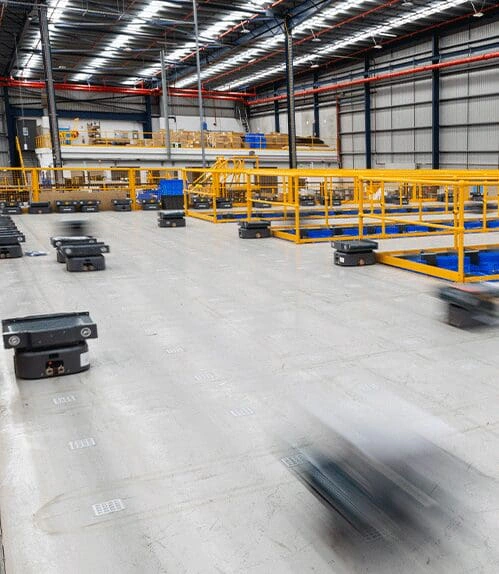
Such changes are facilitating faster adoption of AI warehouse automation models that help increase the speed and flexibility of operations. Supporting this shift, Addverb’s multi-carton picking robot, Veloce and AMR, Dynamo, execute intelligent picking and movement tasks seamlessly.
Veloce navigates through grid-based paths to the pre-decided locations, handling a payload of 240 kgs at a speed of 1.5 m/s. It uses 2D LiDARs to detect obstacles and ground marker-based navigation to operate. It can operate both manually and autonomously, ensuring precision docking of +/- 10 mm.
On the other hand, Dynamo ensures seamless and efficient material movement. Dynamo 2500 moves a payload of 2500 kgs at a speed of 0.8 m/s. It uses 2D LiDAR for obstacle detection and natural navigation with a position accuracy of +/- 20 mm and precision docking of +/- 10 mm.
What Role Will Predictive Intelligence Play in Future Inventory Flow and Fulfilment Accuracy?
Predictive intelligence assists warehouse facilities in determining inventory demand and optimising stock position ahead of time before disruption hits. The AI systems analyse past trends, seasonal demand, and operational data to accurately improve inventory planning.
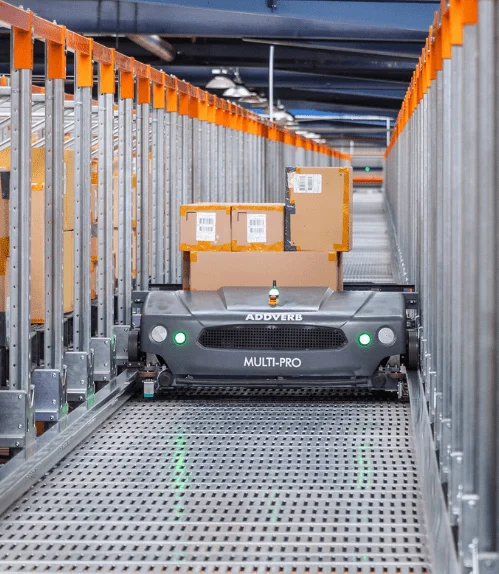
According to SellersCommerce, AI-based inventory placement technology lowers average pick distances by 60%, thereby increasing efficiency in warehouses and decreasing movement time. Addverb’s multi-level shuttle ASRS, Medius, helps achieve this objective by allowing high-density storage and rapid retrieval of inventory through predictive placement logic. It can handle payloads of 30 kg at a speed of 3.1 m/s, ensuring a throughput of 103 totes/hour (for 30m track).
The use of AI in Warehouse Management leads to precise replenishment, helps maintain balance in inventory, and accelerates order fulfilment for large-scale organisations in the USA.
Why Will Simulation-Led Warehouse Automation Become Critical for Future Fulfillment Centers?
Simulation-driven automation is gaining momentum because of increasing complexity in warehouse operations. With digital twin technology, fulfilment centres located in the USA are able to test the layout, processes, robot movement, and product flow before implementing anything physically.
This way, companies can detect congestion risks, optimise storage areas, and plan for automation without disrupting operational processes. Addverb’s digital twin-enabled warehouse simulation solutions enable businesses to understand the behaviour of the systems even before automating the facilities.
The increasing adoption of AI for warehouse management allows companies to make operational decisions quickly while minimising the risks of implementing and deploying solutions.
Also Read: Digital Twin in Warehouses: Benefits, Applications, and User Impact
How Will AI Orchestration Optimise US Fulfilment Operations?
AI orchestration involves integrating warehouse systems, robots, and software into a synchronised network. Rather than working independently, all systems share data continuously to enhance material movement and task scheduling.
Key operational improvements include:
- Faster robotic task coordination
- Reduced idle time across workflows
- Improved inventory visibility
- Better fulfilment consistency during peak demand
- Real-time workflow optimisation through AI systems
This interconnected ecosystem has increased the significance of AI in warehousing operations in contemporary USA fulfilment centres. Addverb’s Carton Shuttle ASRS, Quadron, plays a key role in ensuring high-speed order consolidation and intelligent storage-to-picking orchestration. It can handle a payload of 50 kg and move it at 4 m/s, ensuring a throughput of 115 Totes/hour (for 30 m track). With CE safety certifications, Quadron makes it easier for warehouses to optimise storage space.
Impact of AI on Warehouse Efficiency and Forecast Accuracy in US Fulfillment Centers
| Metric | Before AI Adoption | After AI Adoption |
| Order Accuracy | Moderate accuracy levels | Higher accuracy and fewer errors |
| Forecast Accuracy | Limited predictive visibility | Improved forecasting capability |
| Average Pick Path Efficiency | Longer travel distances | More optimised picking routes |
| Fulfilment Processing Speed | Slower processing cycles | Faster order processing |
| Inventory Visibility | Limited visibility across operations | Real-time operational visibility |
Case Studies: How Addverb’s AI-Enabled Automation Supports Smart Fulfillment Centers
At the Wooster facility, there were major challenges, such as inefficiencies, safety risks, and fulfilment errors due to the manual, paper-based picking process. Addverb deployed an automated material handling solution, which included the integration of 13 AMRs, each of them capable of moving 1,100 pounds. As a result, 15,000 cases were dispatched per day and a throughput of 100+ orders paller per day was achieved.
At DHL’s facility, the primary issue was the labour-intensive sortation process, which affected operations due to consistent labour shortages and high turnover rates. Addverb delivered robotic sortation system solutions, which allowed the facility to go from fulfilling 20 units/hour to 100+ units/hour, a stunning 300%+ increase in throughput efficiency. The sortation system also achieved a throughput of 1000 sorts/hour.
The integration of AI warehouse management systems with robotics and warehouse software continues to strengthen fulfilment efficiency and operational scalability.
Conclusion
AI is transforming fulfilment centres into intelligent and adaptive warehouse ecosystems that can manage today’s complexities within the supply chain. Predictive analysis, simulations, and AI coordination are helping to increase speed, accuracy, and scalability within warehouses.
In light of continuous growth in fulfilment demand, businesses will rely more on AI for warehouse automation to keep their processes efficient and competitive. By leveraging robotics, AI-based software, and smart warehousing technology, Addverb is aiding fulfilment centres in becoming smarter in preparation for future-ready operations across the USA.
FAQs
1. What are the benefits of using AI in warehouse operations?
AI improves operational efficiency, inventory accuracy, and fulfilment speed across warehouse workflows. Addverb’s AI-enabled automation systems also support better coordination between robotics and warehouse software.
2. Can AI help reduce warehouse operational costs?
Yes, AI reduces manual dependency, minimises errors, and improves workflow efficiency. Addverb’s AMR, Dynamo, help warehouses lower operational delays and improve material movement productivity.
3. How does AI help with demand forecasting in warehouses?
AI studies historical and real-time operational data to forecast inventory requirements more accurately. This helps warehouses reduce stock imbalances and improve fulfilment planning.
4. Are AI-enabled warehouses safer for workers?
Yes, AI-powered systems reduce manual handling risks and improve workplace safety through automated monitoring and robotic assistance. Addverb’s robotic automation systems also help reduce repetitive worker strain.
5. Can small and medium-sized businesses use AI warehouse automation?
Yes, scalable automation solutions are becoming increasingly accessible for smaller warehouse operations. Modular systems allow businesses to gradually expand automation capabilities based on operational needs.
6. How does AI integrate with warehouse management systems (WMS)?
AI enhances warehouse management systems by adding predictive analytics, workflow optimisation, and real-time operational visibility. Addverb’s Warehouse Control System(WCS), Mobinity, improves coordination between software and automation technologies.