




Frequently Asked Questions
-
What is a pallet conveyor system?
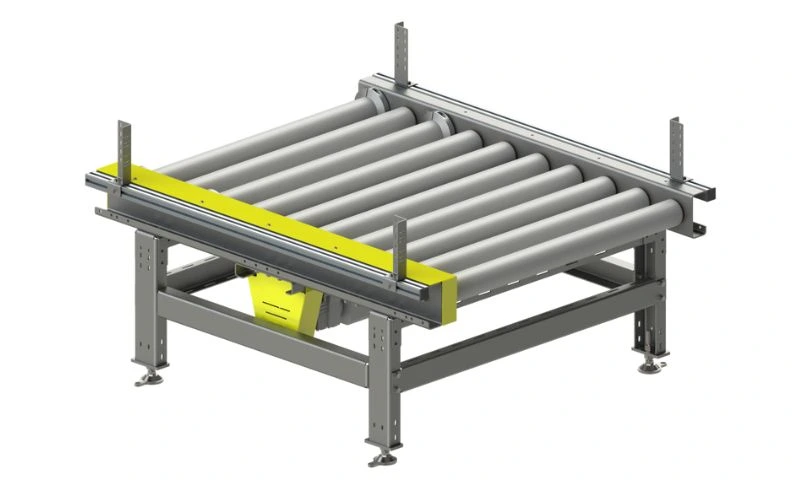
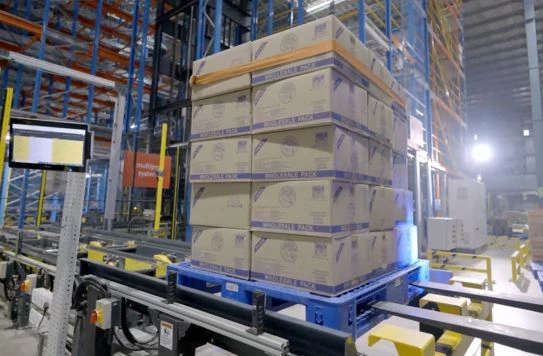
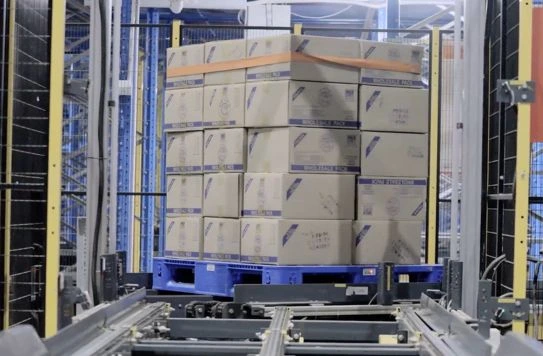
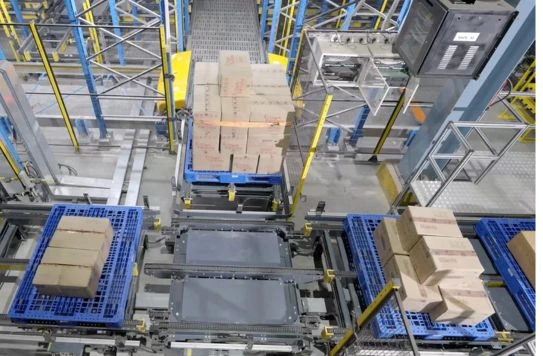
A pallet conveyor system is a network of heavy-duty powered conveyors, transfers and turntables that moves loaded pallets automatically between production, storage, stretch wrapping and shipping without forklifts. Addverb's pallet conveyors combine roller and chain conveyors, 90° pop-up transfers, turntables and pallet stackers into one controlled flow, so each pallet arrives aligned for the next process. -
Should I choose a pallet roller conveyor or a pallet chain conveyor?
Choose a pallet roller conveyor when pallets travel in the direction their bottom boards run, and a pallet chain conveyor when pallets travel crosswise to the boards or are less stable, because chains support the pallet along its runners. Most layouts use both, with chain transfers and turntables at junctions. Addverb's pallet roller conveyor carries about 470 lb per foot at up to 59 ft/min. -
What does a pallet turntable or 90° transfer do?
A pallet turntable rotates a pallet on its conveyor section, typically by 90° or 180°, and a 90° pop-up transfer lifts the pallet onto a crosswise conveyor, so pallets change direction without manual handling. Addverb offers both roller and chain turntables. Turning pallets automatically keeps labels facing scanners, aligns loads for wrapping and shipping, and stops associates pushing heavy pallets by hand. -
Can Addverb pallet conveyors handle standard 48 x 40 in pallets?
Yes, Addverb's pallet roller conveyor handles pallet loads up to about 49 x 57 in, which covers the standard 48 x 40 in GMA pallet used across most US distribution centers. It carries about 470 lb per foot of conveyor and runs at up to 59 ft/min. Pallet stackers inline with the conveyor feed and collect empty pallets automatically. -
When is a pallet conveyor not the right choice?
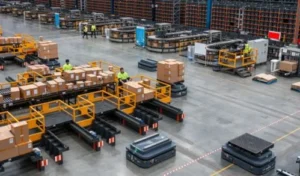
A pallet conveyor is a poor fit when pallet routes change often or must cross busy forklift and pedestrian aisles, because a fixed conveyor blocks floor space along its path. Addverb's pallet roller conveyor operates from 32°F to 113°F, so freezer zones need a cold-rated design. For flexible or long point-to-point moves, an autonomous forklift or a rail guided vehicle is often the better choice.