





Frequently Asked Questions
-
What is a belt conveyor system in a warehouse?
A belt conveyor system is a continuous belt running over pulleys that carries products on a flat, stable surface, which suits fragile, irregular or small-base items that could tip or snag on rollers. Addverb's belt conveyors come in PVC and PLM variants. The PVC belt carries about 84 lb per foot at up to 328 ft/min on frames up to 59 in wide. -
Is a belt conveyor better than a roller conveyor for e-commerce parcels?
Yes, a belt conveyor is usually better for mixed e-commerce parcels, because polybags, padded mailers and soft packages need the full support of a belt instead of riding on separate rollers. The belt also grips loads during fast acceleration and stops without slippage. Roller conveyors still suit rigid cartons and totes, so many US fulfillment centers combine both on the same network. -
Can a belt conveyor carry products up an incline?
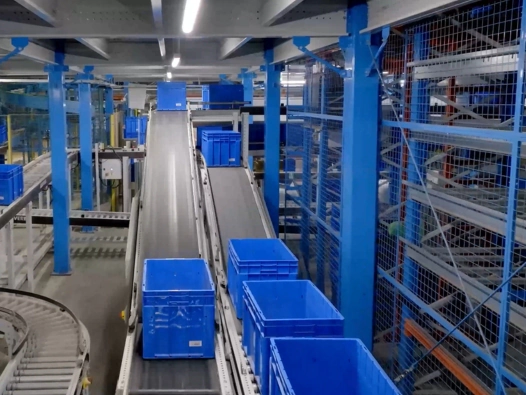
Yes, belt conveyors handle inclines and declines well, because the high-friction belt surface grips cartons, parcels and polybags at steep angles where a roller conveyor would let them slide back. Addverb's belt conveyors use high-friction materials for steep vertical transitions, so you can move goods between floors or mezzanines. The safe angle depends on product weight, shape and packaging, so it is set during design. -
Can belt conveyors be customized for electronics or pharmaceuticals?
Yes, Addverb's belt conveyors can use specialized belt compounds, including anti-static and flame-retardant materials, so one conveyor design adapts to sensitive electronics, pharmaceutical cleanrooms or standard e-commerce fulfillment. Belt material, width and drive type, either end drive or center drive, are selected for each application. That makes belt conveyors a flexible choice across very different product ranges. -
Can a belt conveyor divert items and run in reverse for returns?
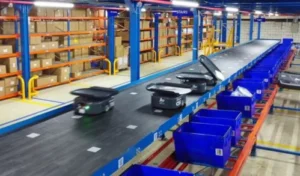
Yes, Addverb's belt conveyors integrate with high-speed pop-up diverts and pushers to route items across the warehouse floor, and they can switch flow direction to handle returns. Bidirectional flow lets the same line serve outbound orders and reverse logistics at different times, which helps when US returns volumes spike after the holiday season. The belt's grip keeps parcels positioned where the diverter expects them.