















Frequently Asked Questions About Conveyor and Vehicles
-
What types of conveyor systems are used in warehouses?
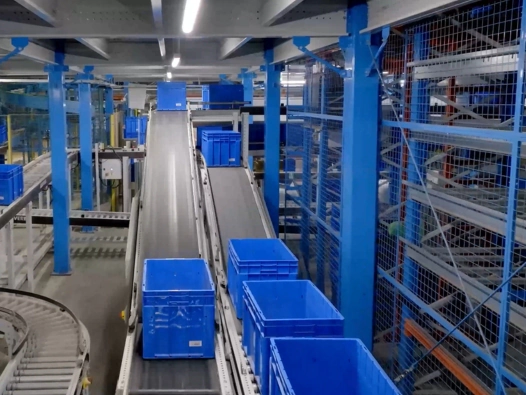
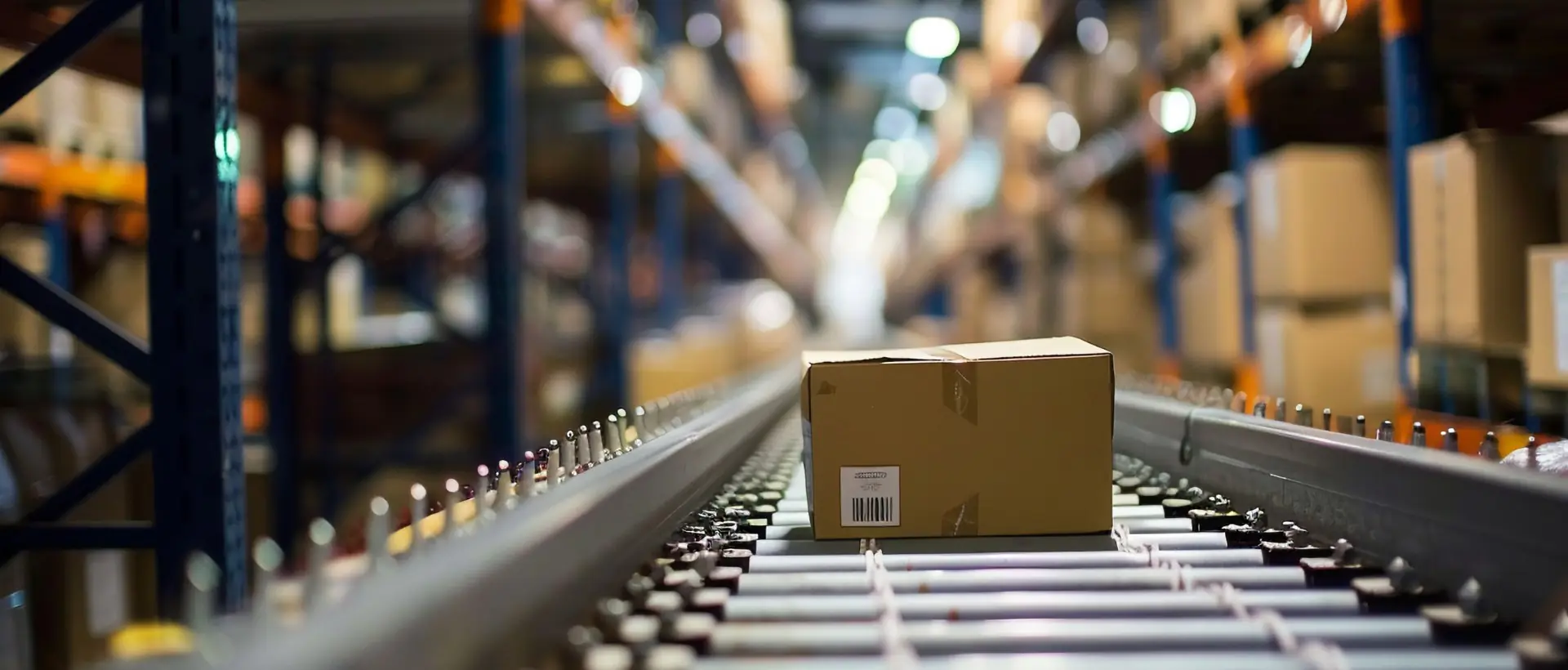
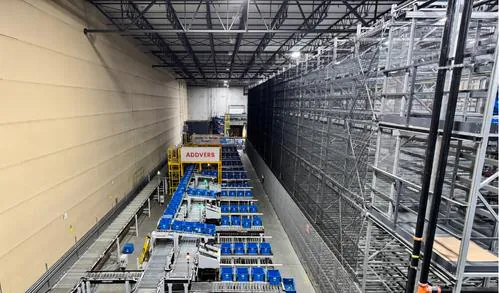
Warehouses use four main conveyor types. Roller conveyor carries cases and totes with flat, stable bases. Belt conveyor carries parcels, polybags, and fragile or small-footprint items, and handles inclines. Chain conveyor carries pallets and heavy loads. Vertical lifts move product between levels. Most facilities combine several, with the choice driven by load type, weight, and whether the line needs to change elevation.
-
Should I use a conveyor or mobile robots?
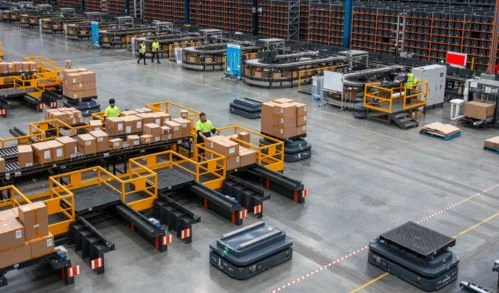
Use conveyor where the route is fixed and volume is high and steady, because fixed automation moves more material per dollar under those conditions. Use mobile robots where volume is seasonal, routes change, or the building cannot take permanent steel. The question is not which technology is better but how stable your flow is. Many US distribution centers run conveyor on the trunk routes and robots on the variable ones.
-
How much does a warehouse conveyor system cost?
Conveyor cost is driven by linear footage, load type, and the number of diverts, merges, and elevation changes, so a per-foot figure means little without the layout. Controls and integration are a significant share of the total, not an add-on. Belt costs more per foot than roller. Addverb quotes the line, controls, and commissioning together after sizing against your throughput profile.
-
How long does it take to install a conveyor system?
number of transfer points, and how much of the work can happen outside operating hours. Modular sections shorten the schedule because they arrive pre-built rather than being fabricated on site. Controls commissioning and WMS integration typically run in parallel and often set the critical path rather than the mechanical install.
-
Can a conveyor system integrate with our WMS?
Yes. Addverb's Warehouse Control System sits between your WMS and the conveyor PLCs, translating order and routing instructions into divert commands and returning status in real time. No custom middleware is required. At DHL Supply Chain near Columbus, Ohio, Addverb integrated roller conveyor with robotic sortation under its Concinity Warehouse Execution System.
-
What is a rail guided vehicle and how is it different from a conveyor?
A rail guided vehicle is a powered cart that runs on a fixed floor rail loop, carrying pallets between multiple pickup and drop points on one circuit. A conveyor moves product continuously along its whole length. An RGV carries one load at a time over longer distances, so it suits point-to-point pallet flows where a full conveyor run would be expensive and mostly empty.
-
How do vertical lifts work in a multi-level facility?
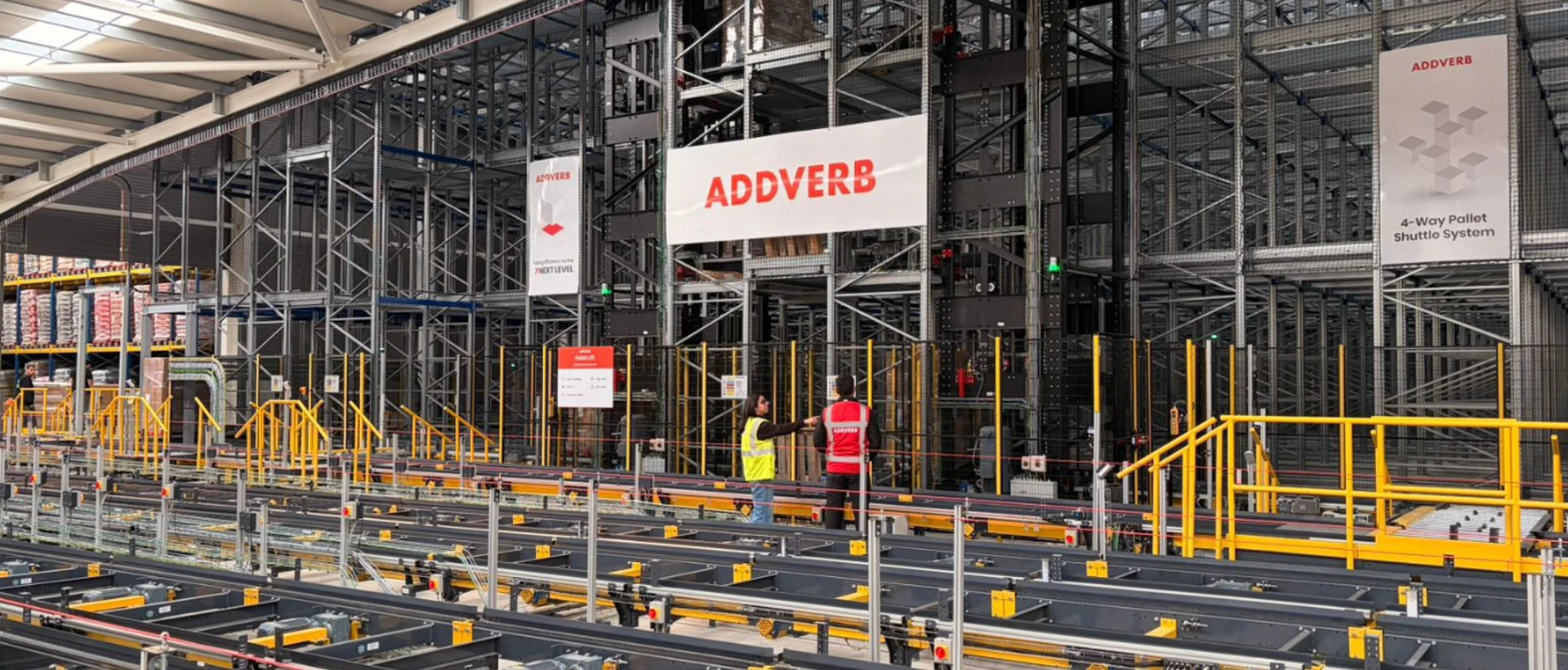
A vertical lift raises or lowers cartons, totes, or pallets between floors and transfers each load onto the receiving conveyor automatically. Safety sensors confirm the carriage is positioned before transfer. In a multi-level AS/RS, vertical lifts are what connect storage tiers to a ground-floor pick and dispatch area, so the storage system can be tall while fulfillment stays on one level.
-
When is a conveyor system the wrong choice?
Conveyor is a poor fit where volume is seasonal, routes change often, or product mix varies enough that one line cannot handle it. In those cases the line sits underused for most of the year while still occupying the floor. Conveyor also struggles with unstable or irregular loads on roller sections, and a long run through a space you may re-lay out later is capital committed to a layout you are not certain of.