WhatsApp Chat

Highlights

The financial and operational cost of not automating your warehouse.

Real-world data and industry trends to make a case for automation.

How automation can enhance productivity, accuracy, and scalability.

Fast and error-free deliveries have now become an intrinsic part of customer satisfaction. With more than 79% supply chain professionals planning to automate their warehouses by 2027, the intralogistics landscape has changed. The critical question for businesses now is no longer "Should we automate?" but rather "Can we afford to delay automation?"

In this whitepaper, we explore the significant cost of not automating your warehouse associated with maintaining manual warehouse operations and explain why automation is essential for a sustainable edge in a rapidly evolving competitive landscape.

Who needs to read this Whitepaper?

01

Warehouse Professionals thinking for automation

02

Operations leaders looking for improved accuracy & speed

03

Supply chain professionals looking for sustainable methods of cost savings

04

Business Owners looking to scale their operations for growth

Executive Summary

Inefficiency in warehouses can cost businesses millions annually. The lack of automation isn’t just a technological gap it’s a strategic setback. Automation can boost productivity by 25% and cut errors by over 70%, transforming operations to thrive in a future defined by agility, resilience, and sustainability. It’s the difference between surviving and leading.

Customers now place high expectations on premium shipping, a trend largely driven by the "Amazon effect." They want deliveries within a day or two, along with a seamless, enjoyable experience that includes real-time tracking updates. Our research reveals that a whopping 91% of U.S consumers actively track their packages, with 39% tracking them once a day, and 19% tracking them multiple times a day.

91%
of U.S consumers actively track their packages

39% tracking them once a day, and 19% tracking them multiple times a day.

In Gartner’s 2019 Realization of Industry 4.0 Study, 79% of respondents stated that by 2025, their operations would be human-driven processes amplified with digital processes, with nearly 18% of respondents believing their operations would move toward a future of lights-out, totally dark warehouse automation, Gartner, July 14, 2020.

With supply chains becoming more global, rising labor costs, increased pressure for 24 hour delivery times, and heightened customer expectations, organizations with low logistical support will find themselves at a significant disadvantage. This white paper delves into the hidden costs of maintaining manual warehouse operations, illustrating how the failure to adopt automation can lead to inefficiencies, increased expenses, and ultimately, lost market opportunities.*

The average U.S. warehouse wastes 6.9 weeks a year on unnecessary motion—costing the industry $4.3 billion, or 265 million hours of labor annually, according to data from the U.S. Census Bureau.*

According to the report

55% of supply chain leaders are increasing their supply chain technology and innovation investments with 88% saying they are planning to spend over $1 million. Forty-two percent plan to spend over $10 million.

Source: *MHI Annual Industry Report, (2024)

Current Warehouse & Distribution Landscape

Today, businesses strive to increase customer satisfaction and focus their efforts on customer delight via the process of order delivery. In a digital world this translates to an online order arriving not just on time, but ahead of schedule, with zero errors. Automation, artificial intelligence, and data analytics are three major pillars that are redefining the supply chain operations.

A recent LogisticsIQ report details that the warehouse automation market is set to reach US$41 billion by 2027, with capabilities such as automated guided vehicles (AGVs)/autonomous mobile robots (AMRs), conveyor systems, automatic identification/data capture, palletization/depalletization, racking, and more.

In fact, one human capital study suggested that 84% of companies that expect automation to alter workforce responsibilities, are also increasing their investments in reskilling workers.*

Approximately 28% of leading U.S. supply chain companies currently use automation within their warehouse operations

but this percentage is projected to reach 79% by 2027. This trend is influenced by ongoing labor shortages and the need to boost operational efficiency.*

Source: *MHI Annual Industry Report, 2022.

Current Warehouse and Distribution Landscape

The Cost of Not Automating Your Warehouse

As the logistics and warehousing industries face rising pressures from labor shortages, escalating consumer expectations, and operational inefficiencies, the cost of not adopting automation becomes increasingly apparent.

Labor Shortages and Retention Issues

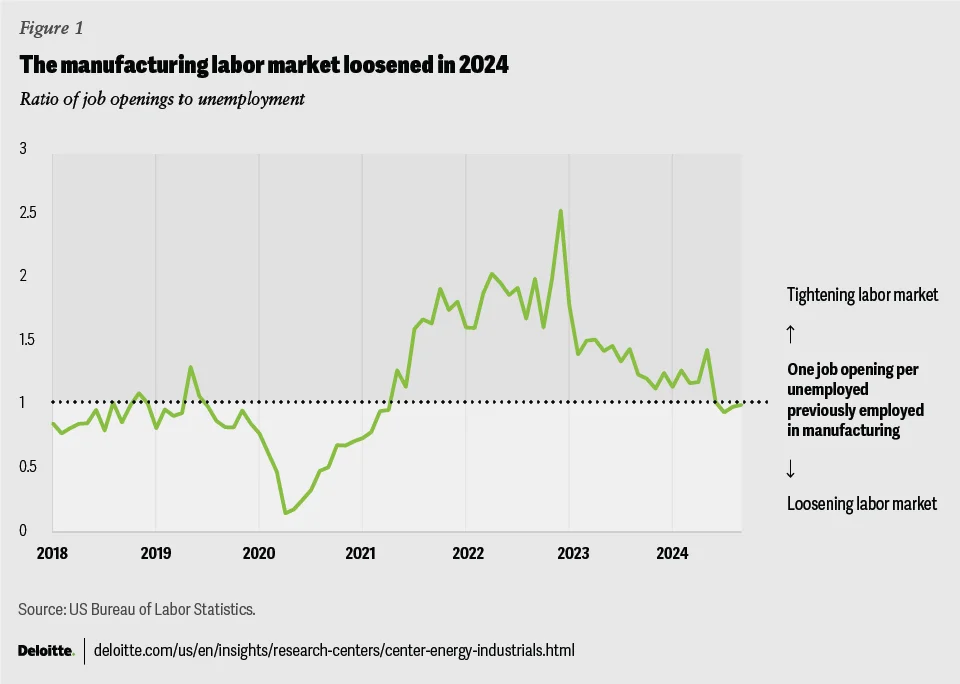
The U.S. Bureau of Labor Statistics reports a 20.5% increase in warehousing jobs since 2017. However, this rise in demand for labor is not matched by an increase in available workers. Employee turnover remains costly, as shown by data from the US Bureau of Labor Statistics, which reported over 4.3 million voluntary resignations in December 2021, following a record in November; notably, Mckinsey’s recent survey of nearly 600 workers revealed that 44% have little to no interest in returning to traditional employment within the next six months, putting additional financial strain on businesses. In response, many companies rely on temporary staffing, which can cause inconsistent performance and errors.*

The manufacturing labor market loosened in 2024

Source: *2025 Manufacturing Industry Outlook, Deloitte 2024

Costs of Staying Manual

01
High Turnover Costs

Recruiting and training new employees is expensive, and frequent turnover exacerbates these costs.

02
Increased Reliance on Temporary Workers

The use of temporary staffing can reduce consistency, resulting in operational disruptions and a lack of reliability.

03
Limited Growth Capacity

Without the necessary workforce, businesses struggle to scale operations, missing potential growth opportunities.

Source: *How to play the new talent game and win back workers. McKinsey & Company, 2019

Safety Concerns and Compliance Risks

Manual operations in warehouses often lead to higher injury rates. According to the Bureau of Labor Statistics’ (BLS) most recently released workforce data, the rate of injury and illness cases for warehouse workers was 5.5 (5.5%) per 100 full-time warehouse workers, a far cry from the rate of 4.0 in 2020.

The risks associated with manual labor [such as repetitive motions, heavy lifting, and the potential for accidents]—can lead to costly workers' compensation claims, higher insurance premiums, and regulatory fines.*

Costs of Staying Manual

  • Increased Injury Rates: Manual tasks are more physically demanding, raising the risk of injury among workers.
  • Compliance Risks: Failing to meet safety regulations can lead to fines, damage to brand reputation, and a negative workplace culture.
  • Low Morale and High Absenteeism: Injuries and safety concerns can affect employee morale, resulting in absenteeism and reduced productivity.
01 Lifting and Ergonomic Injuries
02 Collisions and Hazards
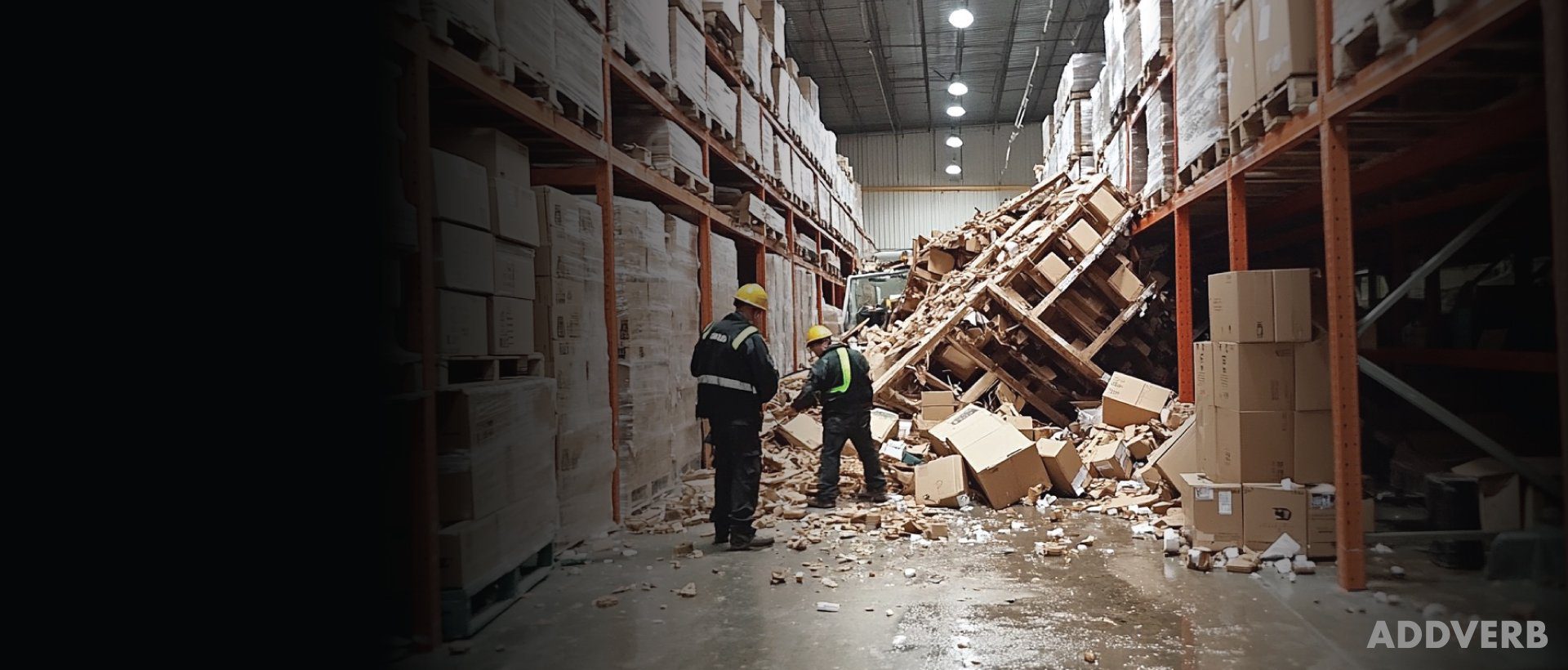
03 Falling Objects & Unsafe Stacking
04 Slip, Trip, & Fall

Source: *Improving Warehouse Safety Culture and Safety Training with Loss Trend Analysis

Rising Consumer Expectations and Operational Complexities

Consumer demands for faster and more accurate service are growing rapidly. McKinsey & Company reports that over 40% of consumers expect same-day delivery, with 74% willing to pay more for faster shipping. Similarly, Statista notes that 72% of consumers are unlikely to return to a brand after an incorrect order. These high expectations place immense pressure on warehouses to prioritize speed, accuracy, and adaptability.*

E-commerce is projected to account for 25% of global retail sales by 2025(Deloitte) and warehouses face increasingly complex challenges. Handling diverse inventory types, fluctuating order volumes, and managing multi-channel fulfillment are now the norm for modern warehouse operations. Manual systems struggle to meet these demands, leading to costly inefficiencies.

Several retail brands, e-commerce players and third-party logistics providers have already disclosed facility closures and job cuts starting this year, impacting over 2,800 employees tied to warehouse and distribution operations.*

Costs of Staying Manual

  • Order Fulfillment Errors: Manual systems increase the likelihood of mispicks, miscounts, and errors, leading to customer complaints and returns.
  • Delayed Processing and Missed Deadlines: Manual systems often struggle to handle high order volumes during peak seasons, resulting in delayed deliveries and missed deadlines.
  • Poor Inventory Visibility: Manual processes often lack real-time data, leading to inaccurate stock levels and poor decision-making.
01 Speed and Efficiency
02 Accuracy in Order Fulfillment
03 Real-Time Inventory Visibility
04 Customization & Order Complexity

Source: *Warehouse employment keeps falling — and more layoffs loom, 2024

Escalating Operational and Real Estate Costs

Warehouse rental rates have risen sharply. In the U.S. and Canada, rental rates increased by 6% in 2023, following a 30% surge in 2022. The Southeast and Southwest regions saw even steeper rises, with rents climbing by over 10% in cities like Las Vegas and Central Florida. High construction costs and rising demand have contributed to these increases, creating additional pressure on warehouse operators. The need for efficient space utilization is now more critical than ever.

In Mexico, nearshoring activity fueled record-breaking demand, leading to an 8% increase over previous highs and pushing vacancy rates from 0.9% to 1.4% as new supply entered the market. Despite this, scarcity and high construction costs sustained strong competition, resulting in a notable 19% rent growth.

In Brazil, record demand for Class AAA spaces, combined with a sharp reduction in new developments, dropped vacancy rates by 320 basis points to an all-time low of 11.4%. Development has slowed significantly due to costly debt, a trend expected to reduce vacancies further and continue driving rent increases into 2024.

Costs of Staying Manual

  • Suboptimal Space Utilization: Poor inventory management and manual operations lead to inefficient use of warehouse space, further driving up costs.
  • Higher Energy Costs: Manual systems tend to be less energy-efficient, contributing to higher utility bills.
  • Operational Inefficiencies: Outdated manual processes result in time-wasting, redundant activities, and wasted resources.
01 Rising Rental & Real Estate Prices
02 Labor Shortages and Higher Wages
03 Supply Chain Disruptions
04 Energy and Utility Costs

The Financial Cost of Inefficiencies

Research indicates that warehouses can waste up to 30% of operational costs due to inefficiencies. Labor-intensive tasks, suboptimal workflows, and poor space utilization are key contributors to these losses. These inefficiencies directly affect profitability and hinder businesses' ability to scale effectively.

Costs of Staying Manual

  • Suboptimal Space Utilization: Poor inventory management and manual operations lead to inefficient use of warehouse space, further driving up costs.
  • Higher Energy Costs: Manual systems tend to be less energy-efficient, contributing to higher utility bills.
  • Operational Inefficiencies: Outdated manual processes result in time-wasting, redundant activities, and wasted resources.
Lost Revenue Opportunities
Increased Operational Costs
Hidden Costs of Errors
Reduced Productivity

Critical challenges and their impact

46%

of warehouses report that they are operating at over 85% capacity.

(CBRE, 2023)
10%

Expected annual growth in E-Commerce Sales through 2030.

(Statista, 2023)
60%

consumers now expect delivery within two days or less.

(McKinsey & Company, 2023)
47%

of companies report an increase in the number of SKUs.

(Deloitte, 2023)
30%

of warehouses still rely on manual data entry and lack automated location tracking systems.

(MHI Industry Report, 2022)
25%

of warehouse space is often utilized for non-storage purposes such as staging areas or product sorting.

(Prologis, 2023)

Industry Applications

Fashion/ E-commerce/ Retail

Challenge: The increasing number and variety of customer SKU choices is driving complexity in warehouse operations. This, combined with a high return rate, results in additional handling steps and challenges in managing shorter delivery windows and low order sizes. Furthermore, demand variability and the accumulation of obsolete inventory add to operational inefficiencies. Additionally, the need for omnichannel distribution from a single warehouse intensifies the complexity, requiring seamless integration of processes to meet diverse fulfillment needs.

Common Requirements: Picking, sortation and reverse logistics.

Fashion E-commerce Retail

Why Choose Addverb?

Store-Ready Picking

Streamlined store-ready order processing to minimize staff unpacking time.

Order Consolidation

Automated order sequencing and consolidation to handle increasing order volume.

Intelligent Batch Picking

Intelligent batch picking strategies to create efficient batches, reducing picking time.

Lower Carbon Footprint

Implement sustainable practices through multi-order single packing.

Third Party Logistics

Challenge: Short-term contracts often result in redundant infrastructure, while changing market demands necessitate flexible automation solutions. Inadequate space utilization at multi-customer sites further exacerbates inefficiencies, compounded by labor shortages that strain operational management. The need for omnichannel fulfillment, along with complex returns management, adds to the challenge, requiring agile systems to optimize space, streamline processes, and ensure consistent performance across operations.

Common Requirements: Picking, sortation and reverse logistics.

Third Party Logistics

Why Choose Addverb?

Dense Storage Solutions

Our ASRS systems optimize storage by maximizing vertical space usage.

Cost Benefit

Our automation cuts your operational costs and addresses labor shortages effectively.

Intelligent Analytics

Our analytics offers efficient insights on inventory, slotting, orders, and performance.

Multi Client Flexibility

Our mix of fixed and flexible automation helps you serve multiple clients.

Cold Storage/ F&B/ Grocery

Challenge: Low margins and demand fluctuations create challenges in maintaining profitability. Omnichannel operations exacerbate these issues, requiring seamless coordination between systems to balance inventory, fulfillment, and packing, while managing the complexities of handling cases versus individual items. Sequencing challenges must also be addressed to ensure fast and efficient order processing for quick commerce. Additionally, the management of perishable items necessitates specialized cold storage solutions to preserve product quality and meet customer expectations.

Common Requirements: Software, Picking, sortation, reverse logistics and dispatch.

Cold Storage F&B Grocery

Why Choose Addverb?

Micro Fulfilment

Our MFC strategies optimize operations for faster fulfillment, and replenishment.

Quick Commerce

Advanced solutions ensure rapid order processing and delivery for quick commerce initiatives.

Omnichannel Distribution

Revolutionize omnichannel distribution by effortlessly managing over 50,000 SKUs.

Preserving Quality & Freshness

Our cold storage solutions with autonomous technology ensures product quality.

Healthcare/ Chemicals & Petro - chemicals

Challenge: A reliable FIFO system is crucial due to short shelf lives, and handling small orders adds to logistics complexity. Outdated software in medical and pharmaceutical settings hinders inventory planning. Managing hazardous materials requires strict safety measures and compliance, necessitating precise processes for storage and movement. The shortage of skilled labor makes effective handling of hazardous inventory essential for safety and compliance, requiring specialized training and advanced systems.

Common Requirements: Software, Picking, Secure Storage and secure material movement.

Healthcare Chemicals and Petro chemicals

Why Choose Addverb?

Automate Material Handling

Our automated material movement reduces human involvement improving safety.

Advanced Software

Our warehouse management software helps real-time tracking and optimize operations.

Efficient ASRS Systems

Our shuttle-based storage and retrieval systems are optimal for space utilization.

Reduced Labour Costs

Automation reduces the need for skilled labor, resulting in significant cost savings.

Automotive + Spare Parts/ Battery and Solar

Challenge: Changing production requirements and the variety of component shapes, sizes, and weights present challenges in warehouse management. These challenges are further complicated by safety risks and the necessity for strict protocols. Inefficient vendor-managed inventory systems, along with labor shortages and high costs, negatively impact productivity. Proper handling is essential to prevent damage during material movement, while maintaining temperature control is critical for sensitive goods.

Common Requirements: Material movement, storage and sortation.

Automotive Spare Parts Battery and Solar

Why Choose Addverb?

Process Based Picking

Efficient order processing through automated batch and wave picking methods.

Organised Storage and Retrieval

Automated shuttle systems for efficient storage and retrieval of pallets and cartons.

Automated Material Handling

Automated material handling solutions to minimize manual labor in transportation.

Workflow-driven Software

Intelligent WMS for real-time inventory tracking and accurate warehouse operations.

Automation in Warehouses: Key Benefits

Increased Throughput 70%

of businesses report higher throughput. Meets rising demand with fewer errors.

(Deloitte, 2023)
Real-Time Data & Insights 30%

Reducion in stockouts and . Inventory turns increased by 25%.

(Gartner, 2023)
Scalability 20-30%

increase in Operational capacity. 53% of warehouses handle peak demand better.

(McKinsey & Company, 2023)
Enhanced Safety 20-25%

fewer workplace injuries with automation.

(OSHA, 2023)
Cost Efficiency 30%

Reduction in labor costs. Human errors cause $60B in supply chain losses annually.

(Prologis, 2023)

The Automation Revolution: Transform Your Operations with Addverb

Automation is about enhancing productivity and optimizing every aspect of warehouse management. Addverb's cutting-edge solutions address the core challenges faced by modern warehouses and our product range spans what we call the “Fixed & Flexible Warehouse Automation” category.

Fixed Automation

Fixed Automation products consist of systems that rely on a fixed infrastructure for operation. These solutions are ideal for industries that demand high-volume, repetitive production of standardized products, such as automotive, electronics, food and beverage, pharmaceuticals, and packaging.

AS/RS

Innovative warehouse automation technologies designed for high density storage and retrieval of goods. They are equipped with rails, robotic arms, shuttles, lifts, and software for inventory management and quicker material handling processes.

Carton Shuttle Pallet Shuttle Mother Child Shuttle Multi-Level Shuttle 4-Way Pallet Shuttle

Stacker Crane

Efficiently loads and unloads heavy items, ensuring precise storage. It's highly designed for unit loads and pallet loads, with accurate real-time inventory tracking.

Vertical Sortation Robot

Delivers highly accurate sortation while sorting individual packets to their destination locations at varied heights on a dedicated track.

Rail Guided Vehicle

Provides a fast and flexible alternative to continuous conveyor systems used to transport pallets within warehouses and factories.

Fixed Automation

Flexible Automation

Fixed Automation products consist of systems that rely on a fixed infrastructure for operation. These solutions are ideal for industries that demand high-volume, repetitive production of standardized products, such as automotive, electronics, food and beverage, pharmaceuticals, and packaging.

Autonomous Mobile Robot

Powered by Lidar and operates on natural navigation. It can carry payloads of 100 kg, 200 kg, 500 kg, 1000 kg, 1500 kg, and 2500 kg.

Multi-Carton Picking Robot

Navigates through grid-based paths to pre-decided locations for storing and picking carton loads, working in perfect sync with one another.

Sorting Robots

Automated systems to identify and categorize order parcels or packages. They are equipped with sensors, cameras, and AI algorithms for accurate and quick sortation.

Autonomous Forklift

Autonomous forklifts are self-operating vehicles equipped a with sensors and software that allow them to navigate and transport materials without manual intervention.

Collaborative Robot

Designed to work alongside humans in shared spaces to perform industrial operations.

Pick-To-Light

Our trusted Pick-to-Light solution, empowers your workforce to pick the correct products and quantities swiftly and accurately for order fulfillment.

Pick-By-Voice

Our advanced Pick-by-Voice technology, revolutionizes the order-picking process. By eliminating the need for paper or RF devices, Zesty streamlines operations through voice commands.

Flexible Automation

Software Solutions: The Brains Behind Automation

Warehouse Management Software (WMS)

While robotics play a crucial role in automation, warehouse management software is essential for seamlessly integrating these technologies into existing operations. Addverb’s comprehensive software suite ensures effective communication between systems.

Optimized Workflow

Advanced software orchestrates various warehouse functions, ensuring smooth operations from receiving to shipping.

Data-Driven Insights

Real-time performance data empowers businesses to make informed decisions, optimize workflows, and enhance efficiency.

Seamless Integration

Addverb's software solutions facilitate easy scaling and upgrading, ensuring businesses can adapt to future needs without disrupting existing operations.

Warehouse Execution System (WES)

Warehouse Execution System is software platform that focuses on the real-time execution and control of warehouse operations. WES serves as a bridge between higher-level systems, such as Warehouse Management Systems (WMS), and the physical aspects of the warehouse, including equipment, automation systems, and personnel.

ASRS System monitor

Concinity monitors ASRS components, schedules tasks, optimises equipment control, detects errors, provides real-time visibility, and enhances productivity by coordinating and optimising ASRS operations within the warehouse.

Increased Productivity

Concinity dynamically assigns tasks to resources, such as equipment, robots, or personnel, based on priority and availability.

Real-Time Visibility

Concinity provides real-time visibility into warehouse operations, inventory levels, and task statuses.

Warehouse Control System (WCS)

A Warehouse Control System is a software application or platform that manages and controls the operations within a warehouse or distribution centre. It serves as the brain of the warehouse, coordinating and optimising various tasks and processes to ensure efficient and accurate operations.

PTL integration

PTL integration with Mobinity enhances order picking by visually guiding operators, improving accuracy, increasing productivity, and streamlining the process through real-time task assignment and monitoring.

Improved Inventory Management

Mobinity can also implement automated replenishment strategies, ensuring timely restocking and minimising out-of-stock situations.

Data Analytics and Reporting

Mobinity collects and analyses vast amounts of operational data, offering insights into warehouse performance, productivity, and KPIs.

Fleet Management System (FMS)

Fleet Management System is specifically designed to manage and control a fleet of robots. It provides centralised control, monitoring, and coordination of robot operations to ensure efficiency, productivity, and effective utilisation of robots. A fleet management system for robots helps organisations efficiently manage their robots, optimise operations, and achieve productivity gains.

Dynamic Task Assignment

Dynamic task assignment in Movect optimises task allocation based on real-time conditions, improving efficiency, resource utilisation, and adaptability to changing requirements.

Centralised Management

Fleet managers can monitor, control, and coordinate robot activities from a single dashboard, simplifying management and boosting productivity.

Software Solutions The Brains Behind Automation

Conclusion: The Cost of Inaction

In an era where efficiency, accuracy, and safety are paramount, warehouse automation is no longer an option - it is a necessity for staying competitive. The costs associated with not automating—ranging from labor inefficiencies and safety risks to lost revenue opportunities—are too significant to ignore. Addverb offers innovative solutions that empower warehouses to overcome these challenges, enhance operational efficiency, and secure their place in the market.

Engage with Addverb today to discover how straightforward and impactful automating your warehouse can be. Start the conversation about your future in automation and ensure your operations are positioned for success.

Get the full whitepaper

  • 20 pages, illustrated
  • 12 min read
Download PDF

Get the full whitepaper as PDF

On one click, no email required.

Download PDF