



ON THIS PAGE
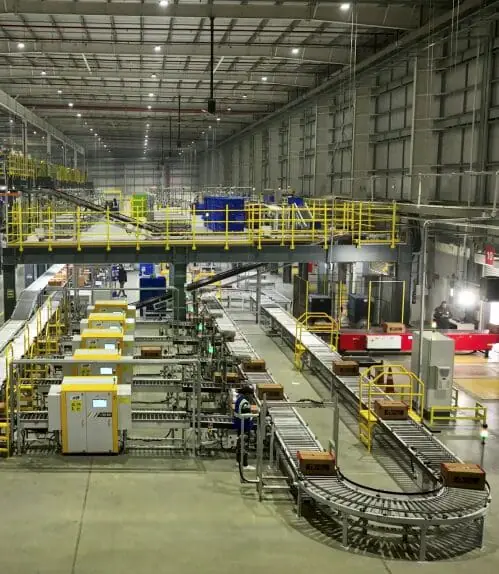
New warehouses are being built at a rapid pace to support e-commerce growth, retail expansion, and regional distribution hubs. But when it comes to meeting market demand, timelines are still being compressed, which leaves very little room for iterative design or testing. Rushed warehouse setup processes often embed inefficiencies that persist for years, such as poorly positioned storage zones, congested aisles, or under-utilised vertical space.
Early-stage planning has become a strategic lever for warehouse efficiency. Imagine running a fast-growing e-commerce company and SKU variety explodes, unexpectedly, demand spikes, and same-day delivery becomes a standard. But because the facility was designed without automation readiness, the team is forced to redesign the layout and interrupt operations, turning growth into an expensive reset. Since service expectations are rising and margins are tightening, smarter warehouse implementation becomes even more important. According to WifiTalents, a well-planned warehouse layout can boost productivity by up to 30%, while inefficient designs and frequent picking errors significantly inflate labour costs and operational losses, reinforcing why smarter warehouse implementation choices matter today.
What Are the Most Common Key Warehouse Setup Problems?
The following issues frequently emerge in warehouses when they are designed without considering long-term automation:
1. Poor Warehouse Layout (Inefficient planning):
Weak warehouse setup ideas often rely on generic aisle spacing and static slotting assumptions, which increase travel distances and lead to congestion. Imagine that you are leading an omnichannel e-commerce warehouse that promises next-day delivery. Order volume rises rapidly, but pickers are forced into long travel paths because fast-moving SKUs are placed too far from dispatch zones, and aisle geometry was never optimised for real order profiles, making it tough to fulfil high demand and resulting into operational and financial losses. Manual aisle design ignores real order profiles, which is not ideal in any scenario. When it comes to implementing automation in distribution centres, simulation-based planning is required.
Addverb’s Digital Twin technology allows the simulation of warehouse layouts and operational flows, enabling the testing of different scenarios to identify congestion points and optimise traffic flows even before the systems go live.
2. Underestimating Future Volume and SKU Growth
Rigid racking limits scalability once the demand begins to go up, and the seasonal surges also play a role in overwhelming manual operations, increasing the warehouse setup cost over time. Imagine that you are in charge of a fashion e-commerce operation and, one day, the number of SKUs triples with a festive launch. Inventory storage locations are overflowing, pallets are accumulating in pick aisles, and off-site space is needed because the facility was built to handle far lower volumes. Modular automation protects capital by enabling phased capacity expansion. A warehouse designed for limited SKU depth may suddenly face fast-moving variants that cannot be slotted efficiently, forcing overflow storage in aisles and emergency off-site rentals.
Shuttle systems such as Addverb’s Carton Shuttle and 4 Way Pallet Shuttle enable vertical growth without the need to expand footprints, and the phased deployment supports long-term throughput targets as volumes and SKU counts rise steadily.
3. Waiting to Add Automation Instead of Planning It Early
Late adoption of robotics affects warehouse operations a lot because things like power, network, and floor loading were never designed for automation during the initial stage. Just imagine adopting robotics later and then finding out that the floors must be reinforced and power lines reroute, while orders continue to pile up across the warehouse.
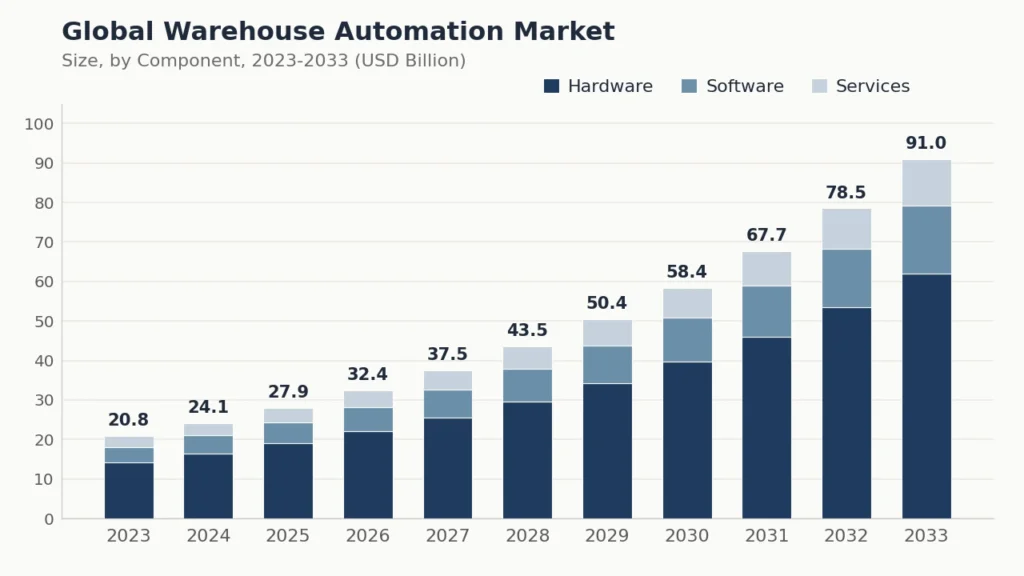
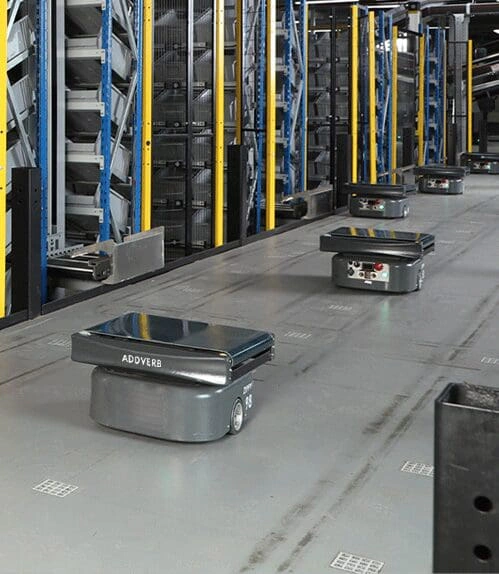
Early planning with Addverb’s AMR, Dynamo and conveyor systems makes it easy to lower the total cost and achieve higher ROI, which is particularly true when warehouse productivity improvements are locked into the initial design. According to Meteor Space, automation can cut labour costs by up to 40% while boosting productivity by more than 35%.
4. Over-Investing in Manual Processes to Save Initial Cost
Heavy labour dependence reduces resilience while limiting the throughput once the volume of orders begins to increase. Rising wages quickly erode early savings and the errors increase rework inside automation in distribution centers.
Addverb’s robotic sorter, Zippy, and Veloce, i.e., multi-carton picking robot demonstrates how automation can make it easier for warehouses to stabilise output while lowering mistakes and protecting service levels at all times.
5. Ignoring Software Architecture in Early Planning
Disconnected systems reduce visibility and force manual orchestration across:
- Picking.
- Packing.
- Dispatch.
WMS-driven task allocation improves execution while APIs ensure interoperability between robots, conveyors, and controls. Planners will need to juggle spreadsheets and phone calls to assign orders if the picking, packing, and dispatch systems are not properly integrated.
Software defines robotic warehouse system performance through the Addverb’s WES, Concinity, which coordinates material flows and optimises asset utilisation across the control layer.
Cost & Throughput Impact of Early Automation vs Retrofit Warehouses
Here’s the cost & throughput impact of early automation vs retrofit warehouses:
| Performance Factor | Early Automation | Retrofit Warehouses |
| Labour Cost Trend | Declines steadily as robotics scale with operations | Reduces slowly due to parallel manual processes |
| Throughput Growth | Rapid, predictable improvement from day one | Slower gains because layouts restrict automation |
| Space Utilisation | High-density storage and vertical expansion via ASRS | Limited by legacy racking and building constraints |
| Downtime Frequency | Low due to digital simulation and early integration | Higher from construction, rewiring, and upgrades |
| ROI Timeline | Faster payback from built-in productivity | Delayed returns after long retrofit cycles |
6. Poor Goods-to-Person Strategy Selection
Excess walking time lowers output, and poorly sized workstations create queues during peak times.
Robotics dynamically balance loads across stations while ergonomic design improves safety across the warehouse. Automated sequencing is essential inside a fully automated warehouse system as it helps increase dispatch speed while reducing fatigue-related slowdowns.
7. Failing to Plan for Peak-Season Stress Scenarios
Temporary labour scales poorly, and overflow storage creates bottlenecks. For example, a company launching a major promotion and watching marshalling areas overflow by midday because surge scenarios were never tested during design.
AMR fleets such as Addverb’s Dynamo expand capacity quickly while software reallocates tasks in real time. Simulation tools lower ramp-up risk inside a robotic fulfillment center by testing holiday or promotional surges before they occur.
8. Underestimating Integration Complexity
Programmable Logic Controller mismatches, Warehouse Management System conflicts, and conveyor control logic errors often delay commissioning and disrupt go-live schedules. The middleware-based orchestration and phased testing mitigate integration risk and ensure operational stability prior to full deployment.
Unified dashboards enable large-scale warehouse process automation by synchronising fleets, sorters, and material flows through Addverb’s fleet-control layers.
9. Neglecting Workforce Enablement and Change Management
Operator resistance and skill gaps make it harder for warehouses to adopt automation. Imagine installing advanced robotics only to see operators avoid the systems because they were never trained, leaving expensive equipment idle.
Training programs play a big role in improving the utilisation of robotics in warehouses and creating new supervisory roles, thereby further streamlining operations. Safer workflows and clear performance metrics strengthen long-term warehouse implementation success and help teams transition confidently into automated operations.
10. Monitoring the Wrong Operational Metrics
Labour KPIs on their own hide automation gains in warehouse operations. Throughput, order accuracy, and energy use provide better insight into the efficiency of warehouse setup process. System uptime ultimately defines ROI while continuous analytics guide optimisation decisions across every phase of the facility lifecycle.
How Addverb Solves Warehouse Setup Challenges?
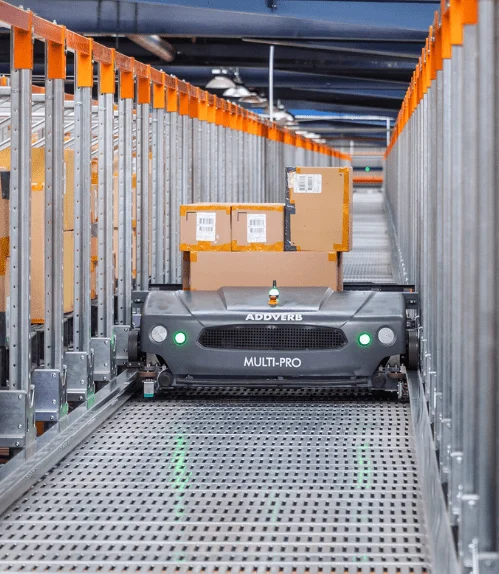
At Piramal PGP’s automated glass distribution centre, Addverb addressed material-handling complexity and layout inefficiencies with an advanced automated storage and retrieval system featuring an 11-floor multi-deep storage with 11 Mother-Child shuttles (Multi-Pro). When it came to managing pallet infeed and outfeed, cycle counts, and reports, Concinity WES was used. This helped reduce handling time and improve inventory accuracy.
For ITC’s high-density storage plant, Addverb deployed Multi-Deep Shuttle ASRS and Pick-to-Light, along with WCS integration to correct poor layouts and unlock better throughput with optimised storage. The outcome was scalable operations and maximised space utilisation.
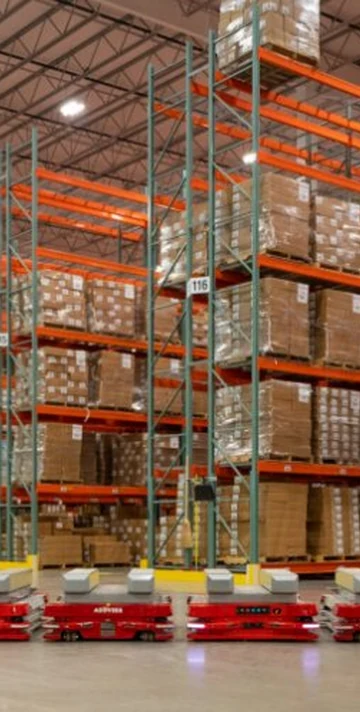
At Wooster Brush Company, Addverb deployed an automated material handling solution by integrating 13 AMRs, each capable of handling payloads of up to 1,100 pounds. This helped streamline internal movement, optimise flow, reduce errors, and raise operational efficiency across the site.
Conclusion
Most warehouse setup mistakes stem from short-term design choices, and some of them also come from limited automation planning. Robotics-first layouts will be a foundation for what the distribution centres of the future will look like, driving accuracy, capital efficiency, and throughput potential. Through the alignment of layout with future goals, facilities gain resilience against volume volatility. Addverb provides modern solutions to help organisations build scalable and automation-ready warehouses, resulting in sustained performance even during high-demand periods.
FAQs
1. What are some key common warehouse design mistakes?
Common warehouse design mistakes include rigid layouts, ignoring future SKU growth, and delaying automation planning, which together create long travel paths, congestion, and expensive retrofits over time. Poor integration between storage, material flow, and software systems further limits throughput and scalability in growing operations.
2. What are the common problems in a warehouse?
Warehouses frequently struggle with flow bottlenecks, rising error rates, inefficient picking routes, and space constraints as demand grows, issues that are often caused by manual decision-making and layouts that were never designed for higher volumes. These inefficiencies gradually increase labour costs while slowing dispatch cycles and weakening service performance.
3. How is automation used in warehouses?
Automation is used to move inventory between zones, store and retrieve pallets or cartons, pick items, sort orders, and sequence shipments, all while software systems dynamically assign tasks and prioritise urgent orders based on demand. AMRs handle transport, robotic arms execute picking, conveyors and robotic sorters accelerate sortation, and WMS or WES platforms manage routing, exceptions, and wave release to keep fulfilment flowing smoothly.
4. How to improve warehouse layout through automation?
Improving warehouse layout starts with analysing order patterns and material flows instead of relying on static aisle designs, while digital twin simulations and slotting optimisation help test different scenarios before physical changes are made. Modular storage and automation-ready infrastructure allow facilities to adapt smoothly as volumes and SKU counts evolve.
5. Can warehouse automation reduce operational errors?
Yes, warehouse automation supported by AI reduces errors through computer vision inspection, anomaly detection, and intelligent task routing, while barcode scans and real-time system checks enforce accuracy at each step. High-speed sortation robots such as Addverb’s Zippy are engineered for up to 99.9% sorting accuracy, helping minimise rework and returns while improving overall order quality.