



ON THIS PAGE
The textile industry is entering a phase where fulfilment is no longer just an operational function but a key driver of speed, consistency, and customer trust.
The Indian Textile Manufacturing Sector is also witnessing significant momentum, with the market estimated to grow at around a 10% CAGR, reaching approximately USD 2.3 billion by 2030. As one of the top global exporters across multiple textile categories, India’s exports are expected to scale toward USD 100 billion, further intensifying the need for efficient, scalable and responsive textile warehouse operations.
Key Questions for Textile Warehouses planning Automation:
While the textile fulfilment operations continue to evolve with introduction of automated processes, these key questions remain consistent for planning warehouse layouts and solutions:
- Fulfilment Speed
Expected fulfilment speed without overproducing or overstocking inventory. Is there any specific period for stocking raw materials or finished goods. - SKU Complexity
Textile warehouses manage SKU-heavy inventories with fabric variants, GSMs, and strict batch traceability. What is the count of such SKUs that need to be maintained? - Sustainable Scale
With the rise of instant delivery expectations, how does a proposed warehouse satisfy the expectation of scaling production or inventory up or down?
But why should textile warehouses in India consider automation?
Key Challenges for Indian Textile Manufacturers in Warehousing
1. Complex Storage & Roll Handling
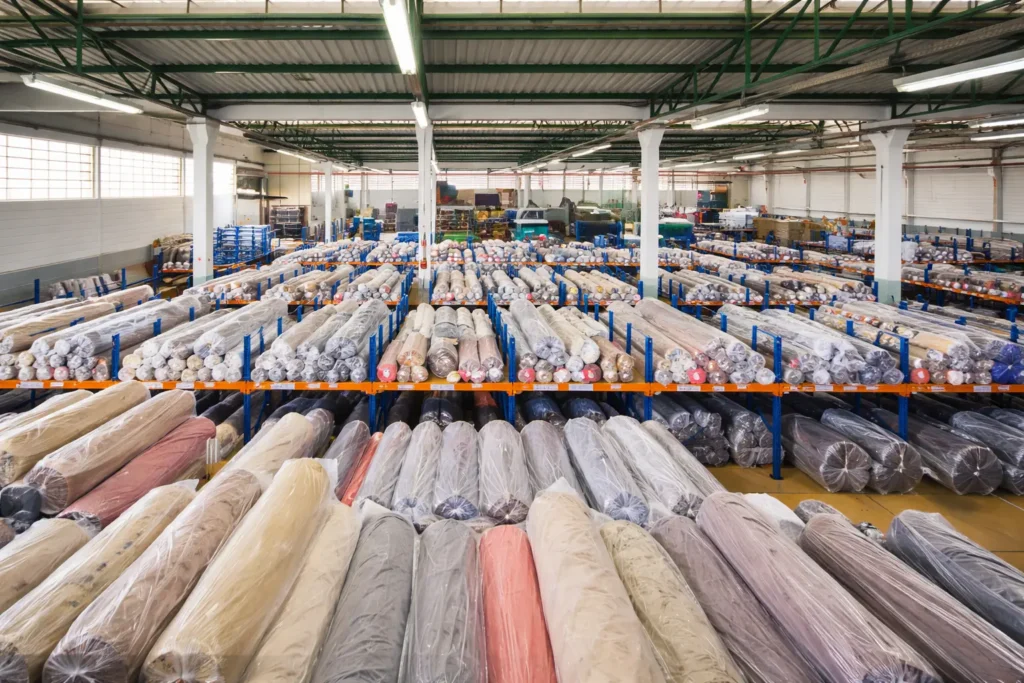
Textile warehouses face challenges in storing bulky fibres, yarns and fabric rolls along with irregular beams of varied diameters, weights and fragile cores. Mislabelled or overstocked inventory reduces slotting efficiency and lowers storage density across textile-fabric warehouse operations.
2. Inventory Visibility Gaps
Textile factories struggle with mis-synced ERP and WMS data, a lack of real-time WIP visibility and poor batch segregation. Inaccurate tracking of partial rolls or fast-moving SKUs causes errors, delays and stockouts across fabric manufacturers and cotton factories.
3. Cartonisation & Packaging Inefficiencies
Textile warehouses handle mixed fabrics and irregular roll shapes resulting in unstandardised cartonisation. Overpacking, voids, varied labels or inappropriate materials increase damage and reduce throughput for cloth manufacturing warehouse operations.
4. High Returns Volume
High volume of returns in unwound, creased or contaminated rolls create bottlenecks for re-inspections and re-rolling. Poor grading inconsistency, missing tags, and seasonal peaks delay the re-integrations that reduce warehouse throughput for fabric suppliers.
5. Movement Challenges
Poor sequencing and mixed pallet formats increase warehouse congestion resulting in reduced efficiency in textile manufacturing environments. Large-format rolls, variable-weighted cartons and manual handling slow down replenishment and disrupt pick availability.
6. Multi SKU Complexities
Color similarity, fine fabrics, curved barcodes and multi-SKU orders complicate picking. Sorting B2B and B2C shipments together with varying sizes increases mis-picks, tote overflows, conveyor jams and cross-zone coordination issues across setups in a textile warehouse.
7. Labour Constraints
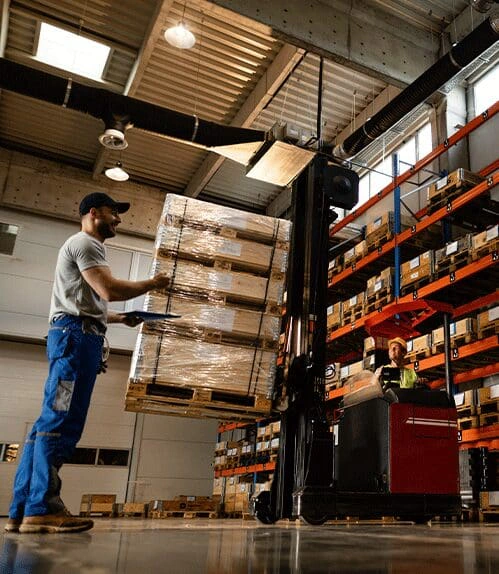
Fatigue, skill gaps and dependence on manual handling of heavy loads blur the effectiveness of textile warehouse operations. Heavy roll handling, night shifts, inconsistent quality checks and absenteeism increase errors, injuries and operational inefficiencies within the textile factory workflow.
How can Addverb’s automation solutions overcome Textile fulfilment challenges?
1. Automated Storage and Retrieval:
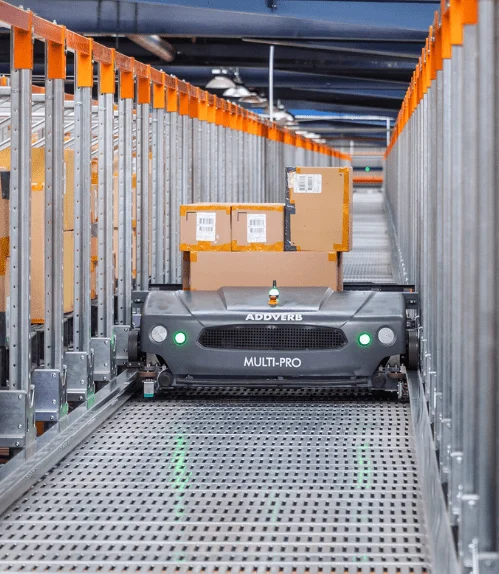
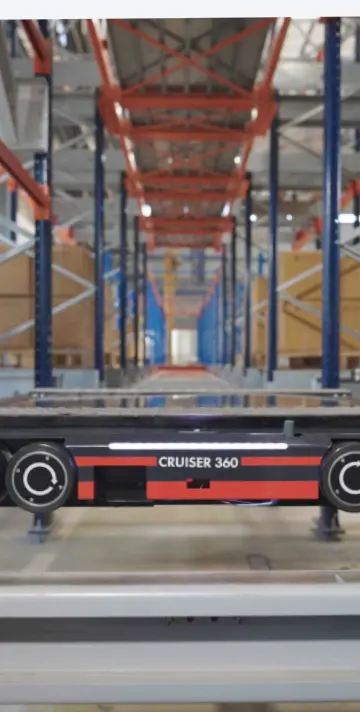
Addverb’s 4-way pallet shuttle and Mother-Child Shuttle ASRS, along with stacker crane AS/RS, efficiently store bulky rolls and irregular beams. FIFO management ensures that the first in, first out sequencing which reduces overstock and misplacement and maximises pallet storage density in textile warehouses.
2. AI-enabled Software
Addverb’s WMS and WES solutions provide real-time visibility of fabric rolls across warehouses, allow the synchronisation of ERP data and manage batch segregation. Accurate tracking of partial fabrics and high-moving SKUs prevents errors and stockouts, while making omni-channel textile automation operations seamless.
3. Material Movement
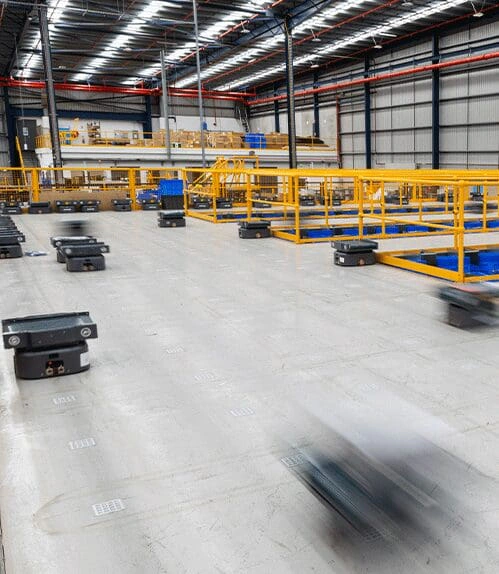
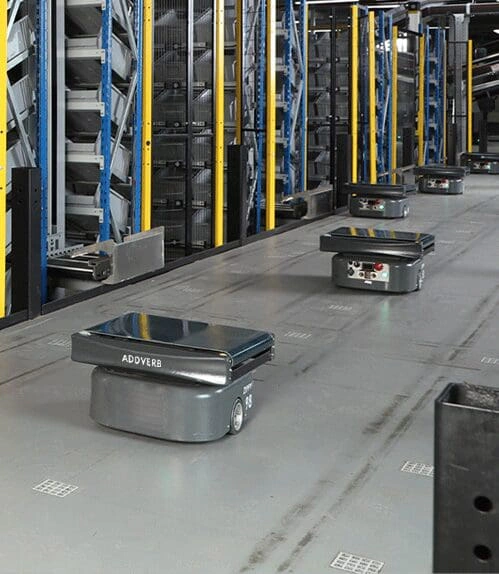
Rail Guided Vehicle, AMRs and autonomous forklifts provide seamless textile material movement, managing heavy oversized rolls, mixed pallet formats and uneven carton weights. Automated sequencing, micro-transfer, and zone-to-zone transport reduce congestion, improve replenishment speed and maintain smooth picking availability across textile warehouse operations.
4. Automation As A Service
Addverb’s Automation-as-a-Service enables deploying automation across textile warehouses without a high upfront cost. Heavy roll handling and repetitive tasks, along with night shifts, are automated to reduce fatigue, human error, and hence improve overall operational efficiency in the automation workflows of the textile industry.
Impact of AI on Automated Textile Warehouses
The textile warehouse of the future will be:
- Data-driven, with real-time visibility across inventory and order flows
- Highly flexible, capable of supporting multiple fulfilment channels
- Automation-enabled, driven by textile automation for consistency and accuracy
- Sustainability-focused, optimised for space, energy, and waste reduction.
For more details on how AI impacts warehouse automation, check out our State of AI in Warehouse Automation Report 2026.
Manufacturers that invest early in future-ready fulfilment infrastructure will be better positioned to adapt to evolving market demands while protecting margins and brand reputation.
Is it time to automate your textile warehouse?
In today’s global textile industry, fulfilment is no longer a support function, it is a competitive differentiator. Companies that successfully balance speed, complexity, and sustainability gain greater control over their supply chains and stronger alignment with market expectations.
By combining deep domain understanding with intelligent automation in textile industry, Addverb enables textile manufacturers to transform fulfilment from a cost center into a strategic advantage, built for today’s demands and tomorrow’s growth.
Reach out to us on [email protected] once you’re ready to convert your fulfilment challenges into your competitive edge.
Frequently Asked Questions
1. How does automation in textile industry improve fulfilment speed and accuracy?
Automation in the textile industry enables faster and more accurate fulfilment by reducing manual intervention across storage, picking, and dispatch. Solutions like ASRS systems, AMRs (Autonomous Mobile Robots), and automated pallet handling systems streamline material flow, ensuring real-time inventory visibility and significantly lowering picking and sorting errors in textile warehouses.
2. What role do ASRS solutions play in textile warehouse operations?
ASRS solutions play a critical role in modern textile warehouse operations by enabling high-density storage, FIFO-based inventory management, and faster retrieval of materials. Systems such as 4-Way Pallet Shuttle and Crane-based ASRS help textile manufacturing facilities manage large SKU volumes efficiently while optimising space and reducing dependency on manual labour.
3. How can textile manufacturing facilities manage high SKU complexity efficiently?
In textile manufacturing, managing SKU-heavy inventories requires a combination of intelligent software and automation. High-density storage systems, ASRS Systems, and AMRs help track fabric variants, GSM, and batch details with precision, ensuring error-free picking and seamless order fulfilment across textile warehouses.
4. How do pallet-based automation systems support textile industry automation?
Pallet-based automation systems are essential for handling bulk materials like fabric rolls and cartons in the textile industry. Automated pallet storage and retrfieval solutions improve storage density, enable safe material handling, and ensure faster movement across the warehouse, making them a key component of scalable textile industry automation strategies.
5. Why are AMRs becoming important in textile warehouse automation?
AMRs (Autonomous Mobile Robots) are increasingly used in textile warehouse environments to automate internal material movement between storage, picking, and dispatch zones. In automation textile industry setups, AMRs enhance flexibility, reduce labour dependency, and support faster fulfilment cycles, especially in dynamic and high-volume textile manufacturing operations.