



ON THIS PAGE
Imagine a temperature-sensitive biologic shipment sitting inside a pharma warehouse, waiting on a narrow, pre-committed delivery window. A minor delay in pickup cascades well beyond operations — it threatens regulatory compliance and, ultimately, patient safety.
Pharmaceutical warehousing was never just about storage — it’s about managing inventory and traceability through volatile demand. The combined pressure of time, precision, and regulatory scrutiny makes pharma one of the strongest use-cases for warehouse automation.
It’s also one of the hardest. DSCSA (Drug Supply Chain Security Act) serialization leaves no margin for error, capital costs run high with long ROI timelines, and legacy WMS/ERP integration is rarely clean. Cold-chain zones, cytotoxic handling, and SKUs from vials to pallets refuse to fit a single automation mold.
That’s where most operators get stuck — not on whether to automate, but on how. The traditional answer is fixed Automated Storage and Retrieval Systems (ASRS): dense, purpose-built infrastructure for stable SKUs and volumes. The newer answer is flexible automation — autonomous mobile robots (AMRs), goods-to-person stations, modular shuttles — trading peak density for the ability to scale and reconfigure. In pharma, where product mix, batch sizes, and regulations keep shifting, that choice is one of the highest-stakes design calls a network makes.
This article walks through it: where fixed ASRS still wins, where flexible automation is pulling ahead, and why pharma leaders are blending both.
Flexible Automation vs Fixed ASRS: The Real Difference in Pharma
On paper, flexible automation and fixed ASRS look like two tools solving the same problem. In practice, they solve fundamentally different ones — and mistaking one for the other is where most pharmaceutical warehouse automation projects go wrong.
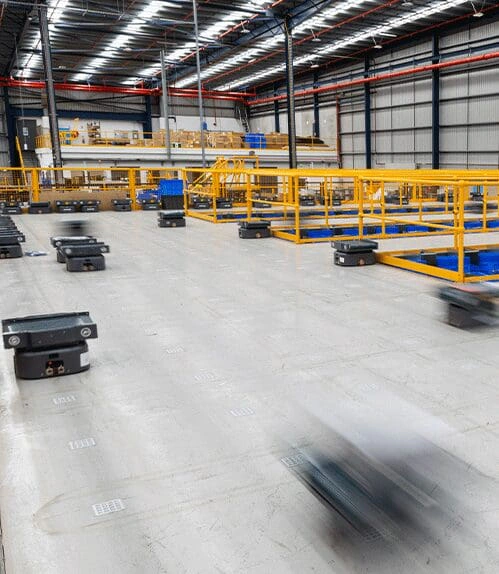
Flexible automation — AMRs, goods-to-person stations, modular shuttles — is built for variability. It drops into existing layouts, deploys in phases, and adapts to shifting SKU profiles, contract-manufacturing surges, and multi-channel distribution. Its strength is movement and change.
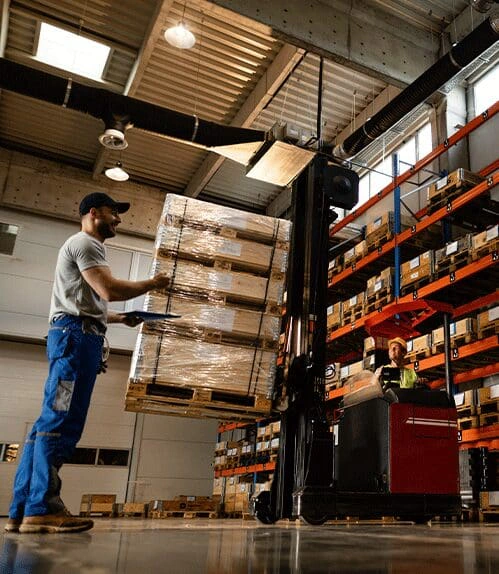
Fixed ASRS is built for density and stability. Pallet retrieval systems, mini-loads, and high-bay shuttles excel where volumes are predictable, SKUs stable, and cubic utilization matters — bulk storage, pharmaceutical cold storage, structured FIFO/FEFO workflows. Its strength is throughput and control at scale.
In short: flexible automation gives you agility; fixed ASRS gives you discipline. The mistake is forcing one to do the other’s job — which is why most pharmaceutical supply chain operators now deploy both.
Flexible Automation vs Fixed ASRS: Side-by-Side
| Parameter | Flexible Automation (AMRs, shuttles) | Fixed ASRS (pallet-based) |
| Adaptability | High — adjusts to SKU and demand changes | Low once installed |
| Deployment | Faster, minimal disruption | Longer — infrastructure build |
| Primary function | Dynamic movement and picking | High-density storage |
| Best use case | Picking, transport, multi-zone ops | Bulk and pharmaceutical cold storage |
| Scalability | Phased expansion | Pre-defined capacity |
Key Factors to Consider When Automating a Pharma Warehouse
Three practical questions decide where flexible automation and fixed ASRS fit in a hybrid pharmaceutical automation stack.
1. Speed to Value
For a new drug launch or contract-manufacturing ramp, deployment speed can be the difference between ROI this fiscal year and next. Flexible automation — AMRs, mobile picking stations, goods-to-person — deploys in weeks, integrates with existing WMS, and scales with throughput. Fixed ASRS takes longer to stand up because the infrastructure is purpose-built, but once live, it runs for a decade with predictable throughput and low variable cost.
2. Investment Strategy and ROI
Flexible automation supports phased investment: start with 10 AMRs, expand to 50 as volumes grow, add goods-to-person stations when SKU complexity demands. Fleets can be redeployed if a facility’s role shifts. Fixed ASRS requires higher upfront commitment but delivers the lowest lifetime cost per pallet-move for stable, high-volume operations. Most large pharma operators now run a blended model — fixed ASRS for the stable core, flexible automation for the variable perimeter.
3. Storage and Compliance Requirements
Pharma warehouses handle temperature-sensitive and serialized inventory across ambient, cold, and controlled zones — often in the same building. Flexible automation moves goods seamlessly across them, with cleanroom-compatible configurations for biologics and sterile handling. Fixed ASRS delivers high-density pallet handling, optimized cubic utilization, and built-in FIFO/FEFO enforcement — non-negotiable in batch-controlled, DSCSA-compliant operations. In pharmaceutical cold storage, fixed systems also cut door-open time and temperature-boundary dwell, improving both energy efficiency and product integrity. Serialization, batch traceability, and audit-readiness ride on the software layer above both.
Why Hybrid Automation Is the Future of Pharma Warehousing?
The flexible-vs-fixed automation debate is resolving through integration, not victory. Fixed ASRS manages the high-volume, predictable storage core — bulk pallets, cold-chain inventory, long-tail finished goods. Flexible automation handles the dynamic perimeter — inbound put-away, multi-zone movement, order consolidation, serialized picking, and last-touch before shipping.
For pharmaceutical supply chain operators, hybrid delivers three things neither approach alone can:
- Compliance at throughput. Fixed ASRS enforces FIFO/FEFO and serialized batch discipline; flexible automation carries it through pick, pack, and dispatch without manual handoffs.
- Resilience as product mix shifts. New therapies and contract-manufacturing additions land on the flexible layer without re-engineering the storage core.
- Staged capital. Fixed ASRS anchors long-term capacity; flexible automation scales with demand.
The broader shift is from point solutions to integrated smart warehousing — storage, movement, and information as one system.
Why Is a Solution-First Approach Important in Pharma Warehousing?
A solution-first approach focuses on understanding operational challenges before implementing technology.
Pharmaceutical warehouses often face issues such as high SKU variability, strict serialization requirements, temperature-sensitive storage needs, and the need to scale operations during new product launches. Addressing these challenges requires a tailored automation strategy rather than a one-size-fits-all solution.
By aligning automation with real operational needs, businesses can ensure that their pharmaceutical automation investments deliver measurable value in terms of efficiency, compliance, and scalability.
How Addverb Enables Hybrid Pharma Automation at Scale?
Addverb enables automation in pharmaceutical warehousing through a hybrid ecosystem designed to support both flexibility and control.
1. Addverb’s Dynamo, Autonomous Mobile Robot
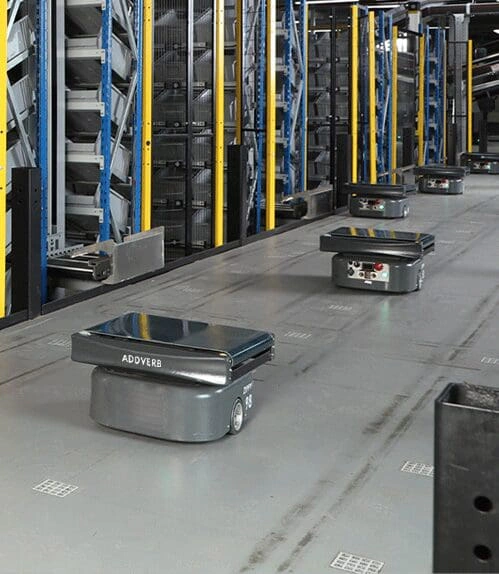
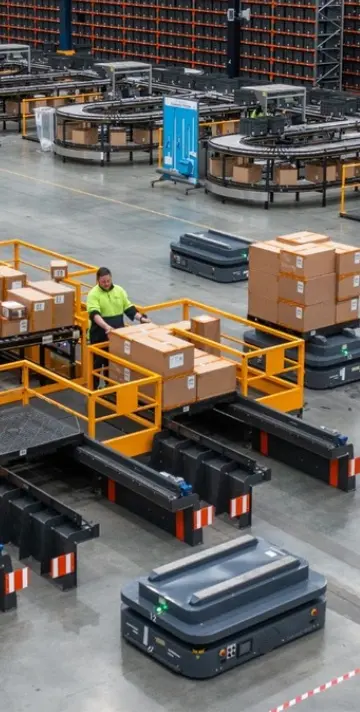
Addverb’s Dynamo, Autonomous Mobile Robot (AMR), enables seamless material movement across pharma warehouse zones using SLAM-based navigation and obstacle detection. It supports flexible payload handling and operates in cleanroom-compatible environments, reducing contamination risks and ensuring consistent, contactless flow between stages.
2. Addverb’s Cruiser 360, 4-Way Pallet Shuttle System
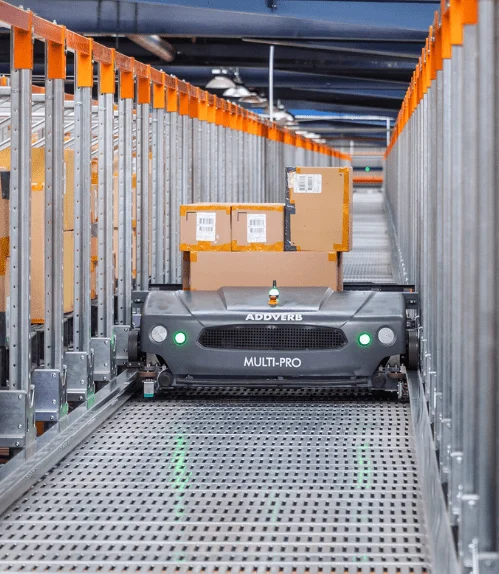
Addverb’s Cruiser 360, 4-Way Pallet Shuttle System, delivers multi-directional pallet movement and deep-lane storage, maximizing space utilization. It ensures FIFO/FEFO compliance and high-throughput operations, making it ideal for handling serialized pharmaceutical inventory with accuracy and speed.
3. Addverb’s 2-Way Pallet Shuttle System with Conveyor Systems
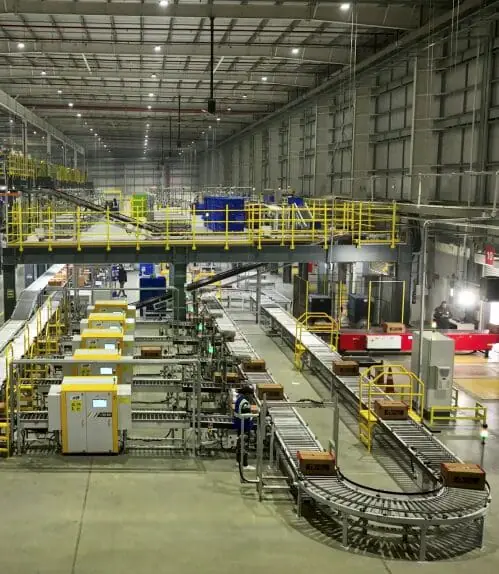
Addverb’s 2-Way Pallet Shuttle system integrated with Conveyor systems enables lane-based high-density storage with automated pallet flow. It ensures faster inbound and outbound movement, reduces manual handling, and improves throughput, especially in pharmaceutical cold storage and bulk handling environments.
These systems are supported by an integrated software layer that provides real-time visibility, batch-level traceability, and optimized workflow management across the pharmaceutical supply chain.
This ensures synchronized operations, regulatory compliance, and end-to-end control across all automation systems.
Why Is Lifecycle-Centric Automation Critical in Pharma Warehousing?
Automation in a pharmaceutical warehouse does not end at deployment. Long-term success depends on continuous monitoring, predictive maintenance, and system optimization.
Lifecycle-centric automation ensures sustained warehouse efficiency, ongoing compliance with pharmaceutical logistics requirements, and reliable system performance as operations evolve.
By adopting a lifecycle-driven approach, pharmaceutical companies can maximize the value of their automation investments while maintaining operational stability.
What Separates the Winners in Pharmaceutical Warehouse Automation?
The pharmaceutical warehouses pulling ahead didn’t pick a side in the flexible-vs-fixed debate. They mapped their operation honestly — stable core vs dynamic perimeter, ambient vs cold vs controlled, finished goods vs complex launches — and matched each layer to the right automation.
Flexible automation delivers agility. Fixed ASRS delivers density and discipline. Under a shared software layer, they deliver what neither can alone: a pharmaceutical warehouse that scales with the business while staying compliant, resilient, and efficient.
If your automation roadmap still frames the decision as flexible or fixed, reframe it. The real question is which parts of your operation need which — and how to orchestrate both.
Talk to an Addverb pharma automation specialist →
FAQs
1. What is the difference between flexible automation and fixed ASRS in pharmaceutical warehousing?
Flexible automation, such as AMRs, is designed for dynamic operations like picking and material movement, while fixed ASRS systems focus on high-density pallet storage and structured workflows. The choice depends on whether your pharma warehouse prioritizes flexibility or storage efficiency.
2. When should pharmaceutical warehouses choose flexible automation over fixed ASRS?
Flexible automation is ideal when operations involve high SKU variability, frequent product changes, or multi-zone movement across pharmaceutical storage environments. It allows faster deployment and phased scalability.
3. When is fixed ASRS more suitable for pharmaceutical storage?
Fixed ASRS systems are best suited for pharmaceutical cold storage, bulk pallet handling, and environments where high-density storage, traceability, and strict compliance are critical.
4. Is hybrid automation better than choosing only one system?
Yes, hybrid automation combines flexible and fixed systems, enabling pharma warehouses to optimize both dynamic workflows and high-density storage, ensuring efficiency, compliance, and scalability.
5. Which Addverb solutions support flexible and fixed automation in pharma warehouses?
Addverb’s Dynamo, Autonomous Mobile Robot (AMR), supports flexible automation, while Addverb’s Cruiser 360 (4-Way Pallet Shuttle) and Cruiser (2-Way Pallet Shuttle), combined with Conveyor systems enable fixed automation for pharmaceutical storage.