



ON THIS PAGE
An Automated Guided Vehicle (AGV)is becoming essential in modern intralogistics because warehouses often have a large number of items and repetitive transportation tasks, which increase travel time and effort while also leading to handling mistakes when performed manually. These challenges are addressed by the AGV for warehouse, which is designed for effective and systematic transportation of goods and payloads between different zones. According to Global Growth Insights, the global AGV market size stood at USD 126.64 billion in 2024 and is estimated to reach approximately USD 316.36 billion by 2033, as demand for logistic automation grows.

How Do AGVs Work in Modern Warehouses?
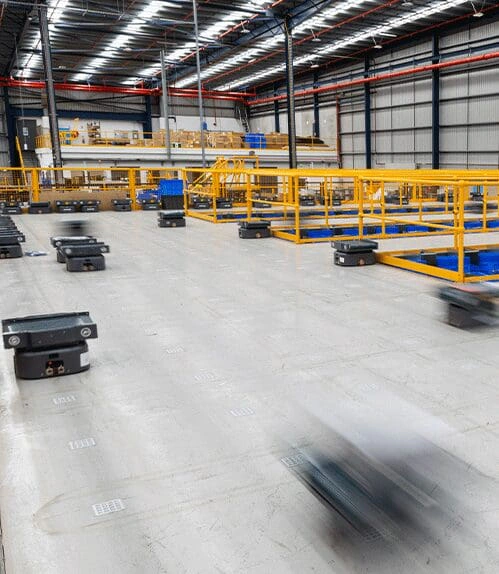
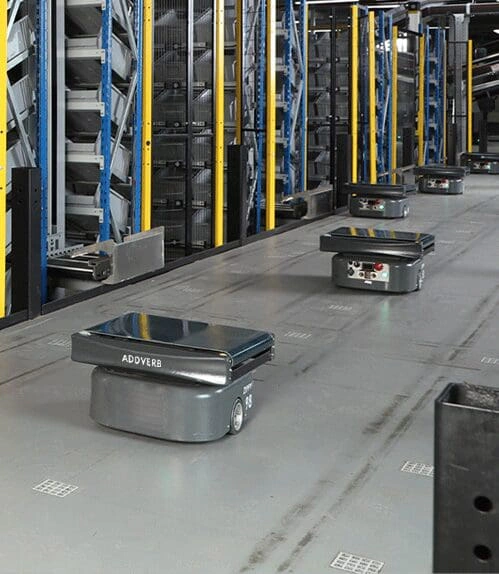
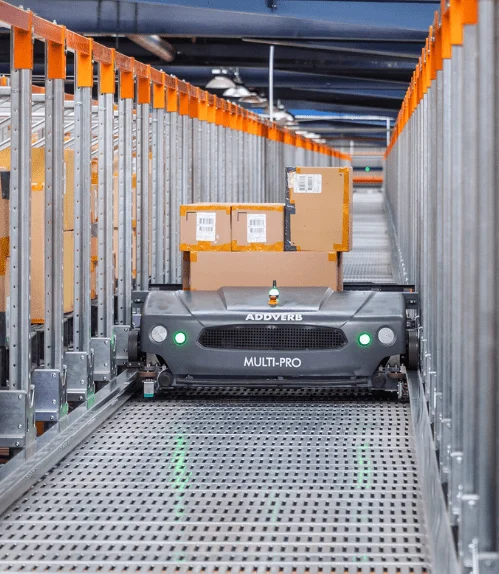
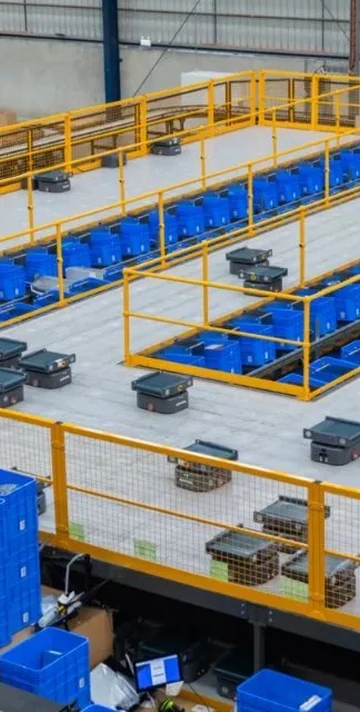
To understand what is AGV first, individuals should witness how it operates within a warehouse. An Automated Guided Vehicle (AGV) is a machine that travels along predetermined paths, using floor markers or QR-based navigation. Addverb’s robotic sorter, Zippy, performs SKU-wise sorting with up to 30,000 sorts per hour, payloads from 6 kg to 40 kg, and navigation for accurate and high-speed sortation. For carton-level processes, Addverb’s multi-carton picking robot, Veloce, supports a maximum of 240 kg of cartons at a top speed of 1.5 m/s, allowing for efficient and precise goods-to-person picking. Both systems integrate with Warehouse Execution Software to ensure fast, accurate, and consistent material flow.
AGVs carry cartons, totes and parcels along predefined routes, and software controls their movement to ensure:
- Consistent travel routes
- Fewer navigation errors
- Controlled and predictable operations
In modern facilities, AGVs integrate with warehouse management systems to coordinate inbound movements, storage moves, and hybrid human-robot areas. Addverb’s high-speed sortation AGVs, such as Zippy, manage carton and parcel routing, AMRs like Dynamo handle material transport, multi-carton picking robots such as Veloce support order picking, and forklift AGVs automate pallet put-away and retrieval operations.
According to PW Consulting, around 70% of AGV buyers prioritise safety-enabled sensors such as obstacle detection when selecting systems.
What Types of AGV Systems Are Used in Warehouse Automation?
The type of AGV system used is normally determined by the warehouse layout. The following are the various types of systems used:
- Robotic Sorters: Addverb’s robotic sorter, Zippy, is designed for high-speed, SKU-wise sorting, with a capacity of up to 30,000 sorts per hour. It handles payloads ranging from 6 kg to 40 kg, facilitating accurate and efficient sorting.
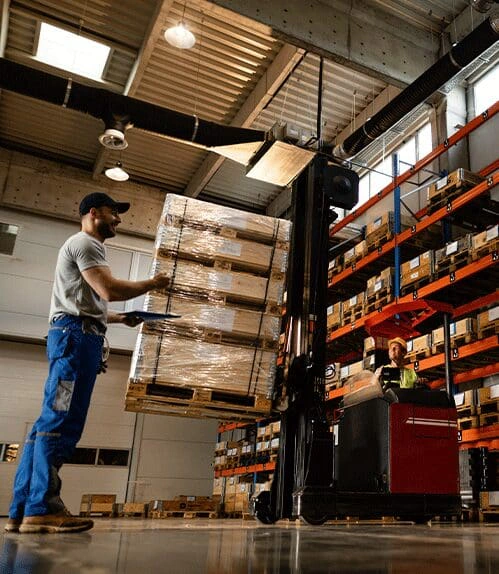
- Forklift AGVs: Automate the put-away and retrieval of the pallets within the racking. Through the usage of lift and tilt mechanisms, they reduce dependence on manual forklifts.
- Multi-Carton Picking AGVs: Designed for high-speed carton picking and transport, improving order fulfilment efficiency and accuracy.
Addverb’s vertical sortation robot, SortIE, provides vertical sortation automation for cartons and totes, integrating guided movement within complex workflows. It helps maintain a smooth flow in zones where materials need to be precisely routed to multiple locations.
What Are the Operational Benefits of AGVs and Their Control Systems?
Deploying AGV automation changes how internal transport is managed. AGVs replace repetitive manual movement with programmed vehicle operations. This supports higher throughput and reduces unnecessary travel inside the facility. Addverb’s Zippy and SortIE improve internal transport by combining guided movement with automated sorting, which reduces handling errors and improves operational reliability.
Key operational benefits include:
- Reduced manual transport effort
- Lower labour costs and redeployment of the workforce to higher-value tasks
- Improved handling precision
- Lower risk of product damage
- Better visibility through centralised dashboards
An AGV control system manages scheduling, routing, and monitoring from a central interface. Supervisors can assign tasks and track vehicle performance in real time, which helps improve coordination across transport activities.
AGVs also support safer operations. Speed limits, automated stops, and obstacle detection make it easier to reduce risk in facilities where people and machines are working together often.
AGV Automation’s Impact on Warehouse Throughput vs Manual Handling
Here is AGV automation’s impact on warehouse throughput vs manual handling:
| Metric | Manual Handling | AGV Deployment |
| Average throughput per hour | Lower | Higher |
| Error rate | Higher | Lower |
| Manual labour requirement | High | Reduced |
| Material flow consistency | Variable | Consistent |
| Response to high-volume peaks | Slower | Faster |
What Are Some Real-World Deployments of Addverb AGVs?
Below are examples of how Addverb’s AGVs have been deployed to improve operations in an AGV warehouse.
In the Sortation Center for an E-commerce Player, the facility faced high-volume outbound sorting and challenges with manual handling. Addverb deployed 125 AGVs to automate the outbound sortation of packages, which helped increase throughput to 5000 sorts/hour and achieve an order fulfilment accuracy of 99.9%.
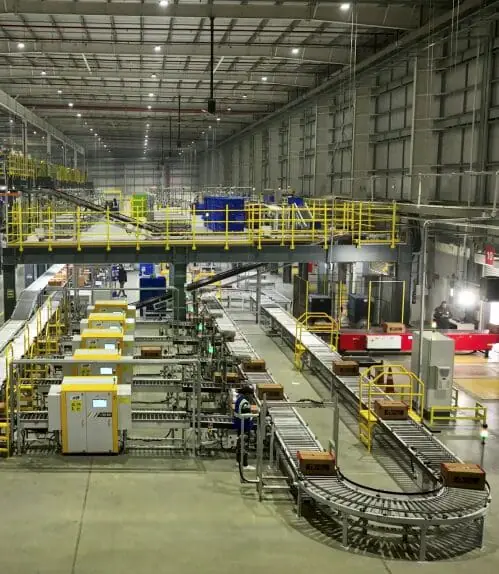
In the Automated Eyewear Manufacturing Facility, the facility struggled with handling diverse SKUs and consolidating orders in an efficient manner. Addverb deployed AGVs to categorise orders into chutes as per logistics partners. The solution reduced order consolidation time to 2.5 hours per order, and the facility dispatched 2,00,000 orders per day, with an order fulfilment accuracy of 99.9%.
Conclusion
An AGV, Automated Guided Vehicle replaces manual internal transport with guided and programmed movement. Instead of relying only on human-driven forklifts, warehouses use controlled vehicle systems to move materials more consistently.
Addverb’s AGV, Zippy, is optimised for fast material movement in high-throughput areas. Likewise, the company’s other AGV, SortIE, handles precise vertical sortation within structured workflows. Both these robots help improve internal flow while reducing errors and supporting scalable warehouse operations.
FAQs
Q1: What are the types of AGVs in warehousing?
Types of AGVs in warehousing include sortation and Carton-moving AGVs. Examples include Addverb’s Veloce and Zippy, which are designed for payload movement, sorting, and automated material handling across warehouse operations.
Q2: How does an Automated Guided Vehicle work?
An AGV operates along predefined paths, uses onboard sensors, and integrates with warehouse systems. Systems such as Addverb’s Zippy move materials through high-volume sorting zones, while SortIE manages guided vertical sortation for efficient distribution.
Q3: How do AGVs avoid hitting objects?
AGVs use obstacle detection sensors, emergency stop mechanisms, and real-time monitoring as part of their safety design, which allows the vehicle to slow down or stop when an obstruction is detected.
Q4: When should a warehouse use AGVs?
Warehouses use AGVs in high-volume and repetitive transport areas where consistent material movement is required. They are suitable when improving throughput and reducing manual travel is a priority.
Q5: What technologies are used in AGVs?
AGVs use path guidance systems, QR-based navigation, onboard sensors, centralised control software, and integrated navigation systems. Together, these technologies enable safe and structured automated material handling.