



ON THIS PAGE
As customer expectations change and the number of fulfilment channels grows, warehouses are required to handle increasingly complex ecommerce order fulfilment processes. Most manual order picking as well as manual sorting leads to bigger mistakes. Such errors progress into delayed shipments and frustrated customers, and no business can afford that because competition is really high. Customers do not give a second chance if errors occur in the order fulfillment.
For warehouses, time management, precision, and overall efficiency are vital, which is why it is a must to reduce picking errors. That need has been increased even further by same-day and next-day delivery expectations, with 70% of consumers preferring same-day or next-day delivery, 88% willing to pay for same-day or faster service, and 76% expecting free delivery on online orders, and there is no more room for errors. Modern fulfilment centres must employ solutions leading to precise and rapid operations to ensure that the customer demands are satisfied adequately.
What is the True Cost of Picking Errors in Fulfilment Operations?
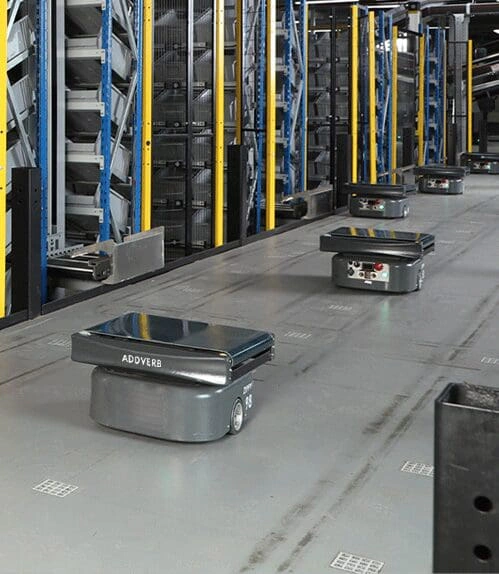
Picking errors increase returns and rework, which makes the operational costs go up significantly, and the Incorrect shipments impact customer trust and reduce retention. Manual quality checks slow down throughput and create bottlenecks, which further affects the efficiency. Tracking error metrics is essential to identify problem areas before implementing improvements. Automated sorting systems reduce dependency on manual verification and ensure improved accuracy and speed. Solutions like Addverb’s Dynamo AMR help maintain consistent, high-speed material movement operations, reducing errors and improving overall warehouse performance.
What Challenges Inside an E-Commerce Fulfilment Warehouse Lead to Errors?
Warehouses face multiple operational hurdles that can increase picking errors and reduce throughput. Understanding these challenges helps in designing strategies and implementing systems that proactively mitigate risks. Key issues include:
- High SKU complexity increases human error risk in an ecommerce fulfilment warehouse, while manual order batching often causes delays and errors.
- Multi-channel fulfilment requires dynamic inventory management, but the limited visibility across warehouse zones prevents proactive error elimination, and that is why even the smallest issues end up escalating into bigger problems.
- Seasonal peaks exacerbate inefficiencies, which creates operational strain.
- Addverb’s Concinity enhances real-time operational visibility and orchestration while the FMS optimises task allocation for AMRs, sorting robots and vertical sortation robots, reducing picking errors and improving throughput.
How Does a Robotic Sortation System Transform E-Commerce Operations?
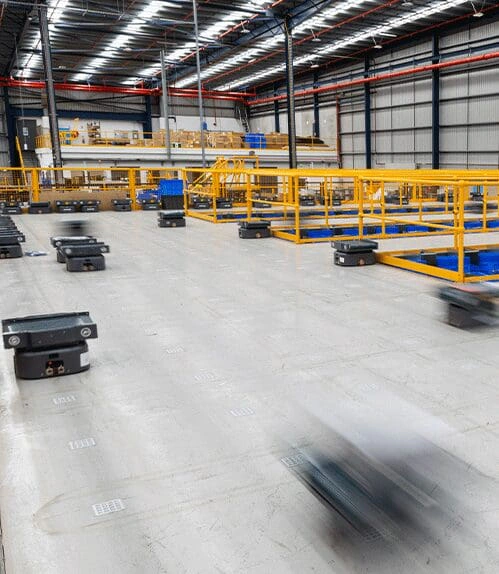
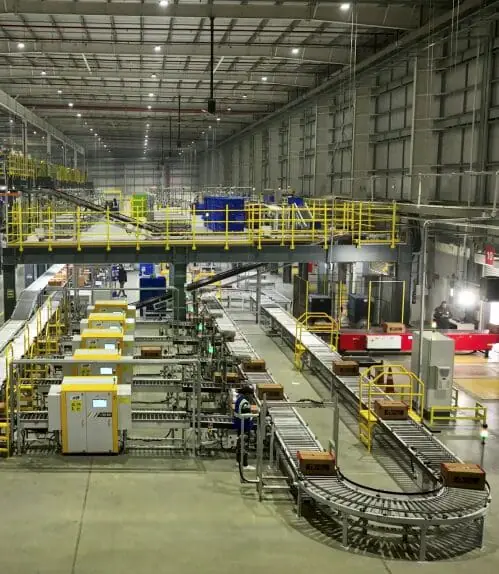
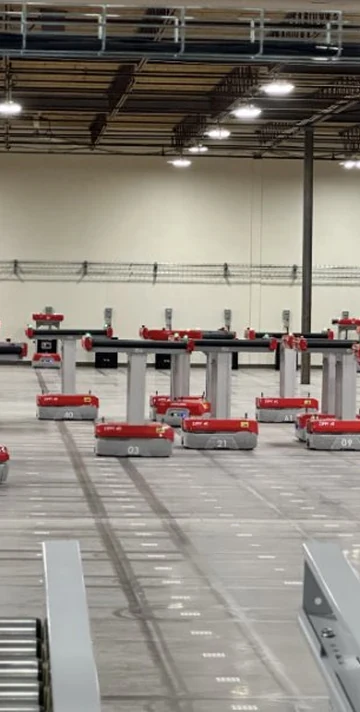
High-speed Zippy, a robotic sorter from Addverb handles large volumes of items with utmost precision. Integration with Movect, FMS and Concinity, WES ensures accurate task allocation and real-time operational control. Conveyor-robot interfaces streamline item flow, while advanced sensors and vision systems reduce mispicks.
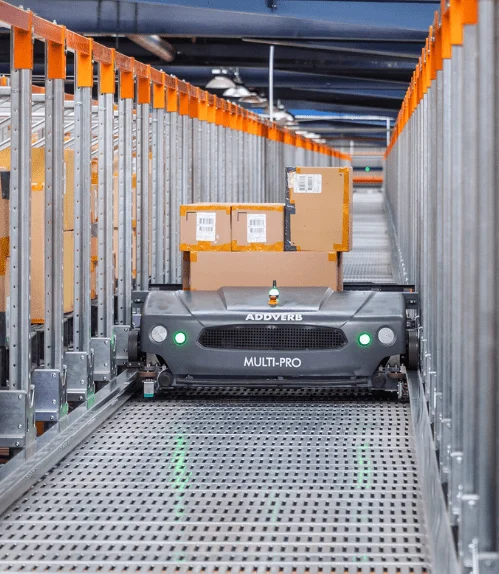
Automated Mobile Robots (AMRs) complement the robotic sortation system, delivering end-to-end material movement fulfilment efficiency. Together, these technologies:
- Optimise warehouse operations.
- Reduce picking errors.
- Improve throughput.
What Key Capabilities Make Sortation Robots So Effective?
Sortation Robots offer real-time item identification and routing, making it easier to minimise errors in order processing. High-speed, automated sorting reduces mispicks while integration with Movect, FMS, and Concinity, WES ensures order-level accuracy. These robots enable flexible handling of diverse SKU sizes and weights, and the built-in redundancy ensures uninterrupted operations. For instance, Addverb’s Zippy performs up to 30,000 sorts per hour while achieving 99.9% order accuracy.
Data tracking allows continuous performance optimisation. These capabilities collectively:
- Reduce picking errors.
- Improve fulfilment efficiency.
- Support high-volume ecommerce fulfilment warehouse operations.
Impact of Sortation Robots on Picking Accuracy and Throughput
Here’s the impact of sortation robots on picking accuracy and throughput:
| Performance Metric | Manual / Low-Automation Operations | Robotic Sortation & AMR-Driven Operations |
| Picking Error Rate | Higher due to manual handling and visual checks | Dramatically reduced through vision systems and automated routing |
| Order Throughput | Limited by walking time and manual sorting | Increased through high-speed robotic sorters and AMRs |
| Returns & Rework | Frequent and costly from mispicks | Significantly lower due to near-perfect order accuracy |
| Quality Inspection Effort | Heavy reliance on manual verification | Automated validation at every sort point |
| Peak-Season Scalability | Requires large temporary labour pools | Robots scale rapidly while software reallocates tasks |
How Should Companies Implement Warehouse Sortation Systems Strategically?
Companies should begin by assessing warehouse layout and workflows, as it will help enable the smooth integration of robotic sorters such as Zippy and SortIE from Addverb across existing infrastructure. Automating first in high-error zones allows performance validation before scaling across the facility. Software platforms and material-handling equipment shall be well aligned so that any bottlenecks can be eliminated and synchronised execution is maintained throughout operations.
Clear KPIs for accuracy, throughput, and reliability set up measurable benchmarks for success across warehouses. The workforce must undergo continuous training to monitor, maintain, and optimise the warehouse’s sorting systems. This will result in sustained reductions in picking errors and stronger ecommerce order fulfilment performance.
How do Automated Sorting Systems Improve ROI and Performance?
Sorting systems reduce picking errors, which helps minimise rework and returns costs and improve fulfillment performance in warehouses. Automated warehouses are achieving 99.9% order accuracy and throughput gains of 30-50% through AMRs and sortation automation. Automated sorting systems improve throughput and fulfilment speed, ensuring smoother operations.
- Data-driven insights enhance inventory accuracy and planning.
- Automation stabilises productivity during peak demand.
Addverb’s Zippy robotic sorter and SortIE delivers measurable gains in throughput and accuracy.
What is the Future of the Sorting System in E-commerce Automated Fulfilment?
Robotic sortation systems are anticipated to gain faster adoption as e-commerce growth continues. Full end-to-end automation requires integration with AMRs and conveyors within the facility. Higher sorting accuracy is achieved through predictive analytics and AI within item sorting systems, while scalable solutions are able to cater to SKU growth and seasonal spikes.

Automation readiness has become a strategic differentiator, enabling warehouses to maintain a competitive edge. Forward-looking facilities will rely on robotics-driven sorting systems to achieve error-free and high-volume order fulfilment.
Case Studies: How Addverb Supports Error-Free Fulfilment
The Automated Grocery Fulfillment Center faced high picking errors and manual sorting bottlenecks. Addverb systems, including Quadron (Carton Shuttle), Goods-to-Person (GTP) stations, and Concinity WES, were integrated fully. The outcome was 99.9% order fulfilment accuracy, and the number of dispatched cases every day reached up to 42,000.
At S. Abraham and Sons, manual batch picking and SKU complexity caused errors. Addverb’s Carton Shuttle ASRS, combined with Multi-Level Shuttles (MLS) and powered by WES, led to better inventory handling. This reduced order fulfillment time by over 200% and helped the facility achieve high throughput with storage and retrieval across 14,400 totes supporting 1300 SKUs.
At Eyewear Manufacturing Fulfillment Facility, manual picking with diverse SKUs caused inefficiencies. Addverb implemented Quadron, GTP picking stations, SortIE, a fleet of robotic sorters, and AMRs for end-to-end automation. The automation systems were orchestrated by Concinity WES, resulting in optimised storage, order fulfilment accuracy of 99.9%, and the dispatch of 2,00,000 orders every day.
Conclusion
Sortation robots such as SortIE and Zippy from Addverb allows business to dramatically reduce warehouse picking errors and improve fulfillment accuracy. Robotics-driven automation is becoming the new norm in high-volume warehouse operations. Accurate and fast order fulfilment strengthens customer trust while lowering operational costs.
Early adoption of automated systems ensures that warehouses are able to scale up while minimising errors. Addverb’s solutions support integration of Robotic Sorters, AMRs, and Concinity WES, ensuring optimised ecommerce order fulfilment performance and operational efficiency in modern warehouses.
FAQs
1. How to prevent picking errors in a warehouse?
Reducing picking errors is not difficult for warehouses today when they improve layout design, standardise workflows, and implement automation in a coordinated way, with robotic sorters like Zippy achieving 99.9% order accuracy. These measures reduce manual touchpoints and enforce process consistency across high-volume operations.
2. What is a picking error in warehouse operations?
A picking error occurs when an incorrect item, the wrong quantity, or an unintended SKU is selected for a specific customer order during fulfilment. Such mistakes usually arise from manual handling, unclear instructions, or poor slotting strategies.
3. How to improve picking accuracy in a warehouse?
Companies improve picking accuracy by using robotic sorters combined with WMS guidance and GTP systems, and real-time validation tools that verify each item before dispatch. These systems reduce reliance on human judgment while maintaining speed and consistency at scale.
4. How does inefficient order picking impact customer satisfaction?
Delays, incorrect shipments, and rising return rates frustrate customers and gradually weaken their trust in the brand over time. This erosion of confidence directly affects loyalty and reduces the likelihood of repeat business.
5. What type of robot is most common for high-speed material handling?
Robotic sorters and AMRs are widely used for high-speed material handling because they move and sort items accurately while maintaining continuous flow through busy fulfilment environments. They optimise throughput and significantly reduce operational errors.
6. Can sortation robots handle high SKU complexity?
Sortation robots are designed to manage diverse SKUs efficiently by accommodating different sizes, weights, and shapes while performing 30,000 sorts per hour and achieving 99.9% order accuracy. This makes them well-suited for operations with wide product assortments.