



ON THIS PAGE
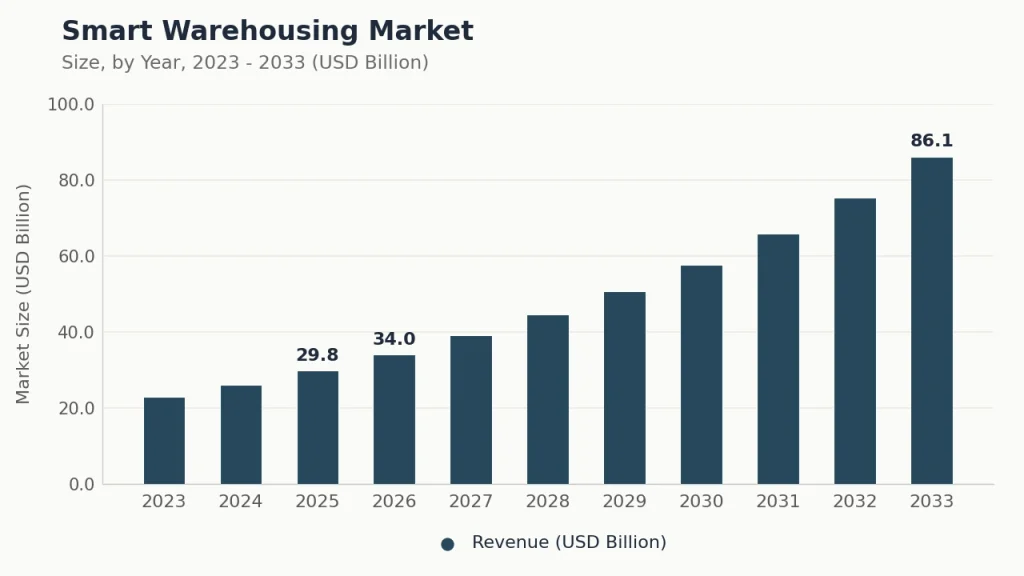
Mexico is becoming an important manufacturing and distribution hub, and nearshoring is adding even more pressure on warehouse capacity. Facilities now have to handle higher volumes, tighter fulfilment windows, wider product ranges, and more complex inventory flows. According to Markets and Markets, the smart warehousing market in Mexico was valued at $563.6 million in 2025 and is projected to reach $844.1 million by 2030, at an 8.4% CAGR.
As these demands grow, the way warehouses handle storage, movement, picking, sorting, and inventory control also needs to change. For Mexican businesses, automation can help increase capacity, keep fulfilment moving, and give teams better control over increasingly complex warehouse operations.
Why Are Nearshoring and Manufacturing Expansion Accelerating Smart Warehousing in Mexico?
Nearshoring is driving more manufacturing activity in Mexico, and warehouses are feeling the pressure. More raw materials, components, and finished goods have to move through facilities every day. If that movement slows down, production and dispatch can quickly feel the impact. This is creating a stronger need for a smart logistics warehouse that can handle higher volumes without depending entirely on manual movement.
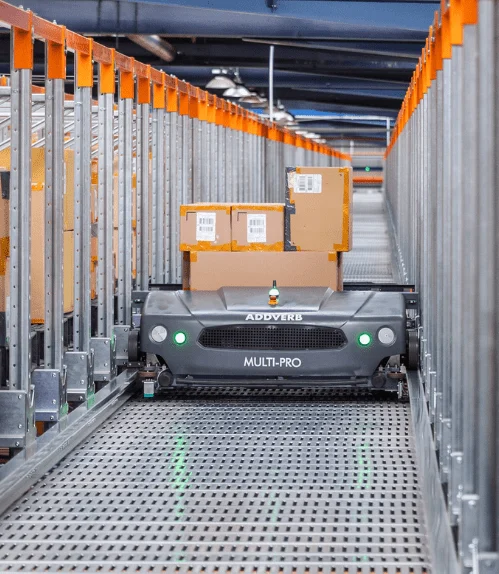
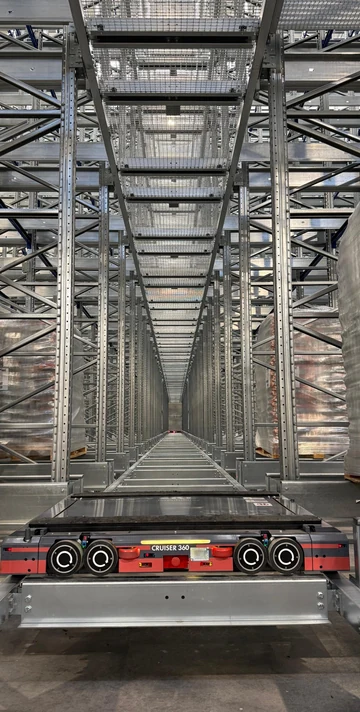
For these operations, Addverb’s Autonomous Mobile Robot, Dynamo, can support autonomous material movement, picking, and tugging across warehouse and production areas. Depending on the variant, Dynamo can move payloads as high as 2500 kgs too, at a speed of 0.8 m/s. On the other hand, Addverb’s 4 Way Pallet Shuttle, Cruiser 360, supports multi-directional pallet movement in high-density storage layouts, giving facilities greater flexibility in pallet storage and retrieval. When transporting and storing pallets, it can handle a payload of 1500 kgs and carry it at a speed of 1.5 m/s while ensuring positioning accuracy of +/- 0.08 inches, improving warehouse efficiency.
The challenge goes beyond moving more goods. Manufacturing expansion also means keeping materials available when production needs them while managing larger inventory volumes. Automating repetitive movement and storage activities can help warehouses keep up without adding the same level of manual effort.
Also Read: Benefits of Automated Smart Warehousing for Large Warehouses
Which Automation Systems Are Gaining Traction Across Mexico’s Warehousing Sector?
There is no single automation setup that works for every Mexican warehouse. The right combination depends on storage requirements, order profiles, and throughput demands. Manufacturing facilities may need better material movement and storage density, while e-commerce and retail operations may need faster picking and sorting. A smart warehouse system connects these requirements through the right mix of technologies and workflows.
Key automation requirements include:
- Automated material movement: AMRs can move heavy payloads between storage, picking, staging, and production areas. This is typically done using mobile robots and forklifts, such as Dynamo for autonomous material movement and FlowT for pallet transport.
- High-density storage: Pallet shuttle systems can increase storage capacity within existing warehouse footprints. Systems like Cruiser 360 use automated pallet movement to improve storage and retrieval.
- Robotic sortation: Robotic sorters like Zippy can automate the segregation of products and orders, helping warehouses handle higher volumes with greater consistency.
- Picking and software: Picking systems like GTP stations or Horizontal carousal systems, and WMS can improve order processing and coordinate warehouse activities. For instance, Rapido supports guided picking, while Optimus helps coordinate warehouse operations.
This lets businesses tackle specific operational problems instead of treating automation as one massive warehouse-wide change.
How Is Automation Helping Mexican Warehouses Improve Throughput and Fulfilment Efficiency?
Warehouse throughput is about more than just storage capacity. It comes down to how quickly goods can move from receiving and storage to picking, sorting, and dispatch. Long travel distances, repetitive manual work, and slow order processing can create bottlenecks at several points. Smart warehouse solutions can help remove some of these roadblocks by automating repetitive activities and improving coordination between processes.
Addverb’s Robotic Sorter, Zippy, can automate sortation where growing order volumes call for faster and more consistent segregation. Depending on the variant, Zippy can handle a maximum payload of 40 kgs and moves at a speed of 2 m/s. It performs 99.9% accurate SKU-level sortation up to 30,000 sorts/hour.
Addverb’s Pick-to-Light system, Rapido, can guide workers to the required picking locations, reducing the time spent identifying products and helping improve picking productivity. This can be especially useful for warehouses dealing with high order volumes and frequent picking activity.
The financial impact can also be substantial when automation is aimed at the right problem. Addverb’s whitepaper – Flexible Sortation Use Cases for Smart Warehouse Operations reports that companies adopting flexible sortation have achieved 20–50% service-level improvement and 25–50% fulfilment cost reduction. The numbers make one thing clear: automation works best when it is tied to a specific warehouse requirement.
Which Industries and Logistics Segments Are Driving Smart Warehousing Demand in Mexico?
Manufacturing, e-commerce and retail, third-party logistics, and food and beverage are among the segments contributing to demand for smart warehouse technology in Mexico. Yet the problems they need to solve are not the same.
Manufacturing warehouses need dependable material flow between production and storage. E-commerce and retail operations must handle changing order volumes across broad SKU ranges. 3PL providers need flexibility because requirements can differ from one customer to another, while food and beverage facilities need efficient inventory movement and storage.
Major warehouse operational requirements across these industries include:
- Manufacturing: Reliable movement of materials between production and storage.
- E-commerce and retail: Higher picking and sortation capacity for changing order volumes.
- 3PL: Flexible automation that can adapt to different customer workflows.
- Food and beverage: Efficient storage and inventory movement within available space.
- Pharmaceuticals: Accurate inventory handling and controlled movement of products and materials.
- Automotive: Efficient movement and storage of components across production and warehouse operations.
This difference matters when choosing automation. A warehouse struggling with pallet storage has a very different problem from one trying to process thousands of individual orders. Identifying the constraint first helps businesses choose technology that solves the problem rather than simply adding more equipment.
Also Read: 13 Benefits of Warehouse Automation
What Will Shape the Growth of Mexico’s Smart Warehousing Market Through 2030?
The growth of the warehouse automation market in Mexico will be driven by manufacturing expansion, nearshoring, e-commerce development, rising labour costs, and supply chain modernization. As warehouse volumes increase, businesses will need better visibility and coordination across inventory, storage, movement, and fulfilment activities.
Addverb’s WMS, Optimus, coordinates key warehouse activities, including receiving, inventory management, order processing, picking, packing, and shipping. It provides real-time visibility into inventory levels, locations, and movements while helping manage resources, workloads, and material flows. Its configurable design can integrate with other systems and adapt to changing site requirements as businesses expand their automation.
Integration and scalability will remain important as adoption grows. Businesses can begin by automating high-impact processes and expand into other areas as volumes and requirements increase, allowing automation to scale with their operational needs.
Smart Warehousing Adoption Drivers Across Key Mexican Industries
| Industry | Key Warehouse Challenge | Smart Warehousing Requirement |
| Manufacturing | Material movement | Automated material handling |
| E-commerce & Retail | Order volume | Robotic sorting and picking |
| 3PL | Fluctuating demand | Scalable automation |
| Food & Beverage | Inventory movement | Automated storage and inventory control |
Case Studies: How Addverb’s Warehouse Automation Solutions Address Smart Warehousing Needs
Mercado Livre partnered with Addverb to automate their sortation centre by deploying advanced automation sortation robots. The manual, RF scanner-based order consolidation system was labor-intensive, error-prone, and contributed to delays, slowing the order-to-dispatch cycle by up to 30%, which was why a solution was needed. Addverb deployed a fleet of 125 robotic sorters to automate outbound package sortation and integrated the solution with WES and FMS to optimize the sorting procedure. As a result, the sortation system was able to achieve a throughput of 5000 sorts/hour along with order fulfillment accuracy of 99.99%.
Conclusion
Mexico’s smart warehouse management landscape is evolving as nearshoring, manufacturing, e-commerce, and logistics activity increase operational demands. Warehouses will increasingly need connected solutions that address storage, material movement, picking, sorting, and inventory management.
Addverb supports this transition with automation and software designed around different warehouse processes. By identifying the areas creating the greatest constraints and scaling automation according to changing requirements, Mexican businesses can build more responsive, accurate, and scalable warehouse operations.
FAQs
1. How big is the smart warehousing market in Mexico?
Mexico’s smart warehousing market was valued at $563.6 million in 2025 and is projected to reach $844.1 million by 2030, growing at a CAGR of 8.4%. This growth reflects increasing investment by manufacturers, retailers, and logistics providers in technologies that improve storage, movement, and fulfilment efficiency.
2. What is driving the growth of smart warehousing in Mexico?
Nearshoring, manufacturing expansion, e-commerce growth, rising labor costs, and supply chain modernization are driving adoption. Addverb’s automation solutions help warehouses manage the higher volumes and operational complexity created by these changes.
3. What automation technologies are used in Mexican smart warehouses?
Common technologies include AMRs, automated storage and retrieval systems, robotic sorters, picking systems, and warehouse management software. Addverb offers solutions across these areas, including Dynamo, Cruiser, Zippy, and Optimus.
4. What challenges does the smart warehousing market face in Mexico?
Key challenges include system integration, workforce adaptation, changing demand, and scaling automation. Addverb’s modular solutions help warehouses automate specific processes while adapting to changing requirements.
5. What is the cost of building a smart warehouse in Mexico?
Costs vary based on warehouse size, throughput, automation scope, software, and integration. Addverb can configure automation around a warehouse’s specific operational requirements.