





Frequently Asked Questions
-
What is a mother-child shuttle system?
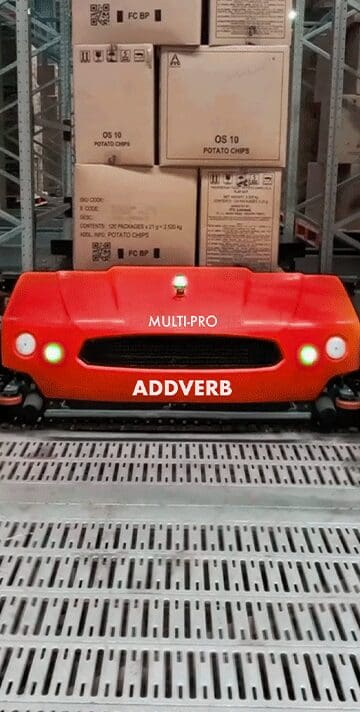
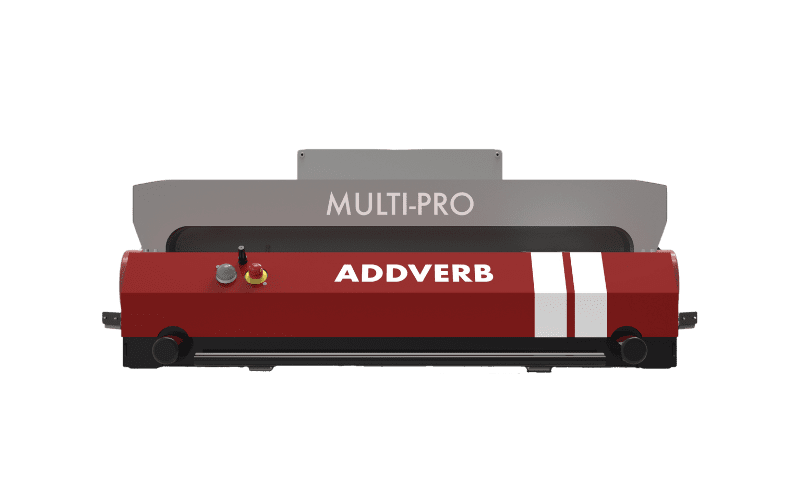
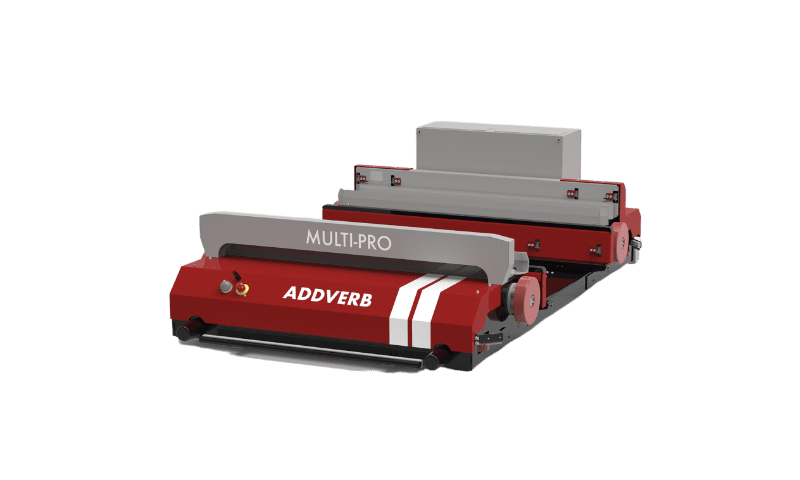
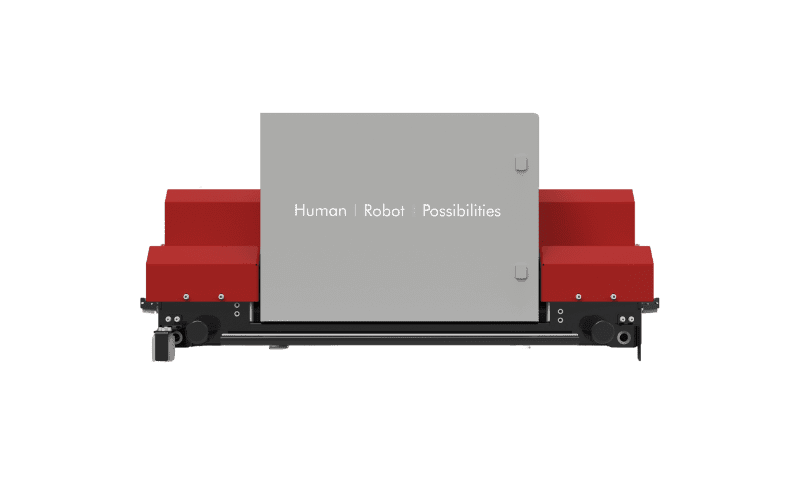
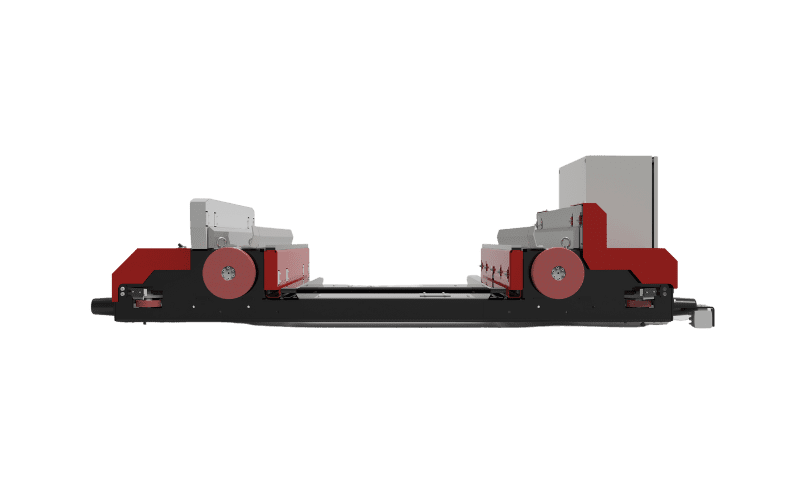
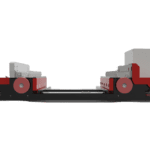
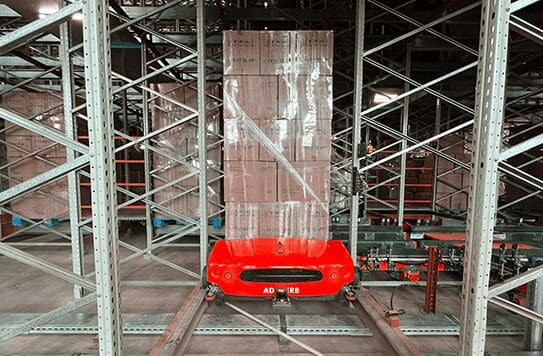
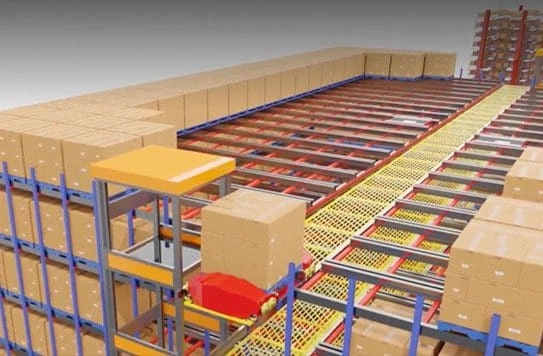
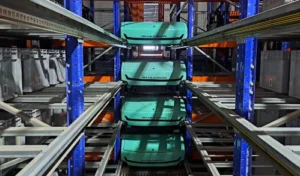
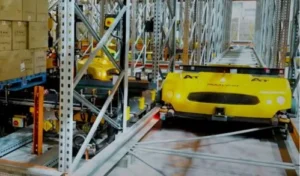
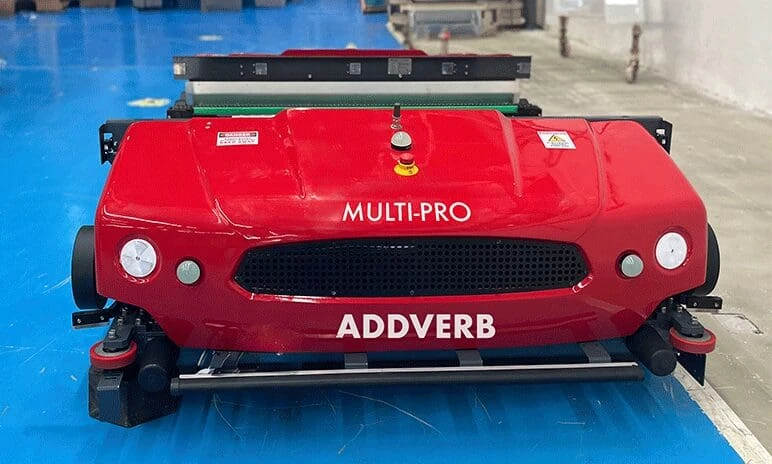
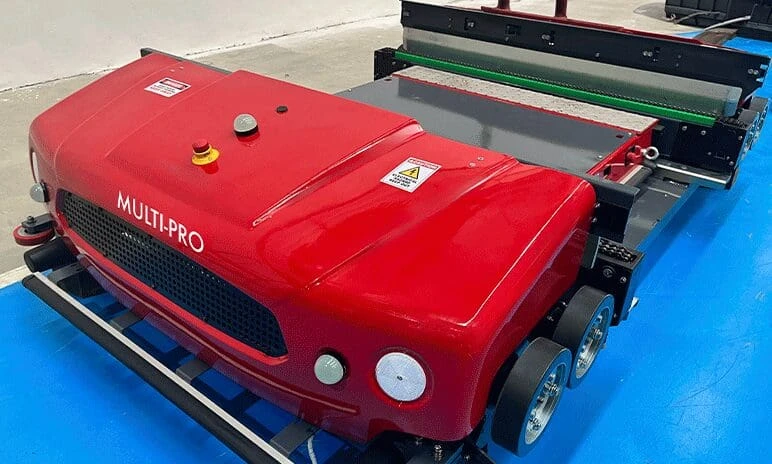
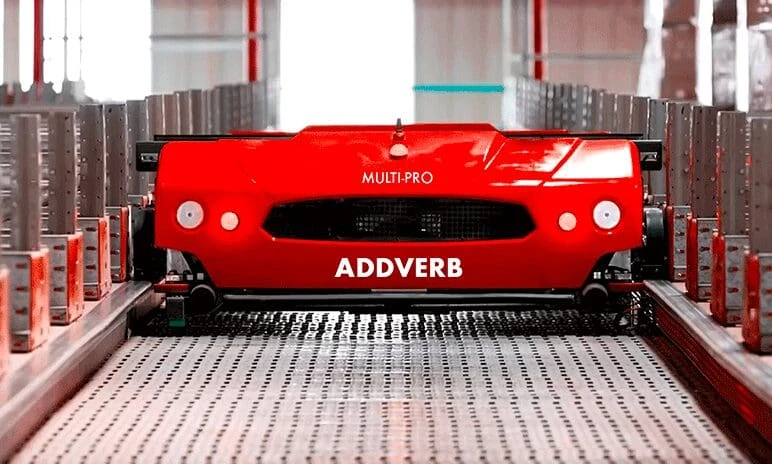
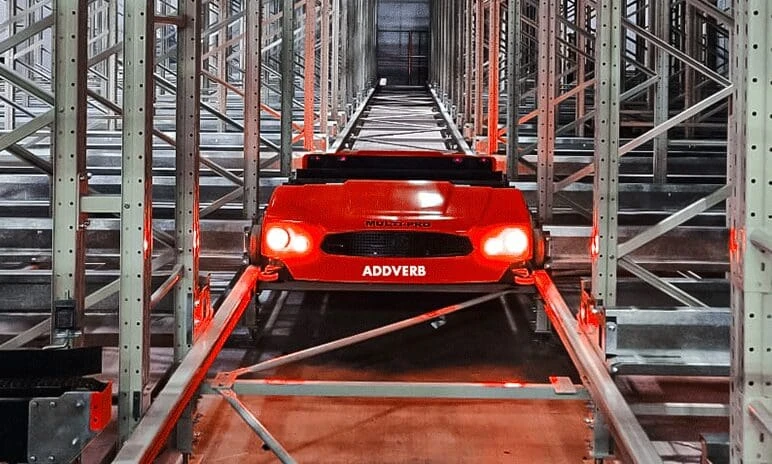
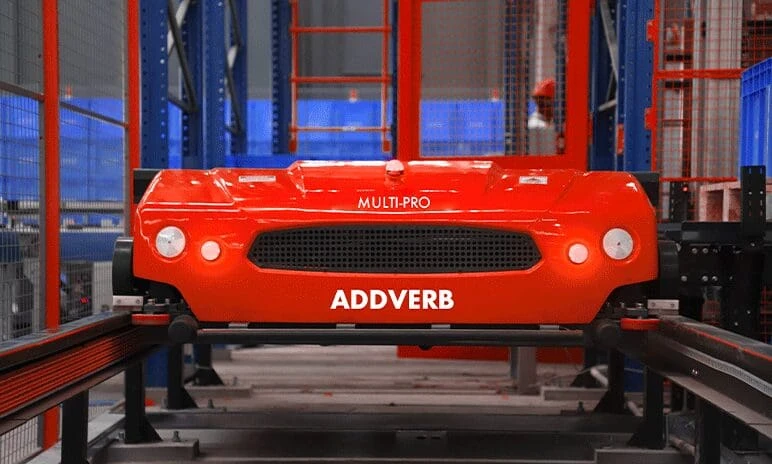
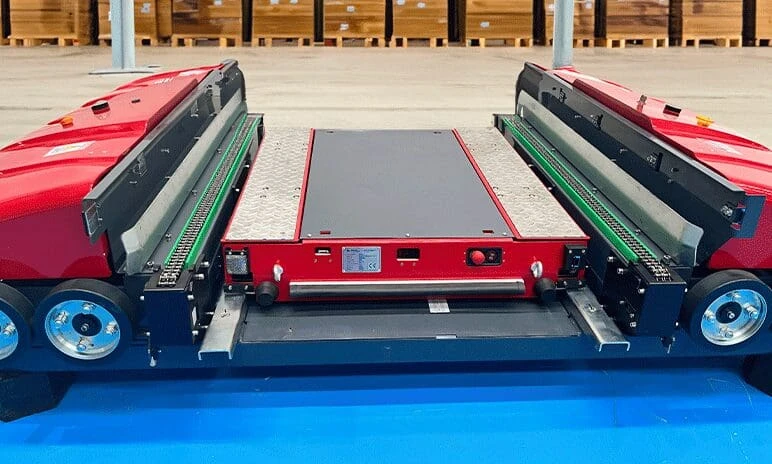
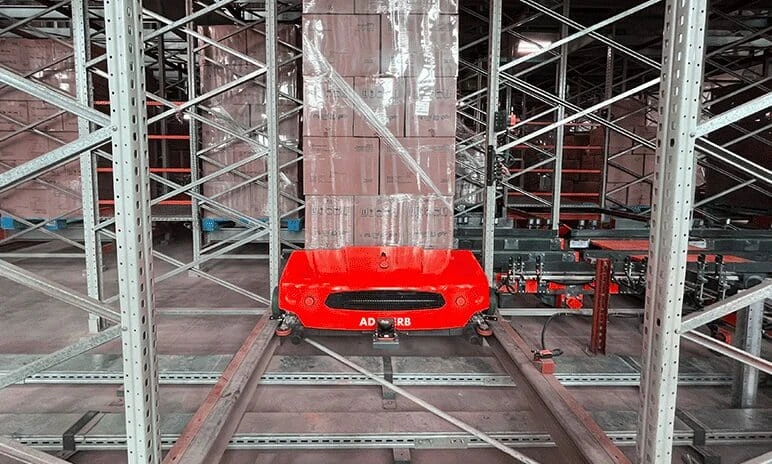
A mother-child shuttle system is a fully automated pallet AS/RS in which a mother shuttle runs along a track perpendicular to the storage lanes and launches a child shuttle into each lane to store or retrieve pallets. Addverb's Multi-Pro handles pallets up to 2,200 lb in multi-deep racking, navigates by barcode and positions loads within 0.08 in. -
Should I choose a mother-child shuttle or a 4-way pallet shuttle?
Choose a mother-child shuttle for multi-deep lanes holding several pallets per SKU with fast, predictable movement along a fixed transfer aisle, and a 4-way pallet shuttle when you need flexible access to many SKUs across the rack. Multi-Pro's mother shuttle travels at up to 9.8 ft/s, which suits high-volume buffers. Cruiser 360 shuttles reach any lane and level, which suits mixed SKU profiles. -
How many pallets per hour can a mother-child shuttle handle?
Addverb's Multi-Pro mother-child shuttle is rated at 73 pallets per hour on a 98 ft track, with the mother shuttle traveling at up to 9.8 ft/s. The child shuttle moves at 3.6 ft/s inside the lanes. Total system throughput rises with the number of levels and tracks, because each level runs its own mother and child pair in parallel. -
Can a mother-child shuttle work in a freezer?
Yes, Addverb's Multi-Pro mother-child shuttle operates from -22°F to 113°F, so it can store and retrieve pallets in deep-freeze warehouses without exposing goods to temperature swings. Multi-deep storage packs more pallets into each cubic foot of cold room, which cuts the volume you need to refrigerate, and associates no longer work inside the freezer to move pallets. -
Can a mother-child shuttle buffer pallets between production and shipping?
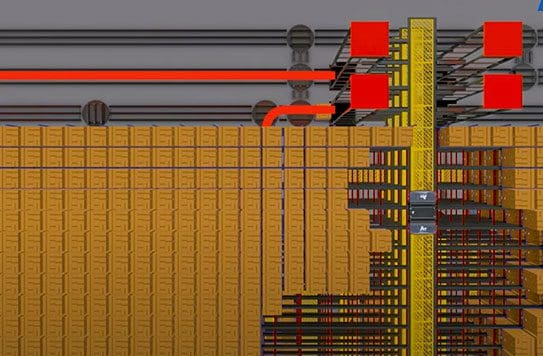
Yes, a mother-child shuttle suits buffering finished pallets between production and shipping, because it stores large volumes in multi-deep lanes and releases them in the sequence your load plan needs. Addverb's Multi-Pro automates both storage and sequencing, so pallets reach the dock in the right order for each trailer. That decouples line speed from shipping schedules and cuts forklift traffic at the end of the line.