






Frequently Asked Questions
-
What is a carton shuttle AS/RS?
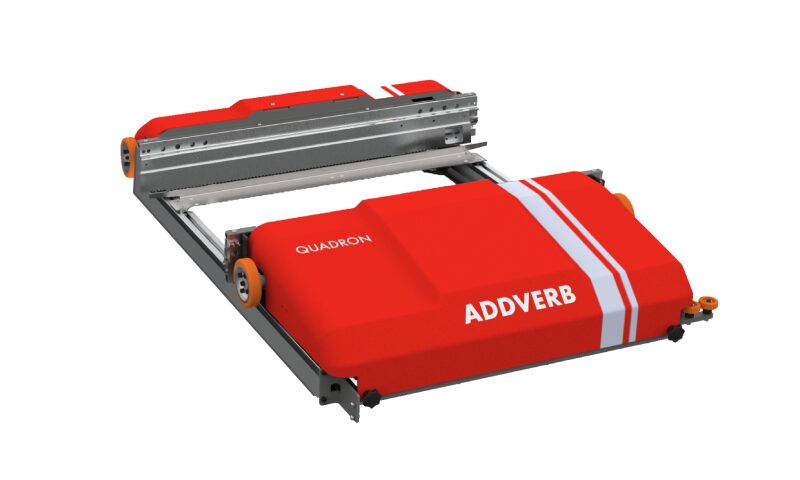
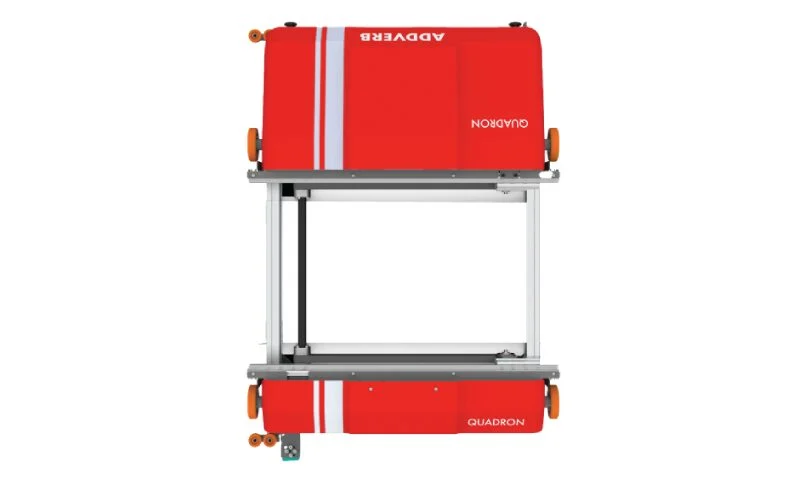
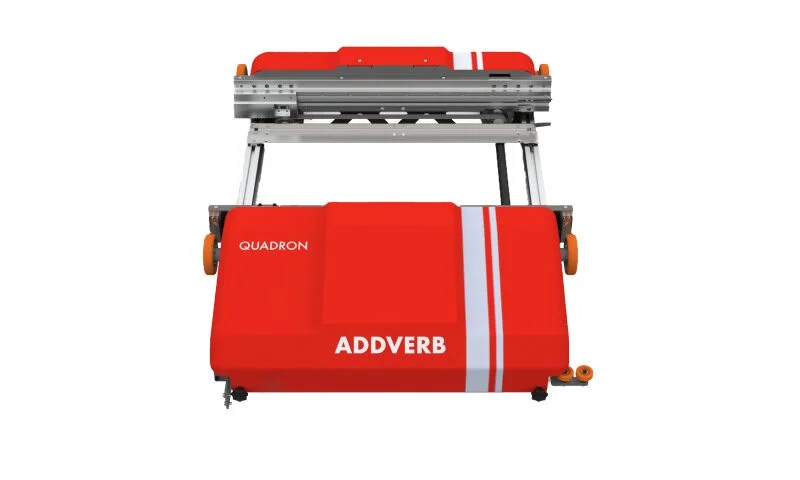
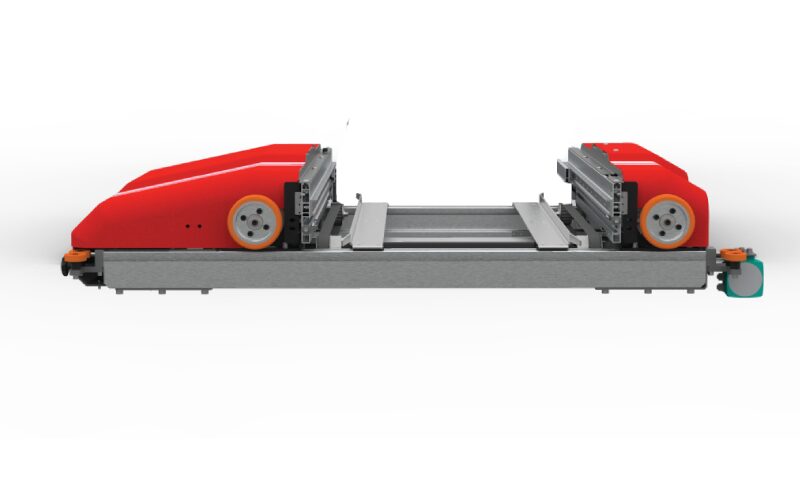
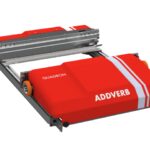
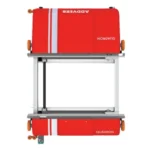
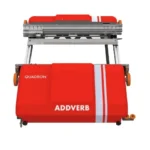
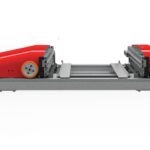
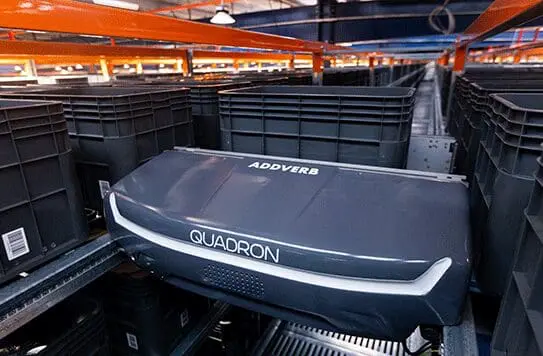
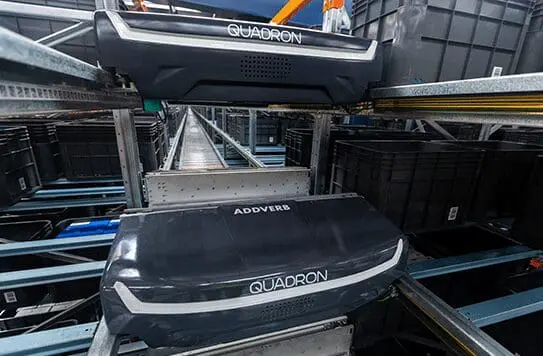
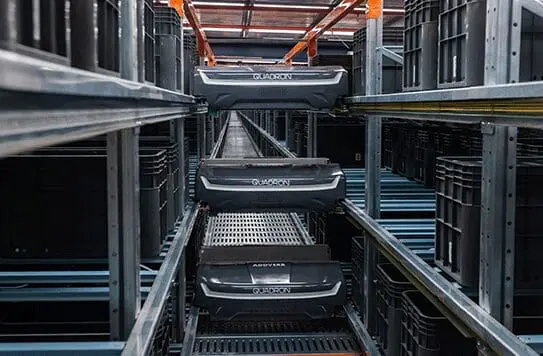
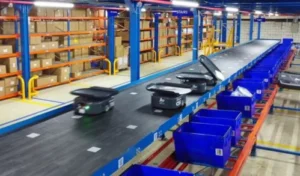
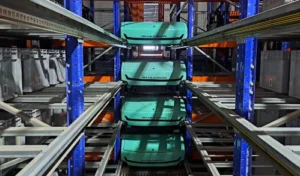
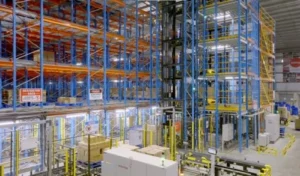
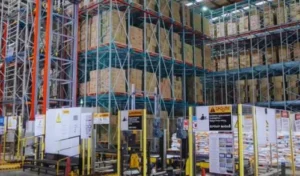
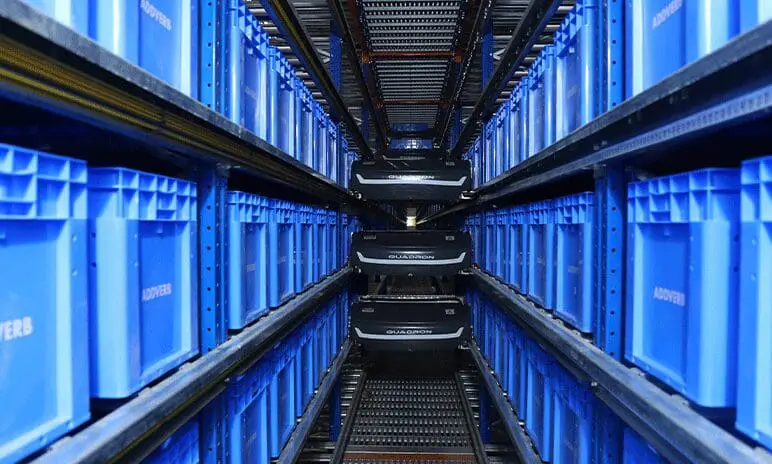
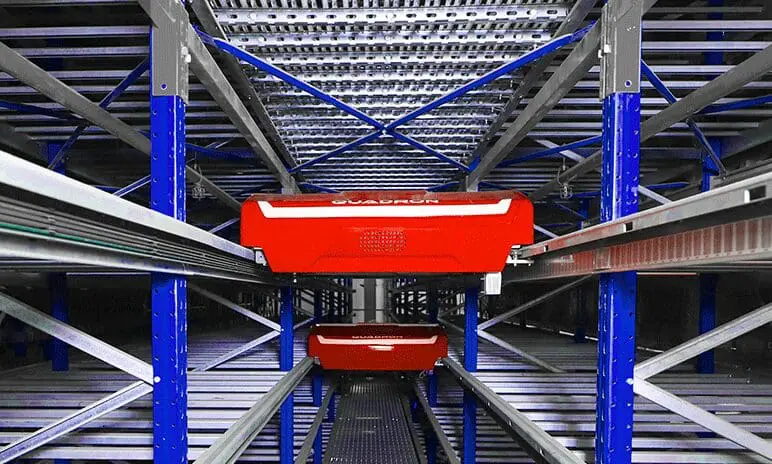
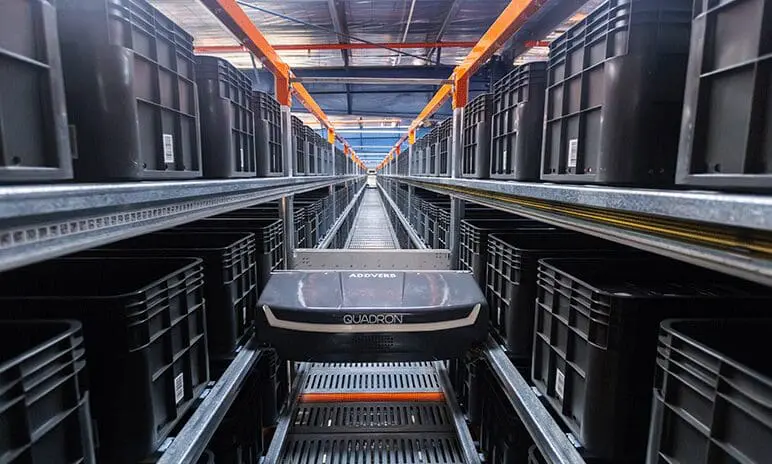
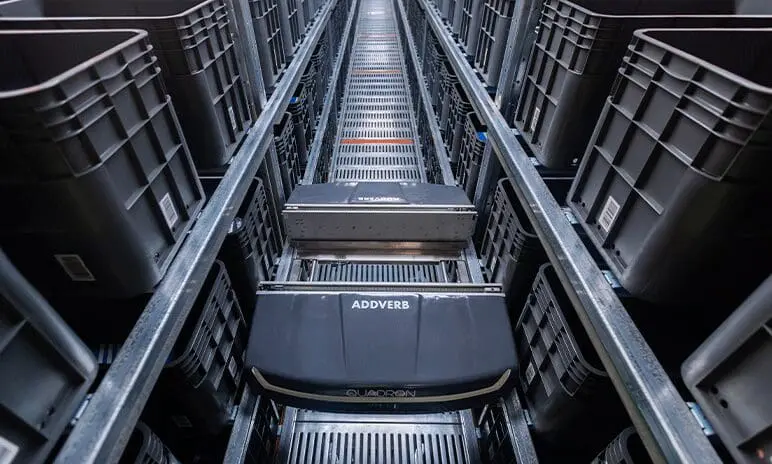
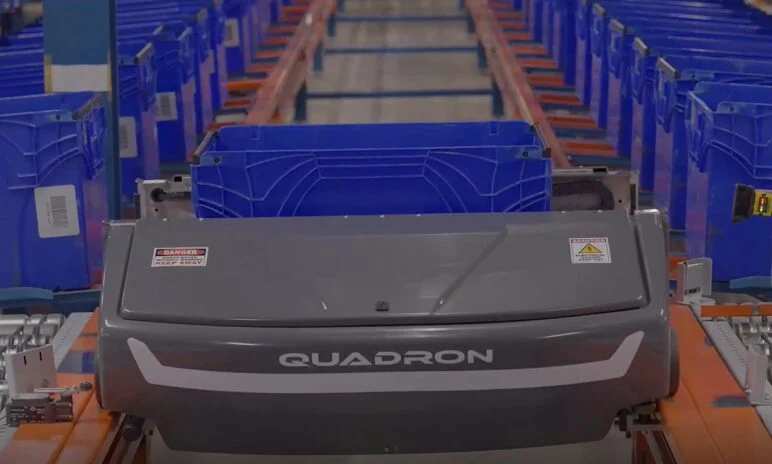
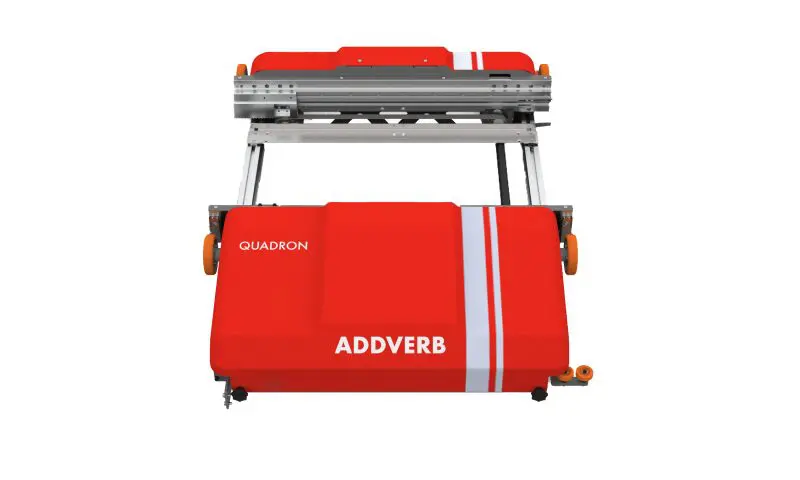
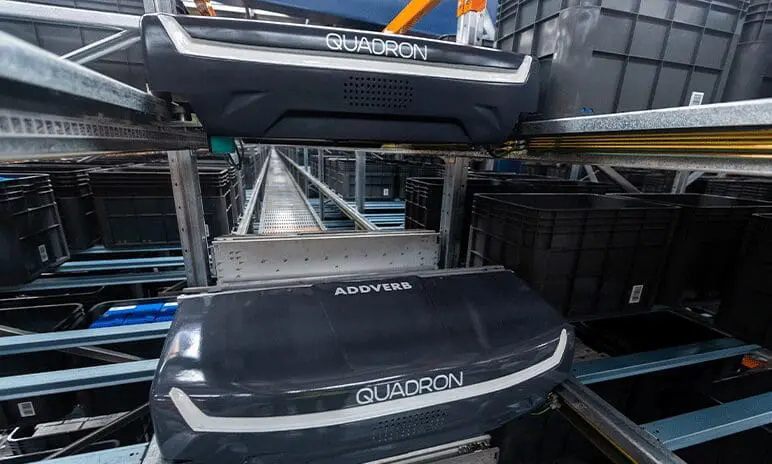
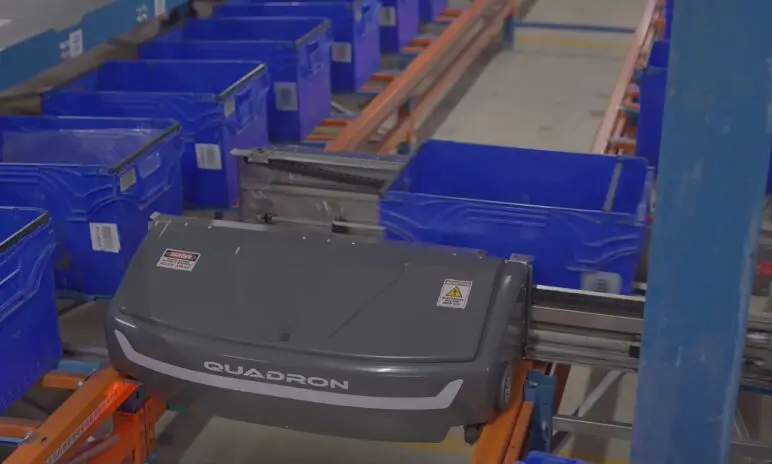
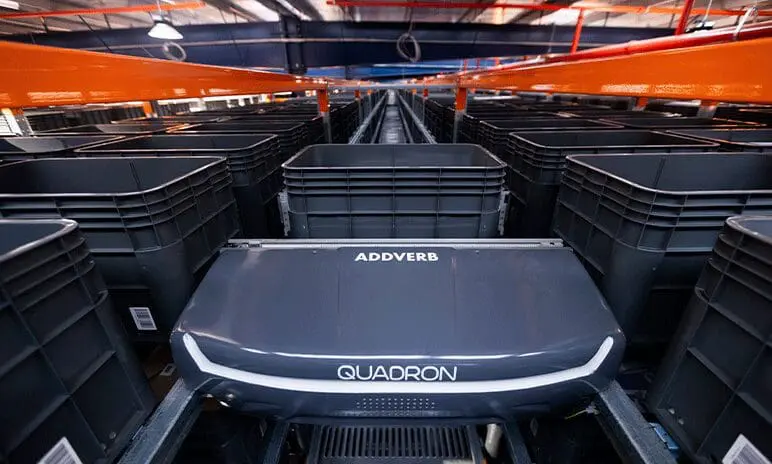
A carton shuttle AS/RS is an automated storage system in which rail-guided shuttles run along each rack level to store and retrieve cartons, crates and totes, while vertical lifts carry loads between levels. Addverb's Quadron handles loads up to 110 lb, travels at 13 ft/s and supports single-deep or double-deep storage. It stores, buffers and sequences inventory for picking and packing. -
What is the difference between a carton shuttle and a mini load AS/RS?
A mini load AS/RS uses one crane per aisle to move totes both horizontally and vertically, while a carton shuttle splits those moves between shuttles on each level and separate vertical lifts. Because several shuttles work in the same aisle at once, a carton shuttle such as Quadron delivers more throughput per aisle. -
How many totes per hour can a carton shuttle handle?
Addverb's Quadron carton shuttle is rated at 115 totes per hour on a 98 ft track, traveling at 13 ft/s loaded or empty, and system throughput grows with every shuttle level you add. Every level works in parallel. Addverb sizes shuttles, lifts and pick stations together, because the lift or the station, not the shuttle, often sets the real limit at peak. -
Has Addverb deployed tote storage with goods-to-person picking in the US?
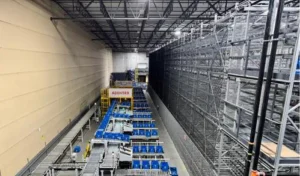
Yes, Imperial SAS deployed Addverb automated storage and goods-to-person picking at its Indianapolis facility to modernize fulfillment and address labor shortages, reaching 480 totes per hour at infeed. The project delivered a 400% gain in space utilization and cut fulfillment time sharply. A carton shuttle such as Quadron brings each tote to an ergonomic pick station, so associates pick without walking aisles. -
Should I choose single-deep or double-deep carton shuttle storage?
Choose single-deep carton shuttle storage when every SKU needs instant access and very high throughput, and double-deep when storage density matters more, since it holds two containers per location. Addverb's Quadron supports both configurations. Double-deep storage sometimes needs a front container moved before reaching the one behind it, so slow-moving SKUs usually go to the rear positions.