



ON THIS PAGE
Imagine an e-commerce warehouse in the USA receiving thousands of orders in a matter of hours during a holiday sale. Every pallet, tote and carton has to flow through storage, picking, sorting and dispatch without delays so that every order leaves on time. According to QYResearch’s Industry Research Reports, the global Just-in-Time Logistics market was valued at USD 27,010 million in 2025 and is projected to reach USD 38,320 million by 2032, reflecting the growing demand for faster and more synchronised fulfilment operations.
To meet the expectations, warehouses are investing in intralogistics automation that links storage, material movement, picking and sortation into an integrated workflow supported by modern warehouse management solutions. This integrated approach helps in Just-in-Time (JIT) delivery of orders by minimising delays, enhancing inventory visibility, and ensuring a smooth flow of goods from receiving to dispatch.
Why Is Intralogistics Automation the Foundation of Just-in-Time Order Delivery?
Just-in-Time fulfilment depends on products being at the right place at the right time. Even small delays in internal warehouse processes can affect order accuracy, dispatch schedules and customer satisfaction. Traditional workflows depend on manual coordination, and as order volumes and SKU counts continue to grow, this becomes increasingly difficult.
Modern intralogistics solutions integrate different warehouse functions via connected technologies and real-time data. Storage, transportation, picking and dispatch are not separate activities anymore but part of a continuous workflow. This increases inventory visibility, cuts unnecessary material handling and enables warehouses to react quickly to changing demand. As a result, businesses can maintain lean inventory while achieving the speed and consistency required for successful Just-in-Time operations in the USA.
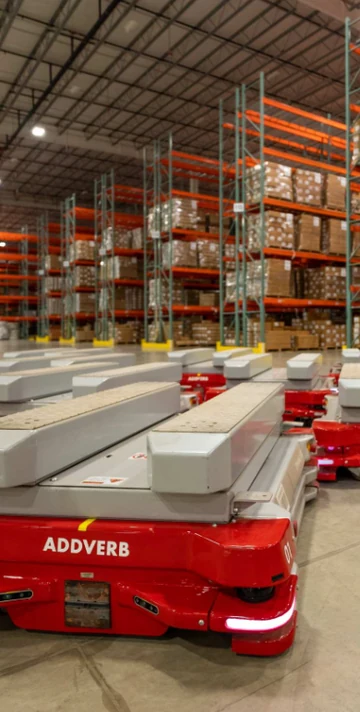
USA-based warehouses are automating the core processes that have the greatest impact on fulfilment speed and accuracy. Storage, material movement, picking and sortation are increasingly integrated with intelligent systems to eliminate manual bottlenecks and create a continuous flow of inventory. By automating these operational stages, it is possible for warehouses to be responsive to customer demand whilst maintaining the inventory accuracy and efficiency required for Just-in-Time fulfilment.
How Do Automated Storage and Retrieval Systems Accelerate Order Fulfilment?
Automated Storage and Retrieval Systems (AS/RS) are important in improving storage density and facilitating quicker inventory retrieval. Combined with warehouse software, they provide real-time inventory visibility and reduce the time required to locate products. Addverb’s 4-Way Pallet Shuttle, Cruiser 360, enables this functionality by automating pallet storage and retrieval, while optimising the use of available warehouse space. It transports a 3,306 lb payload at 4.92 ft/s with a positioning accuracy of +/- 0.08 inches.
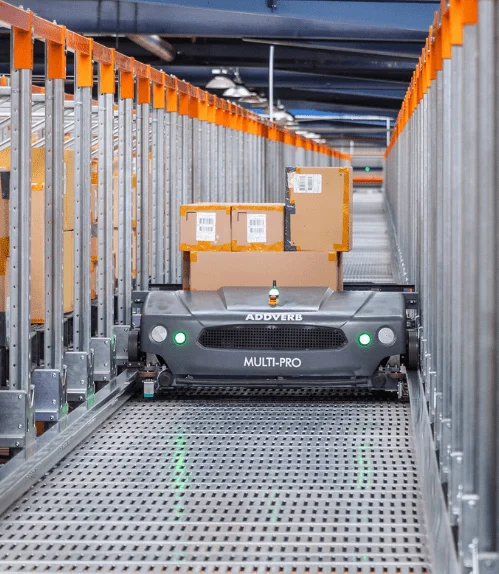
Addverb’s 2-Way Pallet Shuttle, Cruiser, transports and stores pallets in high-density storage systems. It can transport a payload of 3,306 lb at 3.61 ft/s, ensuring a throughput of 60 pallets/hour. Moreover, the Mother Child Shuttle, Multi-Pro, stores and retrieves pallet goods within a multi-deep racking system. It can handle a 2,204 lb payload and ensure a throughput of 73 pallets/hour. This way, order fulfilment time is significantly reduced.
What Role Do AMRs or Automated Material Movement Play in Just-in-Time Operations?
Efficient movement of materials is also important, as goods need to travel quickly from storage to picking, packing and dispatch areas. Using automated intralogistics, warehouses automate internal transport with intelligent mobile systems that move goods between operational zones based on real-time requirements.
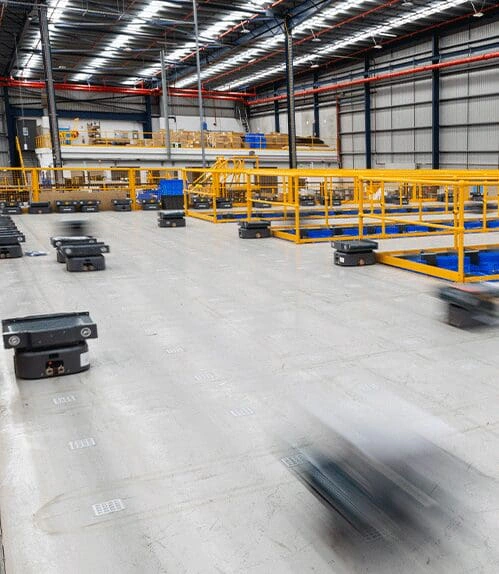
Autonomous Mobile Robots (AMRs) replace dedicated transportation routes with flexible, intelligent movement that can adapt to changing conditions in the USA-based warehouse. Addverb’s Dynamo ensures continuous material flow, minimises manual transport and enables faster order fulfilment during Just-in-Time operations. One of the variants, Dynamo 2500, can move a payload of 5,511 lb at 2.62 ft/s with a positioning accuracy of +/- 0.78 inches and precision docking of +/- 0.39 inches.
The robot uses a 2D LiDAR object detection system to identify obstacles and automatically select the most efficient route, ensuring a continuous and uninterrupted flow of materials. This flexibility helps warehouses to adjust rapidly to fluctuating order volumes, minimising manual handling and optimising overall operational efficiency.
What Operational Benefits Do US Warehouses Gain From Intralogistics Automation?
Automation boosts warehouse performance through increased order accuracy, decreased manual effort and more consistent workflows. According to TRID, average inventory can be reduced from five to six weeks to less than two weeks as the Just-in-Time percentage increases from zero to one hundred, showing the operational value of efficient inventory movement.
Within smart intralogistics, automated picking further strengthens fulfilment performance. Addverb’s Pick-to-Light system, Rapido, enables operators to be directed to the exact location of an item in real-time, which in turn increases productivity, eliminates the need for manual sorting, and minimises errors. Key operational benefits of intralogistics automation include:
- Faster and more accurate order picking
- Reduced manual travel within the warehouse
- Lower picking errors and rework
- Higher workforce productivity during peak operations
- Better inventory accuracy through guided picking
How Does Intralogistics Automation Help Warehouses Maintain JIT Performance During Peak Demand?
During seasonal peaks or promotional events in the USA, warehouses have to handle significantly larger order volumes without compromising delivery commitments. Manual sorting tends to become a bottleneck as it is highly dependent on labour availability and processing speed.
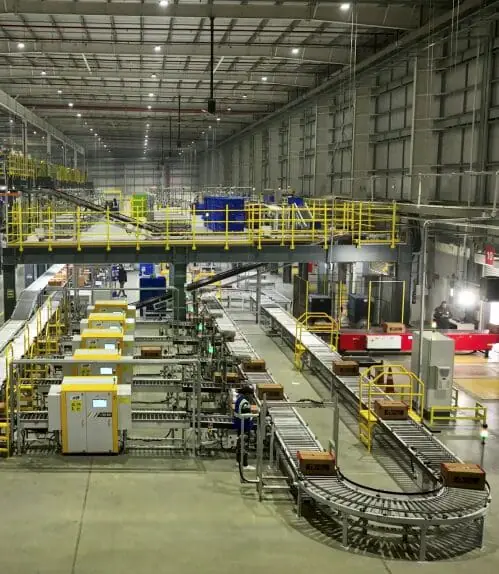
With digital intralogistics, automated sortation improves throughput by routing items quickly and accurately to their designated outbound locations. Addverb’s robotic sorter, Zippy, enables warehouses to increase their order capacity by automating the sortation process, reducing mis-sorts and increasing dispatch efficiency. One of the variants, Zippy 40, is an ultra-fast-moving sorting robot that has a payload capacity of 88.2 lb and performs 100% accurate SKU-level sortation up to 30,000 sorts/hour. This allows facilities to maintain Just-in-Time performance even when demand increases rapidly.
Impact of Intralogistics Automation on Just-in-Time Order Delivery
| Metric | Manual Warehouse | Automated Warehouse |
| Order fulfilment time | Longer fulfilment cycle | Faster fulfilment cycle |
| On-time delivery rate | Lower delivery consistency | Higher delivery consistency |
| Order accuracy | More manual errors and rework | Greater picking and dispatch accuracy |
| Inventory visibility | Limited real-time visibility | End-to-end real-time inventory visibility |
Case Studies: How Addverb’s Automation Improves Intralogistics Performance for Faster Order Fulfilment
At S. Abraham & Sons, the main aim was to handle challenges faced in labour productivity, space utilisation, and picking accuracy. Addverb deployed a solution which featured Carton Shuttle AS/RS and Multi-Level Shuttles (MLS), powered by Warehouse Execution System (WES). As a result, picking efficiency went up to 200 totes/hour, space utilisation improved by 400%, and fulfilment time was reduced by 200%.
At an Automated Brake Parts Distribution Center, the manual system led to worker fatigue, health and safety concerns, and a high employee turnover rate. Addverb deployed a comprehensive solution that featured a fleet of AMRs and 25+ robotic sorters for intralogistics optimization. For better efficiency, the Fleet Management System (FMS) was integrated with WES. The facility was able to achieve a throughput of 1,250 cases per hour, routing to 144 sort destinations. Picking productivity went up by 25%, processing 10,000 orders per day, while the AMRs were able to manage 80 to 100 carts daily, each containing 12 orders.
Conclusion
Just-in-Time fulfilment depends on efficient coordination between storage, material movement, picking, and sortation rather than isolated automation projects. When these functions work together, warehouses improve speed, accuracy, inventory visibility, and operational flexibility.
With the rising fulfilment expectations, intelligent automation will continue to be critical to sustaining long-term competitiveness. Addverb’s intralogistics solutions allow warehouses to build connected intralogistics operations that enable faster and more reliable Just-in-Time order delivery in the USA.
FAQs
1. What role does intralogistics automation play in achieving Just-in-Time (JIT) fulfilment?
Intralogistics automation connects warehouse processes to help companies optimise inventory flow, eliminate delays and speed up order fulfilment.
2. Which intralogistics solutions best reduce order fulfilment delays?
Integrated storage, material movement, picking, and sortation are the most effective intralogistics solutions, and Addverb brings all of these together through its products to ensure optimised warehouse operations.
3. How do intralogistics automation solutions manage peak order volumes?
Intralogistics automation systems leverage smart software and robotics to help balance workload. Addverb’s automated systems ensure that there is consistent throughput during peak times.
4. How much can intralogistics automation improve order fulfilment speed?
The improvement depends on warehouse operations, but Addverb’s automated technologies greatly reduce manual handling, travel time and processing delays.
5. Can intralogistics automation be implemented in existing warehouses?
Yes. The phased implementation of automated intralogistics ensures that automation can be introduced into existing warehouse infrastructure without significant operational disruption.