



ON THIS PAGE
Every day, a warehouse handles thousands of orders, but it’s rarely practical to halt operations for a major automation upgrade. That is the challenge for many facilities across the USA today, where increase in order volumes, tighter delivery commitments and ageing infrastructure make warehouse modernisation far more challenging than building a new facility.
The growing demand for brownfield automation reflects this shift. According to Market Intelo, the global brownfield warehouse automation retrofits market was valued at $18.6 billion in 2025 and is projected to reach $49.2 billion by 2034, expanding at a CAGR of 11.4%. Phased automation upgrades to existing warehouses can help businesses improve operational efficiency, reduce downtime, and future-proof their facilities for growth without interrupting day-to-day operations.
What Challenges Do Warehouses Face, and How Does Brownfield Automation Solve Them?
Retrofitting an existing warehouse is more complex than automating a new facility because existing infrastructure, operating schedules, and inventory movement must all be considered to ensure business continuity. Rather than simply installing automation, the goal is to modernise operations while minimising disruption to ongoing warehouse activities.
Some common challenges include:
- Existing layouts leave limited room for automation equipment.
- Ongoing warehouse operations cannot be interrupted for long periods.
- Legacy systems often lack compatibility with modern technologies.
- Expansion opportunities are limited by building constraints.
- Rising labour shortages increase pressure on operational efficiency.
These challenges are addressed through a phased retrofit automation strategy, which upgrades one operational area at a time. This enables warehouses to continue operating day-to-day, while gradually implementing new technologies that can increase productivity and decrease operational risk.
Also Read: Brownfield and Greenfield Warehouse Automation
What Should Warehouses Assess Before Retrofitting Existing Operations?
Each retrofit project starts with a complete assessment of the existing warehouse. Understanding the physical limitations of the facility and the operational workflows can help determine what automation technologies can be incorporated without major structural changes.
There are several critical factors that warehouses should consider before implementation:
- Current storage density and available expansion capacity.
- Material flow between receiving, storage, picking, and shipping.
- Equipment utilisation and traffic congestion.
- Software readiness for automation integration.
- Future business growth and scalability requirements.
One important consideration is warehouse layout optimization. A good layout plan enables the automation equipment to operate efficiently and at the same time minimises unnecessary travel distances and congestion.
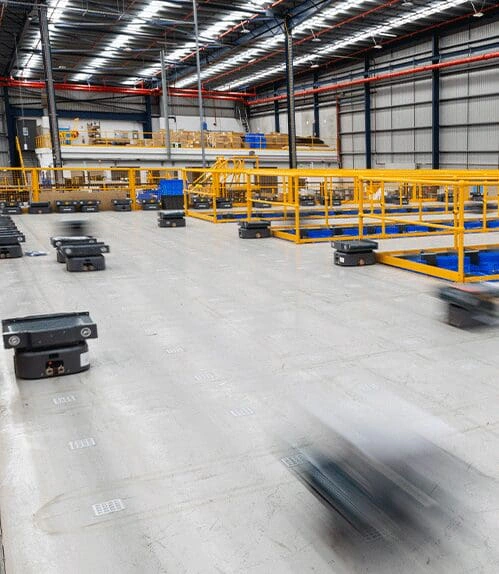
Addverb’s Automated Mobile Robot (AMR), Dynamo, can navigate existing warehouse layouts without requiring any fixed infrastructure, which is ideal for facilities where flexible material movement is a must. This gives companies the ability to automate while maintaining their current operations and adapting routes as warehouse needs evolve. One of the variants, Dynamo 2500, moves a payload of 5,512 lbs at 2.62 ft/s, reducing the need for manual labour while minimising the risk of workplace injuries.
How Does a Phased Automation Approach Reduce Retrofit Risks in Existing Warehouses?
Phased implementation allows automation to be introduced incrementally rather than replacing all systems at once. This reduces operational risk, minimises disruption and allows warehouse teams to adjust to new processes before rolling out automation across the facility.
Each deployment stage is focused on certain operational improvements before moving on to the next phase. Typical implementations are:
- Automating high-volume storage zones first.
- Connecting software with existing warehouse operations.
- Expanding automation into picking and replenishment areas.
- Scaling systems based on operational performance.
Many facilities will initially increase warehouse rack capacity by using automated storage systems instead of expanding the footprint of the building. Addverb’s 2-Way Pallet Shuttle, Cruiser, provides high-density pallet storage and integrates into existing warehouse layouts, enabling warehouses to optimise storage capacity without extensive structural modifications. Similarly, Addverb’s 4-Way Pallet Shuttle, Cruiser 360, enables pallets to move in multiple directions in dense storage conditions, helping warehouses increase storage density without sacrificing fast access to inventory.
What Operational Benefits Can Warehouses Expect From Brownfield Automation?
Modern retrofits provide measurable operational improvements beyond simple equipment upgrades. Automation increases inventory flow, optimises storage utilisation and improves workflow predictability throughout the warehouse.
According to iFactory AI, brownfield retrofitted facilities typically achieve around 71% steady-state efficiency because of inherited structural constraints. Despite the constraints, phased modernisation brings great productivity gains when automation is carefully introduced into existing operations.
Key operational benefits include:
- Higher storage density without facility expansion.
- Faster inventory movement between warehouse zones.
- Reduced manual handling and travel distances.
- Improved inventory visibility and operational control.
- Better scalability for future business growth.
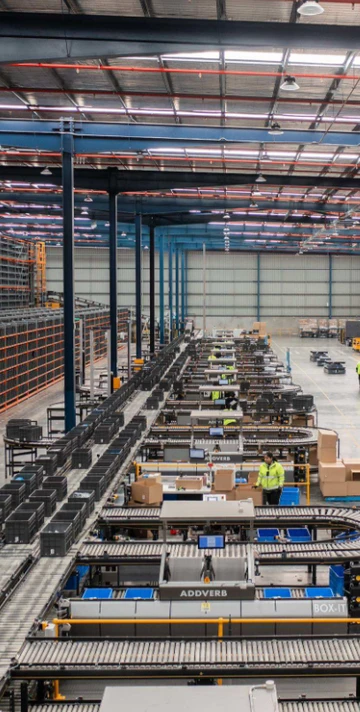
Improving warehouse space optimization is one of the most valuable outcomes of brownfield projects. More than expanding the size of the warehouse, smart storage and material handling technologies allow organisations to maximise their existing warehouse space. Addverb’s robotic sorter, Zippy, enables warehouses with high order volumes to accelerate sorting with a high degree of accuracy while reducing manual intervention. Additionally, its modular design makes it well suited for phased brownfield deployments, allowing facilities to increase throughput without disruption to ongoing operations. Zippy can handle payloads of 88 lbs, performing 100% accurate SKU-level sortation up to 30,000 sorts/hour.
How Does Brownfield Automation Future-Proof Existing US Warehouses?
Future-ready warehouses need systems that can adapt to evolving business needs without repeated infrastructure upgrades. Brownfield modernisation is about creating flexibility in existing operations so that facilities can scale up automation as order volume, product range and customer expectations continue to evolve. This method is especially useful throughout the USA, where many warehouses operate from established facilities that cannot afford prolonged shutdowns.
Businesses can improve long-term performance by focusing on:
- Scalable automation that supports future expansion.
- Flexible software integration across warehouse operations.
- Better inventory visibility through connected systems.
- Modular equipment that can be added without major reconstruction.
- Continuous optimisation based on operational data.
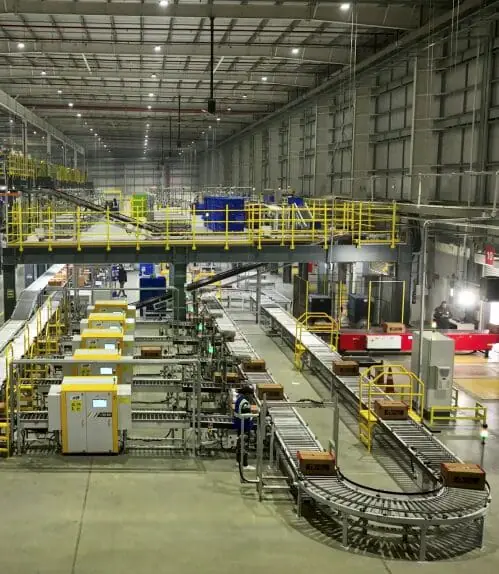
Improving optimize warehouse space strategies also help organisations accommodate future growth without investing in larger facilities. As operations grow, Pallet Conveyors from Addverb automate the transfer of pallets from one zone to another, reducing manual handling and allowing material flow to continue smoothly.
Warehouse softwares also has a role to play in future-proofing. Addverb’s Warehouse Management System, Optimus, offers real-time inventory visibility, task management and operational control, while its Warehouse Control System, Mobinity, synchronises connected automation equipment for smooth material flow. Together they help warehouses make better decisions, reduce bottlenecks and support phased brownfield deployments with minimal disruption.
Also Read: 6 Signs It’s Time to Upgrade Your Warehouse with an AGV System
Warehouse Throughput Before vs. After Brownfield Automation
| Warehouse Throughput Before Brownfield Automation | Warehouse Throughput After Brownfield Automation |
| Lower throughput due to manual processes and operational bottlenecks | Higher throughput through phased automation and optimised workflows |
| Longer order processing time | Faster order processing and material movement |
| Higher labour dependency | Reduced manual intervention with automated systems |
| Frequent congestion in operational zones | Smoother material flow and improved coordination |
| Limited scalability | Greater operational flexibility and future scalability |
Case Studies: How Addverb Modernises Existing Warehouses With Automation
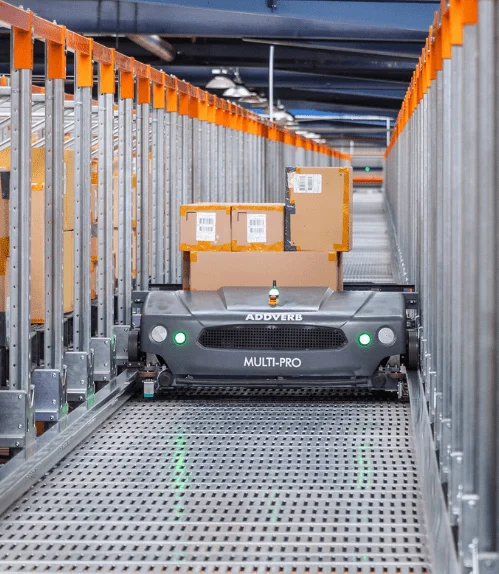
At the facility of S. Abraham and Sons, several operational challenges caused inefficiencies. To address these challenges, Addverb deployed carton shuttles and multi-level shuttles, which were powered by a Warehouse Execution System (WES). Through a comprehensive solution, Addverb modernised the company’s warehouse processes to ensure faster order cycles, improved accuracy and scalable growth. The facility was able to reduce fulfilment time by over 200%, ensuring better delivery speed.
At DHL’s fulfilment centre, a solution was needed to handle issues like a highly labour-intensive sortation process, consistent labour shortages, and high turnover rates. Addverb leveraged its in-house manufacturing and integration capabilities to deliver robotic sortation system solutions within 8 months and modernise the fulfilment centre. As a result, DHL saw a 300%+ increase in throughput efficiency and accuracy for their entire sorting operation.
Conclusion
Brownfield modernisation allows warehouses to improve their efficiency without disrupting their day-to-day operations. Warehouse utilization strategies and scalable automation enable businesses to leverage existing infrastructure and be ready for future growth. Addverb’s advanced automation technologies, software platforms and phased deployment help warehouses modernise with minimal downtime and enable long-term operational performance.
FAQs
1. What is brownfield automation?
Brownfield automation involves the installation of automation technologies into an existing warehouse without interfering with daily operations. Addverb provides modular solutions to facilitate phased modernisation.
2. How long does a warehouse automation retrofit take?
Timeline varies based on the size of the warehouse and scope of the project. Addverb’s phased approach to deployment ensures minimum operational disruption during implementation.
3. What automation technologies are best for brownfield warehouses?
AMRs, AS/RS solutions, conveyors, WMS, WCS and robotic sorters from Addverb are popular because they are able to easily integrate with existing warehouse infrastructure.
4. What are the benefits of retrofitting an existing warehouse?
Retrofitting boosts storage capacity, productivity and operational efficiency without a new facility. Addverb’s solutions also support future scalability.
5. What are the challenges of brownfield warehouse automation?
The biggest challenges are legacy infrastructure, limited space and keeping operations running during implementation. Proper planning and phased deployment help overcome these challenges and minimise downtime.