



ON THIS PAGE
Imagine a customer returns a pair of shoes after trying them once, and the parcel reaches the warehouse the next morning. Instead of moving straight back into sellable inventory, it may wait for inspection, condition checks, sorting, and a decision on where it belongs next. When hundreds or thousands of returns arrive each day, these delays can quickly become an operational bottleneck. For retailers in the USA, returns need to move quickly enough to protect inventory value and customer expectations.
According to the National Retail Federation, 82% of consumers consider free returns an important consideration when shopping online. That expectation makes e-commerce reverse logistics an important part of the customer experience. AI-powered automation can connect return intake, identification, sorting, movement, storage, and disposition into one workflow, helping retailers implement effective reverse logistics solutions.
Why Are Rising E-Commerce Returns Creating a Bigger Reverse Logistics Challenge for U.S. Retailers?
Retailers in the USA are managing more varied return profiles as online sales expand across products, channels, and customer segments. A returned item may need inspection, restocking, repair, resale, liquidation, or disposal, with each path requiring different handling. When these decisions remain manual, goods can wait in receiving areas, occupy storage space, and require additional movement.
Key challenges include:
- Variable product conditions requiring inspection, repair, resale, or disposal.
- High SKU diversity making identification and classification slower.
- Returned inventory occupying receiving and storage space while awaiting decisions.
- Repetitive scanning, movement, and sorting consuming labour capacity.
- Exceptions delaying products that do not fit standard processing rules.
These factors make reverse logistics in e-commerce an operational process that requires speed, accuracy, visibility, and coordinated workflows. A Warehouse Execution System can connect the different automation and material-handling activities involved in returns by managing tasks, prioritising work, and coordinating equipment based on real-time operational requirements.
Addverb’s Warehouse Execution System, Concinity, provides this orchestration layer, connecting warehouse processes with automated systems so returned products can be directed, moved, and processed according to changing priorities. The challenge is not only return volume but also keeping each product moving through the correct stage without creating additional queues or losing recovery value.
Also Read: Reverse Logistics in Supply Chain Management
How Is AI Changing the Way Returned Products Are Identified, Sorted, and Routed?
AI can combine order information, return reasons, product data, scan results, inventory status, and condition inputs to support faster disposition decisions. Returned goods can be classified according to predefined criteria and directed toward inspection, restocking, resale, repair, or another destination. This reduces repetitive decision-making and gives warehouse teams more capacity to handle exceptions.
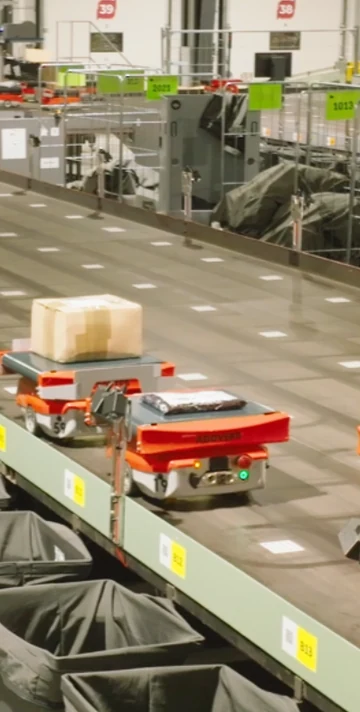
Automation then translates these decisions into physical movement. Addverb’s robotic sorter, Zippy, supports automated sorting and routing, helping separate returned parcels after identification. One of the variants, Zippy 40, can handle a payload of 88 lbs with a movement speed of 6.56 ft/s, performing 100% accurate SKU-level sortation up to 30,000 sorts/hour. With a runtime of 4 hours, it can help make the reverse logistics process more efficient and reduce costs.
The connection between decision-making and physical handling can improve e-commerce returns processing by reducing manual touches and keeping products moving through the appropriate workflow.
Where Does Automation Create the Biggest Efficiency Gains Across the Returns Process?
Automation creates the strongest gains in repetitive movement, sorting, picking, and storage activities. Instead of repeatedly carrying goods between receiving, inspection, storage, and processing zones, automated workflows can assign tasks and move inventory according to operational priorities. This reduces unnecessary travel and helps maintain a predictable flow during return peaks.
- Inbound handling: Returned goods can be identified and assigned to the next stage.
- Sortation: Items can be separated according to destination, condition, or disposition.
- Internal movement: Automated transport reduces walking and manual handling.
- Storage and retrieval: Recoverable goods can move into organised locations.
- Workflow coordination: Systems can sequence tasks around processing priorities.
For e-commerce returns management, this approach standardises repetitive activities while retaining human intervention for exceptions. For instance, Addverb’s Robotic Pallet Mover, Dynamo, supports autonomous material movement, picking, and tugging, with a payload capacity of up to 5,512 lbs and maximum speed of 2.62 ft/s. Dynamo can help USA-based warehouses revolutionise operations by streamlining material movement, increasing efficiency, and improving safety.
How Can AI-Powered Reverse Logistics Improve Inventory Recovery and Resale Decisions?
Recovery decisions depend on product condition, demand, inventory availability, location, seasonality, and processing cost. AI can evaluate these inputs together to determine whether goods should return to available inventory, move for repair, enter resale channels, or follow another disposition path. Faster decisions reduce the time recoverable inventory remains inactive.
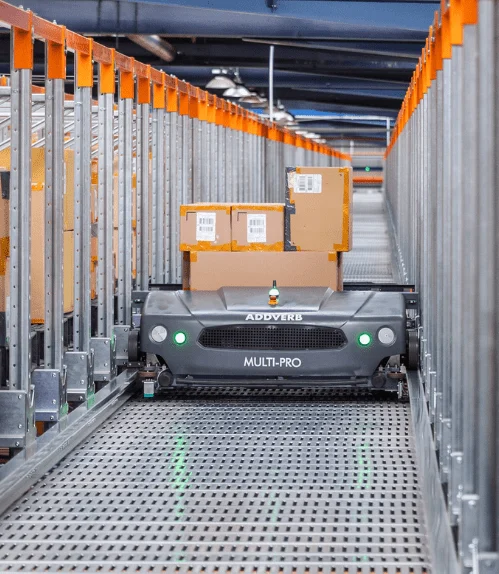
According to McKinsey, U.S. retailers spend about USD 200 billion annually to recover value from returned goods. AI and automation can help turn this cost into business value by shortening the time between return arrival and recovery. Addverb’s Carton Shuttle, Quadron, supports automated storage and retrieval, helping recovered goods move into organised inventory locations and strengthening reverse logistics optimization. It has a maximum payload capacity of 110 lbs and a movement speed of 13.12 ft/s, ensuring a throughput of 115 Totes/hour. Its precise movement ensures quick storage and retrieval with minimal error while also maximizing space utilization.
Why Are U.S. E-Commerce Businesses Moving Toward More Intelligent and Scalable Returns Operations?
Returns increasingly influence customer experience, inventory availability, labour requirements, and warehouse capacity. In the USA, normal workflows can become difficult to manage during seasonal peaks, promotions, or sudden changes in return rates. A scalable operation needs to absorb these fluctuations without creating large backlogs or requiring proportional increases in manual handling.
AI can identify bottlenecks, prioritise tasks, and support routing decisions as operating conditions change. Addverb’s Multi-Carton Picking Robot, Veloce, supports carton picking and movement within structured storage environments, helping returned cartons re-enter controlled inventory flows. With a payload capacity of 529 lbs and a movement speed of 4.92 ft/s, Veloce navigates through grid-based paths to the pre-decided locations for storing and picking carton loads. This allows e-commerce reverse logistics to respond more effectively to changing operational priorities.
Also Read: Why Sortation Robots Are Essential in Modern E-Commerce Fulfillment Centers
From Return Arrival to Inventory Recovery: AI-Powered Reverse Logistics Workflow
| Stage | Process | Role of AI & Automation |
| Return Received | Returned apparel reaches the warehouse or fulfilment facility. | Captures return details and connects the item to its order and product data. |
| AI Identification & Condition Assessment | The returned item is identified and checked for its condition. | AI can analyse product information, return reasons, and condition data to determine the appropriate next step. |
| Automated Sorting & Routing | Products are separated based on their condition and recovery potential. | Automated systems route items to the relevant storage, processing, or recovery area. |
| Inventory Recovery | Each item is directed toward its most appropriate outcome. | AI-assisted decisions support restocking, resale, repair/refurbishment, or disposition, helping recover value from returned inventory. |
Case Studies: How Addverb’s Reverse Logistics Automation Supports E-Commerce Returns
Wooster Brush Company faced inefficiencies, increased labour demands, fulfilment errors, and safety risks in its manual, paper-based picking process. Addverb deployed an automated material handling solution with 13 autonomous mobile robots, automated pallet de-stackers and stackers, and enterprise software for fleet coordination. The solution resulted in 15,000 cases dispatched per day, a throughput of 100+ orders pallet per day, and the system achieved twice the capacity in comparison to manual operations.
DHL Supply Chain faced labour shortages, high turnover rates, and the need to develop new technologies. Addverb deployed a robotic sortation solution leveraging its in-house manufacturing and integration capabilities. The system achieved a throughput of 1000 sorts/hour, allowing the facility to achieve 99.99% order fulfilment accuracy. Earlier, DHL was only able to fulfill 20 units/hour, but now it can fulfill 100+ units/hour, resulting in a remarkable 300%+ increase in throughput efficiency and accuracy for their entire sorting operation.
Conclusion
AI-powered reverse logistics is becoming a connected operational capability rather than a separate returns activity. Linking identification, condition assessment, routing, movement, storage, and disposition allows retailers to make recovery decisions earlier and keep inventory moving through defined workflows.
For the USA e-commerce market, automated reverse logistics can help manage return expectations while controlling labour and handling complexity. By connecting robotics, storage, sortation, material movement, and software, Addverb supports scalable returns operations.
FAQs
1. How does reverse logistics in e-commerce work?
Reverse logistics in e-commerce involves receiving returned products, inspecting and sorting them, and directing them to storage, resale, repair, or disposal. Automation solutions from Addverb can support the movement and handling of these products as they progress through the different stages.
2. How does AI improve reverse logistics in e-commerce?
AI evaluates return, product, and inventory data to support routing decisions across the reverse logistics process. These decisions can then be translated into physical workflows through solutions such as Addverb’s Zippy, which automates sorting to help direct returned products to the appropriate next stage.
3. What is the future of AI-powered reverse logistics in e-commerce?
The future of AI-powered reverse logistics will connect AI-led decisions with the physical movement and storage of returned inventory. In this setup, solutions such as Addverb’s Quadron can support automated storage and retrieval, helping recovered products move efficiently through the reverse logistics process.
4. How can automated workflows improve returns processing accuracy?
Automated workflows apply consistent routing rules, reduce manual handling errors, and provide clearer visibility into returned products and their processing status.
5. What are the challenges of implementing automated reverse logistics?
Challenges include system integration, variable product conditions, exception handling, and changing disposition rules that automation needs to accommodate.