



ON THIS PAGE
Imagine it’s 9 a.m. in a busy American warehouse that has not yet invested in warehouse robotics, and the day is already in motion. Workers are pushing carts between storage aisles, forklifts are carrying pallets across the floor, cartons are piling up at sorting stations, and orders are moving from one process to the next. As the hours pass, the pressure builds: more orders need to go out, delivery windows get tighter, SKU ranges keep expanding, and labor availability remains a challenge. This is where robotics can step in, taking over repetitive movement and handling without requiring the entire warehouse to be automated at once.
What has changed is how these systems are being used. Warehouse robotics is moving toward connected systems that help people, inventory, and equipment work together across the warehouse.
Why Are North American Warehouses Moving Beyond Labor-Heavy Operations?
Warehouses are under pressure to move more goods without making every increase in workload dependent on additional labor. Automation is becoming necessary because:
- Rising order volumes: More orders mean more movement, picking, replenishment, and sorting throughout the day.
- Growing SKU counts: A wider product mix makes manual movement and inventory handling more complex.
- Repetitive labor: Employees can be freed from repetitive walking, carrying, carton movement, and other manual tasks, giving them more time to focus on decision-making, exceptions, and other higher-value activities.
- Labor constraints: Adding more workers is not always a practical way to keep pace with changing warehouse demands.
- Need for consistent throughput: Automated systems can handle repetitive material movement continuously and consistently.
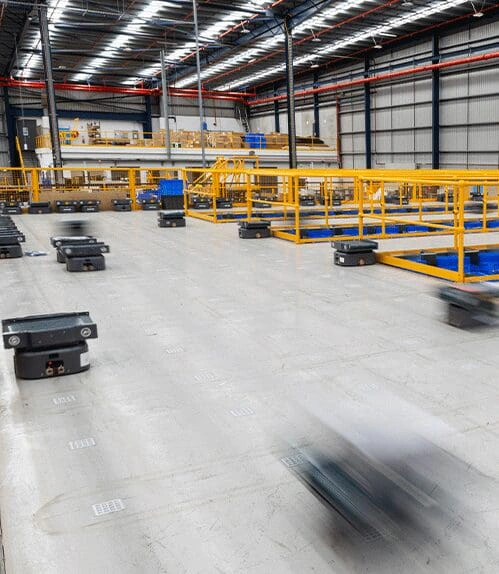
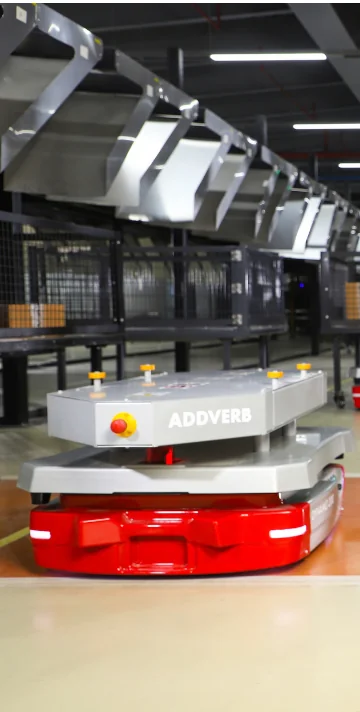
An industrial robot can support these needs without taking over the entire warehouse. Addverb’s Autonomous Mobile Robot, Dynamo, for example, can support material movement and picking, taking repetitive work off employees’ hands while leaving people to handle decisions, exceptions, and tasks requiring human judgment. Depending on the variant, it can carry loads of up to 5,512 lbs.
Also Read: Guide to 5 Types of Mobile Robots and How They’re Used
What Warehouse Functions Can Warehouse Robotics Automate?
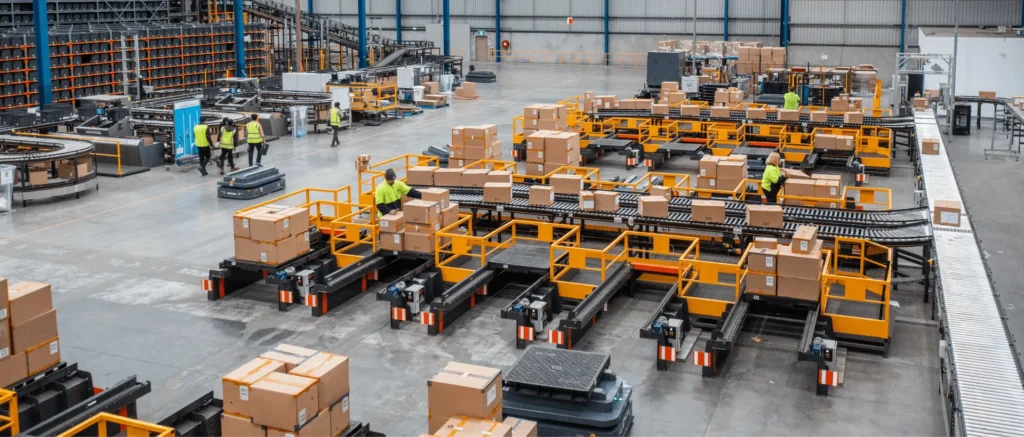
Robotics can now fit into many parts of a warehouse, but the right solution depends on the products being handled, storage requirements, layout, throughput, and existing equipment.
Common functionalities of Addverb’s products include:
- Material movement: AMR, Dynamo, enables autonomous movement of materials across warehouse areas, helping transport loads between different operational points while adapting to changing movement requirements.
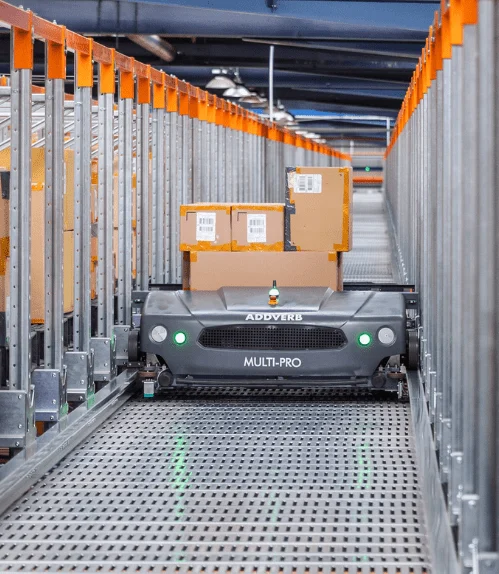
- Storage: Our ASRS solutions like 4-way pallet shuttle, Cruiser 360, supports pallet storage and retrieval in all X, Y and Z axes, while the Mother-Child Shuttle, Multi-Pro, enables multi-deep pallet storage for higher storage density and efficient inventory handling.
- Picking: The Pick-to-Light system, Rapido, guides operators to the right products and quantities for accurate order fulfillment, while the Horizontal Carousel System, HOCA, brings goods directly to operators to reduce travel during picking.
- Sortation: The Robotic sorter, Zippy, performs high-speed SKU-level sortation up to 30,000 sorts/hour and can adapt to changing sorting requirements, while SortIE, its vertical sortation robot, sorts individual parcels into destination positions across different heights.
- Software: The Warehouse Execution System, Concinity, coordinates material and information flow across automation systems, while the Warehouse Control System, Mobinity, provides real-time visibility and control over equipment, inventory, and material flow.
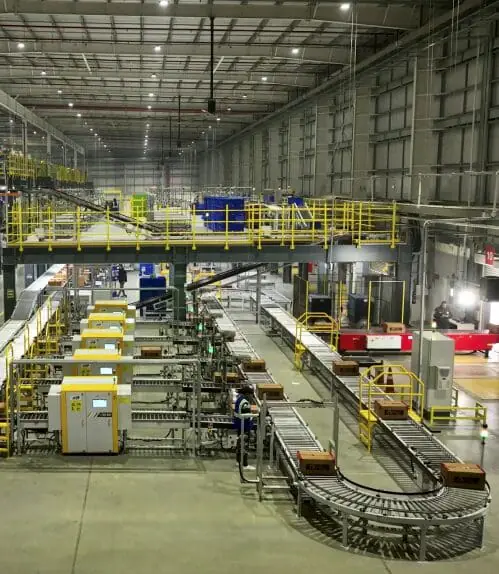
- Conveyors: Addverb’s conveyor solutions support the movement, transfer, rotation, and routing of pallet loads while also connecting different warehouse automation systems such as AS/RS, AMRs, and goods-to-person stations.
What Is Making Robots More Practical for Everyday Warehouse Work?
Robots are no longer limited to futuristic warehouses designed around automation from day one. Many systems can be introduced into existing facilities, allowing operators to start with one repetitive task and expand later. This matters because most warehouses in the USA cannot simply shut down and rebuild around new technology.
The shift is also being supported by better sensing, software, and flexible system designs:
- Modular deployment: Operators can begin with one process and expand as volumes increase.
- Improved sensing: Modern robots can work around people and other equipment.
- Software integration: Systems can respond to orders, priorities, and changing task requirements.
- Flexible configurations: Automation can be adapted for brownfield facilities rather than being limited to new American warehouses.
Addverb’s Cruiser 360 is ideal for omnidirectional movement as it can move payloads of up to 3,307 lbs in 3 directions at a carrying speed of 4.92 ft/s, ensuring flexible and faster storage and retrieval. It uses vertical and horizontal space efficiently, with a positioning accuracy of +/- 0.08 inches.
Furthermore, Mother-Child Shuttle, Multi-Pro, is ideal for storing a large number of pallets of the same or a variety of SKUs, allowing them to be stacked in a compact and organized manner, with a maximum payload of 2,205 lbs. For smaller loads, Addverb’s carton shuttle, Quadron, stores and retrieves cartons, crates, and totes of up to 110 lbs.
How Are Warehouses Making Robots Work Alongside Their Existing Operations?
Most warehouses in the USA already have a mix of manual processes, conveyors, forklifts, packing stations, storage equipment, and software. Automation can therefore take two routes: brownfield automation, where solutions are integrated into existing facilities, and greenfield automation, where the warehouse is designed around automation from the start.
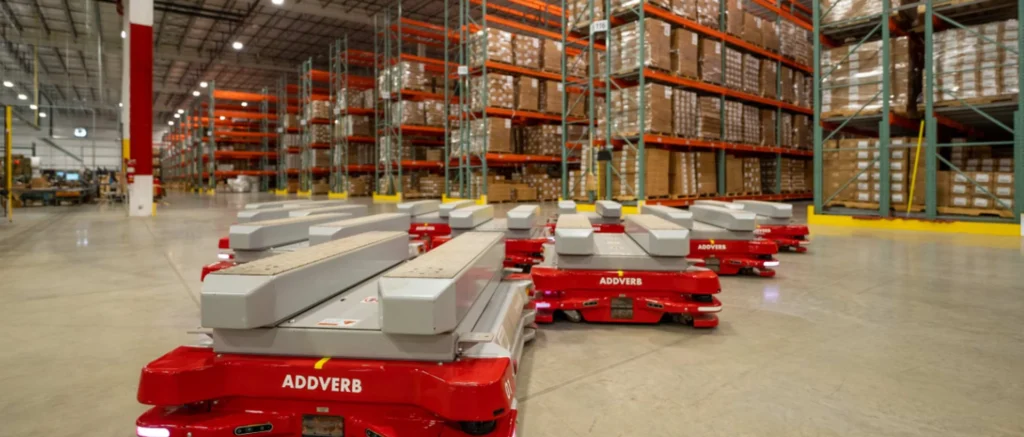
For brownfield operations, AMRs such as Dynamo can be introduced without requiring a complete facility redesign, while systems such as AS/RS, including Cruiser, can automate pallet storage within existing layouts. Cruiser carries up to 3,307 lbs at up to 3.61 ft/s along deep storage lanes.
For greenfield facilities, these technologies can be planned into the warehouse design from the outset to create a more connected flow. This makes industrial process automation less about individual machines and more about building one coordinated warehouse operation.
What Operational Benefits Are US Warehouses Gaining From Warehouse Robotics?
The real test of automation is simple: what changes on the warehouse floor? When robots take over repetitive travel, handling, picking, or sortation, employees have more time for work that requires judgment.
The operational impact can include:
- Faster processing: Coordinated workflows can reduce unnecessary movement and handling time.
- Better accuracy: Automated routing and guided processes can reduce avoidable handling errors.
- More consistent peak performance: Robots can support higher workloads without relying entirely on additional temporary labor.
- Higher-value work: Employees can focus more on decisions, exceptions, and activities requiring human judgment.
For high-volume flows, Zippy performs SKU-level sortation of up to 30,000 sorts/hour, connecting product movement with the need to send orders to the right destinations. It carries up to 13 lbs at up to 6 ft/s.
On the other hand, Addverb’s multi-carton picking robot, Veloce, efficiently navigates through grid-based paths to the pre-decided locations for storing and picking carton loads, handling a maximum payload of 529 lbs at a speed of 4.92 ft/s.
Also Read: 6 Signs It’s Time to Upgrade Your Warehouse with an AGV System
Operational Benefits of Robotics in US Warehouses
| Operational Metric | Manual Operations | Robotic Operations |
| Throughput | Lower number of orders/items handled within a given period | Higher number of orders/items handled within the same period |
| Labor Productivity | Fewer orders processed per labor hour due to manual movement and handling | More orders processed per labor hour as robots support repetitive material-handling tasks |
| Processing Time | Longer time required to move, pick, sort, or process goods | Shorter processing time with automated movement and handling |
What Does the Growing Use of Robots Mean for the Future of American Warehousing?
The future of warehouse robotics in America is unlikely to be one giant machine doing everything. It is more likely to be a group of systems that know what the others are doing. Addverb’s Rapido supports this connected approach by using light-based displays to show workers exactly where to pick and how many items are needed, reducing search time and picking errors.
In addition to pick-to-light technology, the market is moving toward adopting other major robots, including AMRs and AS/RS. Mordor Intelligence reports that AS/RS held a 33.15% share of the North America warehouse robotics market in 2025, and that mid-market operators are still under-penetrated. The opportunity is therefore not simply to add more machines, but to build connected industrial robotics solutions that bring equipment, software, and people into the same workflow.
Case Studies: How Addverb’s Automation Deployments Reflect the Shift Toward Robotic Warehousing
At Wooster Brush Company (WBC), manual, paper-based picking created labor demands, errors, and safety concerns. Addverb deployed 13 AMRs capable of handling up to 1,100 pounds each. The solution helped dispatch 15,000 cases daily and achieve twice the capacity compared to manual operations.
At S. Abraham and Sons in Indianapolis, challenges around labor productivity, space utilization, and picking accuracy called for a more automated approach. Addverb deployed a Carton Shuttle AS/RS alongside Multi-Level Shuttles (MLS). The solution was powered by Addverb’s Warehouse Execution System (WES). The result was improved picking efficiency up to 200 totes/hour, while the distribution center saw up to a 400% improvement in space utilization.
Conclusion
Robotics is changing how American warehouses think about capacity. Instead of adding people for every increase in workload, operators can automate repetitive movement, storage, picking, and sortation while keeping employees focused on decisions and exceptions.
As industrial automation solutions become more connected, warehouses will increasingly have robots, software, and people working together. Addverb supports this approach through modern robotics and systems, helping warehouses build fulfillment operations that can grow with demand.
FAQs
Which industries are adopting robots in American warehouses? Retail, e-commerce, consumer goods, manufacturing, grocery, and 3PL operations are among the industries using warehouse robotics. Addverb supports these environments with solutions for movement, storage, picking, and sortation.
What types of robots are being adopted in US warehouses? Warehouses are adopting AMRs, shuttle AS/RS, sortation systems, and picking robots. Addverb’s Cruiser 360 supports four-way pallet movement for flexible pallet handling.
What warehouse tasks are most commonly automated by robots? Material movement, storage, retrieval, picking, sortation, sequencing, and consolidation are common applications. Addverb’s Carton Shuttle, Quadron, supports carton and tote retrieval for automated handling workflows.
How do robots improve productivity in warehouse operations? Robots reduce repetitive travel and handling while software coordinates tasks and priorities. Addverb’s Veloce supports multi-carton picking where several cartons need to be handled together.
How do robots work alongside human warehouse workers? Robots can handle repetitive movement while workers focus on exceptions and judgment-based activities. Addverb’s Mobinity connects automation equipment to coordinate these workflows.