



ON THIS PAGE
A warehouse preparing for a big seasonal sale can experience problems with its normal procedure when the volume of orders suddenly grows within just a few days. As the number of incoming shipments increases, the storage space fills faster, while orders for shipment use the same resources. With the increasing demands of timely delivery in the USA, even small disruptions in the movement of goods can influence fulfilment performance.
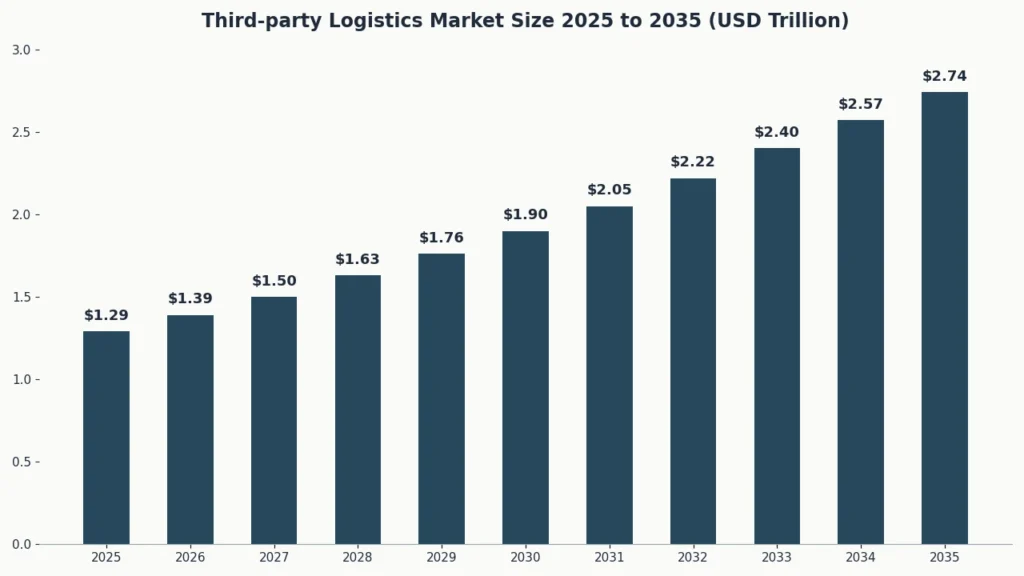
According to Mordor Intelligence, the United States 3PL Market is expected to reach USD 272.74 billion by 2031, growing at a CAGR of 3.68% between 2026 and 2031. This rapid market growth is encouraging logistics providers to rethink how warehouses operate during periods of high demand. In order to address the challenges, third party logistics warehouse operations are now increasingly utilising automation, intelligent storage, and real-time warehouse software. In many cases, traditional manual methods cannot keep up with varying demand, making technology vital to ensuring speed and accuracy across the United States during peak times.
Why Does Peak Season Pressure Make 3PL Warehouse Operations More Complex?
Peak seasons result in abrupt rises in incoming inventory, outgoing shipments, and changes in orders. In contrast to traditional warehouses, 3PL facilities usually handle inventory for more than one customer at once, each having different storage needs and delivery obligations. Resource planning, inventory distribution, and human resource management become more difficult during peak seasons.
Common challenges associated with 3PL operations during peak season include:
- Higher order volumes creating picking and dispatch bottlenecks.
- Multiple client inventories increasing storage complexity.
- Labour shortages affecting fulfilment consistency.
- Greater risk of shipping errors during demand surges.
Meeting such difficulties require adaptable warehouse processes that maintain efficiency, accuracy, and quality despite fluctuations in demand.
Also Read: Types of Automated Warehouse Picking System for Order Fulfillment
How Can 3PL Warehouses Improve Capacity Management During Demand Surges?
Effective 3PL warehouse management begins with optimising existing warehouse space rather than increasing capacity through warehouse expansion. A well-designed storage strategy helps warehouses absorb seasonal demand while maintaining inventory accessibility and operational efficiency during peak periods.
Key strategies for improving capacity management include:
- Maximise storage density to accommodate larger inventory volumes without increasing warehouse footprint.
- Optimise slotting to reduce travel time and improve picking efficiency for fast-moving SKUs.
- Standardise pallet storage and replenishment workflows to minimise congestion during demand surges.
- Deploy scalable AS/RS solutions that can expand with seasonal inventory requirements while maintaining consistent throughput.
- Improve inventory accessibility to reduce delays in storage and retrieval operations.
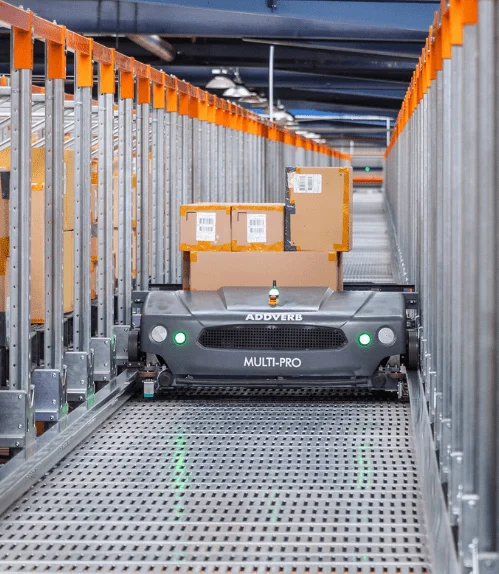
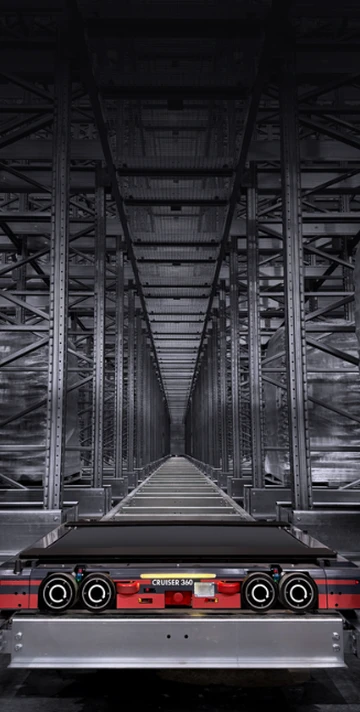
Addverb’s 4 Way Pallet Shuttle, Cruiser 360 supports high-density pallet storage through multidirectional movement within an AS/RS environment. It can handle a 3,307 lb payload at 4.92 ft/s while ensuring a positioning accuracy of +/- 0.079 inches, allowing warehouses to maximise storage capacity without compromising accessibility.
Similarly, the 2 Way Pallet Shuttle, Cruiser enables efficient lane-based pallet storage and retrieval. It can transport and store a 3,307 lb payload at a speed of 3.61 ft/s while delivering a throughput of 60 pallets/hr, helping warehouses accommodate seasonal inventory increases without disrupting existing operations.
What Role Does Automation Play in Maintaining Fulfilment Speed for 3PL Providers?
Warehouse automation enables logistics providers to maintain fulfilment speed despite fluctuating order volumes, multiple customer inventories, and tight delivery timelines. Addverb addresses these operational challenges through an integrated portfolio of automation solutions that improve material movement, storage, inventory visibility, and order execution, enabling faster and more reliable 3PL order fulfillment.
Below are some common 3PL challenges and how Addverb’s automation solutions address them:
- Managing higher inventory volumes: Addverb’s 2 Way Pallet Shuttle, Cruiser and 4 Way Pallet Shuttle, Cruiser 360 maximise storage density while enabling faster pallet storage and retrieval within AS/RS environments.
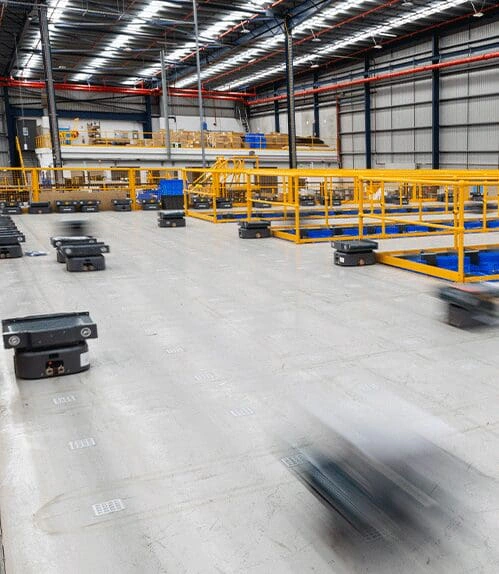
- Reducing manual transportation: Addverb’s Autonomous Mobile Robot, Dynamo, automates material movement between receiving, storage, picking, and dispatch areas. The Dynamo 2500 can transport a 5,512 lb payload using natural navigation while maintaining a positioning accuracy of +/- 0.79 inches, ensuring continuous material flow during peak operations.
- Improving inventory visibility: Addverb’s Warehouse Management System (WMS), Optimus, provides real-time inventory tracking, order visibility, and resource management, enabling faster and more informed operational decisions.
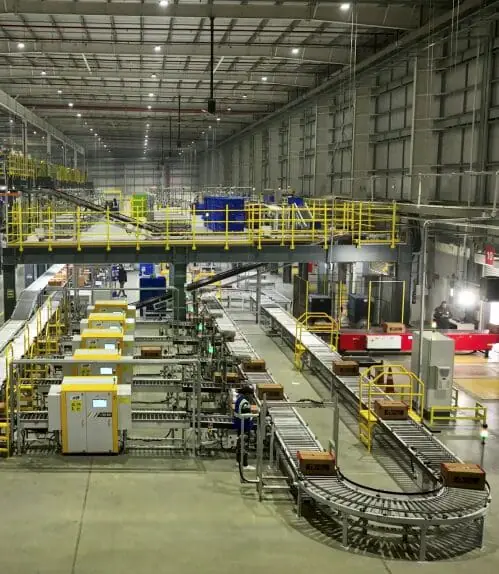
- Increasing sorting efficiency: Addverb’s robotic sortation solution, Zippy, automates parcel and carton sorting, helping warehouses process higher order volumes with greater speed and accuracy.
- Coordinating warehouse operations: Addverb’s Warehouse Execution System (WES), Concinity, synchronises automation equipment and warehouse processes to optimise workflows, improve resource utilisation, and minimise operational bottlenecks.
By combining intelligent robots with advanced warehouse software, Addverb enables 3PL providers to improve fulfilment speed, maintain operational accuracy, and scale warehouse performance efficiently during peak demand periods.
How Can Real-Time Visibility Help 3PLs Balance Inventory, Labour, and Order Volumes?
Real-time visibility allows warehouse managers to make quick decisions based on live data related to inventory, labour, and orders. Real-time visibility helps identify bottlenecks before they impact fulfilment performance, supports proper staffing, and improves inventory accuracy across different customer accounts. According to Zipdo, 92% of 3PL providers use cloud-based Warehouse Management Systems (WMS), highlighting the growing reliance on digital warehouse management.
Some of the major benefits are:
- Live inventory tracking across warehouse locations.
- Better labour allocation based on workload.
- Faster identification of fulfilment bottlenecks.
- Improved order prioritisation during peak demand.
Addverb’s Warehouse Management System (WMS), Optimus, gives real-time insight and control over operations, which helps coordinate inventory, labour, and fulfilment activities effectively in peak seasons for the logistics provider, supporting 3PL automation.
Why Are Scalable Warehouse Technologies Becoming Essential for Long-Term 3PL Growth?
Growth in the long run necessitates the use of warehouse technologies that are capable of growing with the changes in business needs. Rather than replacing the infrastructure every couple of years, logistics providers nowadays favour modular automation that allows for increased throughput, more efficient storage, and flexibility. This ensures that a third party logistics warehouse in the USA can meet its customers’ evolving demands without losing its investment.
Addverb’s Carton Shuttle, Quadron, automates carton storage and retrieval for high-speed carton handling, ensuring a throughput of 115 totes/hour and enabling warehouses to handle increasing order volumes more efficiently.
Addverb’s Warehouse Execution System (WES), Concinity, improves coordination across the warehouse by aligning automation equipment, balancing workflows and boosting overall operational efficiency as warehouse networks grow.
Also Read: Simple Warehouse Space Optimization Techniques for quicker E-Commerce Order Fulfillment
Peak Season Fulfilment Performance Before and After 3PL Warehouse Automation
| Comparison Area | Before Automation | After Automation |
| Order Processing Speed | Manual processes create slower order handling and longer processing cycles during peak demand periods. | Automation improves processing speed by enabling faster movement, sorting, and fulfilment workflows. |
| Warehouse Throughput Capacity | Limited by manual handling capacity, labour availability, and operational bottlenecks. | Increased capacity through automated systems that support higher order volumes and consistent performance. |
| Fulfilment Accuracy | Manual processes increase the chances of picking errors, inventory discrepancies, and shipment delays. | Automated workflows improve accuracy through real-time tracking, better coordination, and reduced human errors. |
Case Studies: How Addverb’s Automation Solutions Support High-Volume Warehouse Operations
Addverb provides automation solutions across the USA and has helped several facilities achieve the desired outcome. Below are the case studies from the USA as well as Europe that demonstrate Addverb’s ability to meet client objectives.
At DHL’s fulfilment centre, there was a need for automation solutions as the peak season was just around the corner and an increase in demand was expected. To ensure maximum efficiency and growth, Addverb provided a comprehensive solution that included robotic sortation system solutions along with several unique solution configurations, such as a “round robin” approach to evenly manage distribution parcels and upstream integrations for the Warehouse Execution System. The facility was able to achieve 99.99% order fulfilment along with 99% inventory accuracy.
Mondial Relay faced several challenges due to limited manpower and a shortage of new facilities. To optimise the sorting process, Addverb initially deployed 62 Zippy 10 robots, which helped achieve a throughput of 2,500 sorts per hour. Building on it, they added 10 more robots, which took the throughput to 3,000 sorts per hour. This helped the company modernise and scale efficiently.
Conclusion
Peak season demands faster, more scalable warehouse operations that maintain speed and accuracy under pressure. Modern 3PL fulfillment solutions leverage automation, real-time visibility, and scalable infrastructure to ensure future growth across the USA. Using the warehouse automation systems provided by Addverb, logistics companies can enhance their warehousing efficiency and scalability.
FAQs
1. What is third-party logistics warehouse management?
Third-party logistics warehouse management entails the handling of storage, inventory management, and order fulfilment for several companies using a common warehouse network system. This makes operations and customer service efficient.
2. How do 3PL warehouses handle peak season demand?
They use automation, real-time inventory visibility, and scalable warehousing technology to improve throughput. Addverb helps warehouses get ready for seasonal demand by integrating automation technologies.
3. What are the benefits of third-party logistics warehouse management?
It enhances inventory accuracy, warehouse utilisation, order fulfilment speed, and operational flexibility. Addverb enables these enhancements through advanced warehouse automation and software solutions.
4. What industries benefit most from 3PL warehouse management?
Many industries such as retail, e-commerce, manufacturing, healthcare, consumer goods, and automotive rely on 3PL providers. Addverb’s automation products support fulfilment operations across these industries.
5. What technologies help 3PL warehouses manage seasonal demand?
WMS, WES, AS/RS, AMRs, and sortation systems can assist in increasing efficiency, improving accuracy, and speeding up order fulfilment during peak times.