



ON THIS PAGE
Imagine a warehouse where an item is on the shelf, but the inventory system still says it’s out of stock. A basic disconnect like this can cause delayed shipments, increased operational costs and affect customer satisfaction. With order volumes rising across the USA, warehouses are looking for inventory systems that can provide accurate, real-time visibility, rather than waiting for manual updates. According to NextMsc, the global Warehouse Control System market is expected to grow from USD 3.55 billion in 2023 to USD 10.12 billion by 2030, driven by the growing need for real-time warehouse control and inventory automation.
An automated inventory management system provides real-time visibility of stock levels, minimises manual intervention and improves inventory accuracy in warehouse operations. When supported by smart software platforms, warehouses can optimise storage, movement and replenishment and gain better control over operations. With a growing use of automation, integrated software has become the backbone of effective inventory management.

Why Are US Warehouses Moving Away From Manual Inventory Management?
Traditional inventory methods rely heavily on manual data entry, paper records and periodic physical stock counts. These practices make inventory management more difficult, especially as warehouses continue to grow.
- Traditional inventory methods rely heavily on manual data entry.
- Paper records increase the likelihood of inventory errors.
- Periodic physical stock counts delay inventory updates.
- Misplaced products and delayed replenishment decisions affect warehouse efficiency.
- The larger the warehouses, the harder it is to manage manual processes.
Faster inventory updates and better visibility into every storage location are needed in modern warehouses. Automated inventory management decreases the dependency on humans by tracking inventory movements and updating stock information in real time. This allows USA-based warehouses to boost operational efficiency while processing higher order volumes with greater consistency.
What Distinct Functions Do WMS and WCS Perform in Inventory Automation?
Both systems support warehouse automation, but they perform different yet complementary functions. Addverb’s Warehouse Management System (WMS), Optimus, serves as the central intelligence layer for warehouse operations. Along with managing inventory records, receiving, put-away, picking, replenishment, and dispatch, it also supports dock management, order management, and location/bin management for better space utilisation.
Optimus uses AI-driven decision-making to optimise inventory placement, workload balancing, and material flow while providing real-time inventory visibility, reporting, and operational analytics. Its modular architecture allows businesses to configure workflows based on changing operational requirements and integrate seamlessly with ERP, OMS, and other enterprise systems.
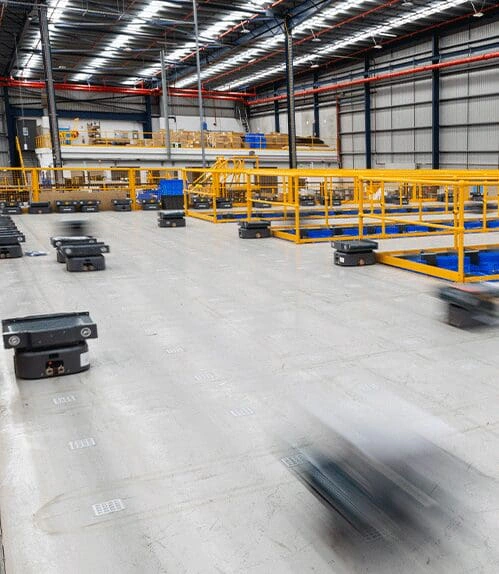
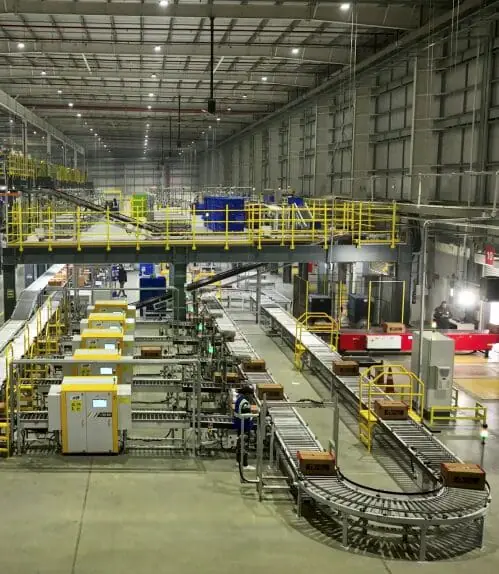
Addverb’s Warehouse Control System (WCS), Mobinity, orchestrates the execution layer, controlling conveyors, sortation systems, AS/RS, robotics and other automated material handling equipment. It’s more than just equipment movement control, as it also includes scanners and sensors for real-time data collection, allows for interoperability with ERP, WMS and automation platforms, and provides standard error handling and reporting to keep warehouse operations running smoothly. The PTL integration improves automated picking accuracy with visual operator guidance and live task allocation, while operational analytics enable proactive decision-making.
Together, these systems strengthen automated inventory processes by combining intelligent planning with real-time equipment control.
How Does WMS-WCS Integration Create Real-Time Inventory Visibility and Improve Inventory Performance?
Inventory visibility requires continuous communication between planning software and warehouse equipment. When WMS and WCS are used as an integrated solution, inventory movements are automatically updated as products are received, stored, picked, transferred or shipped. This avoids the delays that are often associated with manual inventory updates.
The Warehouse Management System, Optimus, is the primary inventory database, and the Warehouse Control System, Mobinity, is responsible for physical warehouse operations based on operational priorities. AI optimisation, bin & location management, scanner integration and continuous equipment feedback ensure that inventory records remain synchronised at all stages. Live dashboards and analytics allow managers of the warehouse to track the movement of inventory, the condition of equipment and operational performance, and respond quickly to changing conditions in the warehouse.
According to Zipdo, approximately 85% of warehouses already use Warehouse Management Systems to track inventory, a sign of the industry’s growing dependence on software-driven inventory visibility. Integrated platforms further strengthen inventory automation by enabling accurate inventory tracking without constant manual verification.
How Does Inventory Automation Enable Faster Replenishment?
For inventory replenishment, it is critical to have accurate stock information and timely movement of materials between storage locations. Inventory levels are constantly monitored by automated systems like WMS, and replenishment tasks are generated before shortages can affect operations. This prevents stockouts and ensures an uninterrupted picking activity.
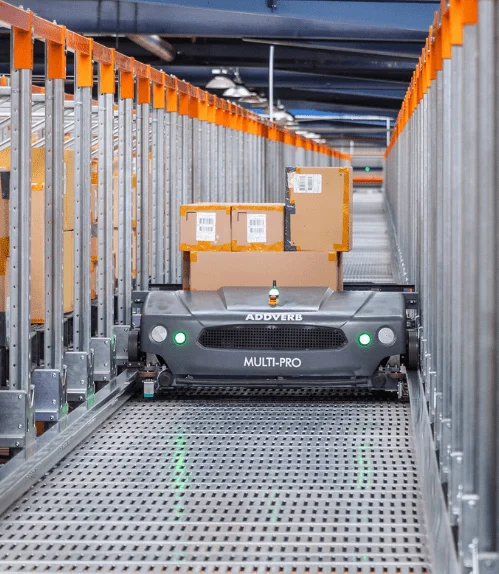
Real-time inventory visibility also allows warehouses in the USA to prioritise replenishment according to product demand, inventory velocity, and storage locations. Advanced automated inventory systems such as Optimus automatically create replenishment tasks based on predefined inventory rules, and Mobinity orchestrates conveyors, AS/RS and Mobile Robots to perform those tasks efficiently. AI-supported task allocation and continuous equipment monitoring reduce travel time, improve inventory availability and keep replenishment workflows running uninterrupted.
What Operational Benefits Can US Warehouses Achieve Through WMS-WCS-Driven Inventory Automation?
Many USA-based warehouse operations can see measurable improvement with WMS and WCS. Real-time visibility, synchronised equipment control and automated workflows contribute to reducing manual effort, while increasing inventory accuracy and throughput.
Main operational advantages are:
- Higher inventory accuracy across storage locations through real-time inventory updates
- Faster order processing and inventory movement with synchronised software and equipment execution
- Reduced manual data entry and operational errors through barcode scanning and automated task management
- Improved utilisation of warehouse resources using AI-driven task allocation and workload optimisation
- Real-time operational monitoring and reporting for quicker issue identification and decision-making
- Seamless interoperability with warehouse equipment, ERP, and automation platforms
- Better scalability during seasonal demand fluctuations without compromising operational efficiency
These improvements enable warehouses to operate more efficiently while supporting long-term growth through robotic inventory management.
| Metric | Before WMS–WCS Integration | After WMS–WCS Integration |
| Inventory Accuracy | Manual inventory updates, delayed stock synchronisation, and higher chances of stock discrepancies | Real-time inventory visibility, synchronised stock updates, and significantly improved inventory accuracy |
| Order Fulfilment Time | Slower order processing due to manual coordination and inefficient workflows | Faster order processing through automated task allocation and coordinated material movement |
| Order Picking Accuracy | Greater risk of picking errors and incorrect order fulfilment | Improved picking precision through automated instructions, barcode/RFID validation, and real-time system coordination |
How Does Inventory Automation Help Warehouses Deliver a Better Customer Experience?
Customers in the USA want accurate orders, faster deliveries, and real-time order status. Stockouts, shipment delays, and incorrect deliveries are often a result of inventory errors and delayed replenishment, which can affect customer satisfaction. Addverb’s WMS, Optimus and WCS, Mobinity, help remove these problems as they maintain accurate inventory records and improve coordination between inventory storage and order fulfilment.
Better inventory visibility also enables warehouses to react swiftly to changes in demand and maintain consistent product availability. Faster order processing, fewer errors in fulfilment, and improved shipment accuracy increase customer confidence and reduce returns and service enquiries. As inventory operations become more predictable, businesses can consistently deliver better service through an automated stock management system.
Conclusion
Manual inventory tracking is not enough for modern warehouses to stay competitive. Intelligent software integration offers accurate inventory visibility, faster replenishment and improved operational performance across increasingly complex fulfilment environments.
With real-time inventory control and automated execution, businesses can increase productivity and enable long-term growth. Addverb helps warehouses achieve these goals with WMS and WCS that strengthen automation readiness, improve operational efficiency, and build resilient, future-ready warehouse operations in the USA.
FAQs
1. How do WMS and WCS work together to improve inventory automation?
Addverb’s WMS manages all the inventory data while its WCS controls warehouse equipment. This enables accurate visibility of inventory and synchronised operations in the warehouse.
2. What are the benefits of automated inventory management over manual tracking?
Automated inventory management improves accuracy, reduces manual effort, offers real-time visibility, and supports faster inventory replenishment and order fulfilment.
3. Can Addverb’s WMS and WCS integrate with existing automated inventory management systems?
Yes. Addverb’s WMS and WCS are built for easy integration with existing automation technologies and warehouse infrastructure, thereby ensuring seamless inventory operations.
4. What types of warehouse technologies integrate with automated inventory management systems?
Addverb’s software integrates with conveyors, AS/RS, AMRs, sortation systems, picking technologies and other warehouse automation equipment.
5. How do you know if a warehouse needs inventory management automation?
Warehouses struggling with inventory accuracy, slow replenishment, manual errors or increasing order volumes should consider inventory management automation to improve efficiency and scalability.