



ON THIS PAGE
Imagine a warehouse where hundreds of orders are picked on time, but dispatch is delayed as it takes too much time to transfer products from one operational zone to another. The issue is not the workforce or the inventory. It is the absence of an effective system of material flow linking all phases of fulfilment. With increased order volumes and more rigid delivery commitments across warehouses in the USA, seamless movement between warehouse zones has become a business priority.
According to Global Market Insights, the conveyor system market was valued at USD 12.6 billion in 2025 and is projected to reach USD 20.3 billion by 2035, growing at a CAGR of 5%, driven by warehouse automation and material flow optimisation. This is supported by an automatic conveyor system that ensures continuous movement between the receiving, storage, picking, sorting, packing and dispatch areas. Warehouses achieve improved coordination, increased throughput, and greater operational efficiency.
Why is Zone-Based Warehouse Flow Critical for High-Volume Fulfilment?
The zone-based warehouse design divides operations into dedicated functional areas so that each process can operate independently but is connected to the overall fulfillment flow. This method reduces unnecessary movement, increases labour productivity and reduces congestion in peak periods in the USA.
With zone-based layouts, you create a predictable flow of materials that can be processed faster than having to manually move products over long distances. Warehouses that process thousands of orders every day benefit from this as work is balanced across receiving, storage, picking and shipping functions. This leads to more consistent operations and better order accuracy, even during seasonal demand spikes.
How Do Automatic Conveyor Systems Structure Zone-Based Warehouse Flow?
A warehouse conveyor belt network creates fixed transportation routes between all zones of the USA-based warehouse with minimal human intervention. Products automatically flow from inbound receiving to storage, picking, packing, and shipping without the need for rehandling.
Addverb’s Pallet conveyors are deployed in the pallet handling operations for reliable movement of heavy pallet loads between different warehouse zones. One of the variants, Pallet Chain Conveyor, supports a maximum of 1,543 lb payload and ensures it moves at 0.98 ft/s. Its ability to support transfers, routing and direction changes allows warehouses to maintain continuous flow while reducing the need for manual transport. The systems also ease the movement from storage to outbound staging areas while providing consistent throughput.
How Do Conveyors Integrate With Picking, Sorting, and Dispatch Zones?
Automatic conveyors support uninterrupted product flow through picking, sorting, and dispatch by supplying items to each workstation at a consistent pace. This helps operators and automated equipment work more efficiently without waiting for material replenishment. As a result, order processing becomes more balanced, handling capacity improves, and fulfilment operations remain stable even during peak workloads.
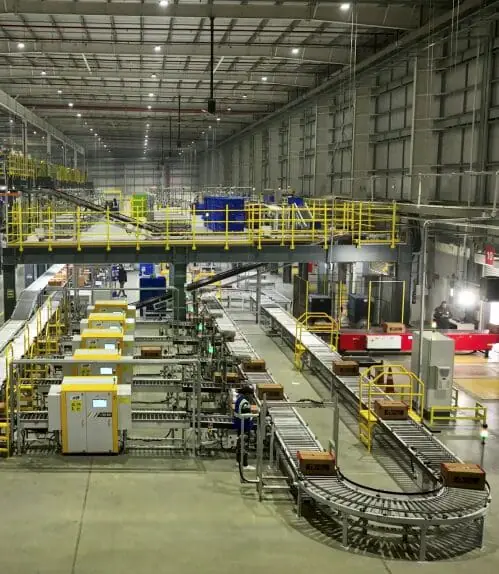
Addverb’s Roller Conveyors are commonly used to transfer cartons, totes, and cases between picking stations and packing or dispatch areas. One of the variants, Spur Roller Conveyor, ensures smooth transportation of a 66 lb payload at a speed of 196 ft/min. The design allows for flexible layouts, so the warehouses can expand or reconfigure conveyor routes as their operational needs evolve. These conveyors provide a continuous flow of product in warehouses in the USA to ensure that orders are received promptly and accurately while reducing idle time.
How Do Automatic Conveyor Systems Improve Cross-Zone Coordination and Reduce Bottlenecks?
An automatic sorting conveyor automatically sends products to the correct operational zone based on order data, thereby reducing manual decision-making and preventing congestion between warehouse operations. Addverb’s Belt Conveyors are integrated with the company’s Warehouse Control System (WCS), Mobinity, which manages conveyor operations in real-time and directs products to the right warehouse zone. Mobinity monitors the status of conveyors and the movement of products to avoid congestion, balance material flow between different operational areas, and keep products moving without unnecessary waiting.
On a higher level, Addverb’s Warehouse Execution System (WES), Concinity, orchestrates tasks across conveyors and other automation systems by prioritising workflows based on order urgency and operational requirements. This means that the picking, sorting, packing and dispatch are all in sync so one warehouse zone does not get overloaded while another is idle.
Addverb’s PVC Belt Conveyor supports this synchronised movement by transporting payloads of up to 275 lb at speeds of 328 ft/min, thus enabling the continuous transportation of cartons and lightweight packages while reducing waiting time, improving throughput and reducing operational bottlenecks.
What Are the Operational Benefits of Zone-Based Warehouse Flow?
An automated warehouse conveyor systems approach leads to increased efficiency throughout the entire fulfilment process. The advantages that will be gained by using this approach include:
- Faster movement of products between warehouse zones
- Reduced manual handling and labour dependency
- Improved picking accuracy and order consistency
- Better utilisation of warehouse space and equipment
- Higher throughput during peak demand periods
A constant flow of material helps eliminate time gaps between different activities within the warehouse and improves coordination across the facility. This allows the warehouse to adapt to fluctuations in order quantities without compromising on service consistency and scalability.
Zone-Based Warehouse Flow Enabled by Automatic Conveyor Systems
| Metric | Before Conveyor Automation | After Conveyor Automation |
| Order Cycle Time | Longer due to manual movement and waiting time | Shorter through continuous automated flow |
| Zone-to-Zone Transfer Time | Slower transfers between operational zones | Faster and uninterrupted movement across zones |
| Material Handling Efficiency | Higher manual intervention and multiple touchpoints | Automated product movement with minimal manual handling |
| Order Throughput | Lower processing capacity during peak periods | Higher throughput with balanced zone-based operations |
What Is the Future of Zone-Based Operations in US Warehouses?
With warehouse operations constantly evolving, companies in the USA are investing in automated material handling technology. An automatic conveyor belt system will increasingly operate with warehouse management software, robotics and automated warehouse storage solutions to create connected fulfilment environments that respond rapidly to changing operational demands.
According to Zipdo, e-commerce and fulfilment centres account for 22% of all industrial conveyor usage, with adoption growing at 8.2% CAGR. This highlights the increasing demand for automated material movement as warehouses manage larger order volumes and greater SKU diversity.
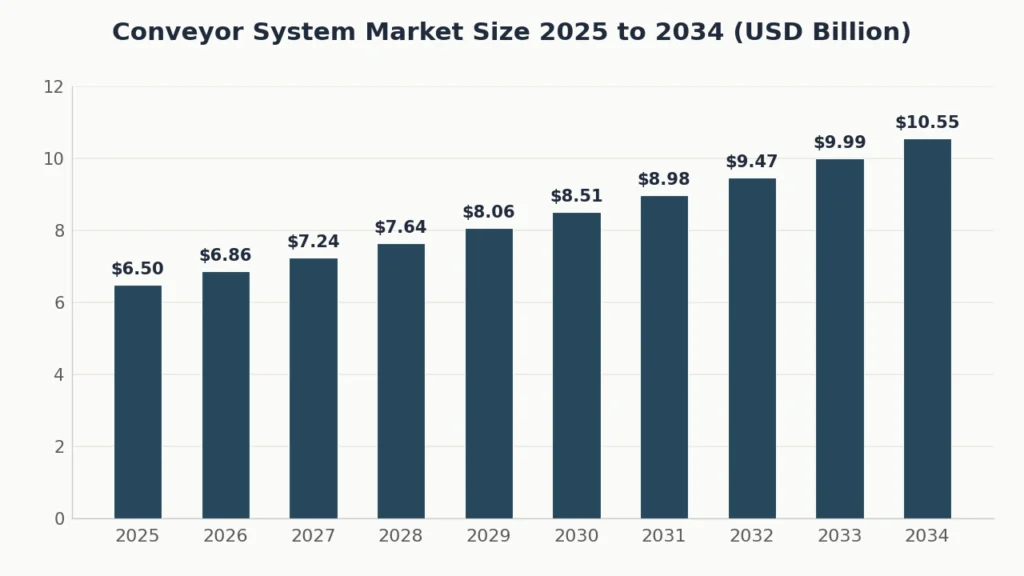
Future warehouse designs will also be modular for expansion, adding new conveyor zones with minimal disruption. This flexibility allows facilities to support business growth while maintaining an efficient flow of material.
Conclusion
Modern fulfilment centres depend on efficient movement between warehouse zones to maintain speed, accuracy, and scalability. Having a sound warehouse conveyor automation strategy minimises bottlenecks, enhances coordination and facilitates long-term operational performance.
As automation continues to transform warehouse operations in the USA, integrated conveyor systems will continue to be a key driver of fulfilment efficiency. Addverb’s next-gen conveyor systems and automation expertise empower businesses in building smart, scalable & future-ready warehouses.
FAQs
1. How do automatic conveyors improve zone-based fulfilment operations?
Addverb’s automatic conveyors create continuous product movement between warehouse areas, minimising manual handling and enhancing order flow.
2. What should warehouses consider when designing a zone-based conveyor layout?
Warehouses should assess product flow, order volumes, available space, future expansion plans and integration with existing automation before finalising the layout.
3. Can automatic conveyor systems be added to existing warehouses?
Yes. Most existing warehouses can adopt Addverb’s automatic conveyor systems through phased implementation with minimal disruption.
4. How do automatic conveyor systems help increase order processing speed?
Addverb’s conveyor solutions minimise waiting time, reduce manual transport between warehouse zones and keep the product flow going.
5. How does an automatic conveyor system differ from a standard conveyor belt?
Unlike a standard conveyor belt that just moves stuff from one place to another, Addverb’s automatic conveyor system combines sensors, controls, and software to automate routing and material flow.
6. What factors should businesses consider before installing an automatic conveyor system?
Businesses should consider factors like warehouse layout, product features, scalability requirements, software integration, and maintenance requirements.