



EN ESTA PÁGINA
Los patrones de demanda impredecibles, junto con los perfiles de inventario complejos y unos indicadores clave de rendimiento (KPA) operativos más estrictos, generan una presión cada vez mayor sobre los almacenes a la hora de gestionar sus instalaciones. Los procesos manuales tradicionales no pueden satisfacer las exigencias de rapidez, precisión y visibilidad del inventario, lo que da lugar a retrasos operativos que aumentan los gastos y reducen los niveles de satisfacción de los clientes. Los operadores de almacenes deben adoptar las tendencias actuales en materia de automatización de almacenes, ya que son esenciales para su trabajo y para mantener su posición en el mercado y su rentabilidad en 2026.
A medida que se acelera la transformación digital, las innovaciones en robótica, inteligencia artificial y tecnologías del Internet de las cosas están impulsando cambios en los métodos de almacenamiento, movimiento y seguimiento de los productos. Gitnux señala que el 75 % de las grandes empresas implementarán robots intralogísticos inteligentes de aquí a 2026. Conocer el futuro de la automatización de los almacenes permitirá a estos alcanzar la eficiencia operativa y generar un crecimiento sostenible.
¿Cuáles son las principales tendencias en automatización de almacenes para 2026?
Las tendencias del sector de los almacenes en 2026 se orientan hacia una mayor inteligencia, adaptabilidad e integración. El enfoque está pasando de la automatización aislada a ecosistemas totalmente conectados que responden de forma dinámica a las exigencias operativas.
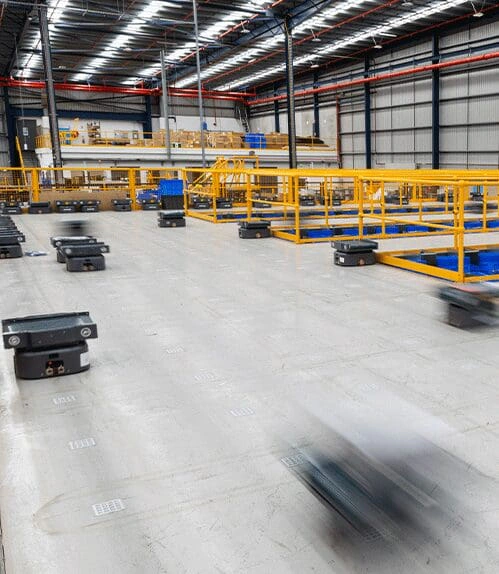
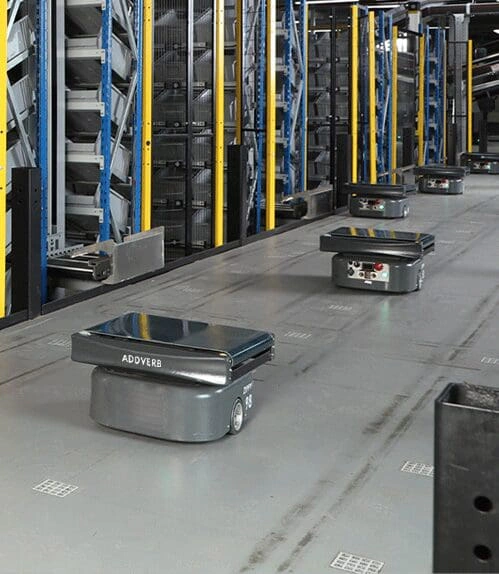
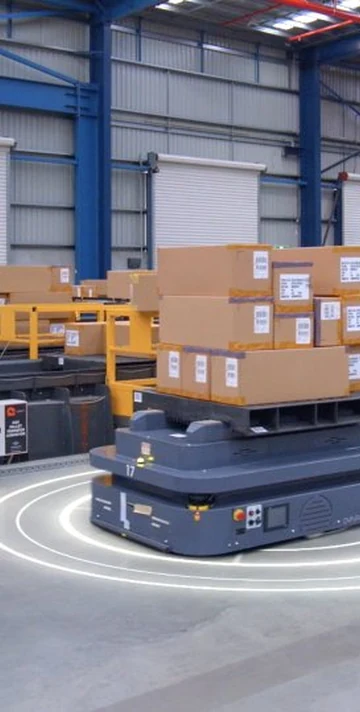
- Transición de la robótica fija a la flexible: Los almacenes están dejando atrás los sistemas basados en cintas transportadoras y están adoptando robots móviles autónomos (AMR) que pueden reasignarse entre distintas zonas según sea necesario.
- Integración de la IA en todas las operaciones: la IA está yendo más allá de la mera ejecución de tareas para tomar decisiones en tiempo real, optimizar rutas, predecir fallos y equilibrar las cargas de trabajo.
- El auge de los almacenes que funcionan las 24 horas del día, los 7 días de la semana: Las instalaciones están implantando operaciones totalmente automatizadas las 24 horas del día, los 7 días de la semana, con la ayuda de la robótica y los sensores del Internet de las cosas (IoT).
- Uso de gemelos digitales para la planificación: En los almacenes se están utilizando réplicas virtuales para simular cambios en la distribución, probar la automatización antes de su implantación y reducir al mínimo el tiempo necesario para la puesta en marcha.
Convergencia de WMS, WES y FMS: Las plataformas de software están convergiendo en un sistema de control unificado que coordina los robots, el inventario y la mano de obra desde una única interfaz.
¿Cómo transforma la adopción de las tendencias en automatización de almacenes las operaciones diarias?
La implantación de tecnologías de automatización de almacenes se traduce en una reducción de los errores humanos y en un aumento de la eficiencia operativa. El uso de la robótica ha crecido un 46 %, mientras que las empresas utilizan ahora robots móviles autónomos en un 52 % de los casos y logran una precisión en la preparación de pedidos un 47 % superior durante operaciones complejas de preparación de pedidos. El proceso de gestión de pedidos se agiliza gracias a soluciones que incluyen Addverb.
- Dynamo, AMR
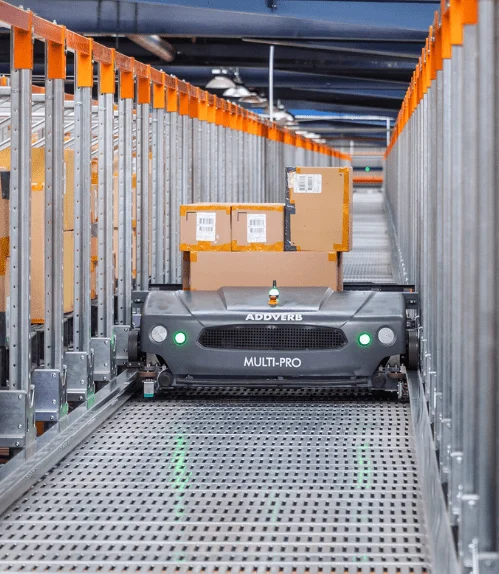
- Veloce, robots de preparación de pedidos de varias cajas, y
- Zippy, robots clasificadores
La combinación de los sistemas de gestión de almacenes (WMS), los sistemas de ejecución de almacenes (WES) y los sistemas de gestión de flotas (FMS) permite crear flujos de trabajo sincronizados y mejora la gestión de tareas en tiempo real.
El software de gemelos digitales permite a las organizaciones visualizar sus operaciones en formato digital, lo que les sirve para mejorar sus procesos de planificación y reducir el tiempo de instalación de sus equipos. Las organizaciones utilizan sensores del Internet de las cosas (IoT) junto con sistemas de monitorización en tiempo real para realizar un seguimiento tanto de los patrones de uso de sus activos como del estado de sus equipos.
¿Qué innovaciones técnicas marcan las tendencias del sector de los almacenes modernos?
La asignación de tareas impulsada por IA identifica las prioridades de los pedidos, lo que permite al sistema reducir los cuellos de botella y aumentar el rendimiento. Los clasificadores robóticos utilizan controles de calidad basados en visión artificial para evitar que se produzcan errores de selección. Zippy Addverb Zippy hasta 30 000 clasificaciones por hora y alcanza una precisión en los pedidos del 99,9 %. Veloce Addverb resultados más precisos a las empresas que gestionan grandes cantidades de productos. Los algoritmos de enrutamiento dinámico para los AMR crean rutas óptimas que ayudan a reducir no solo la congestión del tráfico, sino también los periodos de inactividad.
Las plataformas de gestión de almacenes basadas en la nube permiten la supervisión en tiempo real, mientras que los estándares de interoperabilidad facilitan la comunicación entre distintos sistemas. Esto contribuye a mantener un flujo constante de mercancías en todo el entorno del almacén, lo que garantiza la estabilidad de las operaciones.
Impacto de la robótica y el software en la eficiencia de los almacenes
A continuación se expone el impacto de la robótica y el software en la eficiencia de los almacenes:
| Indicador de eficiencia | Almacenes tradicionales / con bajo nivel de automatización | Robótica y almacenes gestionados por software |
| Rendimiento de pedidos | Limitado por la manipulación manual y los procesos fijos | Un aumento significativo gracias a Dynamo y al enrutamiento basado en IA |
| Índice de errores en la preparación de pedidos | Más elevado debido a los controles manuales | Reducción gracias al uso de clasificadores robóticos y soluciones de selección por visión |
| Visibilidad operativa | Datos fragmentados entre distintos sistemas | Cuadros de mando en tiempo real gracias a la integración de WMS, WES, WCS y FMS |
| Flexibilidad del sistema | Es difícil adaptarlo al crecimiento de las referencias o del volumen | La automatización modular y los robots colaborativos permiten una rápida ampliación |
| Planificación y periodo de puesta en marcha | Ciclos de puesta en marcha prolongados y el método de prueba y error | Reducido gracias a los gemelos digitales y las herramientas de simulación |
¿Cómo están marcando las tendencias en software y digitalización el futuro de la automatización de los almacenes?
La combinación de un avanzado sistema de gestión de almacenes (WMS) y un sistema de ejecución de almacenes (WES) mejora la visibilidad operativa y la gestión de tareas en entornos de almacén. El sistema Addverb permite un funcionamiento sincronizado entre las aplicaciones de software y los sistemas robóticos gracias a sus funciones avanzadas de coordinación. Los paneles de control de automatización supervisan los indicadores de rendimiento del sistema en tiempo real, y el sistema ofrece información útil para los almacenes.
El software lleva a cabo una asignación predictiva de personal y un equilibrio de tareas mediante la previsión de las cargas de trabajo. La plataforma digital utiliza el análisis de los flujos de trabajo para reducir la congestión y aumentar al mismo tiempo la eficiencia operativa. Los análisis y los informes contribuyen al desarrollo continuo de las tendencias en automatización de almacenes, mientras que el sistema permite a los equipos mejorar sus procesos y potenciar la toma de decisiones basada en datos en todo el almacén.
¿Qué estrategias contribuyen a mejorar la eficiencia de los almacenes a largo plazo?
Las arquitecturas de automatización escalables gestionan el aumento del número de referencias (SKU) junto con el incremento del volumen de pedidos. Una implementación adecuada de la automatización evita interrupciones importantes, garantizando que las operaciones no se vean afectadas. Los diseños orientados a la robótica permiten una mayor flexibilidad operativa, además de una mayor velocidad de procesamiento. Los Dynamo de Addverb las empresas crear sistemas de manipulación de materiales a medida. La combinación de inteligencia artificial y aprendizaje automático mejora la previsión y optimiza el proceso de planificación, lo que permite a las organizaciones asignar los recursos de forma más eficaz.
La supervisión remota y la respuesta rápida ante los cambios son esenciales para cualquier almacén, y pueden lograrse mediante la conectividad en la nube. El proceso de planificación a largo plazo debe centrarse en las tendencias de automatización de los almacenes, ya que este enfoque contribuye a reforzar la resiliencia al tiempo que permite mejorar continuamente la eficiencia. Las empresas deben formar adecuadamente a su personal para ayudar a los equipos a alcanzar su máximo potencial en el uso de los sistemas automatizados.
¿Cómo Addverb la automatización de almacenes de última generación?
En el proyecto del centro de distribución de paquetes de gran volumen de Mondial Relay, Addverb que proporcionar soluciones que permitieran a las instalaciones hacer frente a la presión de la temporada alta y a los estrictos requisitos de precisión. La empresa abordó este reto mediante la implantación de clasificadoresZippy integrados en las líneas de manipulación de paquetes. La solución se centró principalmente en una clasificación escalable y precisa, al tiempo que permitía una rápida ampliación del rendimiento. Al sincronizar la robótica con el sistema de gestión de flujos (FMS), la instalación elevó el rendimiento a más de 3.000 clasificaciones por hora, reduciendo significativamente los errores de clasificación, lo cual era el resultado deseado.
En un centro de distribución automatizado de piezas de frenos, Addverb múltiples problemas, entre ellos los cuellos de botella debidos al trabajo manual, la fatiga de los trabajadores y la falta de precisión en la preparación de pedidos, mediante una implantación coordinada de AMR y clasificadores robóticos. Gracias a la integración del sistema de gestión de fábrica (FMS) con el sistema de ejecución de almacenes (WES), se lograron actualizaciones en tiempo real y se optimizaron los procesos de preparación de pedidos, etiquetado y clasificación. El resultado fue un rendimiento de 1.250 cajas por hora, junto con una mayor eficiencia operativa.
Conclusión
Las tendencias en automatización de almacenes en 2026 se centrarán principalmente en la robótica, la inteligencia artificial y la integración de software inteligente; en el futuro, las tendencias del sector de los almacenes impulsarán el aumento de la eficiencia y la agilidad empresarial.
Los almacenes que sean capaces de adoptar de forma proactiva una automatización modular, escalable y basada en datos tendrán más facilidad para superar a la competencia en cuanto a rapidez y resiliencia. Las soluciones Addverbfacilitan la automatización integrada de los almacenes, lo que les permite llevar a cabo operaciones más rápidas y sin errores, adaptadas a las futuras exigencias logísticas.
Preguntas Frecuentes
1. ¿Cuáles son las tendencias de automatización en el sector de los almacenes?
La mayor adopción de la robótica, una integración más profunda de la inteligencia artificial, los robots móviles autónomos (AMR), las clasificadoras robóticas y los sistemas basados en el Internet de las cosas (IoT) están impulsando los actuales esfuerzos de transformación de los almacenes. Estas tendencias se centran en mejorar la velocidad, la visibilidad, la flexibilidad y la resiliencia operativa en todas las redes de distribución.
2. ¿Cuáles son los cuatro tipos de automatización?
La automatización fija, la automatización programable, la automatización flexible y la automatización integrada definen las operaciones de almacén y los entornos de producción modernos. Cada categoría se adapta a diferentes perfiles de volumen, gamas de productos y requisitos de escalabilidad.
3. ¿Qué importancia tiene el software en la automatización de almacenes?
El software es absolutamente fundamental, ya que coordina las tareas, realiza un seguimiento del inventario en tiempo real y proporciona análisis que permiten tomar decisiones operativas inteligentes en todas las tecnologías de automatización de almacenes. Sin unas capas de software sólidas, la automatización física no puede funcionar de forma eficaz.
4. ¿Qué tecnologías marcarán la pauta en los almacenes en 2026?
La robótica, la inteligencia artificial, los sensores del Internet de las cosas (IoT), los sistemas de visión y las plataformas WMS integradas constituirán la base de las operaciones de los almacenes de próxima generación. En conjunto, permiten una ejecución ágil y basada en datos, así como una optimización continua.
5. ¿Cómo mejora la IA la automatización de los almacenes?
La IA mejora la automatización de los almacenesoptimizando los flujos de trabajo, prediciendo los patrones de demanda y reduciendo los errores mediante el aprendizaje continuo. Además, facilita el enrutamiento adaptativo, la previsión y la asignación inteligente de recursos en entornos complejos de gestión de pedidos.
6. ¿Cuánto tiempo se tarda en automatizar un almacén?
El plazo depende del tamaño de las instalaciones, la complejidad de la automatización y la estrategia de implantación por fases, razón por la cual la mayoría de los programas avanzan en etapas estructuradas en lugar de mediante una única implantación. Este enfoque minimiza las interrupciones al tiempo que garantiza la estabilidad del sistema y la validación del rendimiento.