



ON THIS PAGE
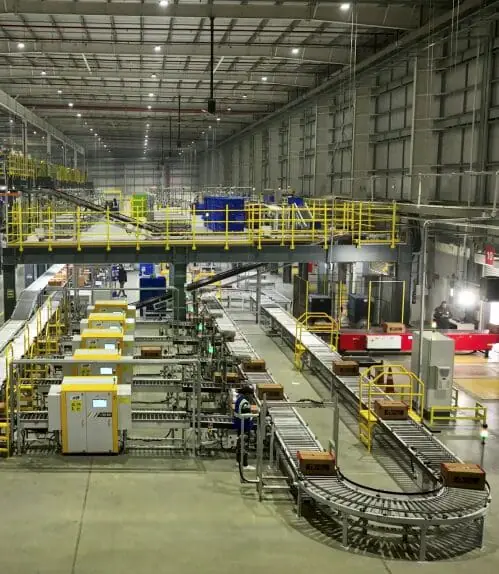
A warehouse that handles thousands of orders each day might look highly efficient from the outside, but any small delay in updating its stock information or equipment coordination could quickly cause fulfillment schedule disruptions. As order volume increases and operations within a warehouse become more interconnected, it becomes increasingly difficult for conventional warehouse systems to offer real-time control and coordination. To counter this, different industries have resorted to embracing smart, interconnected ecosystems where machines, sensors, and other technologies work together as a unified network.
According to Grand View Research, the global IIoT market size was valued at USD 483.16 billion in 2024 and is expected to reach USD 1,693.44 billion in 2030, recording a CAGR of 23.3% from 2025 to 2030. The growing importance of IIoT technology in forming an intelligent, responsive, and data-based warehouse environment should not be ignored.
How Do Sensor Networks and Connected Devices Enable Real-Time Visibility in IIoT-Driven Warehouses?
Visibility is made possible through IIoT (Industrial Internet of Things), which continuously captures operational data across warehouse environments. These sensors monitor inventory movements, machine health, and environmental factors with extreme accuracy to ensure that all changes made during operations are captured in real time.
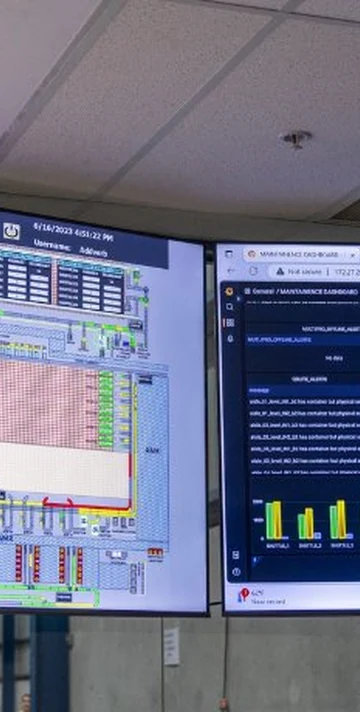
With the uninterrupted flow of information, there would be no need to use batch reporting. It will lead to increased efficiency by enabling faster decision-making. This is where Addverb’s Warehouse Execution System, Concinity, comes into play, enabling the transformation of this data into actionable insights. It provides real-time visibility into warehouse operations, task status, and inventory levels. It dynamically assigns tasks and optimises warehouse operations to ensure maximum efficiency.
At the task level, Addverb’s Pick-To-Light technology, Rapido, functions as a real-time IIoT-connected picking interface. When a worker scans an order crate’s barcode, an electronic signal is instantly transmitted across a tapping-based multidrop network, lighting up the exact pick location. Every confirmed pick is logged digitally and fed back to the WES, creating a live, traceable data loop that eliminates manual checking and ensures consistency during high-volume operations.
In addition to monitoring and guidance, sensors can be used to pinpoint inefficiencies like idleness in equipment or congestion buildup. This means that rather than responding to inefficiencies after they have happened, warehouse managers can continually refine layouts and workflows.
Also Read: 13 Benefits of Warehouse Automation
What Role Do Connected Systems Play in Coordinating Warehouse Automation?
Connected systems help to ensure that warehouse activities function like a synchronised network rather than independent operations. The connectivity is important for ensuring efficient movement of materials between storage, picking, and dispatch locations.
Automated storage solutions such as Addverb’s Carton Shuttle ASRS, Quadron, operate over a dual-band WiFi network (2.4 GHz and 5 GHz), maintaining a continuous IIoT link with the Warehouse Execution System. This capability enables Concinity to dynamically schedule data storage/retrieval operations, arrange inventory in accordance with the priority of orders placed, as well as assess the operational status of Quadron in real time, thus avoiding all problems that may emerge from disconnection and manual operations.
On the operational side, IIoT (Industrial Internet of Things) devices enable easy connectivity among machines, guaranteeing that each machine responds immediately in real-time to any change in the amount of workload or demand.
- Improve coordination between storage and retrieval systems
- Reduce idle time between process handoffs
- Enable dynamic task allocation during peak demand
- Maintain consistency across multi-zone warehouse operations
Interconnected systems also allow avoiding mistakes caused by manual scheduling, so all layers of automation can operate harmoniously without competing with each other for resources.
What Makes IIoT Critical for Predictive Control in Warehouse Automation?
A key strength of IIoT (Industrial Internet of Things) systems is predictive control, which allows companies to move from a reactive approach to a proactive approach in managing their operations. Through the analysis of real-time data streams, problems such as congestion, equipment overload, and demand variations can be predicted.
For example, Addverb’s robotic sorter, Zippy, is equipped with Time-of-Flight (ToF) laser sensors and AI-driven routing algorithms that classify and distribute parcels across thousands of destinations in real time. Such IIoT-based dynamic routing makes sortation operations dependent on real-time data rather than pre-set logic, enabling proactive sortation in warehouses.
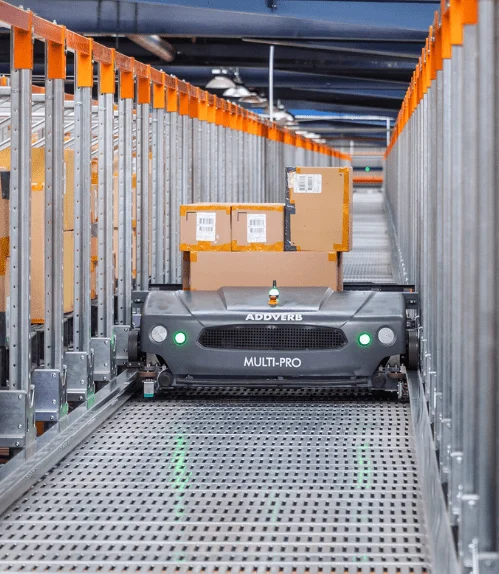
On the other hand, Addverb’s Mother Child Shuttle ASRS, Multi-Pro, operates within a continuous IIoT communication framework connecting to the WES via WiFi. Aisle navigation using a barcode reader makes the process of lane recognition precise and completely automatic. This ensures that the system remains synchronised with centralised operational instructions without experiencing instability or overload due to increased demand.
Together, these systems support smoother execution and better resource utilisation.
According to Cyngn, the companies implementing the IIoT solution have achieved a productivity boost of 72%, which is tangible evidence of what predictive warehouse systems can do.
Impact of IIoT Integration on Warehouse Automation Performance
| Metric | Before IIoT | After IIoT |
| Data Latency | Delayed system updates | Real-time data synchronisation |
| Order Processing Time | Manual/semi-automated workflow | Automated, faster fulfillment |
| Inventory Accuracy | Periodic, error-prone updates | Continuous real-time tracking |
| Operational Efficiency | Fragmented systems, slower coordination | Connected systems with smooth workflows |
| Error Rate | Higher due to manual handling | Reduced via automation & alerts |
Also Read: How Sustainable Warehouse Automation Can Reduce Your Carbon Footprint
How Does IIoT Integrate Legacy Systems with Modern Warehouse Automation?
One of the biggest strengths associated with IIoT (Industrial Internet of Things) solutions is the ability to modernise outdated systems without having to replace them entirely.
The Pick-to-Light system can be used to digitise manual picking zones without changing their current physical configuration. This process will ensure that the transition occurs gradually with little disruption to the operation.
- Enables gradual automation without full infrastructure overhaul
- Reduces capital expenditure on immediate replacement
- Improves visibility in legacy workflows
- Extends operational life of existing systems
This kind of approach proves most beneficial for huge warehouses that have mixed-age infrastructure.
Case Studies: How Addverb’s Connected Automation Enables IIoT-Driven Warehouse Operations
At ITC’s facility, the primary aim was to eliminate the conventional, labor-intensive warehousing processes as they slowed throughput, limited storage density, and increased reliance on manual handling. Addverb deployed a Multi Pro shuttle fleet that handled pallet movement within storage lanes, executing storage and retrieval tasks. The solution enabled high-density pallet storage with 6000+ pallet positions and helped achieve a throughput of 3700+ pallets per day.
At Maersk’s facility, the requirements included a complete process from receiving materials to storage and retrieval, followed by each case picking, order consolidation, and sortation for quick dispatch as per the assigned destination. Addverb’s solution included AMRs for seamless material movement, ASRS solutions like 2-way Pallet Shuttles and Carton Shuttles to ensure proper space utilisation, robotic sorters, and a Multi-Carton picking robot for return handling and automated material transfer. Additional systems like mixed-case palletisers, Pick-to-Lights, and strategically planned conveyor lines were also used. The result: 1,00,000 pieces dispatched per day to 2500 unique distribution nodes and 16500 pallet positions for multi-deep storage and retrieval of pallet loads.
Conclusion
The emergence of IIoT technology is radically changing the way warehouses are automated, providing visibility and predictive capabilities. From mobile robots such as Dynamo to software systems such as WES, all facets of the warehouse are being upgraded through IIoT integration.
Since warehouses keep changing and improving, Addverb plays an important role in ensuring that IIoT (Industrial Internet of Things) solutions can be implemented to make warehouses more efficient, precise, and scalable. This transition marks the way forward for supply chains that are smart, connected, and automated.
FAQs
1. What is IIoT in warehouse automation?
It refers to connecting machines, sensors, and systems to enable real-time data exchange in warehouses. Addverb’s Warehouse Execution System helps implement it effectively.
2. What are the benefits of using IIoT in warehouses?
It improves efficiency, visibility, predictive maintenance, and reduces downtime. Solutions like AMRs enhance these benefits.
3. What technologies are used in IIoT-enabled warehouses?
Sensors, robotics, WMS, cloud platforms, and systems like Addverb’s Pick-To-Light and Zippy robotic sorters are commonly used.
4. Can IIoT improve warehouse safety and security?
Yes, real-time monitoring and predictive alerts improve safety. Addverb’s automation systems help reduce operational risks significantly.
5. Can small warehouses adopt IIoT technology?
Yes, scalable solutions like Addverb’s Multi-Pro and modular WMS allow gradual adoption of smart automation.