



AUF DIESER SEITE
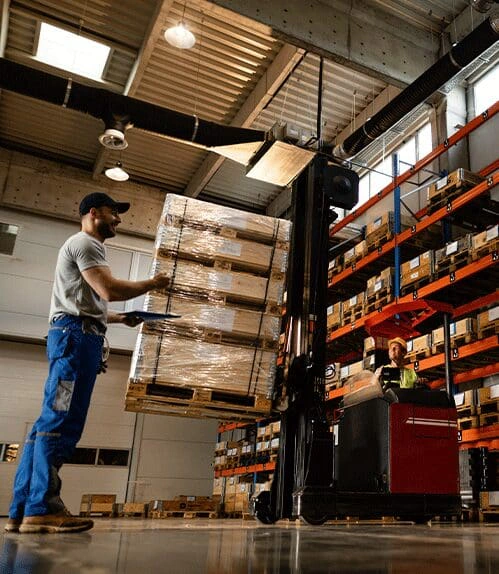
Stellen Sie sich Folgendes vor: Sie gehen an einem Montagmorgen durch Ihr Lager. Auf der einen Seite stellt ein Gabelstapler Paletten mit Autoteilen bereit – einige auf sauberen Holzkisten, andere auf öligen Metallpaletten, jede über 1.200 kg schwer. Auf der anderen Seite muss in der Verpackungszone alle zwei Minuten Kartons und Behälter für den Versand bereitgestellt werden. Ihr Finanzchef hat Ihnen ein Budget vorgegeben. Ihr Systemintegrator ist vor Ort und stellt vor der Angebotserstellung eine Frage:
„Kettenförderer oder Rollenförderer?“
Die einfachen Lösungen kennen Sie bereits. Kartons in der Verpackung? Rollenbahn. Fettige Stahlpaletten für die Presse? Kettenzug. Aber was ist mit dem Mittelteil der Linie? Der Transfer zwischen Wareneingang und Bereitstellung. Die Übergabe an Ihre automatisierten Transportfahrzeuge. Der lange Weg von Feld 3 zum Palettierer. Beides ist möglich – und genau hier wird die Entscheidung schwierig.
Die Rollenschleppe ist günstiger in der Anschaffung, lässt sich leicht umrüsten und benötigt weniger Energie. Bei starker Beanspruchung durch schwere oder ölige Lasten müssen jedoch alle paar Monate Teile ausgetauscht werden. Die Kettenschleppe bewältigt selbst höchste Belastungen ohne Durchrutschen und hält jahrelang. Sie ist aber in der Anschaffung teurer, verbraucht mehr Energie und lässt sich später deutlich schwieriger verlängern.
Wenn Sie die falsche Wahl treffen, zahlen Sie entweder für Kapazitäten, die Sie nie nutzen werden – oder Sie müssen mit ansehen, wie sich die günstigere Option in den teuersten Teil der Leitung verwandelt.
Dieser Artikel beschreibt die Anwendungsfälle, in denen beide Ansätze funktionieren, erläutert die jeweiligen Vor- und Nachteile und gibt am Ende für jeden Ansatz eine klare Antwort.
Wie entscheidet man, welches Fördersystem man einsetzen soll?
Entscheidungsträger müssen Art, Gewicht, Größe und Umschlagshäufigkeit der zu transportierenden Güter berücksichtigen, bevor sie sich für Schwerlastförderanlagen. Maximaler Durchsatz, Anlagenlänge und Betriebsstunden bestimmen die erforderlichen Formkapazitäten. Die Komplexität des Anlagenlayouts, wie Kurven, Steigungen und Zwischenebenen, dient als Richtlinie für die mechanische Konstruktion.
Die Integration mit AMRs, Robotersortieranlagen und WMS-Plattformen ist heutzutage für Lagerhäuser ebenfalls sehr wichtig. Aspekte wie Energieverbrauch, Wartungsaufwand und Gesamtbetriebskosten sollten dabei nicht außer Acht gelassen werden. Weitere wichtige Punkte für Lagerhäuser sind:
- Sicherheitsstandards,
- Ergonomie und
- Zukunftsskalierbarkeit.
Wann ist ein Rollenfördersystem am effektivsten?
Ein Rollenfördersystem eignet sich am besten für standardisierte Kartons, Behälter und mittelschwere bis schwere Pakete und bietet einen reibungslosen und energieeffizienten Transport. Gleichzeitig ist es auch für Verteilzentren geeignet, die Flexibilität erfordern.
Modulare Designs ermöglichen flexible Lagerlayouts mit Konfigurationen für Palettenrollenbahnen, Schwerkraftrollenbahnen, Staurollenbahnen, Stirnrollenbahnen, Kurvenrollenbahnen und Bandrollenbahnen. Die Integration mit Sortieranlagen, Packstationen und Addverberhöht die Sicherheit und gewährleistet einen gleichmäßigen Auftragsdurchsatz auch in Stoßzeiten.
Welche technischen Faktoren sollten bei Rollenförderern berücksichtigt werden?
Konstrukteure berechnen zahlreiche Parameter, darunter Walzendurchmesser, Walzenabstand und Tragfähigkeit, um Durchbiegungen zu vermeiden und einen gleichmäßigen Materialfluss zu gewährleisten. Motorisierte und schwerkraftbetriebene Abschnitte bestimmen Steuerung, Zoneneinteilung und Staulogik, während Durchsatzgeschwindigkeit und Zykluszeit die Linienbalance beeinflussen.
Die Integration mit AMRs und WMS von Addverb ermöglicht die automatisierte Routenplanung in modernen Lagern. Wartungszugang, Schmierstellen und Verschleißüberwachung sind ebenso wichtig wie die folgenden Konstruktionsaspekte:
- Neigungswinkel
- Zusammenführungsbereiche und
- Anordnung der Rollenbahnen im Lager.
Wann sollte man ein Kettenfördersystem einsetzen?
Kettenförderanlagen eignen sich ideal für den Transport extrem schwerer Paletten, Fässer oder Schüttgutbehälter, die eine zuverlässige Traktion erfordern. Sie bewältigen ungleichmäßige oder abrasive Lasten ohne Schlupf und sind bestens für lange Fertigungs- oder Montagelinien geeignet. Diese Anlagen transportieren außerdem:
- Mehrzonenbeladung,
- Höhenänderungen und
- Harte Bedingungen.
Welche technischen Spezifikationen gelten für Kettenförderer?
Ingenieure prüfen die maximale Belastung pro Kettenglied, die Teilung und das Antriebsdrehmoment, um die Ausrüstung korrekt zu dimensionieren. Die Haltbarkeit unter dauerhafter, starker Beanspruchung ist ein wichtiger Faktor, hängt aber hauptsächlich von der Materialauswahl ab.
Lagerroboter automatisieren Kommissionier- und Platzierungsvorgänge entlang von Förderbändern und verbessern die Effizienz industrieller Fördersysteme . Wartungsintervalle, Schmierpläne und Lebensdauerprognosen sind für Entscheidungen über den gesamten Lebenszyklus von großer Bedeutung.
Effizienz- und Durchsatzvergleich von Ketten- und Rollenförderern in der Schwerlastautomatisierung
Hier ein Vergleich der Effizienz und des Durchsatzes von Ketten- und Rollenförderern in der Schwerlastautomation:
| Leistungsfaktor | Kettenfördersysteme | Rollenfördersysteme |
| Tragfähigkeit | Geeignet für extrem schwere, unebene oder raue Paletten | Ideal für Kartons, Behälter und mittlere bis schwere standardisierte Ladungen |
| Durchsatzpotenzial | Hoch für den Dauerbetrieb in industriellen Anlagen geeignet | Hoch gelegen in Verteilzentren mit zonierten, motorisierten Abschnitten |
| Materialfluss mit AMRs und Robotern | Robust und geeignet für die Palettenübergabe und anspruchsvolle Umgebungen | Optimiert für die Integration in Sortieranlagen und flexibles Routing |
| Energie- und Wartungsprofil | Höherer Stromverbrauch, aber sehr langlebig unter extremen Belastungen | Energieeffizienter und modularer für den Routinebetrieb |
| Flexibilität und Skalierbarkeit | Feste Schwerlast-Layouts | Lässt sich für zukünftiges Wachstum leicht umkonfigurieren und erweitern |
Welche technischen Faktoren sollten bei Rollenförderern berücksichtigt werden?
Konstrukteure berechnen Rollendurchmesser, -abstand und Tragfähigkeit, um Durchbiegungen zu vermeiden und einen gleichmäßigen Verkehrsfluss zu gewährleisten. Motorisierte oder schwerkraftbetriebene Abschnitte bestimmen die grundlegende Entscheidung – die Steuerung, die Zoneneinteilung und die Staulogik, die das tatsächliche Verhalten einer Linie im realen Verkehrsaufkommen festlegen.
Hier spielen moderne Zonensteuerungen ihre Stärken aus. Addverbvon Roll X Förderband-Treiberkarte steuert jeweils eine Zone und verfügt über eine integrierte Fehlererkennung sowie CAN-basierte Kommunikation mit der Förderband-Hauptplatine und benachbarten Zonen. Die bedarfsgesteuerte Zonensteuerung ermöglicht das Anhalten der Motoren, wenn kein Produkt vorhanden ist – ein wesentlicher Faktor für die Energieeinsparungen von 30–70 %, für die MDR-Systeme bekannt sind. Dank ihrer kompakten Abmessungen von 60 × 92 mm und der Steckverbindung ist die Installation schnell und die Wartung vor Ort problemlos möglich. Die Fehlerisolierung auf Zonenebene verhindert, dass ein einzelner Fehler die gesamte Anlage lahmlegt.
Die Integration mit AMRs und WMS von Addverb ermöglicht die automatisierte Routenplanung in modernen Lagern. Wartungszugang, Schmierstellen und Verschleißüberwachung sind ebenso wichtig wie die folgenden Konstruktionsaspekte:
Anordnung der Rollenbahnen im Lager.
- Neigungswinkel
- Zusammenführungsbereiche und
- Anordnung der Rollenbahnen im Lager.
Die Gesamtbetriebskosten (TCO) verdeutlichen den Kompromiss. Eine Rollenförderanlage kann bei mittleren Förderleistungen hinsichtlich der TCO die Nase vorn haben, selbst wenn Kettenförderanlagen aufgrund ihrer höheren Langlebigkeit überlegen sind. Umgekehrt verhält es sich bei anspruchsvollen Fördermengen mit hohem Durchsatz, wo der Verschleiß der Rollen die anfänglichen Investitionseinsparungen innerhalb weniger Jahre zunichtemacht. Die Kombination Addverbvon Rollen- und Kettenförderanlagen von Addverb ASRS-Systemen, AMR-Flotten und einem optimierten WMS-Layout verkürzt die Amortisationszeit weiter, indem die Durchsatzgrenzen beseitigt werden, die andernfalls die Rentabilität der Förderanlage schmälern würden.
Anwendungsfall-Urteil: Rollenförderer vs. Kettenförderer
| Anwendungsfall | Bevorzugtes System | Warum |
|---|---|---|
| Standardisierte Kartons, Behälter und mittelschwere Paletten in einem Distributionszentrum | Rolle | Reibungsloser Ablauf, modulare Zoneneinteilung, einfache Integration von AMR/Sortierern |
| Lange Fertigungs- oder Montagelinien mit durchgehend schweren Paletten | Kette | Positive Traktion, Langlebigkeit im Dauerbetrieb |
| Fässer, Motorblöcke, Rohstoffe oder abrasive/ölige Ladungen | Kette | Kein Durchrutschen; die Rollen verschleißen unter diesen Bedingungen schnell |
| Layouts, die im Zuge der Weiterentwicklung von SKUs neu konfiguriert oder erweitert werden müssen | Rolle | Modulare Abschnitte, geringere Nachrüstkosten |
| Palettenhandling in Reifen-, Automobil- und Stahlwerken | Kette | Konzipiert für raue Umgebungen und unebene Lastflächen |
| E-Commerce und 3PL-Auftragsabwicklung, Verpackung und Versand | Rolle | Energieeffizient, ideal für Sortierung und Materialdurchsätze mit hohem Materialmix |
| Kühl- und Reinigungsbereiche mit mittleren Auslastungen | Rollenlager (mit abgedichteten Lagern) | Leichter zu reinigen und zu pflegen |
| Anlagen für den gemischten Warenfluss, die sowohl sperrige als auch Standardartikel verarbeiten | Hybrid (Kette für eingehende Palettenlinien, Rolle für nachgelagerte Sortierung) | Nutzt jedes System zu seinem Vorteil |
Kurz gesagt: Wählen Sie Rollenketten, wenn Flexibilität, Energieeffizienz und standardisierte Lasten im Vordergrund stehen; wählen Sie Kettenketten , wenn Lastschwere, Traktion und Dauerfestigkeit im Vordergrund stehen; und verwenden Sie beide , wenn Ihre Anlage diese Grenzen überschreitet.
Wie lassen sich Fördersysteme zukunftssicher gestalten?
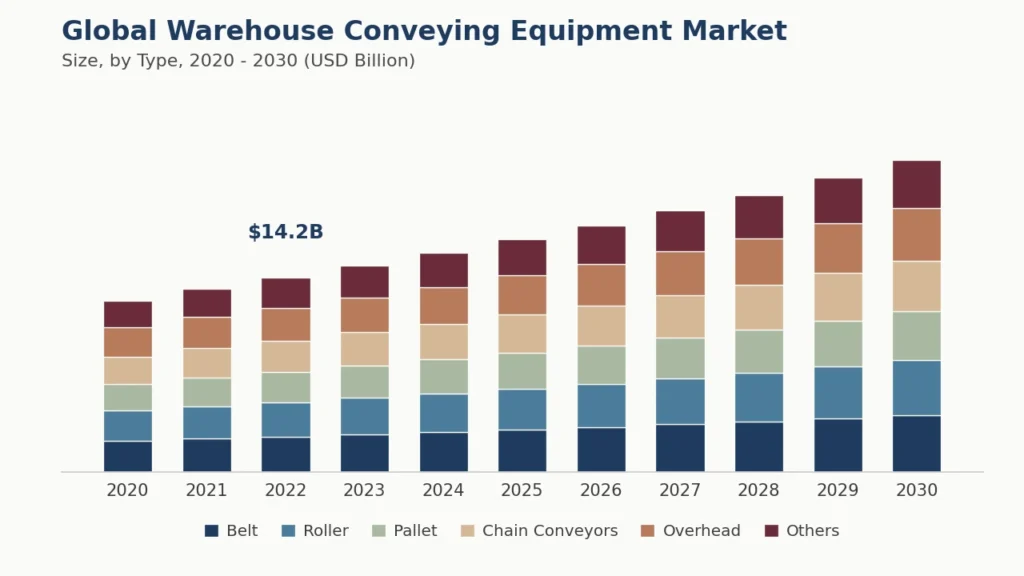
Zukunftsfähige Designs nutzen modulare Erweiterungsmöglichkeiten, um steigende Produktnachfrage und neue Artikelnummern zu bewältigen. Das System minimiert mithilfe von prädiktiver Wartungsanalyse Betriebsunterbrechungen und verlängert die Lebensdauer der Anlagen. Durch die enge Integration mit AMRs, Robotersortierern und WMS-Plattformen wird eine vollständige Betriebssteuerung erreicht. Datenbasierte Optimierung steigert den Durchsatz kontinuierlich, während die frühzeitige Implementierung die Wettbewerbsfähigkeit der Standorte sichert. Laut Zipdo-Berichtamortisiert sich die Automatisierung in den meisten Lagern innerhalb von 18 Monaten, und über 70 % haben bereits digitale Transformationsprozesse zur Effizienzsteigerung umgesetzt.
Fallstudien: Schwerlastautomatisierung in der Praxis
Einige Beispiele, in denen Addverb seine Automatisierungslösungen in Anwendungsfällen eingesetzt hat, die denen von Schwerlast-Kettenförderanlagen und Rollenförderanlagen ähneln, sind folgende:
Im flexiblen Fulfilment-Hub von Maerskerforderten gemischte Artikelmengen und zonenübergreifende Routen einen skalierbaren Materialfluss. Addverb führte Systeme wie Palettierer für gemischte Kartons, Pick-to-Light-Systeme und strategisch geplante Rollenbahnen ein, die eine nahtlose Integration von stationärer und flexibler Lagerhaltung ermöglichten und so eine effiziente und skalierbare Auftragsabwicklung gewährleisteten.
Im Fulfillment-Center der Landmark Groupbestand die größte Herausforderung darin, sperrige und nicht sperrige Sendungen zu unterscheiden und die Warenströme an den Packstationen zusammenzuführen. Aus diesem Grund Addverb das Quazzy-System. Die Bestellungen wurden mithilfe von Rollenförderern, Robotersortierern und DWS-Scannern bearbeitet, was zu einem höheren Durchsatz und weniger Verzögerungen bei der Bearbeitung während Spitzenzeiten führte.
Abschluss
Die Wahl der richtigen Förderkette oder -rolle hat direkten Einfluss auf Effizienz, Durchsatz und Skalierbarkeit in Umgebungen mit hoher Belastung. Automatisierungsfähige Konstruktionen, die mit AMR- und WMS-Plattformen verbunden sind, erhöhen Geschwindigkeit, Zuverlässigkeit und Auftragsgenauigkeit.
Modulare, motorisierte Systeme machen Anlagen zukunftssicher und minimieren gleichzeitig Risiken. Die Lösungen von Addverbermöglichen eine reibungslose Betriebssteuerung über verschiedene Systeme hinweg, darunter Förderbänder, Roboter und Lagereinrichtungen. Sie sind unerlässlich für eine sicherere und konstant leistungsstärkere Lagerautomatisierung.
Häufig gestellte Fragen
1. Was sind die wichtigsten Einsatzgebiete von Rollenförderern in einem Lager?
Ein Rollenförderer wird in erster Linie eingesetzt, um den effizienten Transport von Kartons, Behältern, Kisten und Paletten zwischen den Lagerzonen zu gewährleisten, ohne dass ein ständiges manuelles Handling erforderlich ist. Dadurch eignet er sich hervorragend für Verpackungs-, Sortier- und Versandvorgänge.
2. Welche verschiedenen Arten von Rollenförderern gibt es?
Zu den verschiedenen Arten von Rollenförderern gehören Palettenrollenförderer, Schwerkraftrollenförderer, Staurollenförderer, Stichrollenförderer, Kurvenrollenförderer und Bandrollenförderer. Jeder dieser Förderer ist für bestimmte Durchsatzleistungen und Anlagenlayouts ausgelegt und bietet den Anlagenbetreibern die Flexibilität, die Förderwege an die betrieblichen Erfordernisse anzupassen.
3. Können Kettenförderer schwere Lasten bewältigen?
Ja, Kettenförderer eignen sich ideal für Paletten, Schüttgüter und den Dauerbetrieb, da sie die in rauen Industrieumgebungen erforderliche zuverlässige Traktion bieten und sich daher für Szenarien mit hoher Belastung und hoher Auslastung eignen.
4. Wie wählt man das richtige Fördersystem aus?
Bei der Auswahl eines Fördersystems ist es entscheidend, Lastcharakteristika, Durchsatzziele, Layoutbeschränkungen und Automatisierungsanforderungen umfassend zu bewerten, damit die gewählte Lösung sowohl den aktuellen Nachfragemustern als auch den langfristigen Expansionsplänen entspricht.
5. Welches Förderband wird für den Schüttguttransport eingesetzt?
In den meisten Fällen werden Schwerlast-Kettenförderer oder industrielle Rollenförderanlagen ausgewählt, um einen zuverlässigen Schüttguttransport in anspruchsvollen Umgebungen zu gewährleisten, in denen große Mengen sicher, gleichmäßig und mit minimalem Eingriff bewegt werden müssen.
6. Was ist der Hauptvorteil eines Fördersystems?
Ein Fördersystem ermöglicht einen schnelleren, sichereren und zuverlässigeren Materialtransport in den Lagerprozessen, was die betriebliche Gesamteffizienz verbessert und gleichzeitig die manuelle Handhabung und die Variabilität in den täglichen Arbeitsabläufen reduziert.