



AUF DIESER SEITE
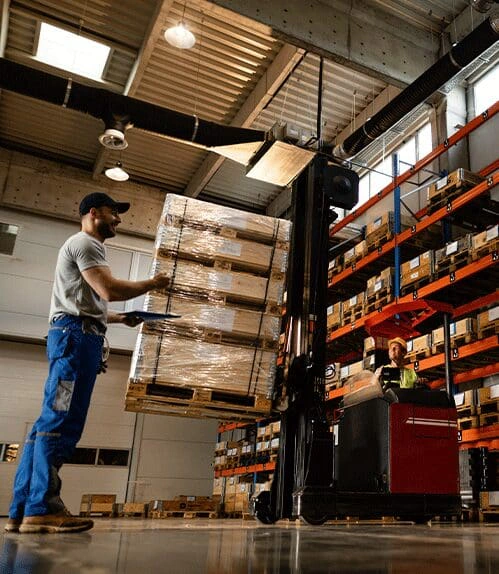
Jahrzehntelang galt in Lagern eine einfache Gleichung: Mehr Aufträge bedeuteten mehr Mitarbeiter. Doch die Hochsaison stellte diese Gleichung auf den Kopf. Kommissionierer legten pro Schicht über 19 Kilometer zurück, Paletten stauten sich auf den Gabelstaplern, und schon eine einzige Änderung im Sortiment konnte den gesamten Auftragsabwicklungsprozess durcheinanderbringen. Neueinstellungen reichten nicht aus. Genau in diesem Moment autonome mobile Roboter (AMRs) vom bloßen „Nice-to-have“ zum operativen Rückgrat moderner Lagerhaltung.
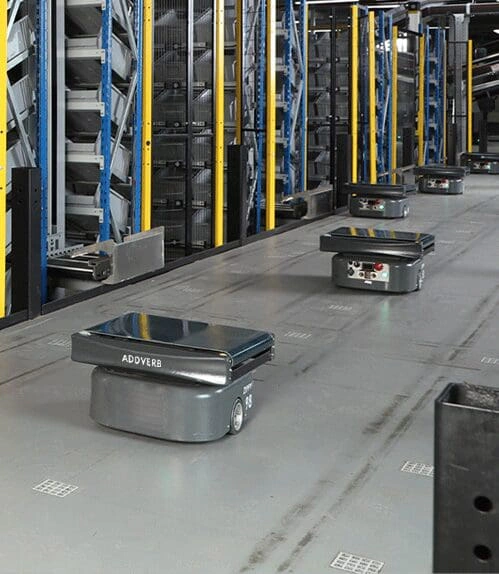
Schauen wir uns an, wie autonome mobile Fahrzeuge (AMRs) funktionieren: Sie denken in Bewegung, umfahren Hindernisse, verteilen Aufgaben innerhalb der Flotte neu und passen sich in Echtzeit an Volumenschwankungen an. Sie skalieren für Spitzenzeiten hoch, reduzieren ihre Kapazität in umsatzschwachen Wochen und bleiben dabei stets leistungsfähig. Führende Lagerhäuser setzen AMRs heute nicht nur zur Senkung der Personalkosten ein, sondern um flexible, anpassungsfähige und selbstrestrukturierbare Abläufe zu schaffen, die sich an veränderte Nachfrage anpassen können, ohne dass das Lager selbst umgebaut werden muss.
In diesem Blog stellen wir drei reale AMR-Einsätze in den Bereichen 3PL-Fulfillment, Fertigungsdistributionund Aftermarket-Logistik , die beweisen, was anpassungsfähige Robotik tatsächlich im Lager leisten kann.
Lagerhäuser brauchten nicht nur Automatisierung. Sie brauchten auch Anpassungsfähigkeit.
Wichtigste Unterscheidungsmerkmale autonomer mobiler Roboter
Zu berücksichtigende Abwägung: Autonome mobile Roboter (AMRs) erzielen die besten Ergebnisse in Einrichtungen mit stabiler WLAN-Abdeckung und klar definierten Kommissionierzonen. Lager mit sich schnell ändernden Layouts erfordern möglicherweise zusätzliche Vorbereitungsmaßnahmen im Vorfeld – ein Punkt, der während der Implementierungsphase der Lagerautomatisierung .
- SLAM-gestützte Navigation mit KI-gesteuerter Hindernisvermeidung und natürlicher Navigationsführung
- Modulare Flottenskalierung, von der Pilotphase bis zum unternehmensweiten Rollout, orchestriert durch Addverbvon Movect Flottenmanagementsystem
- Branchenzertifizierte Lösungen für E-Commerce, Automobilindustrie, Pharmaindustrie sowie Lebensmittel- und Getränkeindustrie
- Schnelle Umsetzung, 6 bis 8 Wochen von der Standortbewertung bis zur Live-Produktion
- Rund-um-die-Uhr-Support mit vorausschauender Wartung und kontinuierlichen Software-Updates
Fallstudie 1: Schnelle Skalierung ohne kompletten Lagerumbau
Wie eine schnell wachsende Marke für Drittanbieterlogistik eine ehemalige Industriebrache in ein Omnichannel-Fulfillment-Kraftwerk verwandelte?
Die Herausforderung
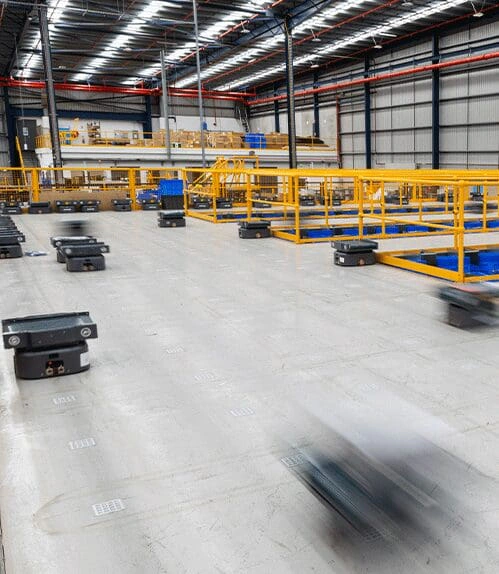
Für Maerskerforderten steigende Auftragsvolumina und wachsende Kundenerwartungen eine Modernisierung der bestehenden Anlagen. Die Herausforderung bestand jedoch nicht nur in der Steigerung des Durchsatzes, sondern vielmehr in der Transformation des gesamten Lagers in ein Hochgeschwindigkeits-Omnichannel-Fulfillment-Center zur Unterstützung von B2B- und B2C-Aktivitäten.
Die Lösung
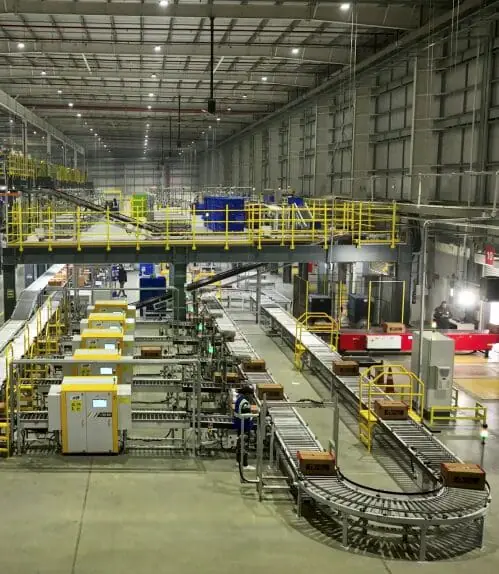
Anstatt sich auf eine einzige Automatisierungsebene zu verlassen, Addverb entwickelte sind autonome mobile Roboter (AMRs) die einen intelligenten Materialfluss im gesamten Lager mit minimalem manuellem Eingriff ermöglichen.
Die Transformation beschränkte sich jedoch nicht nur auf den Materialfluss; wir implementierten auch weitere paletten- und behälterbasierte ASRS-Lösungen. Um die Auftragsabwicklung und Retourenbearbeitung zu optimieren, integrierte das Werk Folgendes:
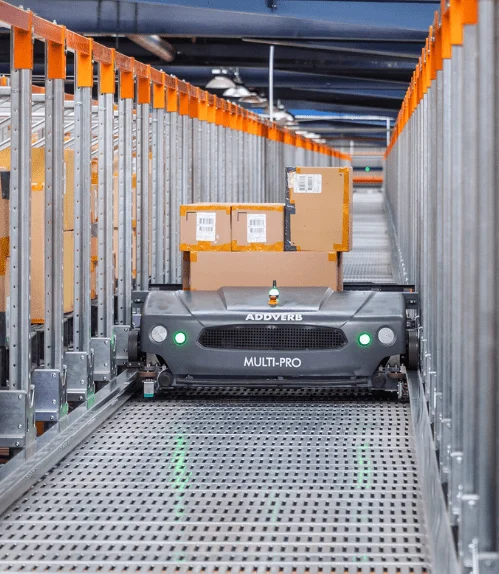
- Paletten- und Behälterbasierte ASRS-Lösung für ihren vielfältigen Lagerbestand
- Kommissionierroboter für mehrere Kartons zur Automatisierung von Kommissionierabläufen
- Zippy Sortierroboter für eine zügigere Auftragstrennung und -versandabwicklung
- Palettierer für gemischte Kartons zur effizienten Palettenherstellung
- Pick-to-Light-Systeme für verbesserte Kommissioniergenauigkeit
- Strategisch konzipierte Fördernetze für einen ununterbrochenen Materialfluss
Das Ergebnis war ein nahtlos vernetztes Lager, in dem feste und flexible Automatisierung als ein intelligentes Ökosystem zusammenarbeiteten.
Die Ergebnisse
- 40 % Reduzierung der Wegestrecke der Kommissionierer
- 2,3-fache Steigerung des Durchsatzes während der Hochsaison
Fallstudie 2: Wooster Brush – Neugestaltung von Kommissionierprozessen mit AMRs
Wie Wooster Brush die Produktivität seines Lagers durch intelligente AMR-Orchestrierung verbesserte?
Die Herausforderung
Für die Wooster Brush Company (USA)bedeutete die Steigerung der betrieblichen Effizienz, einen intelligenteren Weg zu finden, die Kommissionierer zu unterstützen, unnötige Bewegungen zu reduzieren und die Palettenhandhabung zu optimieren – und das alles bei ununterbrochenen Arbeitsabläufen.
Die Lösung
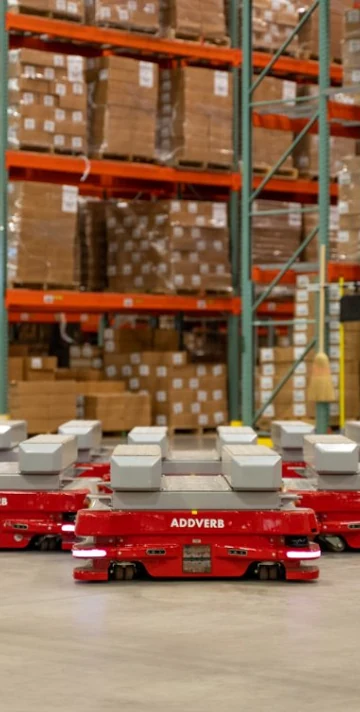
Um diese Herausforderungen zu bewältigen, setzte Addverb eine fortschrittliche automatisierte Materialhandhabungslösung ein, die von 13 autonomen mobilen Robotern (AMRs) angetrieben wird, von denen jeder in der Lage ist, Nutzlasten von bis zu 1.100 Pfund (500 kg) zu handhaben.
Diese autonomen Roboter folgten den Kommissionierern intelligent durch mehrere Kommissionierzonen. Die kommissionierten Produkte wurden direkt auf von den Robotern transportierte Paletten platziert, wodurch die Laufwege deutlich verkürzt und die Kommissioniereffizienz gesteigert wurde. Die eigentliche Transformation ergab sich jedoch aus dem Zusammenspiel des gesamten Ökosystems.
Die Lösung umfasste außerdem:
- Automatisierte Palettenentstapler für unterbrechungsfreie Palettenverfügbarkeit
- Automatisierte Stapler für effiziente Palettenrückgabeabwicklung
- Palettenausgabe in Echtzeit abgestimmt auf die aktuelle Auftragsnachfrage
- Intelligente Flottenkoordination durch das Flottenmanagementsystem (Movect) von Addverb
Im Hintergrund orchestrierte die Unternehmenssoftware (FMS) von Addverbden gesamten Arbeitsablauf, indem sie den Roboterverkehr, die Aufgabenverteilung und die Bewegungssynchronisation steuerte, um einen reibungslosen Lagerbetrieb in großem Umfang zu gewährleisten.
Die Ergebnisse
- 52 % Reduzierung der Laufstrecke für die Kommissionierer
- 4,9 Picks pro Minute (vorher 3,1)
- Die Mitarbeiterfluktuation sank im ersten Jahr
Fallstudie 3: Beseitigung von Lagermüdigkeit durch flexible Robotik
Wie ein führender Bremsenteilehändler Produktivität, Sicherheit und Betriebsabläufe verbesserte?
Die Herausforderung
Unser Kunde, einer der weltweit größten Hersteller von Bremsenteilen, sah sich in seinen größten Vertriebszentren mit Produktivitätsproblemen konfrontiert. Zu viele manuelle Eingriffe beeinträchtigten die Gesamtproduktivität, was zu Mitarbeiterermüdung, Sicherheitsbedenken und einer hohen Mitarbeiterfluktuation führte.
Der Kunde wünschte sich eine flexible Lösung anstelle einer Expansion in bereits stark frequentierten Betriebsbereichen. Um diese Herausforderungen zu meistern, implementierte Addverb eine umfassende, robotergestützte Materialflusslösung.
Die Lösung
- Eine Flotte von AMRs, die Nutzlasten bis zu 1.100 Pfund (500 kg) transportieren können
- Mehr als 25 Robotersortierer für die präzise und schnelle Sortierung von Bestellungen
- Intelligente Optimierung des Materialflusses bei Kommissionierungs-, Sortier- und Versandvorgängen
- Echtzeitkoordination zwischen Robotern, Lagerarbeitern und Betriebssystemen
Um ein reibungsloses Zusammenspiel aller Komponenten zu gewährleisten, Addverb seine Flottenmanagement-Software (FMS) in das Warehouse Execution System (WES). Dies führte zu einer dynamischen Aufgabenverteilung, Echtzeit-Transparenz der Arbeitsabläufe, einer reibungsloseren Koordination zwischen den AMRs und einer schnelleren Reaktion auf schwankende Auftragsnachfrage.
Die Ergebnisse
Produktivität und Effizienz
- 65 % Reduzierung der Auftragsbearbeitungszeit von der Kommissionierung bis zum Versand
- 99,8 % Sortiergenauigkeit mit Robotersortierern gegenüber 94 % manueller Genauigkeit
Arbeitssicherheit und -zufriedenheit
- 60% Rückgang von Überlastungsschäden und ermüdungsbedingten Vorfällen
- 45%ige Verbesserung der Mitarbeiterbindung innerhalb der ersten 12 Monate
- Keine Sicherheitsvorfälle im Zusammenhang mit der Mensch-Roboter-Interaktion
Operative Flexibilität
- 50 % schnellere Anpassung an Änderungen des Auftragsvolumens durch dynamische Aufgabenumverteilung
- 30 % Reduzierung der betrieblichen Engpässe bei Schichtübergängen
- 24/7-Dauerbetriebsfähigkeit mit minimaler Aufsicht
- Skalierbare Infrastruktur, die für eine Kapazitätserweiterung von 35 % ohne Anlagenänderungen
Die Zukunft der Lagerhaltung ist nicht nur automatisiert. Sie ist AMR-gestützt
Die Lagerhallen, die 2026 die Nase vorn haben, sind nicht diejenigen mit den meisten Robotern. Es sind diejenigen, deren Roboter denken, sich anpassen und als vernetzte Flotte zusammenarbeiten. Autonome mobile Roboter (AMRs) stehen im Zentrum dieses Wandels, denn im Gegensatz zu fest installierten Automatisierungssystemen binden sie Sie nicht an ein bestimmtes Layout, einen festgelegten Arbeitsablauf oder eine Volumenprognose. Sie entwickeln sich mit Ihrem Unternehmen weiter.
Bei allen drei oben genannten Implementierungen ist das Muster identisch: AMRs haben die Mitarbeiter nicht ersetzt, sondern ihre Arbeit erleichtert. Kommissionierer konnten ihre Aufgaben selbstständig erledigen, anstatt zu laufen. Sortierer konnten ihre Aufgaben präzise ausführen, anstatt zu raten. Betriebsleiter konnten die Bewältigung des akuten Bedarfs in der Hochsaison beenden und die nächste Expansion planen. Das ist der wahre ROI des AMR-Ökosystems von Addverb: nicht schnellere Roboter, sondern schnellere Entscheidungen, schnellere Skalierung und schnellere Anpassung an veränderte Nachfragebedingungen.
Häufig gestellte Fragen
- Welche Lagerprozesse können AMRs automatisieren?
AMRs können zahlreiche Arbeitsabläufe automatisieren, darunter Palettentransport, Warenbewegung zwischen Zonen, Materialnachschub an der Produktionslinie und Kommissionierhilfe.
2. Wie verbessern AMRs die Produktivität im Lager?
Autonome mobile Transportfahrzeuge (AMRs) reduzieren manuelle Fahrzeiten, optimieren den Materialfluss und automatisieren wiederkehrende Transportaufgaben. Dadurch können sich die Bediener auf wertschöpfendere Tätigkeiten konzentrieren, was Durchsatz, Genauigkeit und betriebliche Effizienz verbessert.
3. Wie verwaltet Addverb mehrere Roboter gleichzeitig?
Die Flottenmanagement-Software von Addverb(Movect) orchestriert den Roboterverkehr, die Aufgabenverteilung, die Routenoptimierung und die Echtzeitkoordination zwischen AMRs, Lagersystemen und Bedienern.
4. Was sind die Hauptvorteile der flexiblen Automatisierung?
Moderne Lieferketten sehen sich mit schwankender Nachfrage, Arbeitskräftemangel und steigenden Erwartungen an die Auftragsabwicklung konfrontiert. Flexible Automatisierungslösungen wie AMRs ermöglichen es Unternehmen, ihre Abläufe schnell und ohne größere Infrastrukturunterbrechungen zu skalieren.
5. Können autonome mobile Fahrzeuge (AMRs) mit menschlichen Bedienern zusammenarbeiten?
Ja. Autonome mobile Fahrzeuge (AMRs) sind für den kollaborativen Einsatz konzipiert und können dank KI-gestützter Hinderniserkennung, Echtzeit-Routenplanung und intelligenter Verkehrsmanagementsysteme sicher mit Lagerarbeitern zusammenarbeiten.