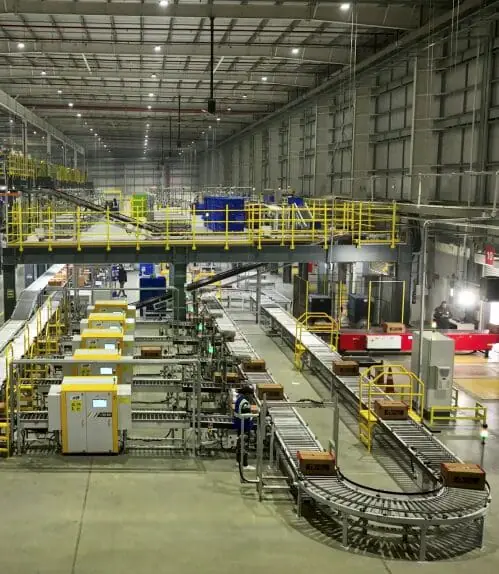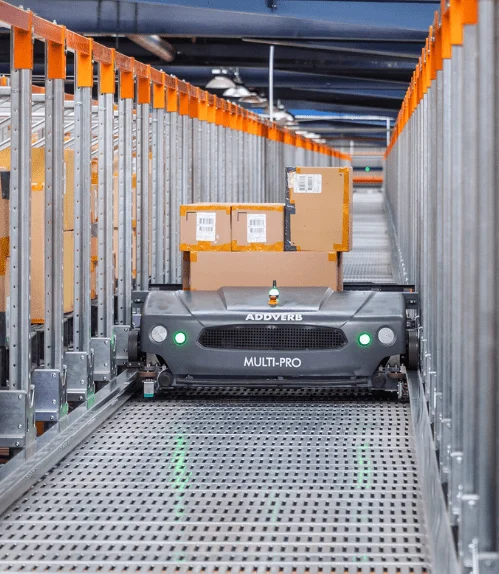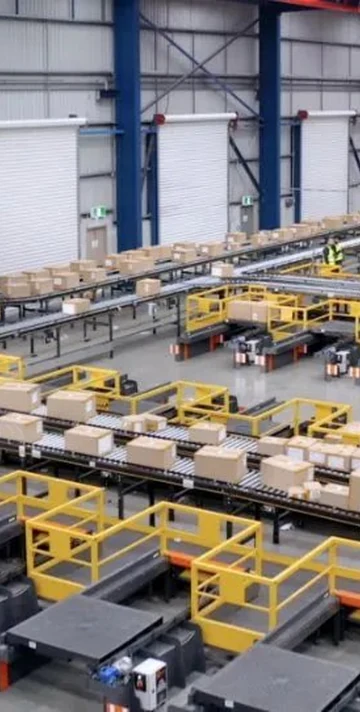




EN ESTA PÁGINA
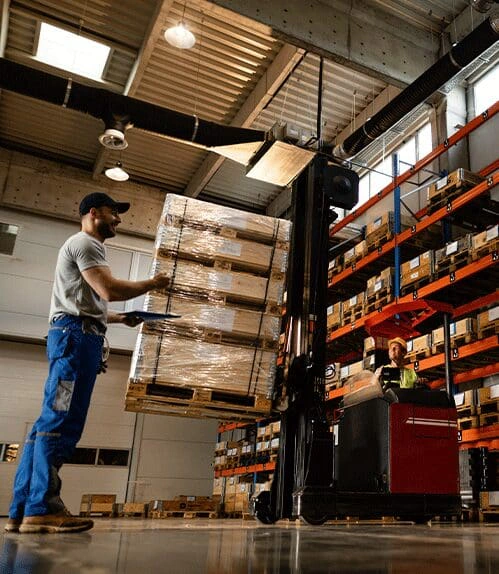
Imagínese esto. Está recorriendo el almacén un lunes por la mañana. A un lado, una carretilla elevadora coloca palés de piezas de automóviles: algunos sobre plataformas de madera limpias, otros sobre palés metálicos resbaladizos por el aceite, cada uno de más de 1200 kg. Al otro lado, una zona de embalaje necesita trasladar cajas y contenedores para su envío cada dos minutos. Su director financiero le ha dado un presupuesto. Su integrador está en las instalaciones y le hace una pregunta antes de presentarle el presupuesto:
¿Transportador de cadena o transportador de rodillos?
Ya conoces las respuestas fáciles. ¿Cajas en el embalaje? Rodillo. ¿Palets de acero grasientos alimentando la prensa? Cadena. ¿Pero qué pasa con la parte central de la línea? La transferencia entre recepción y preparación. El traspaso a tus AMR. El largo recorrido desde la bahía 3 hasta el paletizador. Ambos podrían hacer el trabajo, y ahí es precisamente donde la elección se vuelve difícil.
El rodillo es más económico de instalar, fácil de reconfigurar y consume menos energía. Sin embargo, si se le exige demasiado con cargas pesadas o aceitosas, tendrá que reemplazar piezas cada pocos meses. La cadena soporta las cargas más pesadas sin resbalar y dura años. Pero su costo inicial es mayor, consume más energía y es mucho más difícil de extender posteriormente.
Si eliges mal, o bien pagarás por una capacidad que nunca usarás, o verás cómo la opción más barata se convierte en la parte más cara de la línea.
Este artículo analiza los casos de uso en los que ambas opciones funcionan, desglosa las ventajas y desventajas, y concluye con una respuesta clara para cada una.
¿Cómo se decide qué sistema de transporte utilizar?
Quienes toman las decisiones deben considerar el tipo de carga a transportar, su peso, tamaño y frecuencia de manipulación, factores cruciales antes de optar por sistemas de transporte de alta resistencia. El rendimiento máximo, la longitud de la línea y las horas de trabajo ayudarán a determinar los requisitos de capacidad de forma. La complejidad del diseño, como curvas, pendientes y entrepisos, sirve de guía para el diseño mecánico.
La integración con robots móviles autónomos (AMR), clasificadores robóticos y plataformas WMS es fundamental para los almacenes actuales. Tampoco deben ignorarse aspectos como el consumo de energía, el mantenimiento y el coste total de propiedad. Otros aspectos en los que los almacenes deben centrarse incluyen:
- Normas de seguridad,
- Ergonomía y
- Escalabilidad futura.
¿Cuándo es más eficaz un sistema de transporte por rodillos?
Un sistema de transportadores de rodillos funciona mejor con cajas, contenedores y paquetes de peso medio a pesado estandarizados, ofreciendo un transporte fluido y energéticamente eficiente, a la vez que se adapta a los centros de distribución que requieren flexibilidad.
Los diseños modulares permiten una distribución flexible del almacén, con configuraciones disponibles para transportadores de rodillos para palets, transportadores de rodillos por gravedad, transportadores de rodillos acumuladores, transportadores de rodillos rectos, transportadores de rodillos curvos y transportadores de cinta sobre rodillos. La integración con clasificadores, estaciones de embalaje y Addverbmejora la seguridad y facilita garantizar un flujo de pedidos constante durante los turnos de mayor actividad.
¿Qué factores técnicos deben tenerse en cuenta para los transportadores de rodillos?
Los diseñadores calculan muchos factores, como el diámetro de los rodillos, la separación entre ellos y la capacidad de carga, para evitar deformaciones y mantener un flujo constante. Las secciones motorizadas y las que funcionan por gravedad determinan los controles, la zonificación y la lógica de acumulación, mientras que la velocidad de producción y el ajuste del tiempo de ciclo afectan al equilibrio de la línea.
La integración con AMR y WMS de Addverb permite el enrutamiento automatizado en almacenes modernos. El acceso para mantenimiento, los puntos de lubricación y la monitorización del desgaste también son importantes, junto con las siguientes consideraciones de diseño:
- Ángulos de inclinación,
- Fusionar áreas y
- Disposición de las cintas transportadoras de rodillos del almacén.
¿Cuándo se debe utilizar un sistema de transportador de cadena?
Los sistemas de transporte por cadena son ideales para manipular palés, bidones o contenedores a granel extremadamente pesados que requieren una tracción firme. Soportan cargas irregulares o abrasivas sin deslizamiento y son muy adecuados para largas líneas de fabricación o montaje. Estos sistemas también manejan:
- Carga multizona,
- Cambios de elevación y
- Condiciones adversas.
¿Cuáles son las especificaciones técnicas de los transportadores de cadena?
Los ingenieros analizan la carga máxima por eslabón de la cadena, el paso y el par de transmisión, lo que les permite dimensionar correctamente el equipo. La durabilidad bajo uso intensivo continuo es fundamental, pero depende principalmente de la selección de materiales.
Los robots clasificadores de almacén automatizan las tareas de recogida y colocación a lo largo de las cadenas transportadoras y mejoran la eficiencia de los sistemas de transporte industrial . Los intervalos de mantenimiento, los planes de lubricación y las estimaciones de la vida útil son de gran importancia en las decisiones sobre el ciclo de vida.
Comparación de la eficiencia y el rendimiento de los transportadores de cadena frente a los de rodillos en la automatización de servicio pesado
Aquí presentamos una comparación de eficiencia y rendimiento entre transportadores de cadena y de rodillos en sistemas de automatización de alta resistencia:
| Factor de rendimiento | Sistemas de transporte por cadena | Sistemas de transporte de rodillos |
| Capacidad de carga | Soporta paletas extremadamente pesadas, irregulares o abrasivas | Ideal para cajas de cartón, contenedores y cargas estandarizadas de peso medio a pesado |
| Potencial de procesamiento | Alto rendimiento para líneas industriales de servicio continuo | Alta en centros de distribución con secciones motorizadas y zonificadas |
| Flujo de materiales con robots móviles autónomos y robots | Fuerte para el traspaso de palés y entornos difíciles | Optimizado para la integración con clasificadores y enrutamiento flexible |
| Perfil de Energía y Mantenimiento | Mayor consumo de energía, pero muy duradero bajo cargas extremas | Más eficiente energéticamente y modular para operaciones rutinarias |
| Flexibilidad y escalabilidad | Diseños fijos de alta resistencia | Fácilmente reconfigurable y ampliable para el crecimiento futuro |
¿Qué factores técnicos deben tenerse en cuenta para los transportadores de rodillos?
Los diseñadores calculan el diámetro, la separación y la capacidad de carga de los rodillos para evitar la deflexión y mantener un flujo constante. La elección entre tramos motorizados y tramos por gravedad determina el aspecto más importante: los controles, la zonificación y la lógica de acumulación que definen el comportamiento real de la línea bajo tráfico real.
Aquí es donde los controladores de zona modernos demuestran su valía. Addverbde La tarjeta controladora de transportador Roll X controla una zona a la vez, con detección de errores integrada y comunicación basada en CAN con la tarjeta de la placa base del transportador y las zonas vecinas. La zonificación bajo demanda permite que los motores se detengan cuando no hay producto presente, un factor clave para el ahorro de energía del 30 al 70 % por el que son conocidos los sistemas MDR. Su tamaño compacto de 60 × 92 mm y su diseño con pasador perforador hacen que la instalación sea rápida y el mantenimiento en campo sea sencillo, y el aislamiento de fallas a nivel de zona significa que una sola falla no detiene toda la línea.
La integración con AMR y WMS de Addverb permite el enrutamiento automatizado en almacenes modernos. El acceso para mantenimiento, los puntos de lubricación y la monitorización del desgaste también son importantes, junto con las siguientes consideraciones de diseño:
Disposición de las cintas transportadoras de rodillos del almacén.
- Ángulos de inclinación,
- Fusionar áreas y
- Disposición de las cintas transportadoras de rodillos del almacén.
El costo total de propiedad (CTP) pone de manifiesto la disyuntiva. Una línea de rodillos puede resultar más rentable en términos de CTP para tareas de gama media, incluso cuando la cadena ofrece mayor durabilidad. Lo contrario ocurre en flujos de alto tonelaje y exigentes, donde el desgaste de los rodillos anula el ahorro inicial en gastos de capital en pocos años. La combinación Addverbde las líneas de rodillos y cadenas de Addverb los sistemas ASRS, las flotas de AMR y un diseño WMS optimizado reduce aún más el período de recuperación de la inversión al eliminar los límites de rendimiento que, de otro modo, diluirían el retorno de la inversión en transportadores.
Veredicto del caso de uso: Transportador de rodillos frente a transportador de cadena
| Caso de uso | Sistema preferido | Por qué |
|---|---|---|
| Cajas de cartón estandarizadas, contenedores y palés de peso medio en un centro de distribución | Rodillo | Flujo fluido, zonificación modular, fácil integración de AMR/clasificadores |
| Largas líneas de fabricación o montaje con palets pesados continuos | Cadena | Tracción positiva, durabilidad en uso continuo |
| Tambores, bloques de motor, materias primas o cargas abrasivas/aceitosas | Cadena | Sin deslizamiento; los rodillos se desgastan rápidamente en estas condiciones |
| Diseños que deben reconfigurarse o ampliarse a medida que evolucionan las referencias de productos (SKU) | Rodillo | Secciones modulares, menor coste de adaptación |
| Manipulación de palés para neumáticos, automoción y plantas siderúrgicas | Cadena | Diseñado para entornos hostiles y superficies de carga irregulares |
| Servicios de comercio electrónico y logística de terceros (3PL): preparación, embalaje y envío | Rodillo | Eficiente energéticamente, ideal para la clasificación y flujos de alta mezcla |
| Áreas de almacenamiento en frío y lavado con cargas de peso medio | Rodillo (con rodamientos sellados) | Más fácil de limpiar y mantener |
| Instalaciones de flujo mixto que manejan tanto SKU voluminosos como estándar | Híbrido (cadena para líneas de paletización de entrada, rodillo para clasificación posterior) | Aprovecha las fortalezas de cada sistema |
En resumen: elija rodillos cuando la flexibilidad, la eficiencia energética y las cargas estandarizadas sean prioritarias; elija cadenas cuando la severidad de la carga, la tracción y la durabilidad en servicio continuo sean prioritarias; y utilice ambos cuando sus instalaciones superen esos límites.
¿Cómo preparar los sistemas de transporte para el futuro?
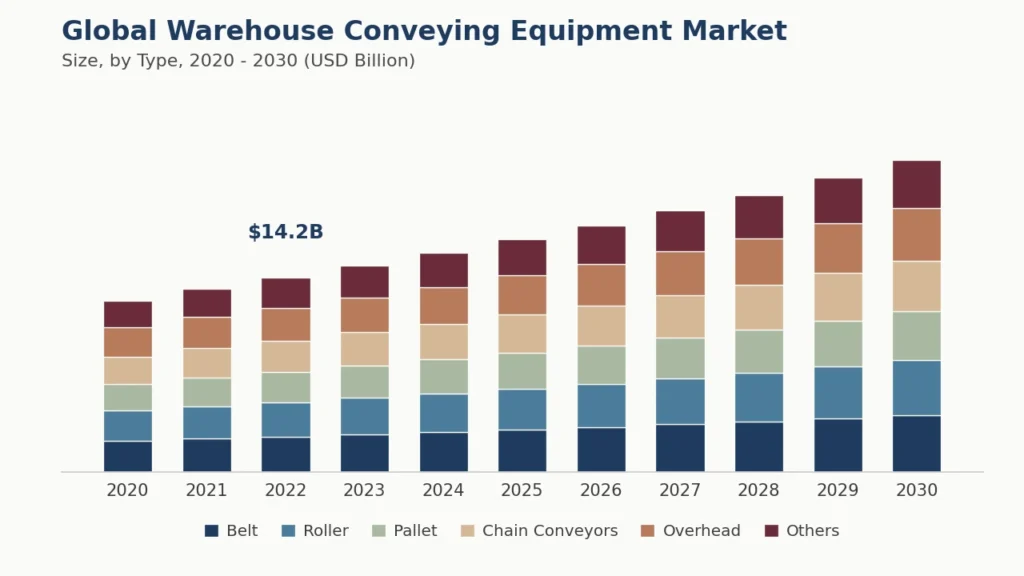
Los diseños preparados para el futuro utilizan la expansión modular para gestionar el aumento de la demanda de productos y las nuevas referencias. El sistema emplea análisis de mantenimiento predictivo para minimizar las interrupciones operativas y prolongar la vida útil de los equipos, y logra una orquestación operativa completa gracias a su estrecha integración con robots móviles autónomos (AMR), clasificadores robóticos y plataformas de gestión de almacenes (WMS). La optimización basada en datos aumenta el rendimiento con el tiempo, mientras que la adopción temprana mantiene la competitividad de las instalaciones. Según el informe de Zipdo, la mayoría de los almacenes alcanzan el retorno de la inversión en automatización en 18 meses, y más del 70 % ha adoptado algún tipo de transformación digital para mejorar la eficiencia.
Estudios de caso: la automatización de alta resistencia en la práctica
A continuación se muestran algunos casos en los que Addverb ha implementado sus soluciones de automatización en situaciones de uso similares a los sistemas de transporte de cadena de alta resistencia y a los sistemas de transporte de rodillos:
En el centro de distribución flexible de Maersk, los volúmenes de SKU mixtos y el enrutamiento entre zonas requerían un flujo de materiales escalable. Addverb implementó sistemas como paletizadores de cajas mixtas, sistemas Pick-to-Light y líneas de transportadores de rodillos estratégicamente planificadas, que ayudaron a integrar sin problemas el almacenamiento fijo y flexible, lo que dio como resultado una distribución eficiente y escalable.
En el centro de distribución de Landmark Group, el principal desafío consistía en diferenciar los flujos de artículos voluminosos de los que no lo eran y fusionarlos en las estaciones de empaquetado. Por ello, Addverb implementó el sistema Quazzy. Los pedidos se procesaban mediante un sistema de cintas transportadoras de rodillos, clasificadores robóticos y escáneres DWS, lo que se traducía en un mayor rendimiento y menos retrasos en la manipulación durante los periodos de mayor actividad.
Conclusión
La elección de la cadena transportadora o el rodillo adecuados influye directamente en la eficiencia, el rendimiento y la escalabilidad en entornos de carga pesada. Los diseños preparados para la automatización, conectados a máquinas móviles autónomas (AMR) y plataformas de gestión de almacenes (WMS), aumentan la velocidad, la fiabilidad y la precisión de los pedidos.
Los sistemas modulares y motorizados contribuyen a preparar las instalaciones para el futuro, a la vez que minimizan los riesgos. Las soluciones de Addverbpermiten un control operativo fluido en múltiples sistemas, incluyendo cintas transportadoras, robótica e instalaciones de almacenamiento. Estas soluciones son esenciales para lograr una automatización de almacenes más segura y con un rendimiento superior de forma constante.
Preguntas frecuentes
1. ¿Cuáles son los principales usos de los transportadores de rodillos en un almacén?
Un transportador de rodillos se utiliza principalmente para garantizar el movimiento eficiente de cajas, contenedores, cajones y paletas a través de las zonas del almacén sin necesidad de manipulación manual constante, lo que lo hace idóneo para operaciones de embalaje, clasificación y despacho.
2. ¿Cuáles son los diferentes tipos de transportadores de rodillos?
Los diferentes tipos de transportadores de rodillos incluyen transportadores de rodillos para paletas, transportadores de rodillos por gravedad, transportadores de rodillos de acumulación, transportadores de rodillos dentados, transportadores de rodillos curvos y transportadores de cinta sobre rodillos, cada uno diseñado para soportar niveles de producción y configuraciones de diseño específicos, al tiempo que brinda a las instalaciones la flexibilidad de adaptar las rutas de flujo a las necesidades operativas.
3. ¿Pueden las cintas transportadoras de cadena soportar cargas pesadas?
Sí, las cintas transportadoras de cadena son ideales para palés, artículos a granel y aplicaciones de uso continuo, ya que proporcionan la tracción fiable necesaria en entornos industriales exigentes, lo que las hace adecuadas para escenarios de alta carga y uso intensivo.
4. ¿Cómo elegir el sistema de transporte adecuado?
Al elegir un sistema de transporte, es fundamental evaluar de forma integral las características de la carga, los objetivos de rendimiento, las limitaciones de diseño y los requisitos de automatización para que la solución seleccionada se ajuste tanto a los patrones de demanda actuales como a los planes de expansión a largo plazo.
5. ¿Qué tipo de transportador se utiliza para el manejo de materiales a granel?
En la mayoría de los casos, se seleccionan transportadores de cadena de alta resistencia o sistemas de transportadores de rodillos industriales para garantizar un manejo confiable de materiales a granel en entornos exigentes donde se deben mover grandes volúmenes de manera segura, constante y con una intervención mínima.
6. ¿Cuál es la principal ventaja de utilizar un sistema de cintas transportadoras?
Un sistema de cintas transportadoras permite una transferencia de materiales más rápida, segura y fiable en los procesos del almacén, lo que mejora la eficiencia operativa general a la vez que reduce la manipulación manual y la variabilidad en los flujos de trabajo diarios.