



ON THIS PAGE
Assembly-driven warehouse operations often face delays during the movement and positioning of parts, chassis, and semi-assembled components across multiple workstations. Manual handling can disrupt assembly continuity, create bottlenecks between stations, and increase the risk of misalignment or delayed part availability. As assembly lines become faster and more interconnected, warehouses require precise and coordinated material movement to ensure uninterrupted production flow.
This is where assembly line robotics becomes essential. According to SwiftFlutter, automation of the assembly line can help increase productivity between 25% to 65% based on process complexity. This trend clearly shows that robotics is becoming highly important for warehouse management.
Why Are Assembly Line Robots Needed in Modern Warehouse Operations?
Modern warehouses rely on the timely movement of materials across interconnected processes. Manually coordinated efforts frequently result in delays and inefficiencies, especially when time becomes critical, which is the case in assembly settings.
The use of robots for assembly lines enable constant material flow, decreases reliance on labour, and facilitates continuous work. Through automation of repetitive and timing-sensitive processes, warehouses can avoid congestion and ensure smooth workflow regardless of increased demand. According to Fact.MR, assembly robot market value will grow from USD 8.6 billion in 2025 to USD 13.2 billion by 2035, rising at a CAGR of 4.4%, representing substantial growth.
Read: How to Use Automated Mobile Robots for Material Handling
What Are the 7 Advanced Tasks Assembly Line Robots Perform in Modern Warehouses?
1. Multi-Point Tugging Across Warehouse Lines
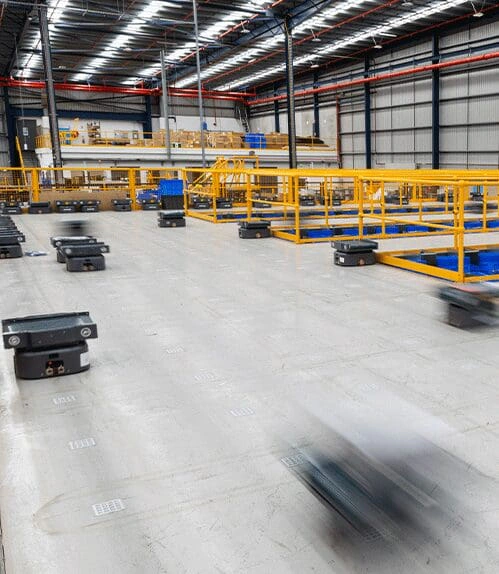
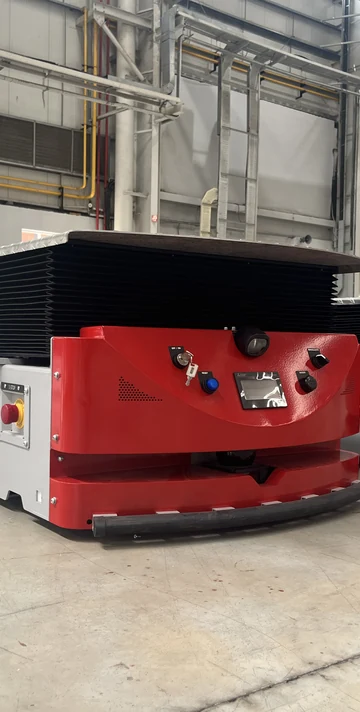
Addverb’s Assembly Line robot, Dash Tug, is designed to perform tugging tasks whereby it transports the chassis or trolley from one assembly station to another through a single workflow. It can move a payload of 1800 kgs at a speed of 0.4 m/s. The robot facilitates the efficient transportation of materials along pre-programmed routes, minimising manual effort and thereby enhancing efficiency in material movement. It also reflects how robots for assembly lines are used to simplify repetitive movement tasks in controlled manufacturing setups.
2. Guided Route Movement Across Assembly Lines (Ground Marker Navigation)
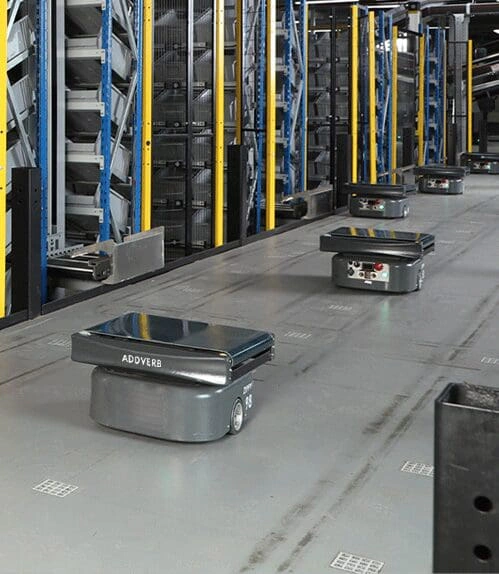
Instead of dynamic routing through AI technology, Addverb’s Assembly Line robot, Dash Line, uses the principle of ground markers for navigation, guaranteeing accurate and repeatable movement along assembly lines. It moves according to predetermined routes, allowing the system to remain stable and consistent with regard to material handling. Controlled navigation ensures reliable functioning in the assembly line robotics environments and is considered a standard technique used in many assembly line AI robot categories within industrial automation systems.
3. Load Movement Across Multiple Assembly Stations
With Addverb’s Dash Line, transfer of chassis or loads is carried out smoothly through several stations in the production line. It transfers a maximum payload of 250 kgs at 0.4 m/s. The system provides consistency in the supply of materials at all stages of assembly, thus enhancing synchronisation between workstations. This supports smooth assembly material handling without interruptions in production flow.
4. Precision Docking at Assembly Workstations
A major strength of Dash Line is its ability to dock with great precision up to ±10 mm. It can accurately ensure that the materials or chassis are correctly aligned at each station without any adjustments being made manually. Such precision is critical for maintaining quality and efficiency in factory assembly line robot operations.
5. Just-in-Time Material Movement Between Workstations
The Dash Line system facilitates the flow of materials exactly when required in each assembly step. It reduces dependency on buffer storage, hence supporting lean production systems. This increases workflow efficiency and enhances assembly line material handling within continuous production settings.
6. Coordinated Chassis Flow Using Dual Scissor Lifter System
One distinguishing factor of Dash Line is the synchronised double scissor lifter mechanism that controls the height adjustment of the chassis while in movement. The advantage of using such a system includes ergonomic benefits, increased safety, and proper assembly alignment. It ensures smooth coordination between lifting and transport functions in structured assembly line robotics workflows.
7. Adaptability Through Configurable Layout and Deployment Flexibility
Addverb’s Dash Line is flexible enough to adapt to any layout changes easily through ground markers as well as route adjustments. It doesn’t have an intelligent real-time algorithm for routing, but it can still be configured to suit evolving assembly line setups. This supports scalable assembly material handling across different production requirements.
How Do Assembly Line Robots Improve Warehouse Operations and Efficiency?
Assembly line robots improve efficiency by minimising manual effort, making mistakes unlikely, and maintaining smooth material flows. They facilitate quick movement from one area to another and decrease downtime between operations.
Such mobile robots enhance space utilisation by avoiding excess storage spaces. With modern material assembly material handling, warehouses can achieve higher throughput, better coordination, and improved operational control.
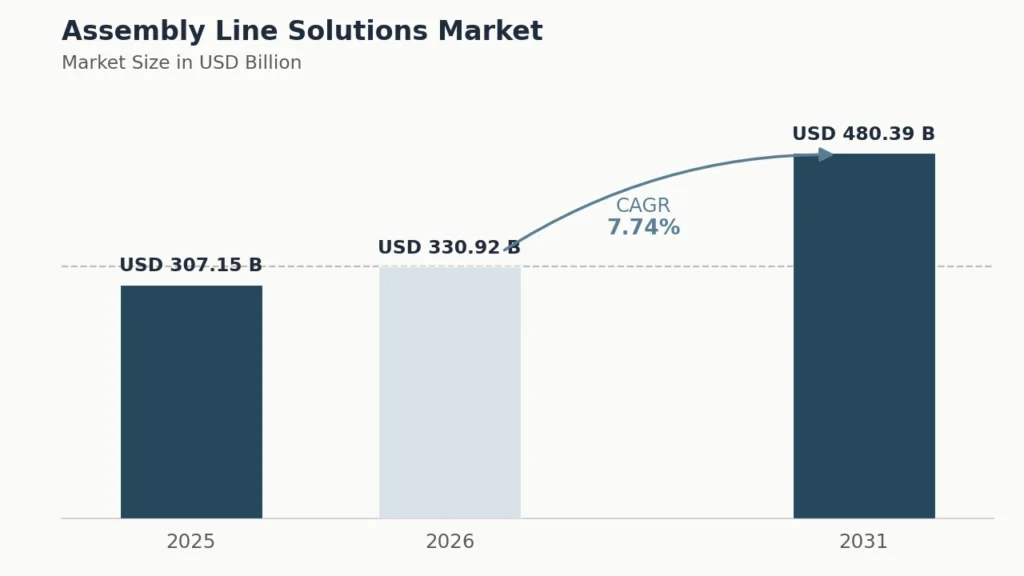
Impact of Assembly Line Robots on Material Flow Efficiency
The table below highlights the benefits of using assembly line robots along with their impact on various material flow efficiency parameters.
| Metric | Manual Process | Robotic Process |
| Material Movement Time | High | Low |
| Line Feeding Efficiency | Moderate | High |
| Error Rate | Higher | Lower |
| Operational Consistency | Variable | Stable |
Also Read: Industrial Applications of Mobile Robots
How Addverb’s Assembly Line Robot – Dash Line Supports Advanced Warehouse Automation
Addverb’s Assembly Line robot, Dash Line is designed to facilitate complex assembly workflows that require accuracy and versatility. The robot helps ensure proper transportation of materials between many different areas.
The advanced navigation system enables real-time route optimisation, which ensures seamless coordination of processes. The scalable design of Dash Line makes it the best choice for warehouses seeking to expand automation without affecting existing processes.
Conclusion
The use of assembly line robots is revolutionising the way materials are managed in the warehouse through rapid, precise, and adaptable processes. Through dynamic route optimisation and workflow coordination, these robots are able to perform complicated procedures that increase efficiency while minimising the possibility of errors. Addverb’s Assembly Line robot, Dash Line, assists organisations in creating intelligent and efficient warehouse environments.
FAQs
1. Can assembly robots adapt to customized product requirements?
Yes, assembly robots can adjust workflows based on product variations and operational needs. Addverb’s Assembly Line Robot Dash Line is designed to support structured customisation within assembly environments.
2. What are the real-world applications of assembly line robots?
They are widely used for material transport, line feeding, and coordinated assembly operations. Addverb’s Dash Line is commonly applied in chassis movement and assembly line coordination tasks.
3. How do assembly line robots reduce errors in warehouse tasks?
They use sensors and controlled navigation systems to ensure precise execution of tasks. Addverb’s Assembly Line Robot Dash Line helps reduce handling errors through accurate positioning and movement control.
4. Which industries benefit most from assembly line robots?
Industries such as automotive, e-commerce, electronics, and manufacturing benefit significantly. These sectors rely on consistent material flow supported by automated assembly systems.
5. What technologies power modern assembly line robots?
They use navigation systems, sensors, and programmed control logic for operation. These technologies enable stable and efficient movement across assembly workflows.
6. How do warehouse robots handle complex assembly tasks?
They coordinate movements across stations and follow predefined operational paths. This allows them to manage structured assembly tasks with accuracy and consistency.