



EN ESTA PÁGINA
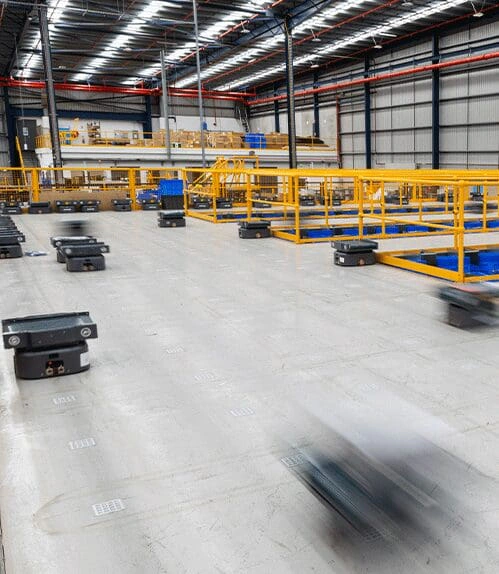
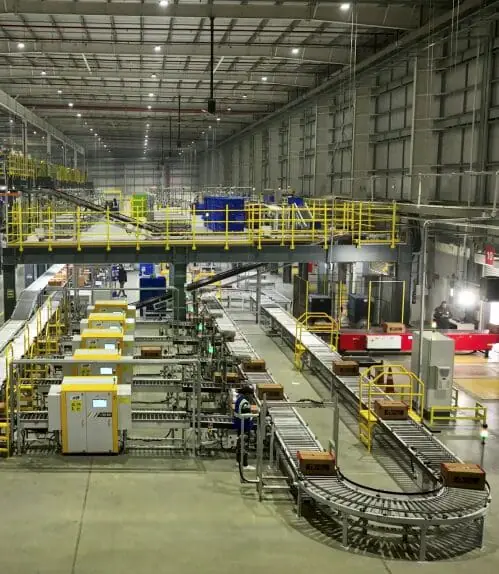
Un almacén que procesausade pedidos diariamente para un minorista de comercio electrónico puede comenzar su jornada laboral de manera eficiente; sin embargo, a medida que avanza el día y llega el período pico, los retrasos se vuelven habituales debido a los cuellos de botella en el movimiento de materiales y a que los operarios esperan los suministros. Este escenario de retraso es común en muchos centros de distribución de alto volumen. Un sistema de vehículos guiados automáticamente proporciona un enfoque sistemático para gestionar el movimiento interno de materiales dentro de los almacenes.
Según un estudio publicado en el sitio web de ASTES, la implementación de AGV contribuyó a eliminar el transporte manual de contenedores y redujo los tiempos de ciclo en un 13 %, lo que permitió a las empresas alcanzar sus objetivos de producción con mayor rapidez. Este ejemplo pone de manifiesto cómo la automatización de almacenes mediante AGV puede ser un factor clave para el éxito y la escalabilidad de las operaciones de almacenamiento modernas.
¿Las transferencias manuales de materiales punto a punto están ralentizando las operaciones de los almacenes?
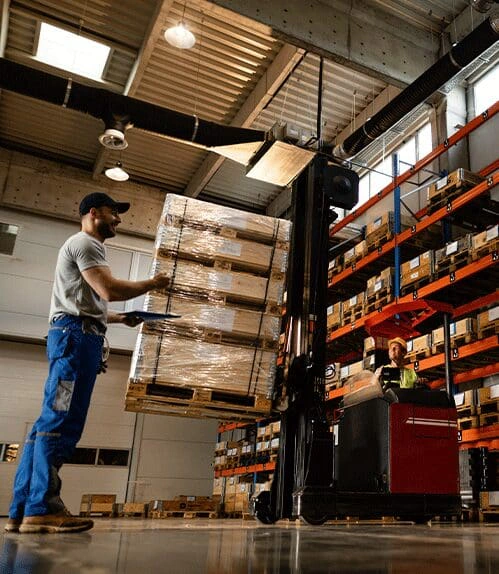
El transporte manual sigue siendo uno de los procesos más lentos y propensos a errores en las operaciones de almacenamiento. Los empleados se ven obligados a trasladar continuamente artículos de un área de almacenamiento a otra, lo que afecta la productividad y aumenta la dependencia de la disponibilidad de mano de obra.
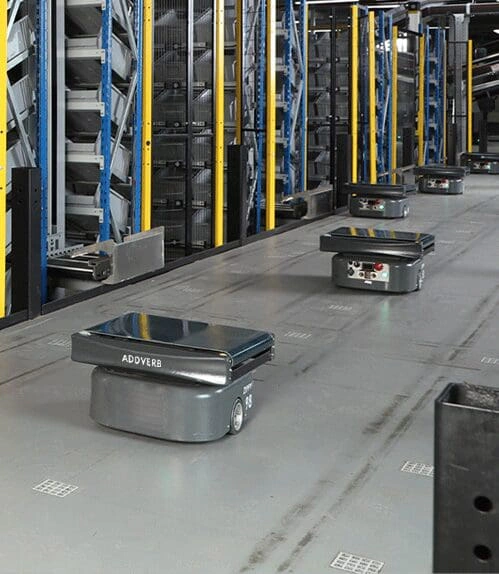
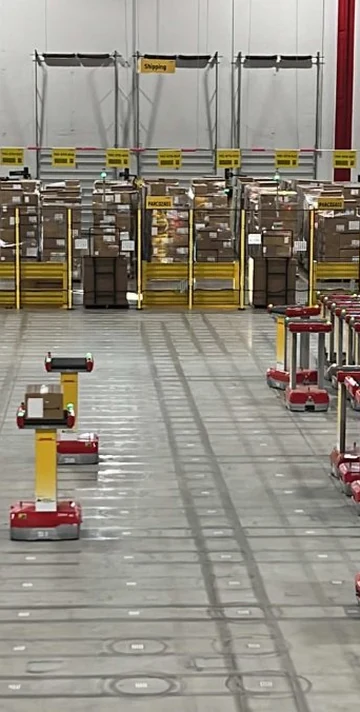
Un almacén automatizado con vehículos guiados automáticamente soluciona estas ineficiencias automatizando las tareas de movimiento repetitivas. AddverbAddverb El clasificador robóticoZippy Zippydiseñado específicamente para operaciones de transporte y clasificación de alta frecuencia. Una de sus variantes, Zippy 40, puede manejar una carga útil de 40 kg y moverla a una velocidad de 2 m/s, realizando una clasificación a nivel de SKU con una precisión del 100 % hasta 30 000 clasificaciones por hora.
Además, Zippy utiliza un sistema de detección de objetos LiDAR 2D para detectar instantáneamente cualquier obstáculo. Garantiza una precisión de posicionamiento de +/- 20 mm y un acoplamiento preciso de +/- 10 mm. Zippy ayuda a minimizar la intervención humana y a optimizar logísticas internas del almacén , especialmente en entornos de preparación de pedidos de alto volumen.
Lea también: AGV para la automatización de almacenes
¿Las tareas de transporte intraalmacén de larga distancia están reduciendo la eficiencia operativa?
En muchos grandes almacenes, la ineficiencia es frecuente debido al traslado de materiales a largas distancias entre las distintas áreas de la instalación. Este proceso consume mucho tiempo, provocando retrasos y fatiga, entre otros problemas, lo que repercute negativamente en el rendimiento general.
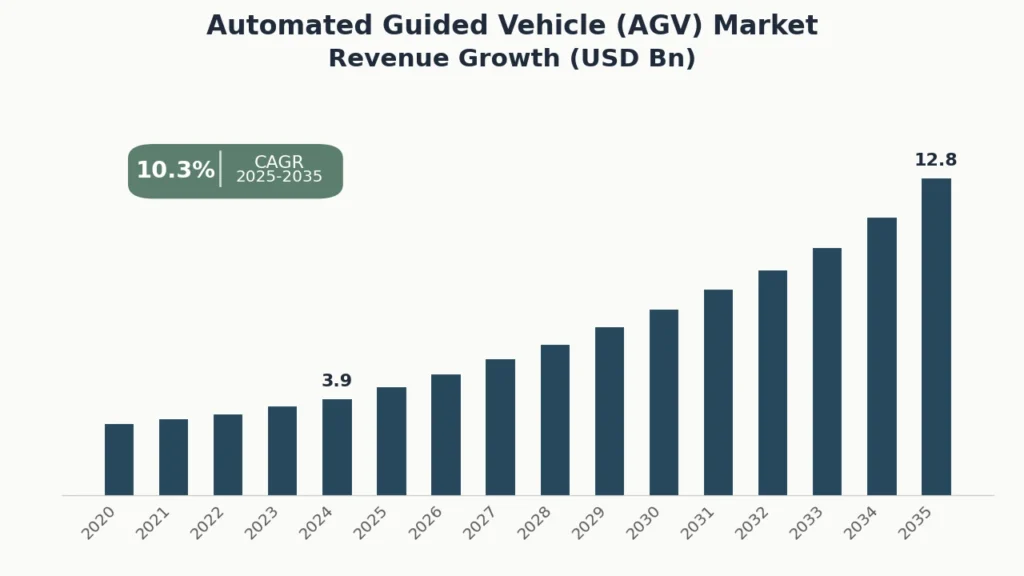
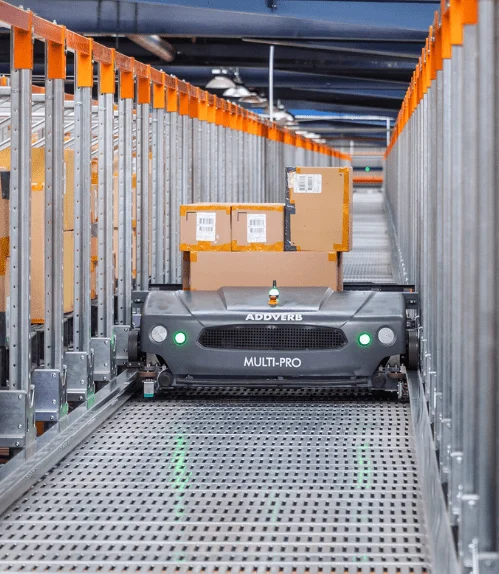
Un vehículo guiado automáticamente en la configuración del almacén garantiza un movimiento continuo y uniforme a lo largo de grandes distancias sin necesidad de control manual. Addverbde El robot de preparación de pedidos de Veloce múltiples cajas optimiza la logística interna al permitir el movimiento rápido y eficiente de cajas o contenedores entre las zonas del almacén, mejorando los tiempos de ciclo y reduciendo los retrasos operativos. Puede mover una carga útil de 240 kg a una velocidad de 1,5 m/s con una precisión de acoplamiento de +/- 10 mm.
La flota de Veloce se desplaza por rutas organizadas en cuadrícula hasta las ubicaciones preestablecidas para el almacenamiento y la preparación de pedidos. Funcionan en perfecta sincronía, lo que garantiza una reducción del tiempo total de preparación y una entrega más rápida.
Indicadores operativos que señalan la necesidad de automatización de los vehículos guiados automáticamente (AGV)
| Indicador operativo | Sistema manual | Sistema basado en AGV |
| Tiempo de ciclo | Alta variabilidad | Reducido y estable |
| Dependencia laboral | Alto | Bajo |
| Eficiencia del transporte | Inconsistente | Flujo continuo |
| Precisión del pedido | Moderado | Alto |
¿La congestión en los pasillos del almacén está interrumpiendo el flujo interno de materiales?
La congestión en los pasillos se convierte en uno de los principales problemas en instalaciones de alta densidad cuando varios tipos de equipos de transporte operan simultáneamente. Habrá montacargas en movimiento, carros manuales en funcionamiento y operaciones de preparación de pedidos, lo que genera cuellos de botella y riesgos para la seguridad.
Con un de robots de automatización de almacenes como el AGV, el movimiento dentro de los almacenes se vuelve estructurado y predecible. Los AGV operan siguiendo rutas predefinidas u optimizadas dinámicamente, minimizando las intersecciones innecesarias, lo que resulta en un mejor flujo de tráfico y un entorno de almacén seguro incluso durante los períodos de mayor actividad.
¿Los retrasos en los ciclos de reposición de materiales afectan a la velocidad de procesamiento de los pedidos?
La lentitud en la reposición del inventario afecta la velocidad y la precisión de la preparación de pedidos, especialmente en entornos dinámicos como los almacenes. El retraso en el traslado del inventario a la zona de preparación de pedidos puede provocar interrupciones e ineficiencias en el trabajo.
Un sistema de manipulación de materiales AGV está diseñado para facilitar el movimiento eficiente de materiales desde el almacén hasta la zona de preparación de pedidos. AddverbEl clasificador robótico Zippymejora aún más esta eficiencia mediante la clasificación automatizada de productos según las zonas de demanda, lo que garantiza la disponibilidad ininterrumpida de los artículos de alta rotación.
Mejoras operativas clave gracias al reabastecimiento basado en vehículos guiados automáticamente (AGV)
- Movimiento de existencias más rápido entre zonas
- Reducción de los retrasos en la recogida durante los periodos de máxima demanda
- Mayor precisión en la disponibilidad del inventario
¿Su almacén tiene dificultades para gestionar el transporte interno durante los períodos de máxima demanda?
Durante los periodos de máxima demanda, se evidencia la ineficiencia de los vehículos operados manualmente debido a la escasez de mano de obra y las limitaciones de los equipos. Ampliar las operaciones resulta un desafío sin incurrir en gastos importantes.
Según un estudio publicado en la Biblioteca Nacional de Medicina, el uso de tan solo dos vehículos guiados automáticamente (AGV) en una empresa manufacturera ayudó a eliminar la necesidad de cuatro empleados, redujo los costos laborales en 79.200 € (93.266 USD) al año y logró el retorno total de la inversión en ocho meses.
Un de automatización AGV para almacenes permite que estos escalen de forma dinámica, sin necesidad de aumentar su plantilla en proporción directa. Addverb, como Zippy y Veloce, permiten a los almacenes gestionar de forma eficiente el aumento del volumen de producción durante los picos estacionales o los ciclos de alta demanda.
¿Tus competidores realizan envíos más rápido mientras tú te quedas atrás?
En la logística moderna, la rapidez en la entrega es uno de los factores más importantes que proporciona una ventaja competitiva clave. Los almacenes que utilizan el sistema de transporte convencional pueden sufrir retrasos durante las transferencias internas de mercancías, lo que afecta a los plazos de entrega de los pedidos.
Un vehículo guiado automáticamente (AGV) en el almacén mejora la velocidad de las operaciones logísticas internas al eliminar las demoras asociadas con el transporte manual. Esto se traduce en procesos de consolidación, empaquetado y envío más rápidos, lo que ayuda a los almacenes a mantenerse competitivos en entornos de cadena de suministro dinámicos.
Lea también: Ventajas y desventajas de los vehículos guiados automáticamente (AGV).
Casos de estudio: Cómo la automatización AGV de Addverbmejoró el flujo de materiales en el almacén
En el centro de clasificación de Mercado Libre, el requisito principal era una solución rápida y precisa para la clasificación, que permitiera solucionar los retrasos y la lentitud en los ciclos de pedido a envío causados por un sistema manual de consolidación de pedidos basado en escáneres de radiofrecuencia. Addverb implementó una flota de clasificadores robóticos, lo que permitió a la planta alcanzar un rendimiento de 5000 clasificaciones por hora, con una precisión de cumplimiento de pedidos del 99,99 %.
En las instalaciones de Maersk, se requería una solución de automatización para gestionar todas las operaciones del almacén de principio a fin. Para garantizar una transferencia de materiales y una gestión de devoluciones eficientes, Addverb múltiples cajas Veloce, junto con el clasificador robótico Zippy, para agilizar el envío de pedidos y atender a los clientes B2C. Como resultado, las instalaciones pudieron enviar 100 000 piezas diarias a 2500 nodos de distribución diferentes.
Conclusión
La adopción de un sistema de vehículos guiados automáticamente (AGV) es fundamental para cualquier almacén que desee aumentar su velocidad y eficiencia. Al minimizar la intervención manual y optimizar el transporte interno, la automatización de almacenes mediante AGV garantiza una mayor previsibilidad en las operaciones.
Con soluciones como Zippy y Veloce, Addverb proporciona sistemas de automatización para ayudar a las empresas a modernizar sus operaciones de almacén y establecer una infraestructura logística escalable para el crecimiento a largo plazo.
Preguntas frecuentes
1. ¿Qué es un sistema de Vehículos Guiados Automáticamente (AGV) en almacenes?
Un sistema AGV automatiza las tareas repetitivas de transporte interno mediante navegación guiada. Mejora la consistencia del flujo y reduce la dependencia manual en las operaciones de almacén.
2. ¿Cómo aumentan los AGV la productividad del almacén?
Los AGV mejoran la productividad al reducir los retrasos en el transporte y garantizar el movimiento continuo de mercancías. AddverbLos sistemas AGV de
3. ¿Cuáles son las señales de que un almacén necesita automatización con vehículos guiados automáticamente (AGV)?
La congestión frecuente, los retrasos en los ciclos de transporte y la escasez de mano de obra son indicadores clave. Addverbayudan a abordar estos desafíos de manera eficaz.
4. ¿Pueden los AGV reducir los costos operativos de un almacén?
Sí, los AGV reducen la necesidad de mano de obra y mejoran la eficiencia. Addverbofrecen ahorros de costos cuantificables y un retorno de la inversión más rápido.
5. ¿Qué industrias suelen utilizar sistemas AGV en almacenes?
El comercio electrónico, los bienes de consumo de alta rotación, la automoción y la industria farmacéutica utilizan ampliamente los AGV. Addverb ofrece soluciones escalables para todos estos sectores.
6. ¿Cómo pueden los AGV respaldar el crecimiento escalable de los almacenes?
Los AGV permiten que los almacenes aumenten su capacidad de procesamiento sin incrementar proporcionalmente la mano de obra. Addverbposibilitan la automatización escalable de almacenes de manera eficiente.