



AUF DIESER SEITE
Stellen Sie sich eine temperaturempfindliche Lieferung biologischer Produkte vor, die in einem Pharmalager steht und auf ein enges, im Voraus festgelegtes Lieferfenster wartet. Eine geringfügige Verzögerung bei der Abholung hat weitreichende Folgen, die über den operativen Bereich hinausgehen – sie gefährdet die Einhaltung gesetzlicher Vorschriften und letztlich die Patientensicherheit.
Bei der Lagerhaltung in der Pharmabranche ging es noch nie nur um die reine Lagerung – vielmehr geht es um Bestandsmanagement und Rückverfolgbarkeit bei schwankender Nachfrage. Der kombinierte Druck durch Zeitvorgaben, Präzision und behördliche Kontrollen macht die Pharmabranche zu einem der wichtigsten Anwendungsbereiche für die Lagerautomatisierung.
Zudem ist es eine der schwierigsten Herausforderungen. Die Serialisierung gemäß dem DSCSA (Drug Supply Chain Security Act) lässt keinen Spielraum für Fehler, die Investitionskosten sind hoch und die Amortisationszeiten lang, und die Integration in bestehende WMS-/ERP-Systeme verläuft selten reibungslos. Kühlkettenzonen, der Umgang mit Zytostatika und SKUs, die von Fläschchen bis hin zu Paletten reichen, lassen sich nicht in ein einheitliches Automatisierungskonzept pressen.
Genau hier kommen die meisten Betreiber ins Stocken – nicht bei der Frage, ob sie automatisieren sollen, sondern wie. Die traditionelle Antwort sind fest installierte automatisierte Lager- und Kommissioniersysteme (ASRS): eine kompakte, speziell entwickelte Infrastruktur für stabile Artikelgruppen und Mengen. Die neuere Lösung ist flexible Automatisierung – autonome mobile Roboter (AMRs), „Goods-to-Person“-Stationen, modulare Shuttles –, bei der Spitzenkapazität zugunsten von Skalierbarkeit und Neukonfigurierbarkeit aufgegeben wird. In der Pharmabranche, wo sich Produktmix, Chargengrößen und Vorschriften ständig ändern, ist diese Entscheidung eine der wichtigsten planerischen Weichenstellungen, die ein Netzwerk treffen muss.
Dieser Artikel gibt einen Überblick darüber, in welchen Bereichen stationäre ASRS-Systeme nach wie vor die Nase vorn haben, in welchen Bereichen flexible Automatisierung die Oberhand gewinnt und warum führende Unternehmen der Pharmabranche beide Ansätze kombinieren.
Flexible Automatisierung vs. fest installierte ASRS: Der eigentliche Unterschied in der Pharmabranche
Auf dem Papier scheinen flexible Automatisierung und fest installierte ASRS zwei Werkzeuge zu sein, die dasselbe Problem lösen. In der Praxis lösen sie jedoch grundlegend unterschiedliche Probleme – und genau diese Verwechslung ist der Grund, warum die meisten Automatisierungsprojekte in pharmazeutischen Lagern scheitern.
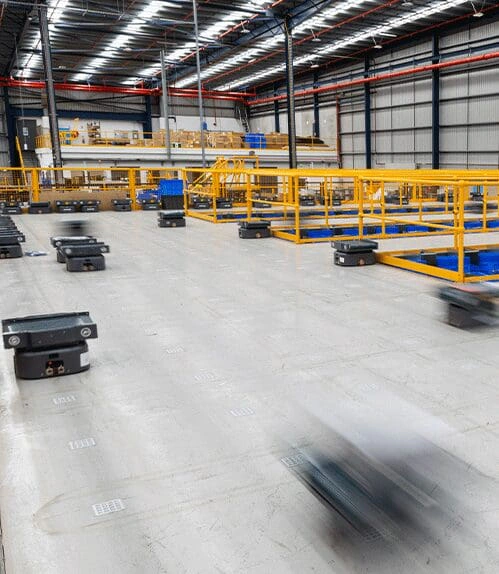
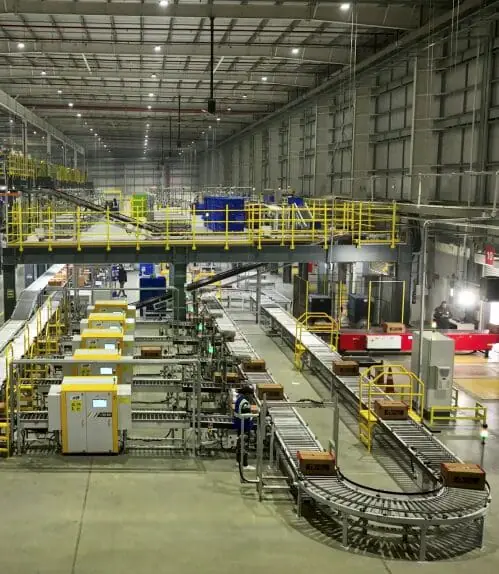
Flexible Automatisierung – AMRs, „Goods-to-Person“-Stationen, modulare Shuttles – ist auf Variabilität ausgelegt. Sie lässt sich nahtlos in bestehende Anlagen integrieren, schrittweise einführen und an sich ändernde Artikelprofile, Auftragsspitzen in der Auftragsfertigung sowie den Multi-Channel-Vertrieb anpassen. Ihre Stärke liegt in Bewegung und Wandel.
Stationäre ASRS-Systeme ist auf Lagerdichte und Stabilität ausgelegt. Palettenentnahmesysteme, Mini-Load-Systeme und Hochregal-Shuttles kommen besonders dort zum Einsatz, wo das Volumen vorhersehbar, die Artikelanzahl stabil und die Raumnutzung entscheidend ist – beispielsweise bei der Massengutlagerung, in pharmazeutischen Kühlhäusern sowie bei strukturierten FIFO-/FEFO-Arbeitsabläufen. Ihre Stärke liegt im Durchsatz und in der Kontrolle bei großem Umfang.
Kurz gesagt: Flexible Automatisierung sorgt für Agilität, fest installierte automatische Lager- und Retrieval-Systeme (ASRS) für Disziplin. Der Fehler besteht darin, das eine System zu zwingen, die Aufgaben des anderen zu übernehmen – weshalb die meisten Betreiber in der pharmazeutischen Lieferkette mittlerweile beide Lösungen einsetzen.
Flexible Automatisierung vs. fest installiertes ASRS: Ein Vergleich
| Parameter | Flexible Automatisierung (AMRs, Shuttles) | Stationäres ASRS (palettenbasiert) |
| Anpassungsfähigkeit | Hoch – passt sich Änderungen bei Artikelnummern und Nachfrage an | Nach der Installation niedrig |
| Einsatz | Schneller, mit minimalen Beeinträchtigungen | Länger — Ausbau der Infrastruktur |
| Hauptfunktion | Dynamische Bewegung und Greifen | Speicher mit hoher Speicherdichte |
| Optimaler Anwendungsfall | Kommissionierung, Transport, Betrieb in mehreren Bereichen | Großlagerung und pharmazeutische Kühllagerung |
| Skalierbarkeit | Schrittweiser Ausbau | Vordefinierte Kapazität |
Wichtige Faktoren, die bei der Automatisierung eines Pharmalagers zu berücksichtigen sind
Drei praktische Fragen entscheiden darüber, wo flexible Automatisierung und fest installierte ASRS-Systeme in einem hybriden Automatisierungs-Stack für die Pharmaindustrie zum Einsatz kommen.
1. Schnelle Wertschöpfung
Bei der Markteinführung eines neuen Medikaments oder beim Hochfahren der Auftragsfertigung kann die Geschwindigkeit der Inbetriebnahme den Unterschied zwischen einer Kapitalrendite im laufenden Geschäftsjahr und einer im nächsten ausmachen. Flexible Automatisierungslösungen – AMRs, mobile Kommissionierstationen, „Goods-to-Person“-Systeme – lassen sich innerhalb weniger Wochen in Betrieb nehmen, in bestehende Lagerverwaltungssysteme (WMS) integrieren und an den Durchsatz anpassen. Die Inbetriebnahme fest installierter ASRS-Systeme dauert länger, da die Infrastruktur speziell für diesen Zweck errichtet wird; sobald sie jedoch in Betrieb sind, laufen sie ein Jahrzehnt lang mit vorhersehbarem Durchsatz und niedrigen variablen Kosten.
2. Anlagestrategie und Kapitalrendite (ROI)
Flexible Automatisierung ermöglicht schrittweise Investitionen: Beginnen Sie mit 10 AMRs, erweitern Sie bei steigendem Volumen auf 50 und fügen Sie „Goods-to-Person“-Stationen hinzu, wenn die Komplexität der Artikel dies erfordert. Die Flotten können umverteilt werden, falls sich die Funktion einer Anlage ändert. Feste ASRS erfordern einen höheren Vorab-Investitionsaufwand, bieten jedoch die niedrigsten Lebenszykluskosten pro Palettenbewegung für stabile Betriebe mit hohem Durchsatz. Die meisten großen Pharmaunternehmen setzen mittlerweile ein gemischtes Modell ein – stationäre ASRS-Systeme für den stabilen Kernbereich, flexible Automatisierung für den variablen Randbereich.
3. Anforderungen an die Lagerung und die Einhaltung von Vorschriften
Pharmalager verwalten temperaturempfindliche und serialisierte Bestände in Raumtemperatur-, Kühl- und kontrollierten Zonen – oft im selben Gebäude. Flexible Automatisierung sorgt für einen nahtlosen Warenfluss zwischen diesen Zonen, mit reinraumtauglichen Konfigurationen für Biologika und sterile Handhabung. Stationäre ASRS-Systeme bieten Palettenhandhabung mit hoher Dichte, optimierte Raumnutzung und integrierte FIFO/FEFO-Durchsetzung – unverzichtbar in chargenverwalteten, DSCSA-konformen Betrieben. In pharmazeutischen Kühlhäusern verkürzen stationäre Systeme zudem die Türöffnungszeiten und die Verweildauer an Temperaturgrenzen, wodurch sowohl die Energieeffizienz als auch die Produktintegrität verbessert werden. Serialisierung, Chargenrückverfolgbarkeit und Audit-Bereitschaft werden auf der darüber liegenden Softwareebene gewährleistet.
Warum ist hybride Automatisierung die Zukunft der Lagerhaltung in der Pharmabranche?
Die Debatte um flexible versus feste Automatisierung wird durch Integration gelöst, nicht durch einen Sieg einer der beiden Seiten. Feste ASRS-Systeme verwalten den Kernbereich der Lagerung mit hohen Volumina und vorhersehbaren Abläufen – Großpaletten, Kühlkettenbestände und Long-Tail-Fertigwaren. Die flexible Automatisierung übernimmt den dynamischen Randbereich – Einlagerung von Wareneingängen, Transport zwischen verschiedenen Zonen, Auftragskonsolidierung, serialisierte Kommissionierung und die letzte Bearbeitung vor dem Versand.
Für Betreiber pharmazeutischer Lieferketten bietet der hybride Ansatz drei Vorteile, die keiner der beiden Ansätze für sich allein bieten kann:
- Einhaltung der Vorschriften bei hohem Durchsatz. Das stationäre ASRS-System gewährleistet die Einhaltung der FIFO-/FEFO-Prinzipien sowie der serialisierten Chargenführung; die flexible Automatisierung sorgt für eine nahtlose Abwicklung von Kommissionierung, Verpackung und Versand ohne manuelle Übergaben.
- Flexibilität bei Veränderungen im Produktmix. Neue Therapien und zusätzliche Auftragsfertigungsprojekte lassen sich nahtlos integrieren, ohne dass der Speicherkern neu gestaltet werden muss.
- Gestaffelte Kapitalinvestitionen. Ein fest installiertes ASRS-System sichert die langfristige Kapazität; die flexible Automatisierung lässt sich an die Nachfrage anpassen.
Der allgemeine Trend geht weg von Einzellösungen hin zu integrierten intelligenten Lagerkonzepten – Lagerung, Transport und Information als ein System.
Warum ist ein lösungsorientierter Ansatz in der Pharmalogistik so wichtig?
Ein lösungsorientierter Ansatz konzentriert sich darauf, die betrieblichen Herausforderungen zu verstehen, bevor Technologien implementiert werden.
Pharmalager stehen häufig vor Herausforderungen wie einer hohen SKU-Variabilität, strengen Serialisierungsanforderungen, temperaturkritischen Lagerbedingungen und der Notwendigkeit, den Betrieb bei der Einführung neuer Produkte zu skalieren. Um diese Herausforderungen zu bewältigen, ist eine maßgeschneiderte Automatisierungsstrategie erforderlich und keine Einheitslösung.
Indem sie die Automatisierung auf die tatsächlichen betrieblichen Anforderungen abstimmen, können Unternehmen sicherstellen, dass ihre Investitionen in die Automatisierung der pharmazeutischen Produktion messbaren Nutzen in Bezug auf Effizienz, Compliance und Skalierbarkeit bringen.
Wie Addverb eine hybride Automatisierung in der Pharmaindustrie in großem Maßstab?
Addverb die Automatisierung in der pharmazeutischen Lagerhaltung durch ein hybrides Ökosystem, das sowohl Flexibilität als auch Kontrolle gewährleistet.
1. Addverb Dynamo, autonomer mobiler Roboter
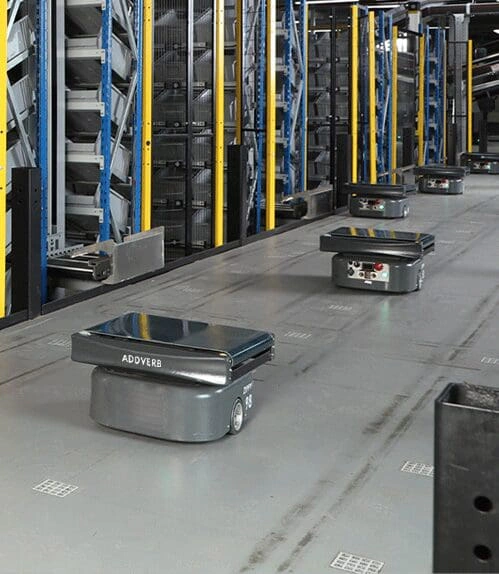
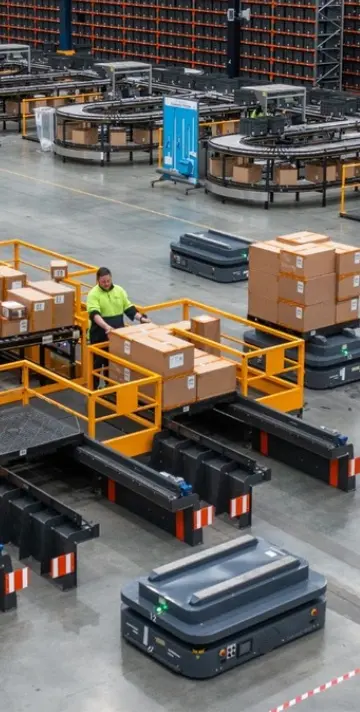
Addverb Dynamo, ein autonomer mobiler Roboter (AMR), ermöglicht mithilfe von SLAM-basierter Navigation und Hinderniserkennung einen nahtlosen Materialtransport zwischen den verschiedenen Zonen eines Pharmalagers. Er unterstützt die flexible Handhabung von Nutzlasten und ist für den Einsatz in Reinraumumgebungen geeignet, wodurch Kontaminationsrisiken reduziert und ein konsistenter, berührungsloser Materialfluss zwischen den einzelnen Phasen gewährleistet wird.
2. Das 4-Wege-Paletten-Shuttle-System Cruiser Addverb
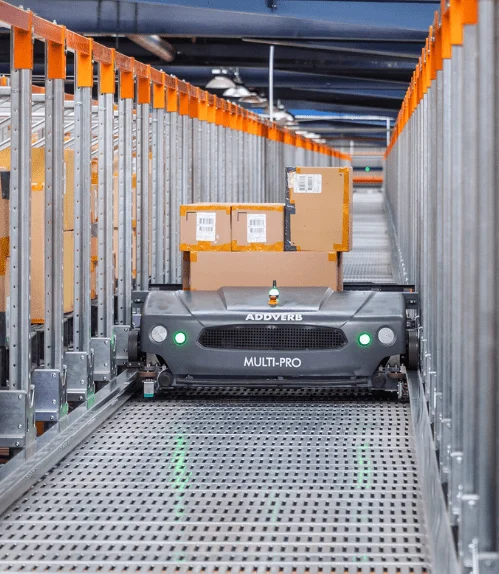
Addverb Das 4-Wege-Paletten-Shuttle-System Cruiser Addverbermöglicht die Bewegung von Paletten in alle Richtungen und die Lagerung in tiefen Gängen, wodurch die Raumausnutzung maximiert wird. Es gewährleistet die Einhaltung der FIFO-/FEFO-Prinzipien und einen hohen Durchsatz und eignet sich somit ideal für die präzise und schnelle Abwicklung serialisierter pharmazeutischer Bestände.
3. Das 2-Wege-Paletten-Shuttle-System Addverbmit Fördersystemen
Addverb Das 2-Wege-Paletten-Shuttle-SystemAddverb, das in Fördersysteme integriert ist, ermöglicht eine bahnbasierte Hochleistungslagerung mit automatisiertem Palettenfluss. Es sorgt für schnellere Ein- und Auslagerungsprozesse, reduziert den manuellen Arbeitsaufwand und verbessert den Durchsatz, insbesondere in pharmazeutischen Kühlhäusern und im Schüttgutumschlag.
Diese Systeme werden durch eine integrierte Softwareebene unterstützt, die Echtzeit-Transparenz, Rückverfolgbarkeit auf Chargenebene und ein optimiertes Workflow-Management entlang der gesamten pharmazeutischen Lieferkette gewährleistet.
Dies gewährleistet einen synchronisierten Betrieb, die Einhaltung gesetzlicher Vorschriften und eine durchgängige Kontrolle über alle Automatisierungssysteme hinweg.
Warum ist eine lebenszyklusorientierte Automatisierung in der pharmazeutischen Lagerhaltung so wichtig?
Die Automatisierung in einem pharmazeutischen Lager endet nicht mit der Inbetriebnahme. Langfristiger Erfolg hängt von einer kontinuierlichen Überwachung, vorausschauender Wartung und Systemoptimierung ab.
Eine auf den Lebenszyklus ausgerichtete Automatisierung gewährleistet eine nachhaltige Lagereffizienz, die kontinuierliche Einhaltung der Anforderungen an die Pharmalogistik sowie eine zuverlässige Systemleistung auch bei sich wandelnden Betriebsabläufen.
Durch einen lebenszyklusorientierten Ansatz können Pharmaunternehmen den Wert ihrer Investitionen in die Automatisierung maximieren und gleichzeitig die Betriebsstabilität gewährleisten.
Was zeichnet die Vorreiter in der Automatisierung von Pharmalagern aus?
Die führenden Pharmalager haben sich in der Debatte um flexible versus feste Lösungen nicht auf eine Seite geschlagen. Sie haben ihre Betriebsabläufe ehrlich analysiert – stabiler Kern versus dynamischer Randbereich, Raumtemperatur versus Kühlung versus kontrollierte Temperatur, Fertigprodukte versus komplexe Markteinführungen – und jede Ebene mit der passenden Automatisierung ausgestattet.
Flexible Automatisierung sorgt für Agilität. Feste ASRS-Systeme bieten hohe Lagerdichte und Struktur. Auf Basis einer gemeinsamen Softwareebene leisten sie gemeinsam das, was keines der beiden Systeme allein leisten kann: ein Pharmalager, das mit dem Unternehmen mitwächst und dabei stets die Vorschriften einhält, ausfallsicher und effizient bleibt.
Wenn Ihre Automatisierungsstrategie die Entscheidung nach wie vor als „flexibel“ oder „fest“ darstellt, sollten Sie sie neu formulieren. Die eigentliche Frage lautet: Welche Teile Ihres Betriebs benötigen welche Variante – und wie lassen sich beide miteinander koordinieren?
Sprechen Sie mit einem Spezialisten für Pharma-Automatisierung Addverb →
FAQs
1. Was ist der Unterschied zwischen flexibler Automatisierung und stationären ASRS-Systemen in der pharmazeutischen Lagerhaltung?
Flexible Automatisierungslösungen wie AMRs sind für dynamische Abläufe wie Kommissionierung und Materialtransport konzipiert, während stationäre ASRS-Systeme auf die Lagerung von Paletten mit hoher Dichte und strukturierte Arbeitsabläufe ausgerichtet sind. Die Wahl hängt davon ab, ob in Ihrem Pharmalager Flexibilität oder Lagereffizienz im Vordergrund steht.
2. Wann sollten pharmazeutische Lager flexible Automatisierung einem fest installierten ASRS vorziehen?
Flexible Automatisierung ist ideal, wenn der Betrieb durch eine hohe SKU-Variabilität, häufige Produktwechsel oder den Transport zwischen verschiedenen Zonen innerhalb pharmazeutischer Lagerumgebungen gekennzeichnet ist. Sie ermöglicht eine schnellere Inbetriebnahme und eine schrittweise Skalierbarkeit.
3. Wann eignet sich ein stationäres ASRS-System besser für die Lagerung von Arzneimitteln?
Stationäre ASRS-Systeme eignen sich am besten für die Kühllagerung von Arzneimitteln, den Umschlag von Paletten mit Schüttgut sowie für Umgebungen, in denen eine hohe Lagerdichte, Rückverfolgbarkeit und strenge Einhaltung von Vorschriften entscheidend sind.
4. Ist hybride Automatisierung besser als die Entscheidung für nur ein System?
Ja, hybride Automatisierung kombiniert flexible und fest installierte Systeme und ermöglicht es Pharmalagern, sowohl dynamische Arbeitsabläufe als auch die Lagerung mit hoher Dichte zu optimieren, wodurch Effizienz, Compliance und Skalierbarkeit gewährleistet werden.
5. Welche Addverb Addverb Addverb unterstützen flexible und fest installierte Automatisierung in Pharmalagern?
Addverb Dynamo, ein autonomer mobiler Roboter (AMR)Addverb, unterstützt flexible Automatisierung, während Cruiser (4-Wege-Paletten-Shuttle) und Cruiser 2-Wege-Paletten-Shuttle) Addverbin Kombination mit Fördersystemen eine fest installierte Automatisierung für die Lagerung von Arzneimitteln ermöglichen.