



ON THIS PAGE
Warehouses in the USA are under pressure to deal with large number of orders, short time periods for deliveries, and rising numbers of SKUs. As a result, they are switching from older setups that concentrate primarily on storage towards more streamlined and process-based operations. This trend is prompting the adoption of lean warehouse management, which focuses mainly on improved processes and less waste across the warehouse activities.
The implementation of lean principles can assist in eliminating the unnecessary activities within the operations process through the inclusion of only those activities that add value. By enhancing layout design, minimising movement, and ensuring inventory levels match the demand level, warehouses will become more efficient. Lean warehouse management has been shown to deliver measurable performance improvements. According to ResearchGate, cycle times for key warehouse processes decreased by 16 % and labour costs by 25% after applying lean principles.
What Are the Core Principles of Lean Warehouse Operations?
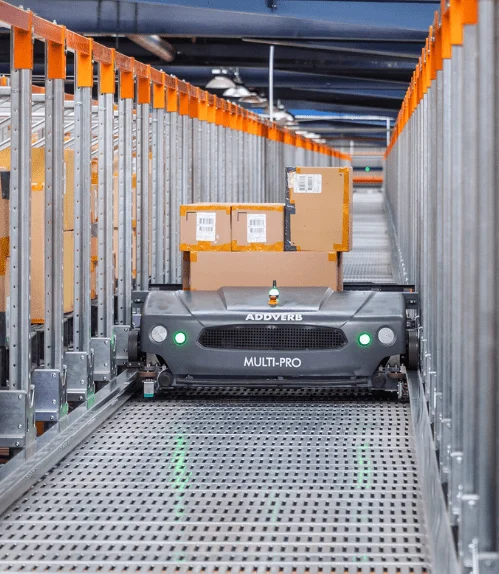
Modern lean warehouse operations rely heavily on automation to maintain consistent performance and ensure efficiency. Automated systems allow warehouses to streamline repetitive tasks while ensuring smooth workflows across the facility.
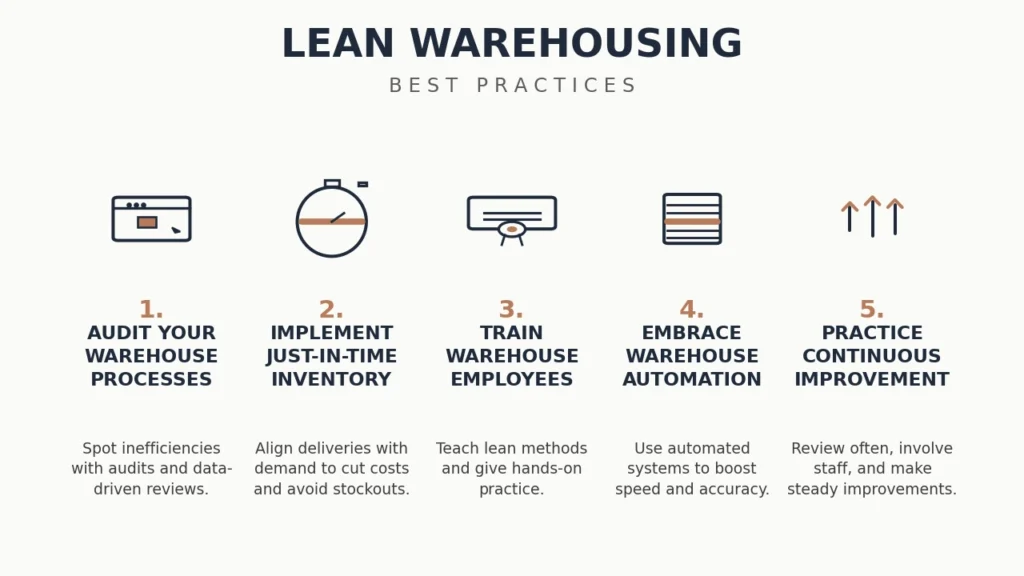
- Automated workflow visualisation makes it easier to monitor operations in real time, quickly identify bottlenecks, and adjust processes without manual intervention.
- Robotic sorting and storage solutions maintain a clean and organised environment while ensuring materials are always in the right place for efficient handling.
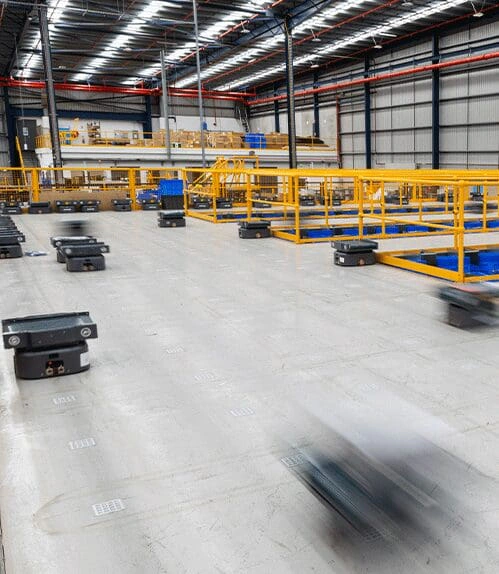
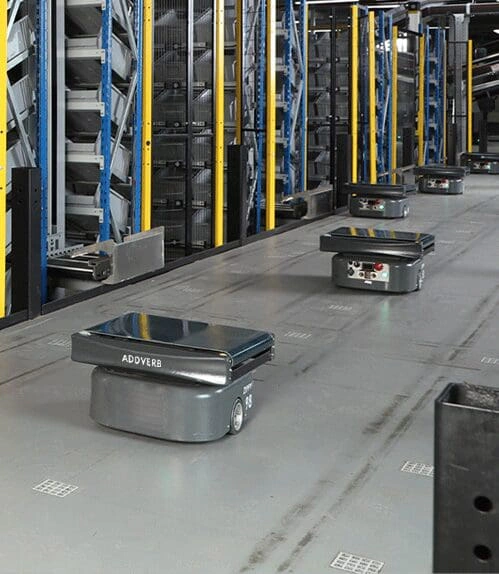
- Autonomous Mobile Robots (AMRs) like Addverb’s Dynamo move goods in response to actual demand, eliminating wasted effort.
Another aspect of the lean system that is very important is pull-based workflows, which responds to customer demand rather than pushing inventory.
Key Tools and Technologies Supporting Lean Warehousing
In today’s environment, lean operations management requires significant technological usage. Modern operational softwares enable the warehouse operators to gain insights into the flow and inventory performance, detect problems, and manage the warehouse operations effectively.
Automation is another significant element, as technologies like Addverb’s 4-Way Pallet Shuttle ASRS, Cruiser 360 help optimise high-density storage and enable faster, more efficient pallet retrieval. They not only enhance efficiency but also provide consistency in various warehouse operations across the USA.
How Lean Principles Optimise Warehouse Operations and Reduce Waste?
The main purpose of lean warehouse management includes the elimination of non-value-adding activities like unnecessary movements and too much stock.
- Better picking processes help reduce errors
- Organised workflows eliminate repeated handling
- Automation ensures tasks are done consistently
Lean warehouse management relies on automation to eliminate non-value-added activities. Addverb offers a range of technologies that streamline material movement, picking, sorting, storage, and workflow management.
- Autonomous Mobile Robots (AMRs) – Dynamo: Transports pallets and materials with a payload of up to 2500 kg at a max speed of 0.8 m/s, which reduces the need for manual handling. These robots cut unnecessary movements, improve accuracy, and accelerate order fulfilment – directly supporting lean principles.
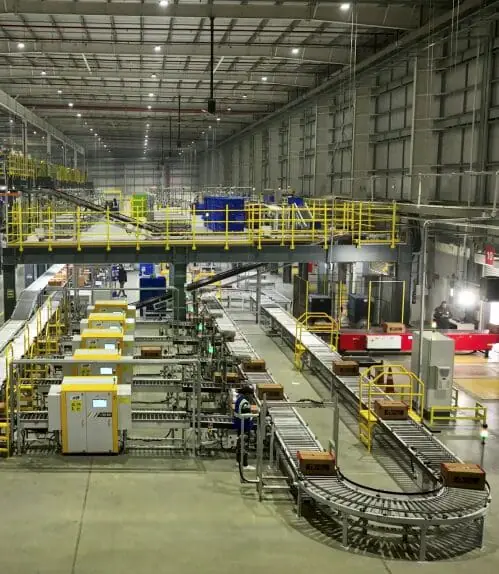
- Vertical Sortation Robot – SortIE: Automates high-speed vertical sorting, enabling 400 sorts per hour at 3 m/s. It eliminates repetitive manual sorting, directs materials efficiently to the right zones, and reduces errors. This helps in ensuring faster, more consistent warehouse operations.
- Automated Storage & Retrieval Systems (ASRS) – 4 Way Pallet Shuttle (Cruiser 360): Transports and stores pallets in high-density storage systems, ensuring warehouse capacity and efficiency are improved. With a maximum payload of 1500 kg and a carrying speed of 1.5 m/s, it helps prevent congestion and reduces unnecessary handling, improving throughput while maintaining lean efficiency.
- Picking Systems – Horizontal Carousel System (HOCA): Brings items directly to the operator. HOCA can handle up to 90 kgs of payload, ensuring a throughput of 400 SKU/hour and picking accuracy of 100%. This reduces walking time, picking errors, and operational delays, which makes it easier for USA-based warehouses to process orders faster and more accurately.
- Warehouse Management System – Optimus: Provides real-time visibility of inventory and workflows, automates task allocation, and predicts bottlenecks. By ensuring orders are prioritised and resources are optimised, it enhances efficiency and supports continuous improvement.
Measuring Efficiency and Cost Savings in Lean Warehouses
Performance monitoring is an essential element in the enhancement of lean inventory management. Through consistent evaluation of KPIs, organisations can efficiently identify areas that require improvement.
- Monitoring KPIs allows for the measurement of efficiency and progress
- Automation in combination with analytics enhances accuracy
- Predictive maintenance lowers the chances of downtime
The use of lean practices and automation in warehouses across the USA usually leads to faster operations, fewer mistakes, and reduced waste, leading to major cost savings in the long run. According to Gitnux, lean warehouse strategies such as zone picking can boost pick rates by up to 50% in an hour. This will contribute towards improved productivity levels in the warehouse operation.
Lean Warehouse Performance Metrics: Before vs After Implementation
Here is a comparison of key performance metrics that highlights the measurable impact of lean warehouse implementation.
| Metric | Before Lean Implementation | After Lean Implementation |
| Throughput (%) | Moderate | High |
| Travel Time (minutes) | High | Reduced |
| Order Accuracy (%) | Inconsistent | Improved |
| Inventory Turnover | Low | Optimised |
| Operational Cost per Order | Higher | Reduced |
Case Studies: Addverb’s Impact on Lean Warehouse Management in the USA
At an Automated Brake Parts Distribution Center, repeated handling and slow picking were affecting efficiency. Addverb deployed a fleet of Autonomous Mobile Robots (AMRs) along with 25+ robotic sorters, which enabled the facility to improve its material flow. This helped the facility improve productivity by 25%, processing 10,000 orders per day.
At Wooster Brush Company, manual processes were creating inefficiencies and fulfilment errors. Addverb deployed 13 Autonomous Mobile Robots (AMRs), which helped streamline movement within the warehouse. With the help of these robots, 15,000 cases were dispatched per day successfully.
Conclusion
The adoption of lean warehouse management in US operations contributes to faster, more efficient supply chains. The key principle of lean warehouse management is the minimisation of waste and optimisation of resource utilisation, allowing warehouses to handle large volumes without increased costs.
Automation is a key component in sustaining these improvements. Addverb supports this change through solutions that align with the lean concept, enabling warehouses to enhance material movement while maintaining stable operations amid growth.
FAQs
1. What is a key benefit of adopting a lean approach to warehouse management?
A major advantage of lean warehouse management is improved efficiency and faster order fulfilment. Technologies like Addverb’s AMR, Dynamo and vertical sortation robot, SortIE, streamline material movement, reduce manual sorting and handling, and help warehouses maintain lean workflows.
2. What is one of the primary principles in lean warehouse operations?
Continuous improvement and elimination of non-value-added activities are central. Automation robots such as Addverb’s picking system, HOCA and pallet shuttle, Cruiser 360 reduce repetitive tasks, improve accuracy, and ensure consistent operations.
3. What is the main goal of lean warehousing?
The goal is to optimise workflows while minimising unnecessary stock. Software like Addverb’s WMS, Optimus, enables real-time monitoring of inventory and material flow, ensuring resources are used efficiently and orders are fulfilled faster.
4. Which tools and technologies support lean warehouse management in modern supply chains?
Modern tools supporting US lean supply chain strategies include automation systems, warehouse management platforms, autonomous robots, and multi-level storage solutions.
5. How does lean warehouse management contribute to faster order fulfillment and cost savings?
Lean practices contribute to faster fulfilment and cost savings by improving material flow, reducing errors, and enhancing storage efficiency within warehouse operations.
6. How can lean principles optimize warehouse operations and reduce waste?
Through standardisation, visual management, and pull-based workflows, lean warehouse management helps eliminate inefficiencies, reduce excess movement, and improve overall process flow.