



EN ESTA PÁGINA
La planificación de almacenes es mucho más que colocar estanterías y distribuir el espacio en un almacén. Hoy en día requiere una metodología estructurada y basada en procesos que se adapte a las exigencias operativas de gestión de la capacidad del almacén, el uso eficiente del espacio y la optimización de las operaciones del centro de distribución. Según LogisticsIQ, a través de PR Newswire, se estima que el mercado mundial de la automatización de almacenes crecerá hasta alcanzar los 55 mil millones de dólares estadounidenses en 2030, debido a la proliferación del comercio electrónico, la escasez de mano de obra y la necesidad de entregas urgentes.
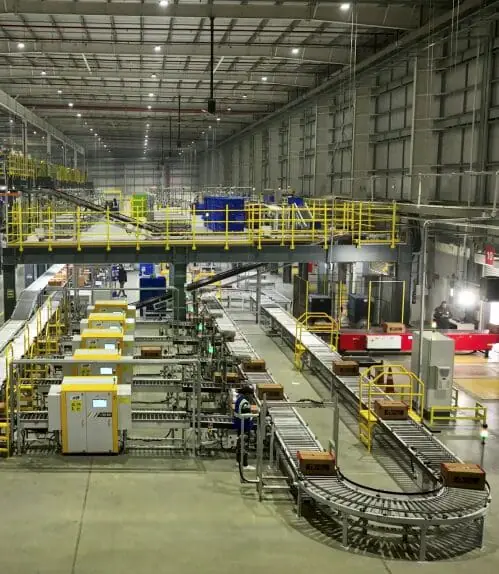
El enfoque basado en el flujo de procesos analiza el funcionamiento de un almacén o centro de distribución y se centra en cómo se mueven realmente los materiales por las instalaciones.
¿Qué implica el enfoque basado en el flujo de procesos para la planificación de almacenes?
En pocas palabras, el flujo de procesos del almacén es el movimiento ordenado de mercancías, personas e información desde su recepción hasta su envío. En este flujo, en lugar de considerar por separado la distribución del almacén y el diseño del almacenamiento, el planificador traza cada paso operativo con el fin de identificar las dependencias, los cuellos de botella y las necesidades de recursos.
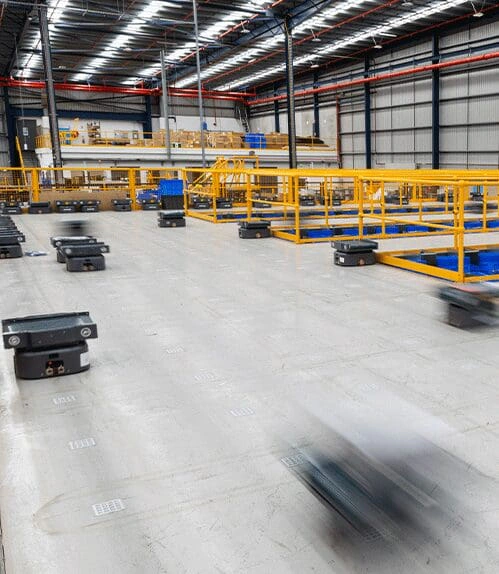
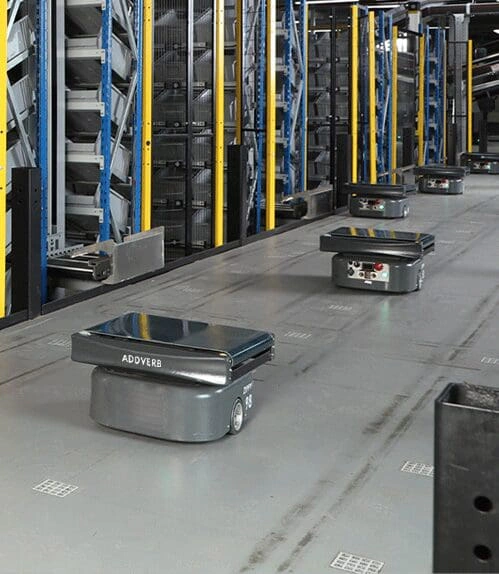
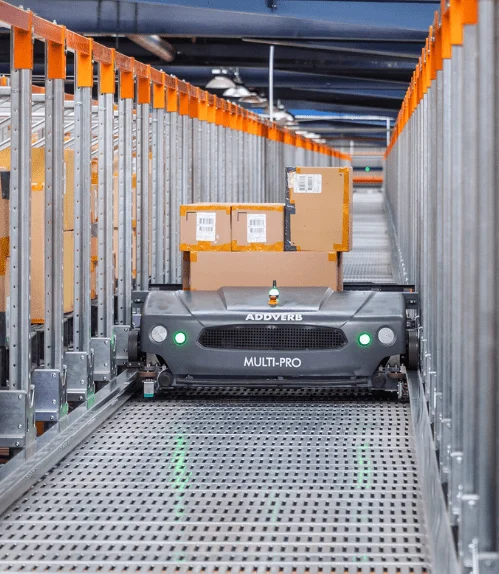
El análisis del flujo de productos en las operaciones de almacén permite situar las referencias de alta rotación más cerca de las zonas de salida, minimiza las distancias y la congestión, y crea un flujo de trabajo en el almacén que favorece un rendimiento predecible y escalable mediante el uso de tecnologías como los robots móviles autónomos (AMR) Addverb.
¿Por qué el flujo de procesos es fundamental en los almacenes modernos?
Los patrones de demanda muy variables, la mayor complejidad de las referencias y los plazos de entrega inciertos constituyen una combinación complicada para los almacenes actuales, y las distribuciones estáticas ya no resultan adecuadas en situaciones tan impredecibles.
Los modelos optimizados facilitan la planificación dinámica de la capacidad de los almacenes y ayudan a prever los volúmenes en horas punta, el aumento estacional de la demanda o la probable necesidad de ampliación. El objetivo es permitir una asignación espontánea del espacio de almacén por zonas en función de la rotación de las referencias (SKU), los perfiles de los pedidos y la interconectividad de los sistemas de automatización.
De este modo, se garantizará que la planificación de los centros de distribución siga siendo resiliente incluso en situaciones en las que las necesidades empresariales experimenten cambios.
¿Cómo mejora el flujo de procesos la eficiencia del almacén?
Un flujo de procesos en el almacén que no esté bien definido conduce sin duda a ineficiencias relacionadas con la suboptimización de los desplazamientos, el tráfico cruzado, las zonas de inactividad y la congestión, lo que puede requerir una mejor optimización de la distribución, la preparación de pedidos por zonas y la secuencia de tareas.
La optimización del flujo de trabajo en el almacén minimiza las manipulaciones innecesarias, reduce los tiempos de ciclo de los pedidos y aumenta la precisión en la preparación de pedidos. Todo el stock de alta rotación se organiza cuidadosamente durante las operaciones del almacén, en sincronía con los patrones de demanda reales, lo que aumenta el rendimiento de las salidas y reduce la fatiga de los trabajadores gracias a sistemas como Quadron carton shuttle Addverb.
Una encuesta realizada por Supply Chain Brain reveló que el 98 % de los trabajadores de almacén afirmaron haber experimentado un aumento de la productividad tras la implantación de la automatización, y señalaron una reducción del estrés y un menor número de errores durante los periodos de mayor actividad.
Problemas habituales a los que se enfrenta quien no adopta un enfoque basado en el flujo de procesos
La mayoría de los fallos en la planificación de almacenes se deben a que los diseños se elaboran sin comprender el flujo operativo:
• Pasillos de preparación de pedidos congestionados
• Aprovechamiento deficiente de los muelles de carga
• Zonas de almacenamiento infrautilizadas
• Desequilibrio en la distribución de la mano de obra
• Escalabilidad limitada
Sin un flujo de trabajo estructurado en el almacén, ni siquiera los sistemas de automatización más avanzados logran alcanzar el rendimiento esperado.
Addverb : Planificación de almacenes basada en procesos
El sistema de gestión de almacenes (WMS) Addverbestá diseñado para adaptar la planificación del almacén al flujo real de los procesos operativos. El WMS establece una conexión entre la infraestructura física, la inteligencia del software y el movimiento de materiales en una capa de ejecución unificada. Esto permite sincronizar la planificación del espacio del almacén, el diseño de los flujos de trabajo y la implantación de la automatización con los patrones de demanda reales.
Arquitectura del sistema
Este sistema WMS funciona mediante módulos basados en reglas que permiten controlar en tiempo real todos los aspectos de la gestión del flujo de trabajo, desde la recepción de la mercancía hasta el almacenamiento, la preparación de pedidos, el embalaje y la expedición, todo ello de forma automática y basada en datos.
Capacidades de integración
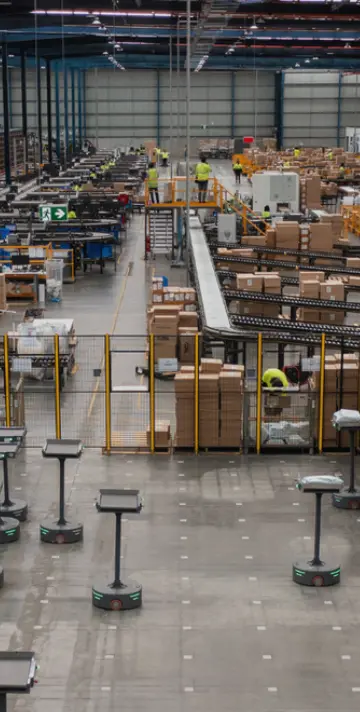
La plataforma se conecta con sistemas ERP basados en API, WES, WCS, sistemas AS/RS, cintas transportadoras y sistemas de clasificación para ofrecer un funcionamiento fluido del software combinado con hardware de automatización, como los clasificadores robóticos Addverb.
Repercusiones operativas
El sistema de gestión de almacenes (WMS) facilita la planificación dinámica de la capacidad del almacén, asignando tareas únicamente cuando surge la demanda y hay recursos disponibles. Los análisis de asignación de ubicaciones y las recomendaciones de optimización de la distribución mejoran la planificación del almacenamiento en el almacén. La seguridad mejora gracias al control del flujo de tráfico, los desplazamientos guiados y la secuenciación de tareas dirigida por el sistema.
Flujo de procesos a lo largo del ciclo de vida de la automatización de almacenes
Un flujo de procesos estructurado abarca todo el proceso de automatización del almacén:
• Preventa: Estudios de emplazamiento, análisis de rendimiento, estudios de viabilidad
• Ingeniería: Diseño mecánico, eléctrico, de control, informático y de software
• Fabricación: Fabricación, montaje de paneles, programación de PLC
• Instalación: Configuración de equipos , integración de sistemas, pruebas
• Entrega: Formación, pruebas de aceptación, asistencia para la puesta en marcha
• Posventa: Mantenimiento preventivo, actualizaciones, supervisión del rendimiento
De este modo, se garantiza que las decisiones relativas a la distribución del almacén y el espacio de almacenamiento sigan siendo escalables, cumplan con la normativa y estén en consonancia con los objetivos empresariales a largo plazo.
Addverb prácticos Addverb : el flujo de procesos en acción
En el proyecto del centro de distribución mayorista automatizado de S. Abraham and Sons , Addverb la estrategia de planificación del almacén trazando primero el flujo de procesos de principio a fin, desde la recepción de mercancías hasta su envío. Las operaciones se enfrentaban a retos como recorridos más largos para la preparación de pedidos, tráfico entre zonas y un uso ineficiente del espacio. Tras rediseñar la distribución del almacén y el espacio de almacenamiento en función de la rapidez con la que fluyen las mercancías por el almacén, Addverb un sistema ASRS basado en lanzaderas que gestiona 14 400 contenedores de SKU repartidos en tres pasillos y 4 800 contenedores de pedidos, con ocho estaciones de trasvase que procesan hasta 480 contenedores por hora. Este enfoque basado en el flujo de procesos mejoró la planificación del espacio del almacén, aumentó la eficiencia de la preparación de pedidos a 200 contenedores por hora, redujo las distancias de desplazamiento de los preparadores y permitió una tramitación más rápida de los pedidos, al tiempo que mejoró la utilización del espacio hasta en un 400 % sin necesidad de ampliar las instalaciones.
En el proyecto del sistema de almacenamiento de varias profundidades de Par Pharma , Addverb un enfoque basado en el flujo de procesos para hacer frente a la elevada complejidad de las referencias (SKU), la trazabilidad reglamentaria y la capacidad limitada del almacén. Partiendo de los controles de calidad en la entrada, el almacenamiento controlado de materiales y el envío conforme a la normativa, se rediseñó el flujo de trabajo del almacén. Se configuraron carriles ASRS de almacenamiento en profundidad múltiple de acuerdo con el flujo de productos en el almacén, utilizando tres unidades Crane apiladoras con lanzaderas cruiser capaces de manejar hasta 1 000 kg por palé y el software Mobinity integrado. El objetivo era lograr una planificación óptima de la capacidad y ciclos de reabastecimiento eficientes. Este proceso de flujo altamente estructurado aumentó la densidad de almacenamiento a 4.050 posiciones de profundidad múltiple, garantizó una trazabilidad del 100 % de los productos y alcanzó un rendimiento de 50 palés por hora, mejorando las operaciones de preparación de pedidos por lotes.
En el proyecto del centro de distribución automatizado de piezas de frenos , Addverb la planificación del almacén analizando los patrones de movimiento de material de entrada y salida. La distribución del centro de distribución existente adolecía de una grave congestión y presentaba una productividad irregular en la preparación de pedidos. Durante el proceso de reorganización, se identificaron el almacenamiento a granel, las zonas de preparación de pedidos de alta velocidad para los productos de mayor rotación y la zona de preparación de salidas. El proyecto se puso en marcha con robots y una clasificadora, incluyendo una flota de AMR capaces de manejar hasta 1.100 libras cada uno y más de 25 clasificadoras robóticas con una capacidad de carga de 88 libras, coordinadas mediante un software integrado de gestión de flotas y ejecución; este plan de optimización del diseño de la distribución del almacén simplificó la planificación del espacio, aumentó el rendimiento diario a 1 250 cajas por hora distribuidas a 144 destinos de clasificación, incrementó la productividad en la preparación de pedidos en un 25 % y permitió a los AMR gestionar entre 80 y 100 carros al día (12 pedidos por carro), lo que redujo sustancialmente los errores de almacenamiento.
Conclusión
El enfoque basado en los flujos de procesos ha contribuido a que el proceso de planificación de almacenes haya evolucionado desde un enfoque de distribución estática hacia una estrategia basada en el rendimiento. Ofrece un medio para integrar las instalaciones en una gestión óptima de los materiales, garantizando así un uso eficaz del espacio, un flujo de trabajo fluido, la gestión de los procesos de las instalaciones y unas operaciones eficientes.
En cierto modo, la planificación y el flujo de un proceso impulsan la capacidad empresarial, siempre resiliente, de las operaciones logísticas modernas en el entorno actual de gran demanda. En un escenario en el que las operaciones logísticas de alto crecimiento y gran complejidad del pasado contrastan con un enfoque de flujo libre, no cabe duda de que el flujo del proceso es algo más que una mera planificación. De hecho, es la piedra angular sobre la que se asienta la excelencia de los almacenes actuales.
Preguntas Frecuentes
1. ¿Qué es la planificación de almacenes?
Consiste en diseñar la distribución, las capacidades, los flujos de trabajo y los sistemas necesarios para garantizar la eficiencia de las operaciones. La planificación de almacenes abarca aspectos como la optimización del espacio, la distribución de los recursos humanos y la implantación de herramientas tecnológicas. Un plan bien elaborado garantiza la seguridad, la productividad y la operatividad a largo plazo.
2. ¿En qué consiste el enfoque basado en el flujo de procesos en la planificación de almacenes?
Existe una correspondencia entre las actividades y los diseños y sistemas que permite un flujo realista de las operaciones, lo que incluye el análisis de los movimientos en las fases de recepción, almacenamiento, preparación de pedidos, embalaje y envío. El objetivo es eliminar las ineficiencias y reorientar el diseño físico en función de las operaciones reales.
3. ¿Por qué es fundamental un enfoque basado en el flujo de procesos para los almacenes modernos?
Permite adaptarse a las fluctuaciones en los volúmenes, los tipos de productos y los requisitos de servicio. Las distribuciones basadas en procesos permiten a los almacenes gestionar picos de carga sin sufrir atascos. Además, facilitan una integración más rápida de la automatización y la escalabilidad futura.
4. ¿Cómo influye el flujo de procesos en el rendimiento general del almacén?
Elimina la congestión. Mejora la precisión. Garantiza la estabilidad en la producción. Unos flujos de trabajo claros pueden reducir —y de hecho reducen— los movimientos innecesarios y los errores de manipulación. Por lo tanto, entre sus ventajas destacan una mayor rapidez en la preparación de los pedidos y un mejor aprovechamiento de los recursos.
5. ¿Cómo mejora el diseño del flujo de procesos la eficiencia del almacén?
Minimiza los desplazamientos innecesarios y equilibra la carga de trabajo. Las referencias de alta rotación se sitúan más cerca de las zonas de expedición. Esto reduce el tiempo de desplazamiento y mejora la velocidad de preparación y embalaje.
6. ¿Cuál es el principal problema que se plantea en la planificación de almacenes?
La falta de coherencia entre el diseño de la distribución y las operaciones reales. Muchas instalaciones se diseñan sin un análisis real de los flujos. Esto provoca cuellos de botella, espacio infrautilizado e ineficiencias en la mano de obra.
7. ¿Cómo contribuye la planificación de almacenes al crecimiento del negocio?
Permite una capacidad escalable y la preparación para la automatización. Los almacenes bien planificados pueden aumentar su rendimiento sin necesidad de grandes rediseños. Esto facilita la incorporación de nuevas líneas de productos, la expansión en el mercado y la gestión de la demanda en temporada alta.
8. ¿Cuáles son los errores más comunes en la planificación de almacenes?
Ignorar el análisis de flujos y hacer un mal uso del espacio. Sobreestimar las necesidades de almacenamiento y subestimar el rendimiento. No tener en cuenta la automatización ni las necesidades de crecimiento futuro.