



WhatsApp 채팅

An average e-commerce business receives around 15-30% return or replacement requests for their orders. Some specific sectors like Apparel and footwear can have returns as high as 40%, peaking during the peak seasons.

Hence, the supply chain management has evolved to include reverse logistics, automation and robotics to enable efficiency, traceability, and sustainability during returns processing. Consumers expect a smooth return process and a well-defined reverse logistics process is becoming a strategic necessity for enterprises across industries such as retail, FMCG, e-commerce, electronics, and manufacturing.

As per the National Retail Federation (NRF), in the U.S., the returns of goods will amount to $849.9 billion in 2025, which will equal approximately 15.8% of the total retail sales. Also, it is estimated that this year nearly one-fifth (19.3%) of the internet sales will be returned. Such numbers stress the vastness and the expense of reverse logistics, thus indicating the critical demand for the application of automation and robotics in the efficient handling of returns.

Taking this into consideration, Addverb uses the power of automation and robotics to automate and transform the whole reverse logistics for future needs — a future where waste is not an issue anymore, and the operational bottlenecks are non-existent, and Returns management system becomes a source of growth, sustainability, and resilience instead of being a cost factor.


Challenges in Manual Returns Processing

Returns management is a logistics chokepoint without automation. Manual operations tend to cause repetitive issues that lead to lower warehouse efficiency. Some common challenges include:

  • Unpredictability: Manual sorting may feel slower during peak periods, such as festive seasons or sales campaigns. Arranging temporary resources creates process continuity issues.
  • Lack of Traceability: Items lost or misplaced due to poor tracking create inventory discrepancies:.
  • High Error Rates: Manual data entries often result in product mis-categorization or willful stock loss.
  • Space Inefficiency: Stockpiling returns occupy precious floor space, restricting throughput.

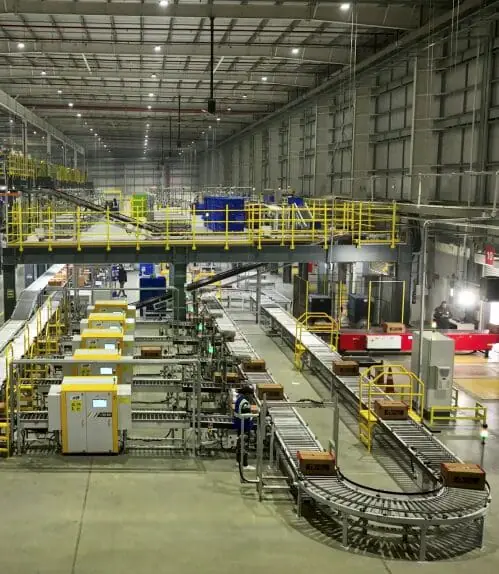
Addverb deploys robotics and intelligent automation to tackle these issues that hamper every single activity involved. Robotic sortation systems, AI-enabled WMS, and digital dashboards provide businesses with real-time insight and control, which means no more delays, greater visibility, and guaranteed inventory reconciliation.

How Automation Improves Reverse Logistics and Returns Management

Manual methods to handle returns often caused time delays, inaccurate data, and inefficiency. Automation has enabled reverse logistics to grow from just managing product returns to recover value, develop customer trust, and foster circular supply chains.

From item identification to sorting to reintegration into inventory, Addverb’s smart automation and robotic technologies provide intelligence, precision, and speed at every step in returns handling.

  • Smart WMS: Addverb robots integrate seamlessly with existing ERP to scan, categorize, and move returned items.
  • Vision-Based Sorting: Through automated vision sorters and barcode scanners, the returned items are immediately categorized by condition and destination.
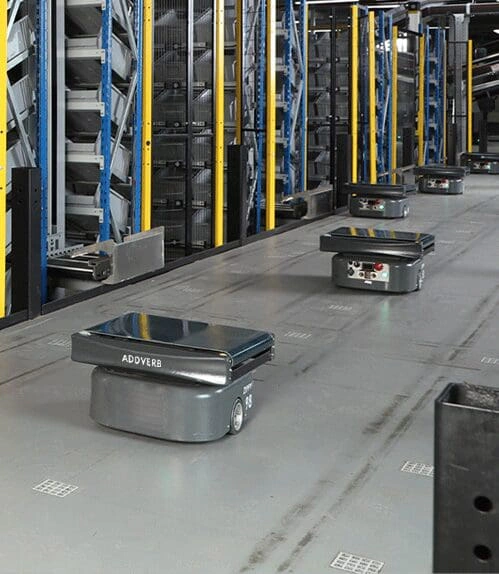
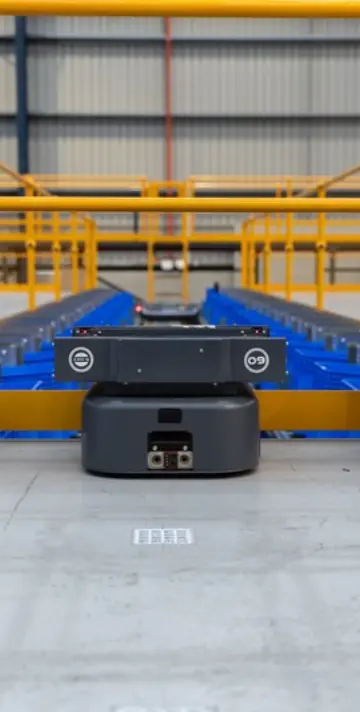
  • Robot Picker and Transport: Addverb AMRs and Sorting Robots transport returned items efficiently across the warehouse while staying connected to the WES and FMS. This integration ensures real-time visibility, intelligent coordination, and optimized routing of the entire robotic fleet, enabling faster and more accurate returns handling.

End-to-end traceability eliminates unnecessary manual touchpoints and helps in effectively analysing data to gain insight for decision-making. Also, through Addverb’s approach, reverse logistics works faster yet is smartly optimized in such a way that every return is inspected accurately with minimal waste.

Also Read: Role of Technology in Supply Chain Management

Benefits of Robotic Solutions in Reverse Logistics

Addverb’s robotics and automation suite leads to measurable improvements across several reverse logistics performance dimensions:

  • Increased Throughput: Addverb’s SortIE, a high-speed vertical sortation system, along with AMRs, handles several thousand items per hour, significantly reducing turnaround times and enhancing customer satisfaction through faster, more accurate returns processing.
  • Improved Accuracy: Vision-based sorting and barcode-based identification provide for faultless product routing, such that the item will always reach the next point of processing correctly.
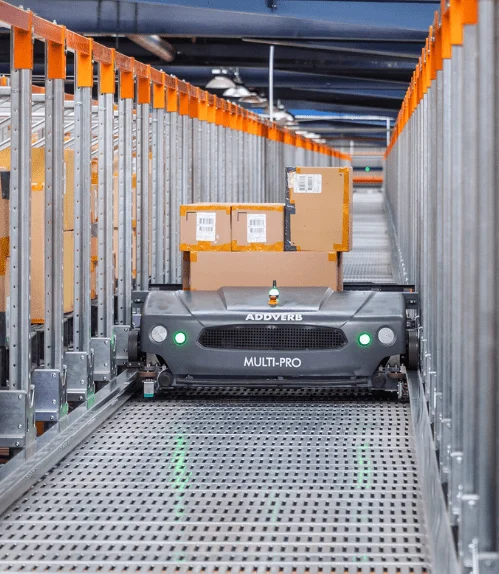
  • Optimized Space Utilisation: Addverb’s ASRS and Robotic Shuttles optimizes space on vertical and horizontal axes to yield compact, highly efficient storage layouts.
  • Reduced Human Dependency: Robots perform all repetitive and heavy-lifting operations and thereby, decrease reliance on temporary staff..
  • Sustainability and Circular Economy: With quicker repair and refurbishment cycles, Addverb enables businesses to minimize waste generation and responsibly enter their products back into the supply chain.

Faster returns processing via Addverb robots also helps businesses align with ESG and sustainability goals, thus making their warehouses smarter and greener.

Real-World Examples of Automated Returns Success

Across retail, e-commerce, and manufacturing, Addverb’s automation systems have already demonstrated tangible impact.

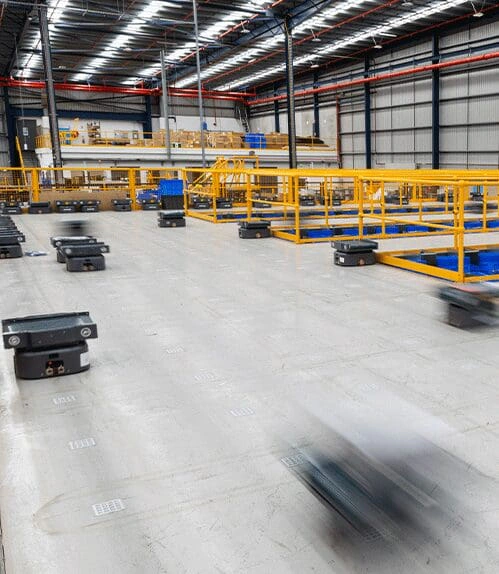
In the fashion & lifestyle sector, AJIO formed a partnership with Addverb Technologies for transforming its returns handling operations. Addverb provided Zippy, its smart robotics sortation system, to AJIO’s reverse logistics center, capable of 30,000 sorts per hour, vastly increasing throughput capacity.

The implementation enabled AJIO to move from the slow manual returns processing to a highly automated system where returned apparel and footwear are instantly sorted, routed for re-integration or resale, and then sent back into inventory, rendering what was formerly a bottleneck into a competitive differentiator within their supply chain.

This underlines how Addverb converts reverse logistics challenges into strategic advantages, helping enterprises achieve operational excellence while enhancing customer loyalty.

How Addverb Enhances Reverse Logistics

Reverse logistics has transformed into a billion-dollar growth engine scenario and it is no longer a backstage operation. The figure of e-commerce returns is supposed to reach trillions by 2030, making it imperative to have reverse processes that are quicker, more intelligent, and environmentally friendly.

Addverb stands at the forefront of this shift, enabling companies to turn returns into opportunities for value recovery, sustainability, and customer loyalty.

  • Industry-Aligned Solutions: From fashion retail to electronics and FMCG, Addverb’s automation ecosystem adapts to sector-specific return complexities, ensuring each industry achieves optimal efficiency and traceability.
  • Scalable Technology Backbone: With platforms like Movect (Fleet Management System), Addverb enables seamless orchestration of large-scale robotic fleets and real-time insights across global operations.
  • Driving Circular Supply Chains: By reintroducing recovered products into the production loop, Addverb not only reduces waste but also helps enterprises meet their ESG and sustainability goals, a growing priority for modern supply chains.

In essence, Addverb isn’t just automating reverse logistics; it’s redefining how the industry views returns , from operational burden to competitive advantage.

결론

Reverse logistics and returns management have evolved into a strategic cornerstone of supply chain excellence. Now, through automation and robotics, these solutions can be deployed towards operational efficiency and customer delight.

Addverb constitutes the support of such transformation by building smart, scalable, and sustainable automation ecosystems that make reverse logistics in supply chain management faster, smarter, and greener.

Tomorrow’s reverse logistics will be intelligent, automated, and environmentally conscious, and Addverb leads the march into its creation.


Reverse Logistics in Supply Chain Management: How Automation and Robotics Transform Returns and Sustainability


자주 묻는 질문

1. What is reverse logistics in supply chain management?

Reverse logistics involves handling returned, damaged, or recycled products and introducing them into the supply chain for resale.

2. How does automation bring improvements to reverse logistics and returns management?

Automation brings speed to processing, accuracy, and visibility by integrating robotics, warehouse management systems, and AI-based decision-making.

3. What industries stand to gain the most from Addverb’s reverse logistics solutions?

Retail, e-commerce, FMCG, and manufacturing industries benefit most, having voluminous returns requiring traceability and efficiency.

4. Which Addverb products are used for automated returns management?

The sortation, transportation, and storage of returned goods are automated by an integrated ecosystem including Addverb’s Zippy (Robotic Sorter), Quadron (ASRS), and Dynamo (AMR), etc.

5. Are there any published case studies or whitepapers from Addverb on reverse logistics?

Yes, you can check them out here.

추천 블로그