
Table of Contents
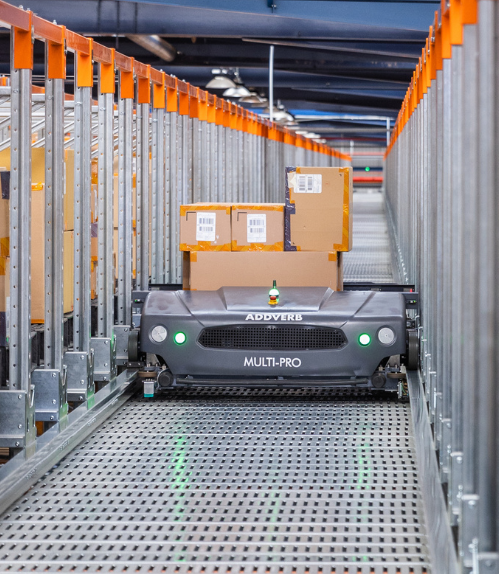
Robotic warehouse systems are a core element of next-generation logistics, transforming material handling, movement, and management across industries. Autonomous Mobile Robots (AMRs), combined with optimal path planning and real-time data analytics, enable faster fulfilment, adaptive workflows, and a smarter supply-chain ecosystem.
How AMRs Increase Efficiency and Flexibility in a Warehouses
Efficiency and flexibility mark success for a modern-day warehouse. The traditional systems of fixed automation may be effective, but they are often not adaptable enough to accommodate dynamic operations. For example, events like peak seasons and holidays, impact the usage of a warehouse, in such cases, having a fixed automation system may not be efficient. Thus, flexible solutions like AMRs from Addverb, bypass these limitations by offering something similar to plug and play like experience, where you can choose to scale up or scale down your operations as per the consumer demand.
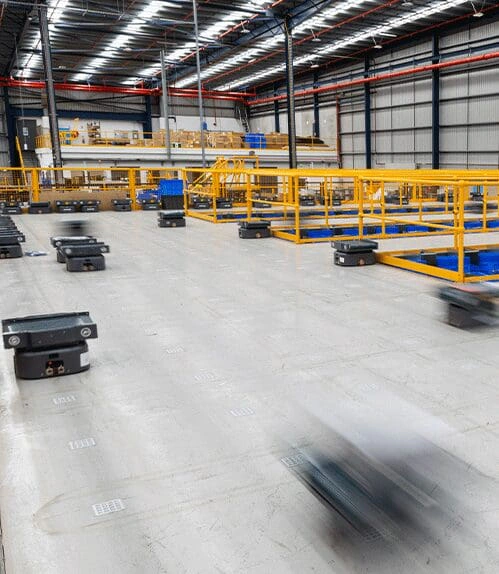
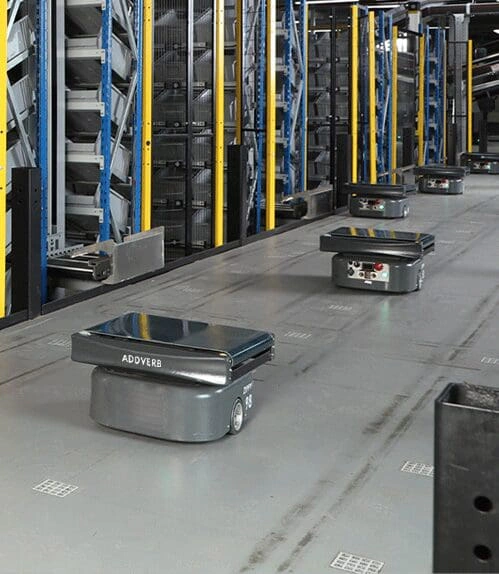
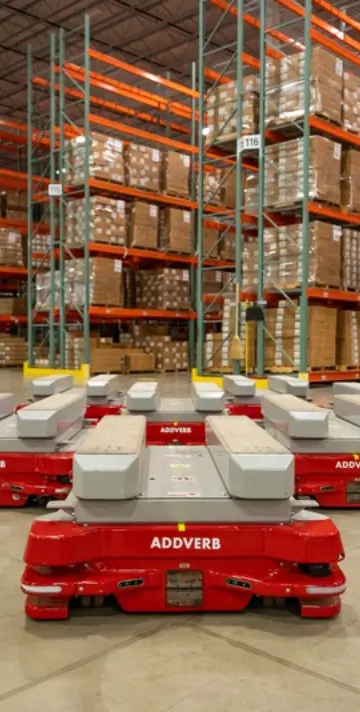
Dynamo is an advanced AMR robot solution created by Addverb to automate the pallet and heavy load movement across warehouse zones. It operates autonomously, detecting obstacles and rerouting in real-time, thus optimising material flow. Equipped with a 360-degree safety sensor system based on LiDAR, onboard intelligence, and integration with Warehouse Management System and Warehouse Execution System, Dynamo offers uninterrupted operations and optimises intralogistics.
The autonomy granted at this level empowers robots to perform monotonous and time-intensive tasks, so that the human employees can concentrate on more valuable operations. It also assists warehouses in adapting to demand or layout changes easily and without significant infrastructure alterations, which in turn allows the businesses to grow faster without losing the accuracy and consistency of their operations.
LogisticsIQ’s Warehouse Automation Market Report 2025 stated that the global warehouse automation market is projected to cross USD 41 billion by 2027, with AMRs/AGVs cited as a major growth driver. Addverb’s AMR robot, in fact, add momentum to this trend by enabling companies to scale operations without redesigning their infrastructure.The possibility of modular implementation and smart routing of Addverb AMRs mitigates fluctuation in productivity levels which are often linked with increase and decrease in demand. Hence, these Autonomous Mobile Robots help you deliver certainty.
Differences Between AMRs and AGVs
While both Automated Guided Vehicles (AGVs) and Autonomous Mobile Robots (AMRs) automate the transport of materials, they operate very differently. AGVs move along fixed paths or magnetic tracks and depend rigorously on some physical infrastructure to guide them. In contrast, Addverb’s Dynamo employs intelligent sensors and AI-empowered navigation to move freely within dynamic warehouse environments. This flexibility allows the Addverb’s AMR to operate safely alongside human workers, automatically diverting routes to avoid congestion or obstacles. Unlike AGV, they require minimal setup, thus allowing faster deployment and easy scalability with evolving business needs.
How Addverb’s AMRs Drive Intelligent Material Movement
At the center of Addverb’s automation ecosystem lies intelligent material movement. The Dynamo automates pallet transportation between inbound, storage, and outbound areas to minimise human intervention and maximise process flow.
Supporting the robotic hardware are Addverb’s warehouse software solutions:
- Optimus – Warehouse Management System (WMS) that handles inventory and order processing
- Mobinity – Warehouse Control System (WCS) that handles equipment-level coordination
- Concinity – Warehouse Execution System (WES) that connects planning to real-time execution
- Movect – Fleet Management System (FMS) that supervises and controls AMR operations
Together, they set up an integrated automation environment, providing connectivity between AMRs, conveyors, and all automated technologies. This ecosystem facilitates the perfect synchronisation and visibility in every warehouse process, from dispatch to receiving.
Overcoming Implementation Complexities with Addverb’s Expertise
AMRs are implemented seamlessly into both new and existing warehouse infrastructure, which often is a complex task in itself, but Addverb, through its consultancy and modular approach, eases this process. The company ensures smooth implementation of Addverb’s AMRs between with the software suite and existing enterprise systems.
Addverb brings real-time data exchange and performance tracking, with the intelligent orchestration of all the warehouse operations, through solutions like Optimus, Mobinity, Concinity, and Movect. These integrated setups reduce downtime and maximise scalability, securing a smooth change in automation with changing business needs.
Real-World Examples of AMR Deployment
Addverb’s systems have been successfully implemented globally, transforming the movement of materials within warehouses and factories.
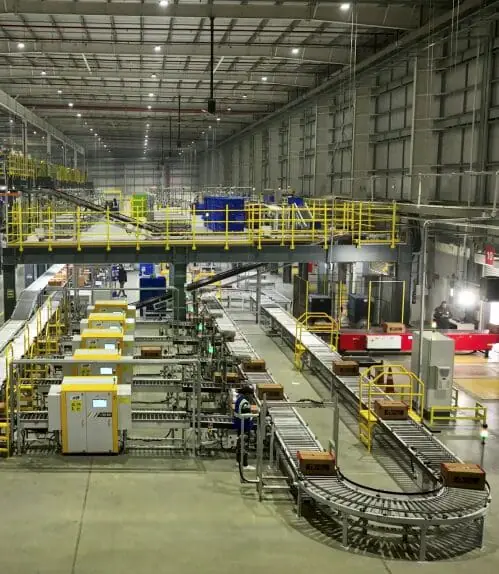
For instance, Flipkart, one of the major Indian e-commerce players, came into a partnership with Addverb to establish one of the biggest automated fulfilment centres in Asia. Addverb’s AMR robot, facilitated the smooth movement of pallets, improved throughput, and gave a turnaround in the level of visibility across the operation.
In another endeavour, Unilever implemented Addverb’s automation solutions into its manufacturing plants to allow for automated transfer of materials between production and dispatch zones. The implementation minimised manual material handling, enhanced safety, and gave real-time tracking of the process via Addverb’s integrated fleet management system.
These implementations thus highlight how Addverb’s intelligent automation ecosystem drives measurable results in efficiency, scalability, and operational resilience across industries.
Future of Autonomous Mobile Robotics in Logistics
Collaboration, dependability, and sustainability are the hallmarks of the future of AMR in warehouse operations. Addverb continues to lead this evolution with their next-generation of AMRs powered by natural navigation to enable efficient and seamless material movement of up to 2500 kg.
The Future of AMRs
The Increasing demand for Autonomous Mobile Robots is rapidly been driven by businesses’ desire for scalable and data-driven warehouse solutions. With industries moving towards flexible automation, AMRs are estimated to get a large part of the investments in warehouse robotics by 2030. Their versatility in e-commerce, retail, and manufacturing gives them a good position to lead the next generation of smart material movement.
Addverb is a company that continues to build on this trend by fusing together robotics, AI, and software intelligence to design warehouse robotics and automation ecosystems, that can adapt in real time to the operational requirements, thus increasing efficiency, sustainability, and resilience over the long term.
As the logistics landscape moves towards 24/7 intelligent operations, Addverb’s robotic warehouse systems will serve as the foundation for efficiency, scalability, and environmental responsibility.
Conclusion
With the advent of Mobile Robots, warehouse automation has revolutionised material movement and the scale of operations. The technologies that Addverb is employing with its AMRs, along with integrated software solutions like Optimus, Mobinity, Concinity, and Movect, stand as a testimony to the gradual change from manual intralogistics systems to modern connected, intelligent, and future-ready solutions.
Addverb, by linking robotics with cutting-edge software and analytics, is churning out a next-generation smart warehousing paradigm where automation is not just efficient but also adaptable, sustainable, and intelligent.
FAQs
1. What are Autonomous Mobile Robots (AMRs)?
Autonomous Mobile Robots are intelligent robots that independently traverse warehouse environments through capabilities like natural navigation. Using onboard sensors, cameras, and mapping algorithms, they move materials efficiently, with minimal manual intervention or fixed infrastructure.
2. How do Addverb’s AMRs transform warehousing operations?
Addverb’s AMRs like Dynamo increase operational efficiency by automating material movement, thereby minimising manual handling and optimising workflow management. They interface with warehouse management systems so as to maintain visibility and control over operations on a near-real-time basis.
3. Can AMRs adapt to layout or process changes?
Yes, and unlike conventional conveyors or AGVs, AMRs can dynamically adapt to layout changes, demand patterns, and more, without physically changing the warehouse setup.
4. What safety features do Addverb’s AMRs possess?
The Addverb AMRs are further equipped with 360 LiDAR sensors, obstacle-detection systems, and navigation intelligence, making them even safer around people or equipment in busy warehouse environments.
5. Which industries obtain the most benefits from AMR deployments?
AMRs are best suited for use in e-commerce, retail, FMCG, manufacturing, and logistics, especially for those requiring fast-paced, high-volume material handling and flexible automation.